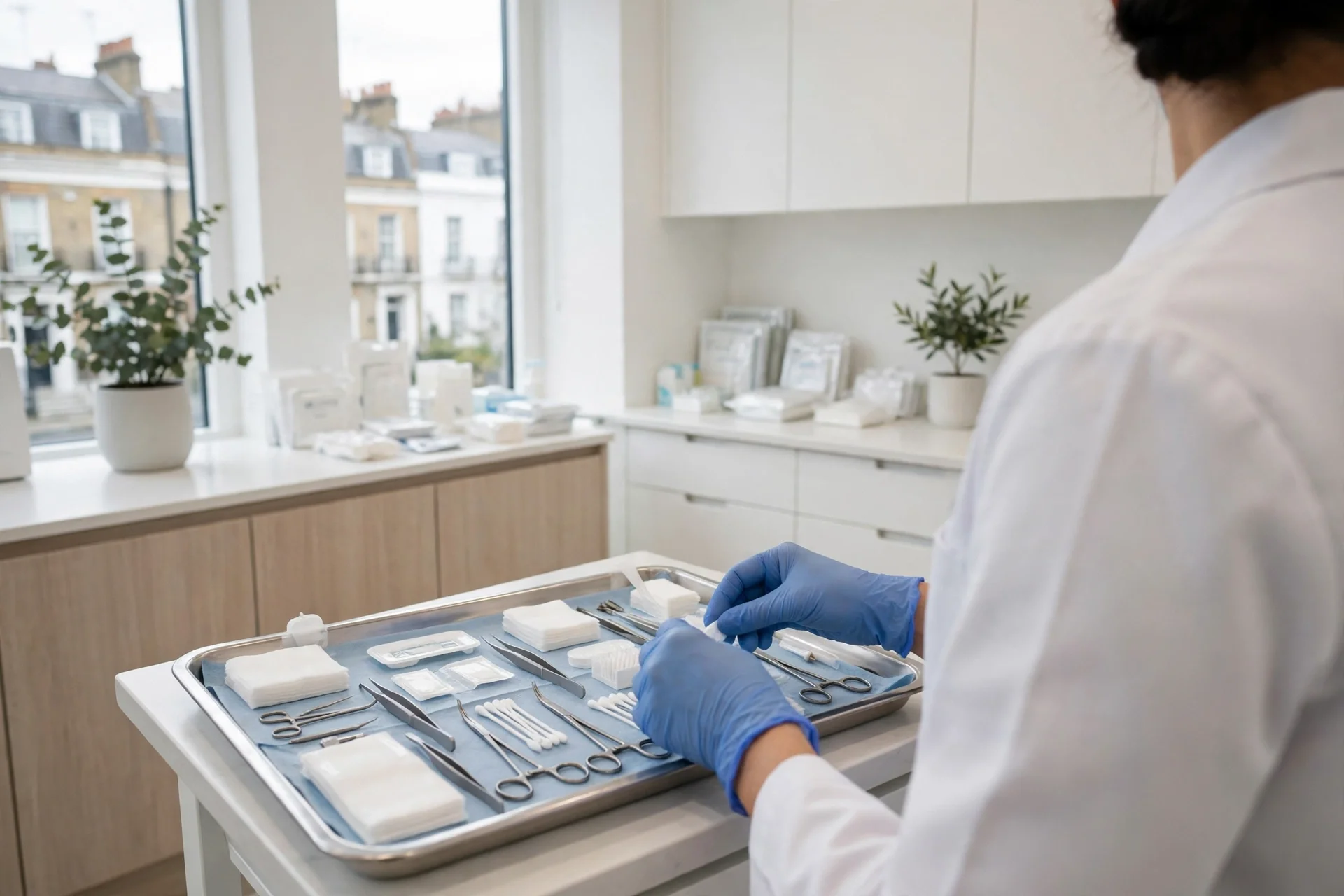
Imagen alusiva a una clínica estética regulada, generada para ilustrar las nuevas restricciones británicas. · Imagen generada para EPM
United Kingdom restricts highest-risk cosmetic procedures to clinicians
The British government proposes restricting the highest-risk cosmetic procedures to qualified healthcare professionals, defining fillers outside the face as…
Only qualified clinicians will perform the riskiest cosmetic treatments
The British government announced restrictions limiting the highest-risk cosmetic procedures to qualified, trained and regulated professionals, with fillers…
--- The context --- The British government announced new restrictions on the highest-risk cosmetic procedures, stepping up its crackdown on unqualified operators. The announcement says the line between surgical and non-surgical procedures has become increasingly blurred.
That blurring allowed ill-qualified practitioners to exploit a loophole by working out of hotel rooms without oversight. The crackdown follows reports of rogue procedures by unqualified practitioners, putting patients at serious risk of harm or even death.
--- The facts --- Under the new rules, anyone carrying out the highest-risk procedures will need to be a qualified and regulated professional. Fillers injected into parts of the body other than the face, including liquid Brazilian butt lifts, would be legally defined as cosmetic surgery, for doctors only.
Deep chemical peels, vampire facials, dermal micro-coring and some laser procedures would be restricted to doctors, dentists and some nurses, midwives and pharmacists authorised to prescribe medications.
The rules would also stop under-18s from having risky cosmetic or wellbeing treatments, while fillers are already restricted for children under a separate law. Rogue providers could face the courts under new criminal offences, with unlimited fines or fixed penalties up to £4,000.
--- The positions --- Health Minister Karin Smyth said in attributed terms that anyone planning a major procedure deserves to know they are in safe hands rather than risking their life, and that only properly trained professionals should carry out the most serious procedures, young people should be shielded, and reputable businesses should get a fair chance.
Victoria Brownlie of the British Beauty Council said in attributed terms that the line between beauty and medicine has blurred over years, that a lack of regulation let those gaps be exploited with the public at serious risk, and that the move is a vital step, while welcoming the planned licensing scheme for lower-risk treatments.
Ashton Collins, director of Save Face, welcomed in attributed terms a vital step, noted that Save Face has campaigned since 2023, and linked the loophole to serious complications including the death of Alice Webb. Dr Leah Totton said in attributed terms that the proposals are a welcome and long-overdue step, particularly to protect under-18s, because cosmetic treatments are medical treatments and things can go wrong.
--- What remains unknown --- The British government is launching a consultation asking clinicians, regulators, businesses and the public for their say on the draft regulations before the parliamentary process, planned for spring 2027. Separately, it remains committed to licensing so clinics delivering Botox, lip filler and other lower-risk treatments meet strict safety standards, ending backyard clinics.
--- Unanswered questions --- What exact accredited training will each authorised professional group need to complete? How will enforcement reach practitioners now working from hotel rooms? When will the licensing scheme for Botox and lip filler actually take effect?
--- EPM analysis --- The proposal sorts the market by risk: surgery is reserved to doctors, high-risk non-surgical treatments are limited to named professionals, and lower-risk treatments are left to a later licensing scheme. It also closes the hotel-room loophole, adds offences backed by unlimited fines or fixed penalties up to £4,000, and bars risky treatments for under-18s.
📌 EPM Take: In EPM's view, the core strength of this proposal is that it names the problem plainly, because high-risk cosmetic work is medical work and should sit only with trained, regulated professionals who can be held accountable. Closing the hotel-room loophole and protecting under-18s address the exact ground where harm already occurred, including the death of Alice Webb. Whether it delivers will depend on the consultation, on the parliamentary process planned for spring 2027, and on enforcement that can actually find operators working beyond any visible register.
--- The context --- The British government is intensifying its crackdown on cosmetic cowboys with new restrictions on procedures including liquid Brazilian butt lifts, vampire facials and chemical peels, limiting them to qualified healthcare experts only. The move follows reports of rogue procedures by unqualified practitioners, putting patients at risk of harm or even death.
The announcement says surgical and non-surgical procedures have become increasingly blurred, and the rules will close a loophole that allowed ill-qualified practitioners to work out of hotel rooms without oversight.
--- The facts --- Under the new rules, anyone carrying out the highest-risk procedures will need to be qualified and regulated. Fillers injected into parts of the body other than the face, including liquid Brazilian butt lifts, would be legally defined as cosmetic surgery, for doctors only.
Deep chemical peels, vampire facials, dermal micro-coring and some laser procedures would be restricted to doctors, dentists and some nurses, midwives and pharmacists authorised to prescribe medications.
Rogue providers could face the courts under new criminal offences, with unlimited fines or fixed penalties up to £4,000. The rules would also stop under-18s from having risky treatments, while fillers are already restricted under a separate law.
--- The positions --- Health Minister Karin Smyth said in attributed terms that people undergoing a major procedure deserve to know they are in safe hands, that only properly trained professionals should carry out the most serious procedures, that young people will be shielded, and that raising standards would give reputable businesses a fair chance.
Victoria Brownlie of the British Beauty Council said in attributed terms that a lack of regulation in a booming market led to gaps being exploited and the public placed at serious risk, called the step vital, commended the government for tackling the issue head-on, and welcomed the assurance that a licensing scheme for lower-risk treatments will follow.
Ashton Collins, director of Save Face, said in attributed terms that non-healthcare practitioners exploited a loophole for too long to carry out liquid butt lifts and facelifts, leading to serious complications including the death of Alice Webb, with victims left without justice, and that Save Face has campaigned since 2023. Dr Leah Totton said in attributed terms that medical practitioners have called for stronger regulation for years.
--- What remains unknown --- The British government is launching a consultation to ask clinicians, regulators, businesses and the public for their say on the draft regulations before the parliamentary process, planned for spring 2027. Separately, it remains committed to licensing ensuring clinics delivering Botox, lip filler and other lower-risk treatments meet strict safety standards, ending backyard clinics.
--- Unanswered questions --- Which accredited courses will qualify nurses, midwives and pharmacists for each restricted procedure? What penalties will courts apply first under the new criminal offences? Will the spring 2027 parliamentary timetable hold without weakening the rules?
--- EPM analysis --- The framework rests on clear legal definitions, a closed list of authorised professionals for high-risk work, and criminal deterrence through unlimited fines or fixed penalties up to £4,000, plus an age barrier for under-18s and licensing for the lower-risk segment.
📌 EPM Take: In EPM's view, this is overdue regulation written around a simple test, namely whether a procedure can seriously harm someone when done badly, and on that test liquid butt lifts, deep peels and similar treatments plainly belong with doctors and regulated healthcare professionals alone. The death of Alice Webb and the campaign run by Save Face since 2023 show what the loophole cost. The remaining risk is delivery, since new offences and penalties up to £4,000 will matter only if inspectors and courts use them against operators outside any register.
Reino Unido restringe los procedimientos estéticos de mayor riesgo
El Gobierno británico propone reservar los procedimientos estéticos de mayor riesgo a profesionales sanitarios cualificados, definir los rellenos fuera del…
Solo profesionales sanitarios harán los tratamientos estéticos riesgosos
El Gobierno británico anunció restricciones para que solo profesionales cualificados, formados y regulados realicen los procedimientos estéticos de mayor…
--- El contexto --- El Gobierno británico anunció nuevas restricciones sobre los procedimientos estéticos de mayor riesgo, contra los operadores sin cualificación. La frontera entre lo quirúrgico y lo no quirúrgico se ha vuelto cada vez más difusa.
Esa confusión permitió que personas sin formación sanitaria aprovecharan un vacío legal para intervenir incluso en cuartos de hotel, sin supervisión, con pacientes en riesgo de daño grave o de muerte.
--- Los hechos --- Con las nuevas reglas, los procedimientos de mayor riesgo solo podrán realizarlos profesionales sanitarios cualificados. Los rellenos inyectados fuera del rostro, incluido el levantamiento de glúteos brasileño líquido, se definirán legalmente como cirugía estética, solo para médicos.
Los peelings químicos profundos, los tratamientos faciales conocidos como vampire facials, el micro-coring dérmico y algunos procedimientos con láser quedarán restringidos a médicos, dentistas y determinados profesionales de enfermería, matronas y farmacia autorizados a prescribir medicamentos.
Las reglas impedirán además que los menores de 18 años reciban tratamientos riesgosos; los rellenos ya están restringidos por una ley separada. Incumplirlas podrá llevar a los proveedores ante los tribunales por nuevos delitos penales, con multas ilimitadas o fijas de hasta £4,000.
--- Las posiciones --- La ministra de Salud, Karin Smyth, sostuvo en términos atribuidos que quien se somete a un procedimiento importante merece saber que está en manos seguras, y defendió que solo profesionales formados realicen los procedimientos más serios, que los jóvenes queden protegidos y que los negocios serios puedan competir.
Victoria Brownlie, del British Beauty Council, señaló en términos atribuidos que la línea entre belleza y medicina se difuminó durante años, que la falta de regulación permitió explotar esos vacíos con riesgo serio, y valoró la medida como un paso vital, además de acoger el futuro esquema de licencias.
Ashton Collins, director de Save Face, celebró en términos atribuidos un paso vital, recordó que su organización hace campaña desde 2023 y vinculó el vacío con complicaciones graves y mortales, incluida la muerte de Alice Webb. La doctora Leah Totton calificó en términos atribuidos la propuesta como un paso bienvenido y largamente esperado, en especial para proteger a los menores de 18 años.
--- Lo que falta saber --- El Gobierno británico abrió una consulta para que clínicos, reguladores, empresas y el público opinen sobre el borrador antes del proceso parlamentario, previsto para la primavera de 2027. Al margen, mantiene el compromiso de licencias para clínicas de Botox, relleno de labios y otros tratamientos de menor riesgo, con normas estrictas.
--- Preguntas sin respuesta --- ¿Qué formación acreditada exacta se exigirá a cada categoría profesional autorizada? ¿Cómo se fiscalizará a quienes hoy operan en cuartos de hotel? ¿Cuándo entrará en vigor el esquema de licencias para Botox y relleno de labios?
--- Análisis EPM --- La propuesta ordena el mercado por riesgo: reserva la cirugía a los médicos, acota los tratamientos no quirúrgicos de alto riesgo a profesionales definidos y deja los de menor riesgo para licencias posteriores. También cierra el vacío de los cuartos de hotel y suma respaldo penal y prohibición para menores de 18 años.
📌 Conclusion EPM: A juicio de EPM, el acierto central es tratar estos procedimientos como lo que son cuando el riesgo es alto, actos médicos que exigen formación, regulación y responsabilidad penal si se burlan las reglas. El cierre del vacío de los cuartos de hotel y la protección de los menores de 18 años atacan los frentes donde el daño ya se demostró, incluida la muerte de Alice Webb. Su valor dependerá de la consulta, del trámite previsto para la primavera de 2027 y de una fiscalización capaz de alcanzar a quienes trabajan fuera de todo registro.
--- El contexto --- El Gobierno británico intensifica su ofensiva contra los llamados vaqueros de la estética con nuevas restricciones sobre los procedimientos de mayor riesgo. El anuncio responde a reportes de procedimientos irregulares realizados por personas no cualificadas, con pacientes en riesgo serio de daño o de muerte.
Según el anuncio, la línea entre lo quirúrgico y lo no quirúrgico se volvió cada vez más borrosa, y operadores mal cualificados aprovecharon un vacío legal para trabajar desde cuartos de hotel sin supervisión.
--- Los hechos --- Bajo las nuevas reglas, quien realice los procedimientos de mayor riesgo deberá ser profesional cualificado y regulado. Los rellenos inyectados fuera del rostro, incluido el levantamiento de glúteos brasileño líquido, se definirán legalmente como cirugía estética, solo para médicos.
Los peelings químicos profundos, los vampire facials, el micro-coring dérmico y algunos procedimientos con láser quedarán reservados a médicos, dentistas y a ciertos profesionales de enfermería, matronas y farmacia autorizados a prescribir medicamentos.
Las reglas detendrán también los tratamientos riesgosos en menores de 18 años; los rellenos ya están restringidos bajo una ley separada. Quienes desobedezcan podrán comparecer ante los tribunales por nuevos delitos penales y recibir multas ilimitadas o fijas de hasta £4,000.
--- Las posiciones --- La ministra de Salud, Karin Smyth, afirmó en términos atribuidos que quien planea un procedimiento importante merece saber que está en manos seguras, y que los cambios buscan expulsar a los operadores sin escrúpulos, elevar los estándares y dar a las empresas reputadas una oportunidad justa.
Victoria Brownlie, del British Beauty Council, expuso en términos atribuidos que durante años se difuminó la línea entre belleza y medicina, que la falta de regulación permitió explotar esos vacíos con riesgo serio, y elogió que el Gobierno británico afronte el problema, además de acoger el esquema de licencias.
Ashton Collins, director de Save Face, dio la bienvenida en términos atribuidos a un paso vital, señaló que practicantes sin perfil sanitario explotaron el vacío para hacer levantamientos líquidos y estiramientos faciales, con complicaciones graves y mortales que incluyen la muerte de Alice Webb, y recordó que Save Face hace campaña desde 2023. La doctora Leah Totton dijo en términos atribuidos que los médicos llevan años pidiendo una regulación más fuerte.
--- Lo que falta saber --- El Gobierno británico lanza una consulta para que clínicos, reguladores, empresas y el público opinen sobre el borrador antes del proceso parlamentario, previsto para la primavera de 2027. Por separado, mantiene el compromiso de licencias para que las clínicas de Botox y relleno de labios cumplan normas estrictas y se acabe con las clínicas improvisadas.
--- Preguntas sin respuesta --- ¿Qué cursos acreditados habilitarán a enfermería, matronas y farmacia para cada procedimiento? ¿Qué recursos tendrá la inspección para perseguir la práctica en hoteles? ¿Llegará el trámite de la primavera de 2027 sin rebajar las sanciones previstas?
--- Análisis EPM --- El diseño combina definición legal clara de la cirugía estética, reserva de los tratamientos de alto riesgo a profesionales identificados y disuasión penal con multas ilimitadas o fijas de hasta £4,000, más la barrera para menores de 18 años.
📌 Conclusion EPM: A juicio de EPM, una norma que define con precisión quién puede hacer qué, y que castiga con multas ilimitadas o fijas de hasta £4,000 a quien la burle, corrige el fallo de un mercado que creció sin reglas mientras el riesgo lo pagaban los pacientes. La muerte de Alice Webb y la campaña de Save Face desde 2023 muestran el costo de la demora. La prueba pendiente es práctica, porque cerrar el vacío de los cuartos de hotel exige inspección real y no solo delitos nuevos sobre el papel.