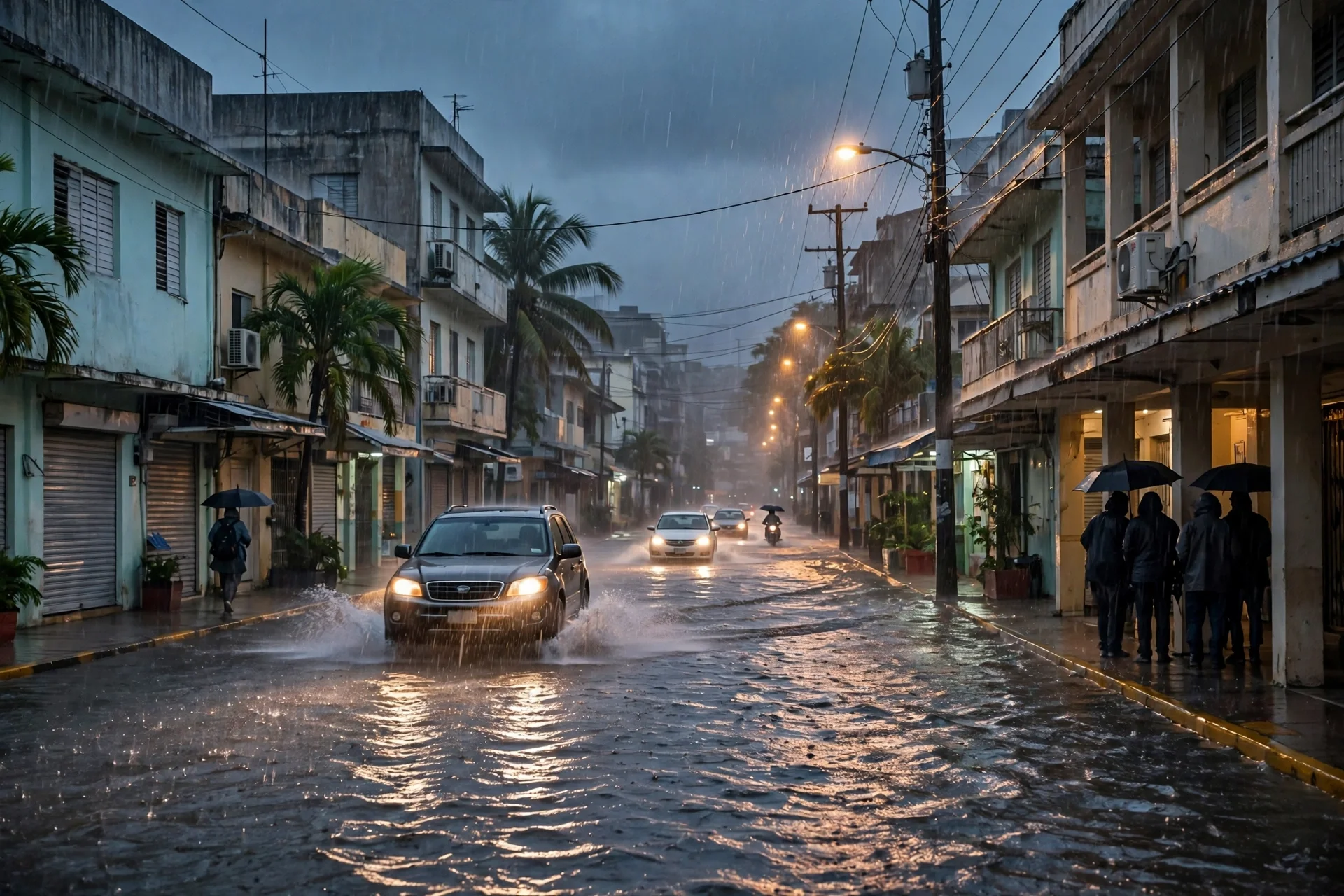
Una avenida de Santiago convertida en río por las lluvias de la tarde y la noche. · Imagen generada para EPM
Heavy rains flood Santiago avenues and expose open drains as safety risk
Intense afternoon and nighttime rains flooded 27 de Febrero and Circunvalación Sur avenues in Santiago, hindered traffic near the Cabral y Báez hospital and…
Santiago avenues flood after heavy rains, raising risks for drivers and walkers
Afternoon and nighttime rains flooded important Santiago avenues, complicated traffic beside the Cabral y Báez hospital and exposed the danger of an uncovered…
--- The context ---
Santiago once again showed how exposed its streets are to intense rain. The downpours recorded on Tuesday afternoon, which continued late into the night, were enough to flood important roads in the city and turn busy stretches into improvised rivers, creating immediate risks for pedestrians and drivers trying to move through the accumulated water.
--- The facts ---
The intense rains caused flooding on important roads in Santiago, turning stretches of 27 de Febrero Avenue into improvised rivers. Near the José María Cabral y Báez regional university hospital, the accumulation of water considerably hindered vehicle traffic and pedestrian movement, generating congestion and complications for those who needed to travel through the area.
The rainfall also affected Circunvalación Sur Avenue, in an area where many families live. One of the most worrying situations of the day happened there: a woman nearly fell into an uncovered drain that had been hidden by the water accumulated after the rainfall. The quick intervention of several people passing through the area made it possible to help her and prevent the incident from ending in tragedy.
--- The positions ---
The report conveys a call for the competent authorities to intervene at the city's vulnerable points, inspect the drains and adopt measures to reduce flooding and prevent accidents that could endanger citizens' lives. It also notes that the incident brings back into focus the danger posed by unprotected drains during floods, when water makes it impossible to distinguish open registers and other obstacles on public roads.
--- What remains unknown ---
The available information did not detail other incidents or the full extent of the effects across the rest of the city. It also did not specify how long the mentioned stretches remained flooded or what actions were taken at the identified points after the rains. The account focuses on the two affected avenues and on the risk avoided on Circunvalación Sur.
--- Unanswered questions ---
How many drains remain unprotected on Santiago's busiest avenues? Will the vulnerable points be inspected before the next heavy rain? What concrete measures will be adopted to protect pedestrians when water hides open registers from view?
--- EPM analysis ---
What happened was not only a traffic problem. When an uncovered drain is hidden under water, the street stops being a safe space for anyone walking, and prevention ends up depending on the improvised help of other passersby. Investing in drainage, inspecting registers and protecting pedestrians at vulnerable points is a basic task of urban care, especially in residential areas and near a regional hospital.
📌 EPM Take:
In EPM's view, Santiago needs prevention before the next storm, not only a reaction after water has accumulated. Inspecting drains, securing open registers and intervening on the stretches that flood on avenues such as 27 de Febrero and Circunvalación Sur should be an immediate priority. A woman was saved because other people intervened in time; the safety of pedestrians and drivers cannot depend on that kind of luck. Drainage and road protection are investment in everyday life.
--- The context ---
An afternoon of intense rain was enough to disrupt normal life in Santiago. The rainfall recorded on Tuesday, which continued late into the night, caused flooding on important roads in the city and turned stretches of central avenues into improvised rivers, with evident risks to the safety of pedestrians and drivers and to the order of traffic.
--- The facts ---
On 27 de Febrero Avenue, especially near the José María Cabral y Báez regional university hospital, the accumulation of water considerably hindered vehicle traffic and pedestrian movement. The situation generated congestion and complications for those who needed to move through a key area of the city during the hours of rain.
The rains also affected Circunvalación Sur Avenue, in an area where many families live. There, a woman nearly fell into an uncovered drain that had been hidden by the accumulated water. Several people passing through the area intervened quickly, helped her and prevented the incident from ending in tragedy, according to the account of the events.
--- The positions ---
The account conveys a call for the competent authorities to intervene at the city's vulnerable points, inspect the drains and adopt measures to reduce flooding and prevent accidents. It also underlines that unprotected drains represent a danger during floods, because the water makes it impossible to distinguish open registers and other obstacles on public roads.
--- What remains unknown ---
The available information does not detail other effects in the city or specify how long the water accumulation lasted on each stretch. It also does not indicate what inspections were later carried out on the drains mentioned. What is known is limited to the two avenues named, the congestion generated and the incident avoided on Circunvalación Sur.
--- Unanswered questions ---
Who is responsible for maintaining the drains on these avenues? When will the registers that remain open or unprotected be inspected? Will dangerous points be marked when a flood makes them invisible?
--- EPM analysis ---
Basic maintenance is the first line of urban order. A missing cover or an unprotected register may seem a minor detail on a dry day, but under water it becomes a trap for anyone walking or driving. Municipal responsibility is also measured in these elementary tasks: inspecting, repairing and keeping safe and passable the roads used every day by families, patients and workers.
📌 EPM Take:
In EPM's view, what happened in Santiago demands responsibility and maintenance, plainly stated. The competent authorities should inspect the drains, secure the registers and address the vulnerable points on 27 de Febrero and Circunvalación Sur before another rainfall repeats the scene. An orderly city does not leave hidden traps under water or shift the cost of neglect onto residents. Timely help avoided a tragedy; keeping the roads in proper condition is the obligation that remains.
Lluvias intensas inundan avenidas de Santiago y exponen alcantarillas abiertas
Lluvias intensas de la tarde y la noche inundaron la avenida 27 de Febrero y la Circunvalación Sur en Santiago, dificultaron el tránsito cerca del hospital…
Avenidas de Santiago se inundan tras lluvias y crece el riesgo para peatones
Las lluvias de la tarde y la noche anegaron avenidas importantes de Santiago, complicaron el tránsito junto al hospital Cabral y Báez y dejaron al descubierto…
--- El contexto ---
Santiago volvió a mostrar su vulnerabilidad frente a la lluvia intensa. Las precipitaciones de la tarde de este martes, que continuaron al filo de la noche, bastaron para anegar importantes vías de la ciudad y transformar tramos transitados en corrientes improvisadas, con riesgos inmediatos para peatones y conductores que intentaban seguir su trayecto en medio del agua acumulada.
--- Los hechos ---
Las intensas lluvias provocaron inundaciones en importantes vías de Santiago, convirtiendo tramos de la avenida 27 de Febrero en ríos improvisados. En las inmediaciones del hospital regional universitario José María Cabral y Báez, la acumulación de agua dificultó considerablemente el tránsito vehicular y el desplazamiento de los peatones, generando congestionamiento y complicaciones para quienes necesitaban movilizarse por la zona.
Las precipitaciones también afectaron la avenida Circunvalación Sur, en un entorno donde residen numerosas familias. Allí ocurrió una de las situaciones más preocupantes de la jornada: una mujer estuvo a punto de caer en una alcantarilla destapada que quedó oculta por el agua acumulada tras las precipitaciones. La rápida intervención de varias personas que transitaban por el lugar permitió auxiliarla y evitar que el incidente terminara en una tragedia.
--- Las posiciones ---
La nota recoge un llamado a las autoridades competentes para que intervengan los puntos vulnerables de la ciudad, revisen las alcantarillas y adopten medidas que permitan reducir las inundaciones y prevenir accidentes que puedan poner en peligro la vida de los ciudadanos. El hecho, señala, vuelve a poner sobre la mesa el peligro que representan las alcantarillas sin protección durante las inundaciones, cuando el agua impide distinguir los registros abiertos.
--- Lo que falta saber ---
No se detallaron en la información disponible otros incidentes ni el alcance completo de las afectaciones en el resto de la ciudad. Tampoco se precisó cuánto tiempo permanecieron anegados los tramos mencionados ni qué actuaciones se realizaron en los puntos señalados después de las lluvias. El relato se concentra en las dos avenidas afectadas y en el riesgo evitado en Circunvalación Sur.
--- Preguntas sin respuesta ---
¿Cuántas alcantarillas permanecen sin protección en las avenidas más transitadas de Santiago? ¿Se revisarán los puntos vulnerables antes de la próxima lluvia intensa? ¿Qué medidas concretas se adoptarán para proteger a los peatones cuando el agua oculta los registros abiertos?
--- Análisis EPM ---
Lo ocurrido no fue solo un problema de tránsito. Cuando una alcantarilla destapada queda oculta bajo el agua, la calle deja de ser un espacio seguro para quien camina, y la prevención pasa a depender de la ayuda improvisada de otros transeúntes. Invertir en drenaje, revisar los registros y proteger a los peatones en los puntos vulnerables es una tarea básica de cuidado urbano, especialmente en entornos residenciales y cerca de un hospital regional.
📌 Conclusion EPM:
A juicio de EPM, Santiago necesita prevención antes de la próxima tormenta, no solo reacción después del agua acumulada. Revisar alcantarillas, asegurar los registros abiertos e intervenir los tramos que se inundan en avenidas como la 27 de Febrero y la Circunvalación Sur debe ser una prioridad inmediata. Una mujer se salvó porque otras personas intervinieron a tiempo; la seguridad de peatones y conductores no puede depender de esa suerte. El drenaje y la protección vial son inversión en vida cotidiana.
--- El contexto ---
Una tarde de lluvia intensa bastó para alterar la vida normal de Santiago. Las precipitaciones registradas este martes, que continuaron al filo de la noche, provocaron inundaciones en importantes vías de la ciudad y convirtieron tramos de avenidas centrales en ríos improvisados, con riesgos evidentes para la seguridad de peatones y conductores y para el orden del tránsito.
--- Los hechos ---
En la avenida 27 de Febrero, especialmente en las inmediaciones del hospital regional universitario José María Cabral y Báez, la acumulación de agua dificultó considerablemente el tránsito vehicular y el desplazamiento de los peatones. La situación generó congestionamiento y complicaciones para quienes necesitaban movilizarse por una zona clave de la ciudad durante las horas de lluvia.
Las lluvias también afectaron la avenida Circunvalación Sur, en un entorno donde residen numerosas familias. Allí, una mujer estuvo a punto de caer en una alcantarilla destapada que quedó oculta por el agua acumulada. Varias personas que transitaban por el lugar intervinieron con rapidez, la auxiliaron y evitaron que el incidente terminara en una tragedia, según el relato de los hechos.
--- Las posiciones ---
El relato recoge el llamado a las autoridades competentes para que intervengan los puntos vulnerables de la ciudad, revisen las alcantarillas y adopten medidas que permitan reducir las inundaciones y prevenir accidentes. También subraya que las alcantarillas sin protección representan un peligro durante las inundaciones, porque el agua impide distinguir los registros abiertos y otros obstáculos en las vías públicas.
--- Lo que falta saber ---
La información disponible no detalla otras afectaciones en la ciudad ni precisa cuánto duró la acumulación de agua en cada tramo. Tampoco indica qué revisiones se hicieron después en las alcantarillas señaladas. Lo conocido se limita a las dos avenidas mencionadas, al congestionamiento generado y al incidente evitado en la Circunvalación Sur.
--- Preguntas sin respuesta ---
¿Quién responde por el mantenimiento de las alcantarillas en estas avenidas? ¿Cuándo se revisarán los registros que quedan abiertos o sin protección? ¿Se señalizarán los puntos peligrosos cuando una inundación los vuelva invisibles?
--- Análisis EPM ---
El mantenimiento básico es la primera línea del orden urbano. Una tapa ausente o un registro sin protección puede parecer un detalle menor en un día seco, pero bajo el agua se convierte en una trampa para quien camina o conduce. La responsabilidad municipal se mide también en estas tareas elementales: revisar, reparar y mantener transitables y seguras las vías que usan a diario familias, pacientes y trabajadores.
📌 Conclusion EPM:
A juicio de EPM, lo de Santiago exige responsabilidad y mantenimiento, sin rodeos. Las autoridades competentes deben revisar las alcantarillas, asegurar los registros y atender los puntos vulnerables de la 27 de Febrero y la Circunvalación Sur antes de que otra lluvia repita la escena. Una ciudad ordenada no deja trampas ocultas bajo el agua ni traslada a los vecinos el costo de la dejadez. Auxiliar a tiempo evitó una tragedia; mantener bien las vías es la obligación que sigue.