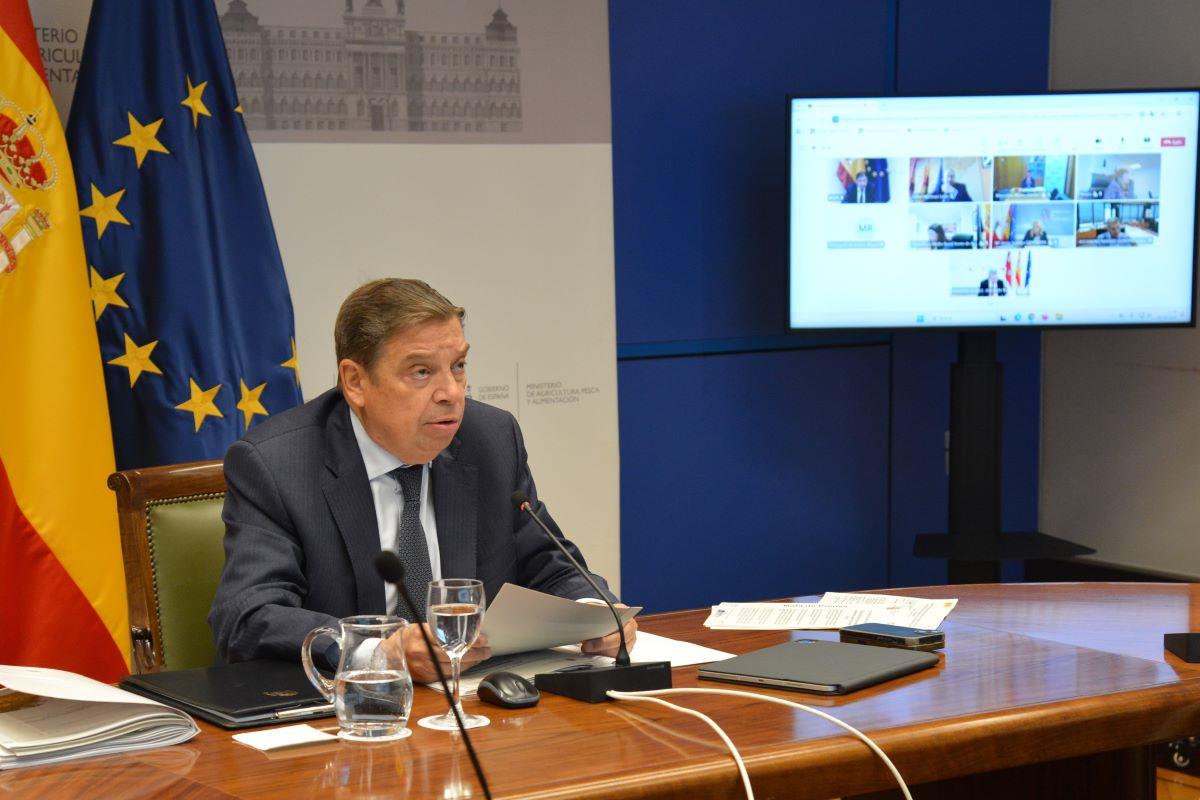
El ministro de Agricultura, Pesca y Alimentación, Luis Planas, durante la reunión de la Conferencia Sectorial en la que se acordó el reparto de 69,2 millones de euros en fondos agrarios entre las comunidades autónomas. · La Moncloa / Pool Agricultura
Spain channels 69.2 million euros to regions to shield farmers
The Sectoral Conference on Agriculture and Rural Development agreed to distribute 69.2 million euros among Spain's autonomous communities: 50.1 million from…
Spain allocates 69.2 million for farms with anti-overcompensation cap
Spain's autonomous communities will receive 69.2 million euros in farm funds: 50.1 million from the European agricultural reserve allocated by 2024 utilized…
--- The context ---
Spanish farmers and livestock producers have spent months absorbing higher fertilizer and energy prices driven by the crisis in the Middle East, a direct hit to production costs across the countryside. The European Union activated its agricultural reserve and assigned Spain a share to soften that blow. The money adds to the farm and fisheries measures already deployed under the Comprehensive Plan to Respond to the Middle East Crisis, approved by Royal Decree-Law 7/2026 of March 20, worth 1,174 million euros after two extensions.
--- The facts ---
The Sectoral Conference on Agriculture and Rural Development agreed to distribute farm funds worth 69.2 million euros among the autonomous communities. Of that total, 50.1 million euros come from the European agricultural reserve assigned to Spain for producers hit by rising costs, while another 19.1 million euros go to animal health. The reserve was allocated using each region's 2024 utilized agricultural area as reported to Eurostat. The reserve must be paid by February 28, 2027 at the latest, and the regional top-up financing by May 31, 2027.
The 19.1 million euros for animal health will fund action against bovine tuberculosis, 2026 compensation for avian influenza and contagious nodular dermatosis with 50% financial collaboration, and bluetongue vaccines in Andalusia, Castilla-La Mancha, Castilla y León, Extremadura, Madrid and Murcia. Since 2018, 142 million euros have been distributed against animal diseases. Agriculture minister Luis Planas also reported the possibility of a political agreement next week on the future Common Agricultural Policy for 2028-2032.
--- The positions ---
The Government explained that it chose to place the reserve funds at the disposal of the autonomous communities instead of designing a centralized aid scheme, arguing that this gives the system more flexibility and complements measures already approved. Under the design, each region decides the beneficiary sectors and subsectors, the eligible area and the potential beneficiaries, and may add its own funds of up to 200% of its allocation. Aid may cover up to 100% of justified extra costs while avoiding any overcompensation. All regions expressed interest and agreement with the distribution, and Spain notified the conditions to the European Commission on September 30, 2026.
--- What remains unknown ---
It is not yet known how each region will divide its allocation among sectors and farms, nor which regions will add their own money and in what amounts. The effective payment calendar for farmers and livestock producers in each territory has not been detailed either. On fisheries, the minister called for simpler management through multiannual total allowable catches and quotas, without waiting for the December negotiation, and defended a cautious stance on canned tuna in trade deals with Southeast Asian countries such as the Philippines, so as not to harm the Spanish and European canning industry.
--- Unanswered questions ---
Will the aid arrive in time to relieve the season for the producers most exposed to fertilizer prices? Which regions will add their own funds, and up to what share of their allocation? How will regional governments prevent farms in similar situations from receiving very different support depending on the territory?
--- EPM analysis ---
The chosen design moves the detailed decisions to the regional level, which can bring aid closer to the reality of each territory but also multiplies criteria and execution speeds. Speed will be decisive: a fund designed for a present cost shock loses value if payment drifts toward the 2027 deadlines. Animal health spending, with 142 million euros accumulated since 2018, shows that sanitary pressure on livestock herds is structural rather than a one-off episode.
📌 EPM Take:
In EPM's view, channeling the European reserve through the regions is a reasonable decision if it translates into fast payments and transparent criteria, because the fertilizer and energy cost shock does not hit every district or every sector equally. The regional margin of up to 200% may become the true measure of each regional government's commitment to its countryside. Two things will need watching: that flexibility does not produce seventeen incompatible systems, and that coverage of up to 100% of justified extra costs also reaches small farms, which usually have less administrative capacity to document every expense.
--- The context ---
The Middle East crisis has driven up fertilizer and energy prices, two basic inputs of farm production, and the European Union responded by activating its agricultural reserve, from which Spain received an allocation. That money sits inside the Comprehensive Plan to Respond to the Middle East Crisis, approved by Royal Decree-Law 7/2026 of March 20, whose farm and fisheries measures total 1,174 million euros after two extensions. The stated challenge is to sustain farmers and livestock producers without creating permanent subsidies or overlapping schemes.
--- The facts ---
The Sectoral Conference on Agriculture and Rural Development agreed to distribute 69.2 million euros among the autonomous communities. The bulk, 50.1 million euros, comes from the European agricultural reserve and was allocated according to each region's 2024 utilized agricultural area as reported to Eurostat, an objective and verifiable criterion. The remaining 19.1 million euros go to animal health. The reserve must be paid by February 28, 2027 at the latest, and the regional top-up financing by May 31, 2027, deadlines that set a clear horizon for execution and closure.
On animal health, the 19.1 million euros will fund the fight against bovine tuberculosis, 2026 compensation for avian influenza and contagious nodular dermatosis with 50% financial collaboration, and bluetongue vaccines in Andalusia, Castilla-La Mancha, Castilla y León, Extremadura, Madrid and Murcia. Since 2018, 142 million euros have been distributed against animal diseases. Minister Luis Planas also pointed to the possibility of a political agreement next week on the Common Agricultural Policy for 2028-2032 and called, on fisheries, for multiannual total allowable catches and quotas.
--- The positions ---
The Government waived a centralized aid scheme and placed the funds at the regions' disposal to complement, with greater flexibility, the measures already approved. Each region will decide sectors, areas and beneficiaries, may contribute its own funds of up to 200% of its allocation, and aid will cover up to 100% of justified extra costs while avoiding overcompensation of beneficiaries. All regions expressed interest and agreement with the distribution, and Spain had already notified the conditions to the European Commission on September 30, 2026, which gives the scheme legal certainty.
--- What remains unknown ---
It remains to be seen which regions will exercise the option of contributing their own funds and which will simply manage the state and European allocation. The concrete criteria each regional government will apply to select beneficiaries, and the control mechanisms used to verify extra costs, are not yet known. On the external front, Planas defended a defensive position on canned tuna in possible agreements with Southeast Asian countries such as the Philippines, given the impact on the Spanish and European canning industry.
--- Unanswered questions ---
Will the regions verify extra costs with sufficient controls to prevent undue payments? How many will contribute their own financing, and at what cost to their budgets? Will Spain manage to ensure that the future Common Agricultural Policy for 2028-2032 preserves farm income without increasing bureaucracy?
--- EPM analysis ---
The scheme has two uncommon virtues: a measurable allocation criterion, the utilized agricultural area declared to Eurostat, and an explicit limit against overcompensation. Its risk is the opposite: uneven regional management could create grievances among producers in neighboring regions, and the 2027 deadlines could become an excuse for late execution. Requiring justification of every extra cost protects public money, but it can also leave out farms with less administrative structure unless the paperwork is simplified.
📌 EPM Take:
In EPM's view, the approved distribution is defensible because it combines an objective criterion, closed payment deadlines and a clear rule against overcompensation, three elements that should be standard in any public aid scheme. Decentralization makes sense if each region publishes its criteria and accounts for execution euro by euro. The seriousness test will come with the Common Agricultural Policy for 2028-2032 and with the defense of the canning industry against Asian competition: Spanish farming does not need more announcements, it needs stable rules, firm controls and payments that arrive while the cost shock bites, not after it has passed.
El Gobierno reparte 69,2 millones entre las comunidades para el campo
La Conferencia Sectorial de Agricultura y Desarrollo Rural acordó repartir 69,2 millones de euros entre las comunidades autónomas: 50,1 millones de la reserva…
69,2 millones para el campo con control del gasto y sin sobrecompensar
Las comunidades autónomas recibirán 69,2 millones de euros en fondos agrarios: 50,1 millones de la reserva agrícola europea repartidos según la superficie…
--- El contexto ---
El campo español lleva meses absorbiendo el encarecimiento de los fertilizantes y de la energía derivado de la crisis en Oriente Próximo, un golpe directo a los costes de producción de agricultores y ganaderos. La Unión Europea activó su reserva agrícola y asignó a España una partida para amortiguar ese impacto, que se suma a las medidas agrarias y pesqueras ya desplegadas dentro del Plan Integral de Respuesta a la Crisis en Oriente Medio, aprobado por el Real Decreto-ley 7/2026, de 20 de marzo, con 1.174 millones de euros y dos prórrogas sucesivas.
--- Los hechos ---
La Conferencia Sectorial de Agricultura y Desarrollo Rural acordó distribuir entre las comunidades autónomas fondos agrarios por valor de 69,2 millones de euros. De esa cantidad, 50,1 millones corresponden a la reserva agrícola europea asignada a España para los productores afectados por el alza de costes, y otros 19,1 millones se destinan a sanidad animal. El reparto de la reserva se calculó con la superficie agraria útil de 2024 comunicada por cada comunidad a Eurostat. El pago máximo de la reserva deberá efectuarse antes del 28 de febrero de 2027, y el de la financiación complementaria autonómica, antes del 31 de mayo de 2027.
Los 19,1 millones de sanidad animal cubrirán actuaciones contra la tuberculosis bovina, las indemnizaciones de 2026 por influenza aviar y por dermatosis nodular contagiosa, con colaboración financiera del 50 %, y las vacunas de lengua azul en Andalucía, Castilla-La Mancha, Castilla y León, Extremadura, Madrid y Murcia. Desde 2018 se han distribuido 142 millones de euros contra las enfermedades animales. El ministro de Agricultura, Pesca y Alimentación, Luis Planas, informó además de la posibilidad de un acuerdo político la próxima semana sobre la futura Política Agrícola Común 2028-2032.
--- Las posiciones ---
El Gobierno explicó que optó por poner los fondos de la reserva a disposición de las comunidades autónomas en lugar de articular una ayuda centralizada, con el argumento de dotar de mayor flexibilidad al sistema y complementar las medidas ya aprobadas. Según ese diseño, cada comunidad decide los sectores y subsectores beneficiarios, la superficie subvencionable y los potenciales beneficiarios, y puede aportar fondos propios hasta el 200 % de su asignación. Las ayudas podrán cubrir hasta el 100 % de los sobrecostes justificados, evitando cualquier sobrecompensación. Todas las comunidades expresaron interés por los fondos y su conformidad con el reparto, y España comunicó las condiciones a la Comisión Europea el 30 de septiembre de 2026.
--- Lo que falta saber ---
Todavía no se conoce cómo repartirá cada comunidad su asignación entre sectores y explotaciones, ni qué comunidades aportarán financiación propia y en qué cuantía. Tampoco se ha detallado el calendario de pago efectivo a los agricultores y ganaderos en cada territorio. En pesca, el ministro reclamó simplificar la gestión con totales admisibles de capturas y cuotas plurianuales, sin esperar a la negociación de diciembre, y defendió una posición prudente en las conservas de atún frente a acuerdos con países del Sudeste Asiático como Filipinas, para no perjudicar a la industria conservera española y europea.
--- Preguntas sin respuesta ---
¿Llegarán las ayudas a tiempo para aliviar la campaña de los productores más expuestos al precio de los fertilizantes? ¿Qué comunidades añadirán fondos propios y hasta qué porcentaje de su asignación? ¿Cómo evitarán los gobiernos autonómicos que explotaciones con situaciones parecidas reciban apoyos muy distintos según el territorio?
--- Análisis EPM ---
El diseño elegido traslada la decisión fina al nivel autonómico, lo que puede acercar la ayuda a la realidad de cada territorio, pero también multiplica los criterios y los ritmos de ejecución. La clave estará en la rapidez: un fondo pensado para un sobrecoste presente pierde valor si el pago se acerca a los plazos límite de 2027. La sanidad animal, con 142 millones acumulados desde 2018, muestra que la presión sanitaria sobre las cabañas ganaderas es estructural y no un episodio aislado.
📌 Conclusion EPM:
A juicio de EPM, repartir la reserva europea a través de las comunidades es una decisión razonable si se traduce en pagos rápidos y criterios transparentes, porque el sobrecoste de fertilizantes y energía no golpea igual en todas las comarcas ni en todos los sectores. El margen autonómico de hasta el 200 % puede convertirse en la verdadera medida del compromiso de cada gobierno regional con su campo. Habrá que vigilar dos cosas: que la flexibilidad no derive en diecisiete sistemas incompatibles y que la cobertura de hasta el 100 % de los sobrecostes justificados llegue también a las explotaciones pequeñas, que suelen tener menos capacidad administrativa para acreditar cada gasto.
--- El contexto ---
La crisis en Oriente Próximo ha encarecido los fertilizantes y la energía, dos insumos básicos de la producción agraria, y la Unión Europea respondió activando su reserva agrícola, de la que España recibió una asignación. Ese dinero se inserta en el Plan Integral de Respuesta a la Crisis en Oriente Medio, aprobado por el Real Decreto-ley 7/2026, de 20 de marzo, cuyas medidas agrarias y pesqueras suman 1.174 millones de euros tras dos prórrogas. El reto declarado es sostener a agricultores y ganaderos sin crear ayudas permanentes ni duplicidades.
--- Los hechos ---
La Conferencia Sectorial de Agricultura y Desarrollo Rural acordó la distribución de 69,2 millones de euros entre las comunidades autónomas. El grueso, 50,1 millones, procede de la reserva agrícola europea y se repartió según la superficie agraria útil de 2024 que cada comunidad comunicó a Eurostat, un criterio objetivo y verificable. Los otros 19,1 millones se destinan a sanidad animal. El pago máximo de la reserva vence el 28 de febrero de 2027 y el de la financiación complementaria autonómica, el 31 de mayo de 2027, unos plazos que fijan un horizonte claro de ejecución y cierre.
En sanidad animal, los 19,1 millones financiarán la lucha contra la tuberculosis bovina, las indemnizaciones de 2026 por influenza aviar y dermatosis nodular contagiosa con colaboración financiera del 50 %, y vacunas de lengua azul en Andalucía, Castilla-La Mancha, Castilla y León, Extremadura, Madrid y Murcia. Desde 2018 se han distribuido 142 millones contra enfermedades animales. El ministro Luis Planas apuntó además la posibilidad de un acuerdo político la próxima semana sobre la Política Agrícola Común 2028-2032 y reclamó en pesca totales admisibles de capturas y cuotas plurianuales.
--- Las posiciones ---
El Gobierno renunció a una ayuda centralizada y puso los fondos a disposición de las comunidades para complementar, con más flexibilidad, las medidas ya aprobadas. Cada comunidad decidirá sectores, superficies y beneficiarios, podrá aportar fondos propios hasta el 200 % de su asignación y las ayudas cubrirán hasta el 100 % de los sobrecostes justificados, evitando la sobrecompensación de los beneficiarios. Todas las comunidades expresaron interés y conformidad con el reparto, y España ya había comunicado las condiciones a la Comisión Europea el 30 de septiembre de 2026, lo que aporta seguridad jurídica al esquema.
--- Lo que falta saber ---
Queda por ver qué comunidades ejercerán la opción de aportar fondos propios y cuáles se limitarán a gestionar la asignación estatal y europea. Tampoco se conocen aún los criterios concretos de cada gobierno autonómico para seleccionar beneficiarios ni los mecanismos de control que aplicarán para acreditar los sobrecostes. En el frente exterior, Planas defendió una posición defensiva en las conservas de atún ante posibles acuerdos con países del Sudeste Asiático como Filipinas, por su impacto sobre la industria conservera española y europea.
--- Preguntas sin respuesta ---
¿Acreditarán las comunidades los sobrecostes con controles suficientes para impedir pagos indebidos? ¿Cuántas aportarán financiación propia y con qué coste para sus presupuestos? ¿Logrará España que la futura Política Agrícola Común 2028-2032 preserve la renta agraria sin aumentar la burocracia?
--- Análisis EPM ---
El esquema tiene dos virtudes poco frecuentes: un criterio de reparto medible, la superficie agraria útil declarada a Eurostat, y un límite explícito contra la sobrecompensación. Su riesgo es el contrario: que la gestión autonómica desigual genere agravios entre productores de comunidades vecinas y que los plazos de 2027 se conviertan en excusa para ejecutar tarde. La exigencia de justificar cada sobrecoste protege el dinero público, pero también puede dejar fuera a explotaciones con menos estructura administrativa si no se simplifica el trámite.
📌 Conclusion EPM:
A juicio de EPM, el reparto aprobado es defendible porque combina un criterio objetivo, plazos de pago cerrados y una regla clara contra la sobrecompensación, tres elementos que deberían ser norma en cualquier ayuda pública. La descentralización tiene sentido si cada comunidad publica sus criterios y rinde cuentas de la ejecución euro a euro. La prueba de seriedad llegará con la Política Agrícola Común 2028-2032 y con la defensa de la industria conservera frente a la competencia asiática: el campo español no necesita más anuncios, necesita reglas estables, controles firmes y pagos que lleguen cuando el sobrecoste aprieta, no cuando ya pasó.