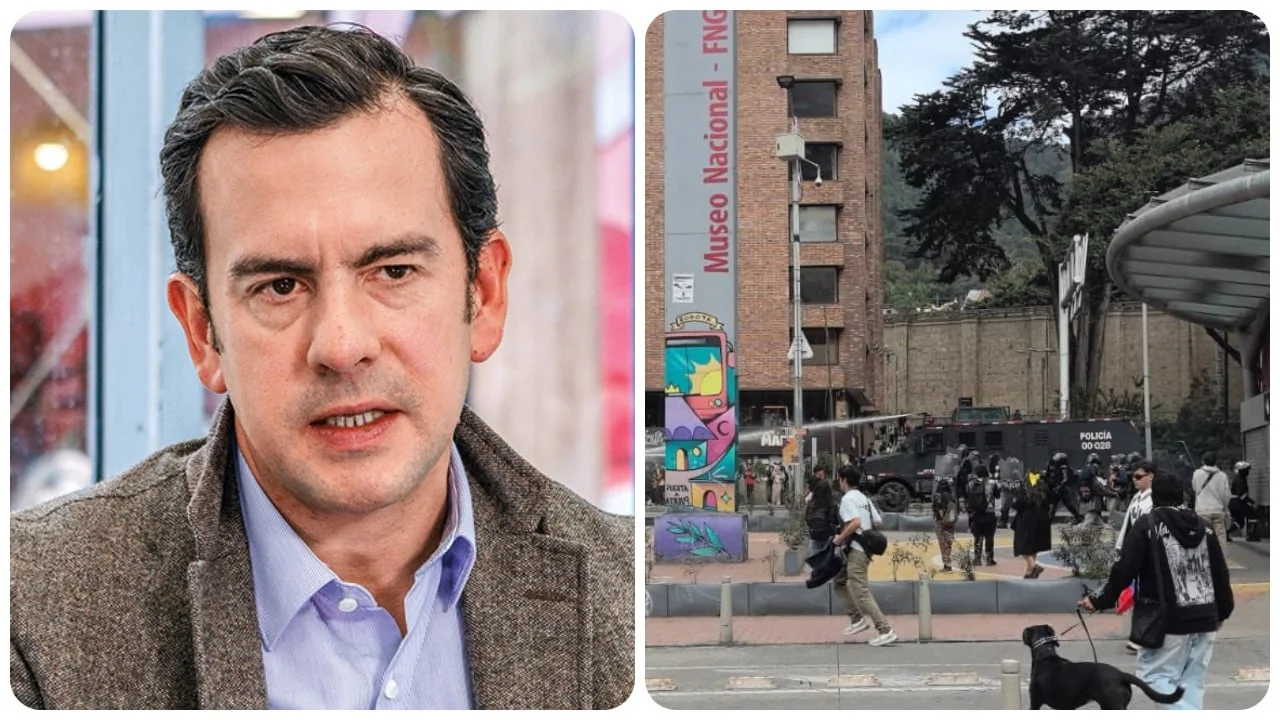
El ministro del Interior, Rodrigo Lara, y la presencia policial durante las manifestaciones del domingo en el centro de Bogotá. · Semana
Bogotá Between Dialogue and Blockade: The Deal That Avoided Force
Minister Rodrigo Lara delivered Bogotá's Sunday protest account from the Unified Command Post: in La Perseverancia an agreement kept a lane permanently open…
Red Line in Bogotá: No Total Blockade as Police Reopen the Séptima
From the Unified Command Post, Minister Rodrigo Lara set the day's red line in Bogotá: after dialogue was exhausted, the Police intervened solely to restore…
--- The context ---
Bogotá faced a test this Sunday, October 18: how to protect peaceful protest without letting the city be held hostage. From the Unified Command Post, Interior Minister Rodrigo Lara delivered the official account of a response coordinated jointly between the Ministry of the Interior and the Bogotá Mayor's Office.
--- The facts ---
There were two flashpoints. In the La Perseverancia neighborhood, the demonstration initially blocked direct access to the sector's police station, and there the way out was negotiation, not force.
After the regulatory dialogue stage was exhausted, demonstrators formally committed not to obstruct the entire roadway and to keep one vehicle lane permanently open, compliance that allowed the preventive withdrawal of the security forces.
The second flashpoint, outside the National Museum on Carrera Séptima, unfolded differently: before 2:00 in the afternoon, during the Sunday ciclovía, the gathering did not disrupt motor traffic, but once the ciclovía ended a remaining group imposed a total blockade on that main artery.
--- The positions ---
The Government said it sought to balance protection of the right to peaceful protest with preservation of urban mobility, and Lara was categorical in stating that a total blockade can in no way be allowed.
Given the documented presence of minors at the National Museum site, the Unified Command Post deployed an interdisciplinary contingent with technical teams from the Ministry of the Interior, the Colombian Family Welfare Institute and coexistence managers from the District.
Despite formal requests to clear the road and calls from political leaders to comply with the provisions of Decree 1525 and keep solidarity corridors open, the persistence of de facto blockades forced, according to the minister, the National Police intervention to restore mobility, and he closed with a formula of balance: not one right less for those who protest and not one space more for de facto actions.
--- What remains unknown ---
Still missing is a detailed public accounting of the intervention outside the National Museum: timelines, criteria and safeguards applied when minors were present at the site.
--- Unanswered questions ---
How was the protection of minors verified during the intervention on Carrera Séptima? What follow-up will the La Perseverancia agreement receive so the open lane is maintained? Will the Unified Command Post publish a full report on this day of protests?
--- EPM analysis ---
La Perseverancia shows that dialogue works when it is genuinely exhausted before force is used; the National Museum raises the inverse question, about the proportionality of each intervention.
📌 EPM Take: In EPM's view, Bogotá's account leaves a double lesson that should not be lost: where there was negotiation and a guaranteed lane, protest and mobility coexisted without force, and where a total blockade was imposed, the State intervened. The citizen demand now is full transparency about what happened outside the National Museum, verifiable protection of the minors present and publication of the criteria applied, so that the promised balance between rights and mobility is provable and not merely an official statement from the Command Post.
--- The context ---
Public order in the capital was at stake this Sunday, October 18, at two points in downtown Bogotá. Interior Minister Rodrigo Lara delivered the protest account from the Unified Command Post, in an operation carried out jointly with the Bogotá Mayor's Office and with an unambiguous red line: a total blockade can in no way be allowed.
--- The facts ---
In La Perseverancia, the demonstration initially blocked direct access to the sector's police station, an affront to authority that was resolved institutionally when, after the regulatory dialogue stage was exhausted, demonstrators formally committed not to obstruct the entire roadway and to keep one vehicle lane permanently open, which allowed the preventive withdrawal of the security forces.
Outside the National Museum, on Carrera Séptima, the sequence was tolerance first and firmness later: before 2:00 in the afternoon, during the Sunday ciclovía, the gathering did not disrupt motor traffic, but once that space ended a remaining group imposed a total blockade on one of the capital's main road arteries.
--- The positions ---
The minister explained that the Police intervened solely to restore mobility outside the National Museum, after formal requests to clear the road and calls from political leaders to comply with the provisions of Decree 1525 and keep solidarity corridors open.
The persistence of de facto blockades, Lara noted, was what forced that intervention, on a day when the Unified Command Post also deployed technical teams from the Ministry of the Interior, the Colombian Family Welfare Institute and coexistence managers from the District given the documented presence of minors at the site.
His closing set the doctrine of the day: not one right less for those who protest and not one space more for de facto actions, a formula that protects peaceful protest while denying legitimacy to the total closure of roads.
--- What remains unknown ---
What remains unknown is the enforcement schedule for Decree 1525 in future protest days and the concrete consequences for those who again impose a total blockade.
--- Unanswered questions ---
Will there be effective sanctions for those who repeat a total blockade of Carrera Séptima? How will the Mayor's Office guarantee that the La Perseverancia agreement holds on the next protest day? What permanent measures will protect access to that sector's police station?
--- EPM analysis ---
A capital cannot function with its arteries closed by decision of a remnant group: the mobility of millions is also a right that the State has the duty to protect.
📌 EPM Take: In EPM's view, Bogotá received this Sunday a necessary and measured signal of authority: dialogue was pursued until the regulatory stage was exhausted, a permanent lane was accepted in La Perseverancia, and only in the face of the total blockade of Carrera Séptima did the Police intervene to restore mobility. That sequence must become a permanent rule, with Decree 1525 applied without exceptions and clear consequences for de facto actions, because protecting peaceful protest requires, at the same time, never surrendering control of the capital's streets.
Bogotá entre diálogo y bloqueo: el acuerdo que evitó la fuerza en La Perseverancia
El ministro Rodrigo Lara entregó desde el Puesto de Mando Unificado el balance de las manifestaciones del domingo en Bogotá: en La Perseverancia un acuerdo…
Línea roja en Bogotá: sin bloqueo total, la Policía restableció la Séptima
Desde el Puesto de Mando Unificado, el ministro Rodrigo Lara fijó la línea roja de la jornada en Bogotá: tras agotar el diálogo, la Policía intervino…
--- El contexto ---
Bogotá vivió este domingo 18 de octubre una jornada de manifestaciones en el centro que puso a prueba una promesa básica: protestar sin que la ciudad quede secuestrada. Desde el Puesto de Mando Unificado, el ministro del Interior, Rodrigo Lara, entregó el balance oficial de una atención coordinada de manera conjunta y articulada entre el Ministerio del Interior y la Alcaldía Mayor de Bogotá.
--- Los hechos ---
Hubo dos focos. En el barrio La Perseverancia, la manifestación generó inicialmente un bloqueo que impedía directamente el acceso a la estación de policía del sector, y allí la salida fue la concertación, no la fuerza.
Tras agotarse la etapa reglamentaria de diálogo, los manifestantes asumieron el compromiso formal de no obstruir la totalidad de la calzada y habilitar de manera permanente un carril vehicular, un cumplimiento que permitió el retiro preventivo de la Fuerza Pública.
El otro foco, frente al Museo Nacional sobre la carrera Séptima, fue distinto: antes de las 2:00 de la tarde, en plena ciclovía dominical, la concentración no alteró el tránsito automotor, pero tras la finalización de la ciclovía un grupo remanente impuso un bloqueo total sobre esa arteria principal.
--- Las posiciones ---
El Gobierno sostuvo que buscó balancear la protección al derecho a la protesta pacífica con la preservación de la movilidad urbana, y Lara fue tajante al afirmar que de ninguna manera se puede permitir un bloqueo total.
Ante la presencia documentada de menores de edad en el sitio del Museo Nacional, el Puesto de Mando Unificado desplegó un contingente interdisciplinario con equipos técnicos del Ministerio del Interior, el Instituto Colombiano de Bienestar Familiar y gestores de convivencia del Distrito.
Pese a las solicitudes formales de desbloqueo y a los llamados de líderes políticos para acatar las disposiciones del Decreto 1525 y mantener corredores solidarios, la persistencia de las vías de hecho obligó, según el ministro, a la intervención de la Policía Nacional para restablecer la movilidad, y cerró con una fórmula de equilibrio: ni un derecho menos para quienes protestan ni un espacio más para las vías de hecho.
--- Lo que falta saber ---
Falta una rendición pública y detallada de la intervención frente al Museo Nacional: tiempos, criterios y garantías aplicadas cuando había menores de edad presentes en el lugar.
--- Preguntas sin respuesta ---
¿Cómo se verificó la protección de los menores de edad durante la intervención en la carrera Séptima? ¿Qué seguimiento tendrá el acuerdo de La Perseverancia para que el carril habilitado se mantenga? ¿Se publicará un informe completo del Puesto de Mando Unificado sobre esta jornada?
--- Análisis EPM ---
La Perseverancia demuestra que el diálogo funciona cuando se agota en serio antes de recurrir a la fuerza; el Museo Nacional plantea la pregunta inversa, sobre la proporcionalidad de cada intervención.
📌 Conclusion EPM: A juicio de EPM, el balance de Bogotá deja una lección doble que no debe perderse: donde hubo concertación y un carril garantizado, la protesta y la movilidad convivieron sin fuerza, y donde se impuso el bloqueo total, el Estado intervino. La exigencia ciudadana ahora es transparencia completa sobre lo ocurrido frente al Museo Nacional, protección verificable de los menores presentes y publicación de los criterios aplicados, para que el equilibrio prometido entre derechos y movilidad sea comprobable y no solo una declaración oficial desde el Puesto de Mando.
--- El contexto ---
El orden público de la capital se jugó este domingo 18 de octubre en dos puntos del centro de Bogotá. El ministro del Interior, Rodrigo Lara, entregó desde el Puesto de Mando Unificado el balance de las manifestaciones, en una gestión desarrollada de manera conjunta y articulada con la Alcaldía Mayor de Bogotá, con una línea roja anunciada sin ambigüedad: de ninguna manera se puede permitir un bloqueo total.
--- Los hechos ---
En La Perseverancia, la manifestación bloqueó inicialmente el acceso directo a la estación de policía del sector, una afectación a la autoridad que se resolvió por la vía institucional cuando, tras agotarse la etapa reglamentaria de diálogo, los manifestantes se comprometieron formalmente a no obstruir la totalidad de la calzada y a habilitar de manera permanente un carril vehicular, lo que permitió el retiro preventivo de la Fuerza Pública.
Frente al Museo Nacional, sobre la carrera Séptima, la secuencia fue de tolerancia primero y firmeza después: antes de las 2:00 de la tarde, durante la ciclovía dominical, la concentración no alteró el tránsito automotor, pero terminado ese espacio un grupo remanente impuso un bloqueo total sobre una de las principales arterias viales de la capital.
--- Las posiciones ---
El ministro explicó que la Policía intervino únicamente para restablecer la movilidad frente al Museo Nacional, después de las solicitudes formales de desbloqueo y de los llamados de líderes políticos para acatar las disposiciones del Decreto 1525 y mantener corredores solidarios.
La persistencia de las vías de hecho, señaló Lara, fue lo que obligó a esa intervención, en una jornada donde el Puesto de Mando Unificado también desplegó equipos técnicos del Ministerio del Interior, el Instituto Colombiano de Bienestar Familiar y gestores de convivencia del Distrito ante la presencia documentada de menores de edad en el sitio.
Su cierre fijó la doctrina de la jornada: ni un derecho menos para quienes protestan ni un espacio más para las vías de hecho, una fórmula que protege la protesta pacífica y niega legitimidad al cierre total de vías.
--- Lo que falta saber ---
Queda por conocer el cronograma de aplicación del Decreto 1525 en próximas jornadas y las consecuencias concretas para quienes vuelvan a imponer un bloqueo total.
--- Preguntas sin respuesta ---
¿Habrá sanciones efectivas para quienes reincidan en el bloqueo total de la carrera Séptima? ¿Cómo garantizará la Alcaldía que el acuerdo de La Perseverancia se cumpla en la siguiente jornada? ¿Qué medidas permanentes protegerán el acceso a la estación de policía de ese sector?
--- Análisis EPM ---
Una capital no puede funcionar con sus arterias cerradas por decisión de un grupo remanente: la movilidad de millones también es un derecho que el Estado tiene el deber de proteger.
📌 Conclusion EPM: A juicio de EPM, Bogotá recibió este domingo una señal de autoridad necesaria y medida: se dialogó hasta agotar la etapa reglamentaria, se aceptó un carril permanente en La Perseverancia y solo ante el bloqueo total de la carrera Séptima intervino la Policía para restablecer la movilidad. Ese orden de factores debe convertirse en regla permanente, con el Decreto 1525 aplicado sin excepciones y consecuencias claras para las vías de hecho, porque proteger la protesta pacífica exige, al mismo tiempo, no ceder jamás el control de las calles de la capital.