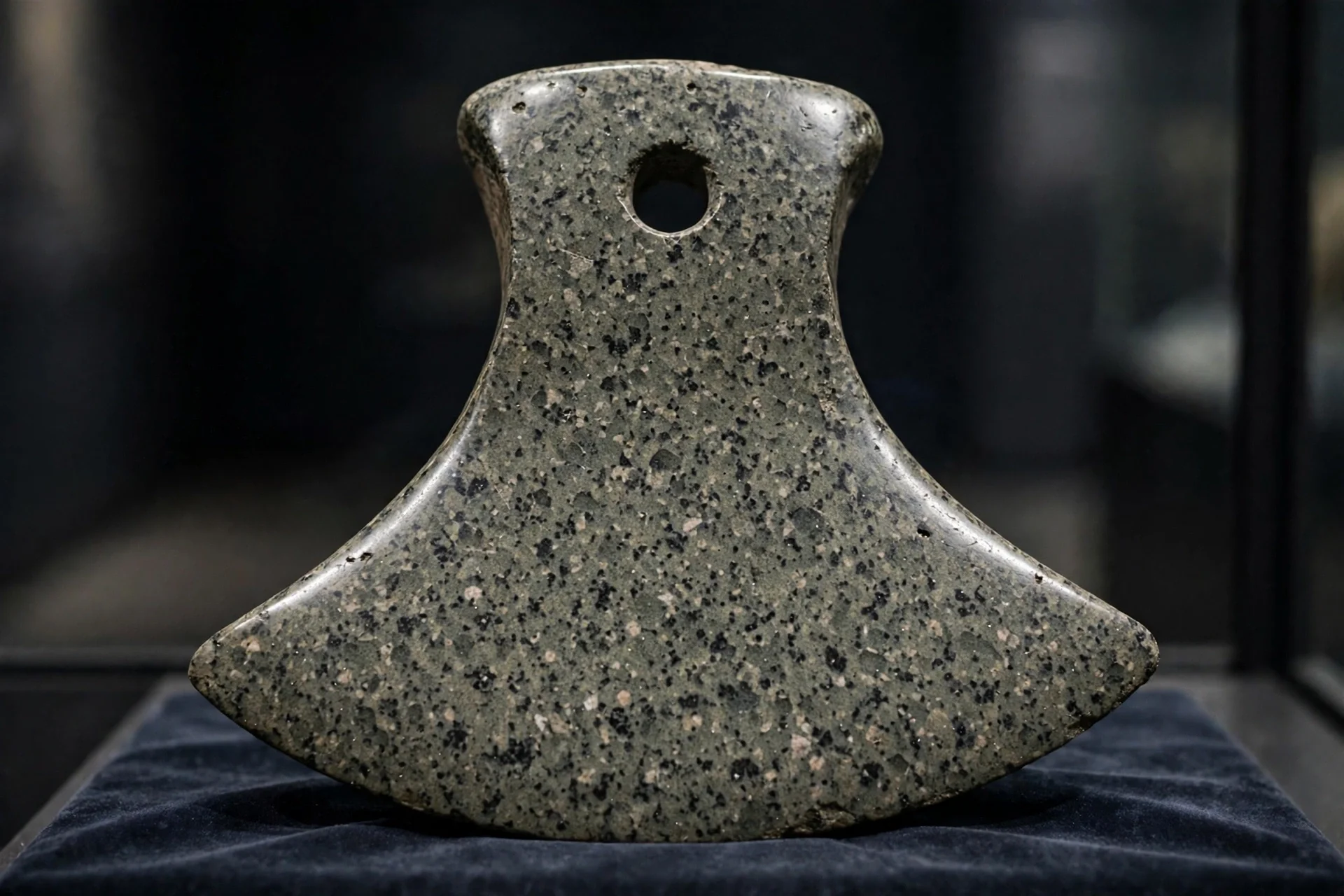
UK halts export of prehistoric Scarthingwell battle-axe head
The UK Government has placed a temporary export bar on the Bronze Age Scarthingwell battle-axe head so that museums and institutions can acquire it for £15,000…
Temporary export bar seeks to keep a Bronze Age treasure in Britain
A temporary export bar gives British museums until 22 December 2026 to acquire the Scarthingwell battle-axe head for £15,000, an object found in 1974 and…
The UK Government has placed a temporary export bar on the Scarthingwell battle-axe head, a rare survivor from prehistoric Britain, in the hope that a UK museum, gallery or institution can acquire it and secure it for public display.
--- The context ---
Dating to the Bronze Age, the piece represents more than 6,000 years of polished stone working in Britain, beginning with the first axes of early farming communities. It offers insight into how such objects expressed status, identity and changing ways of life in Neolithic and Bronze Age Britain, and carries significant research potential.
--- The facts ---
The ban gives museums and galleries time to raise funds and keep the object in the UK on public display. The decision on the export licence will be deferred until 22 December 2026 inclusive. Afterwards, the owners will have 15 business days to consider offers at the recommended price of £15,000, and a second deferral period of three months will follow the signing of an option agreement.
The axe is a ground, perforated and polished stone battle-axe of weather-altered diorite, with a waisted profile and tear-drop plan, in Needham's Class 2, dated to around 2050-1850 BC. It measures 120mm and weighs 360g. It was found in the winter of 1974 at Scarthingwell, near Tadcaster in North Yorkshire, during agricultural work, and reported in 2012. Its condition is exceptionally good.
--- The positions ---
Heritage Minister Baroness Twycross said in reported remarks that the piece is an important part of the country's ancient story, with outstanding craftsmanship and exceptional condition, and that securing it would ensure it can be protected, studied and shared. Tim Pestell, of the reviewing committee, noted in reported remarks that Early Bronze Age stone battle axes were powerful symbolic objects conveying social, sacred and political messages. The committee recommended the bar because it met all three Waverley criteria.
--- What remains unknown ---
It is not yet known which institution will come forward, or whether the funds will be raised within the deadline. No display location has been announced if the axe stays in the UK, and no first research programme has been set out.
--- Unanswered questions ---
Which British institution will step forward to acquire the Scarthingwell battle-axe head? Will the recommended price of £15,000 be met before 22 December 2026? Where will the public see it if it remains in the country? What research will its polished surface make possible?
--- EPM analysis ---
The case joins heritage, public access and research: the question is not only where an ancient object ends up, but who will study and share it. The speckled diorite, the polished surface and the hundreds of hours its making would have required explain why the committee judged it outstanding for its historical connection, aesthetic importance and significance for study.
📌 EPM Take: In EPM's view, keeping this battle-axe head in the UK is a commitment to public access and shared knowledge, because an object that embodies more than 6,000 years of polished stone working teaches most when it can be protected, studied and displayed for future generations. The December deadline creates a real opportunity and a practical test at the same time: without an institution ready to raise £15,000 and take custody, temporary protection will not turn into lasting conservation or effective public benefit for anyone.
A temporary export bar seeks to stop the Scarthingwell battle-axe head, a rare treasure from prehistoric Britain, from leaving the UK before a national institution can acquire it and put it on public display.
--- The context ---
The piece dates to the Bronze Age and represents more than 6,000 years of polished stone working in Britain, beginning with the first axes of early farming communities. Such objects expressed status and identity and reflected changing ways of life between the Neolithic and the Bronze Age. It is material testimony to history and national life, with outstanding research potential.
--- The facts ---
Museums and galleries have until 22 December 2026 inclusive to save the piece, while the decision on the export licence is deferred to that date. Afterwards, the owners will have 15 business days to consider offers at the recommended price of £15,000. If an option agreement is signed, a second deferral period of three months will follow. The procedure is orderly and time-bound.
The axe is made of polished, perforated stone in weather-altered speckled diorite, with a waisted profile and tear-drop plan. It belongs to Needham's Class 2, from around 2050-1850 BC, measures 120mm and weighs 360g. It appeared in the winter of 1974 during agricultural work at Scarthingwell, near Tadcaster in North Yorkshire, and was reported in 2012. It survives in exceptional condition, with little plough scarring.
--- The positions ---
Heritage Minister Baroness Twycross said in reported remarks that the piece is an important part of the country's ancient story, that its craftsmanship is outstanding and its condition exceptional, and that securing it would allow it to be protected, studied and shared. Tim Pestell, of the reviewing committee, argued in reported remarks that these stone axes conveyed social, sacred and political messages, and that this example would have taken hundreds of hours to make. The committee based its recommendation on the three Waverley criteria.
--- What remains unknown ---
It remains to be seen whether an institutional buyer willing to pay the recommended price will emerge within the deadline, and what will happen to the licence if no viable offer appears. It is also unknown which institution would take custody, or where the piece would be displayed.
--- Unanswered questions ---
Will a British museum be able to raise £15,000 before 22 December 2026? What will happen to the export application if no appropriate purchaser comes forward? Who will take custody of an object of this rarity? Will public display be guaranteed if it stays in the UK?
--- EPM analysis ---
The measure applies a simple principle of national stewardship: before an irreplaceable object leaves, the country gives itself a reasonable window to retain it through purchase. The recommended price is modest against the historical value described, and the mechanism follows a procedure with deferral periods and consideration of offers.
📌 EPM Take: In EPM's view, the temporary bar is a prudent act of national heritage stewardship, because it provides time and a clear procedure for a British institution to acquire an irreplaceable piece at a defined price before it leaves the country. Keeping at home an object found in 1974, of exceptional craftsmanship and deep historical roots, protects the continuity of the national story. The responsibility now lies with museums: to respond within the deadline and then guarantee serious conservation and public display worthy of the treasure.
Reino Unido frena la salida de un hacha prehistórica de Scarthingwell
El Gobierno británico impuso una prohibición temporal de exportación a la cabeza de hacha de Scarthingwell, de la Edad del Bronce, para que museos e…
Una prohibición temporal busca retener un tesoro de la Edad del Bronce
Una prohibición temporal de exportación da a los museos británicos hasta el 22 de diciembre de 2026 para adquirir por £15,000 la cabeza de hacha de…
El Gobierno británico impuso una prohibición temporal de exportación a la cabeza de hacha de batalla de Scarthingwell, un superviviente raro de la Gran Bretaña prehistórica, para que un museo, una galería o una institución del Reino Unido la adquiera y la asegure para su exhibición pública.
--- El contexto ---
La pieza data de la Edad del Bronce y representa más de 6,000 años de trabajo de piedra pulida en Gran Bretaña, desde las primeras hachas de las comunidades agrícolas tempranas. Estos objetos ayudaban a expresar estatus, identidad y cambios en las formas de vida entre el Neolítico y la Edad del Bronce, y conservan un potencial de investigación significativo.
--- Los hechos ---
La prohibición da a museos y galerías tiempo para reunir fondos y mantener el objeto en el Reino Unido y en exhibición pública. La decisión sobre la licencia se difiere hasta el 22 de diciembre de 2026 inclusive. Después, los propietarios tendrán 15 días laborables para considerar ofertas al precio recomendado de £15,000, y un segundo periodo de tres meses seguirá a la firma de un acuerdo de opción.
Es un hacha de piedra pulida y perforada, de diorita alterada, con perfil de cintura estrecha y forma de lágrima, de la clase 2 de Needham, fechada hacia 2050-1850 a. C. Mide 120mm y pesa 360g. Fue hallada en el invierno de 1974 en Scarthingwell, cerca de Tadcaster, en North Yorkshire, durante trabajos agrícolas, y reportada en 2012. Su estado es excepcionalmente bueno.
--- Las posiciones ---
La ministra de Patrimonio, baronesa Twycross, señaló en indirecto que la pieza es parte importante de la historia antigua del país, de artesanía sobresaliente y condición excepcional, y que asegurarla permitiría protegerla, estudiarla y compartirla. Tim Pestell, del comité revisor, indicó en indirecto que las hachas de piedra de la Edad del Bronce temprana fueron objetos simbólicos poderosos que transmitían mensajes sociales, sagrados y políticos. El comité recomendó la medida porque cumple los tres criterios Waverley.
--- Lo que falta saber ---
No se conoce qué institución presentará una oferta ni si se reunirán los fondos dentro del plazo. Tampoco se ha anunciado dónde se exhibiría la pieza si permanece en el Reino Unido, ni qué estudio se aplicaría primero.
--- Preguntas sin respuesta ---
¿Qué institución británica dará el paso para adquirir la cabeza de hacha de Scarthingwell? ¿Se alcanzará el precio recomendado de £15,000 antes del 22 de diciembre de 2026? ¿Dónde podrá verla el público si se queda en el país? ¿Qué investigaciones permitirá su superficie pulida?
--- Análisis EPM ---
El caso combina patrimonio, acceso público e investigación: no se trata solo de dónde queda un objeto antiguo, sino de quién podrá estudiarlo y compartirlo. La diorita moteada, la superficie pulida y las cientos de horas que habría requerido su fabricación explican por qué el comité la considera excepcional por su conexión histórica, su importancia estética y su valor para el estudio.
📌 Conclusion EPM: A juicio de EPM, retener esta cabeza de hacha en el Reino Unido es una apuesta por el acceso público y por el conocimiento compartido, porque un objeto que resume más de 6,000 años de trabajo de piedra pulida enseña más cuando puede protegerse, estudiarse y mostrarse a las generaciones futuras. El plazo hasta diciembre abre una oportunidad real, pero también una prueba práctica: sin una institución dispuesta a reunir £15,000 y a asumir su custodia, la protección temporal no se convertirá en conservación duradera ni en beneficio público efectivo.
Una prohibición temporal de exportación busca impedir que la cabeza de hacha de batalla de Scarthingwell, un tesoro raro de la Gran Bretaña prehistórica, salga del Reino Unido antes de que una institución nacional pueda adquirirla y exhibirla.
--- El contexto ---
La pieza pertenece a la Edad del Bronce y representa más de 6,000 años de trabajo de piedra pulida en Gran Bretaña, desde las primeras hachas de las comunidades agrícolas tempranas. Estos objetos expresaban estatus e identidad y reflejaban cambios entre el Neolítico y la Edad del Bronce. Es testimonio material de la historia y la vida nacional, con un potencial de investigación sobresaliente.
--- Los hechos ---
Los museos y galerías tienen hasta el 22 de diciembre de 2026 inclusive para salvar la pieza, mientras la decisión sobre la licencia queda diferida hasta esa fecha. Después, los propietarios dispondrán de 15 días laborables para considerar ofertas al precio recomendado de £15,000. Si se firma un acuerdo de opción, seguirá un segundo periodo de tres meses. El procedimiento es ordenado y con plazos claros.
El hacha es de piedra pulida y perforada, de diorita alterada moteada, con cintura estrecha y forma de lágrima. Pertenece a la clase 2 de Needham, de hacia 2050-1850 a. C., mide 120mm y pesa 360g. Apareció en el invierno de 1974 durante trabajos agrícolas en Scarthingwell, cerca de Tadcaster, en North Yorkshire, y fue reportada en 2012. Se conserva en estado excepcional, con escasas marcas de arado.
--- Las posiciones ---
La ministra de Patrimonio, baronesa Twycross, afirmó en indirecto que la pieza forma parte importante de la historia antigua del país, que su artesanía es sobresaliente y su condición excepcional, y que asegurarla permitiría protegerla, estudiarla y compartirla. Tim Pestell, del comité revisor, sostuvo en indirecto que estas hachas transmitían mensajes sociales, sagrados y políticos, y que este ejemplar habría requerido cientos de horas. El comité fundó su recomendación en los tres criterios Waverley.
--- Lo que falta saber ---
Falta saber si aparecerá un comprador institucional dispuesto a pagar el precio recomendado dentro del plazo y qué ocurrirá con la licencia si nadie presenta una oferta viable. Tampoco consta qué institución asumiría la custodia ni dónde quedaría expuesta.
--- Preguntas sin respuesta ---
¿Habrá un museo británico capaz de reunir £15,000 antes del 22 de diciembre de 2026? ¿Qué pasará con la solicitud de exportación si no surge un comprador adecuado? ¿Quién asumirá la custodia de una pieza de esta rareza? ¿Se garantizará su exhibición pública si permanece en el Reino Unido?
--- Análisis EPM ---
La medida aplica un principio sencillo de custodia nacional: antes de que un objeto irrepetible salga, el país se da un plazo razonable para retenerlo mediante la compra. El precio recomendado es modesto frente al valor histórico descrito, y el mecanismo respeta un procedimiento con diferimientos y consideración de ofertas.
📌 Conclusion EPM: A juicio de EPM, la prohibición temporal es una decisión prudente de custodia del patrimonio nacional, porque da tiempo y un procedimiento claro para que una institución británica adquiera a un precio definido una pieza irrepetible antes de que salga del país. Conservar en casa un objeto hallado en 1974, de artesanía excepcional y profundo arraigo histórico, protege la continuidad de la historia nacional. La responsabilidad ahora es de los museos: responder dentro del plazo y garantizar después conservación seria y exhibición pública a la altura del tesoro.