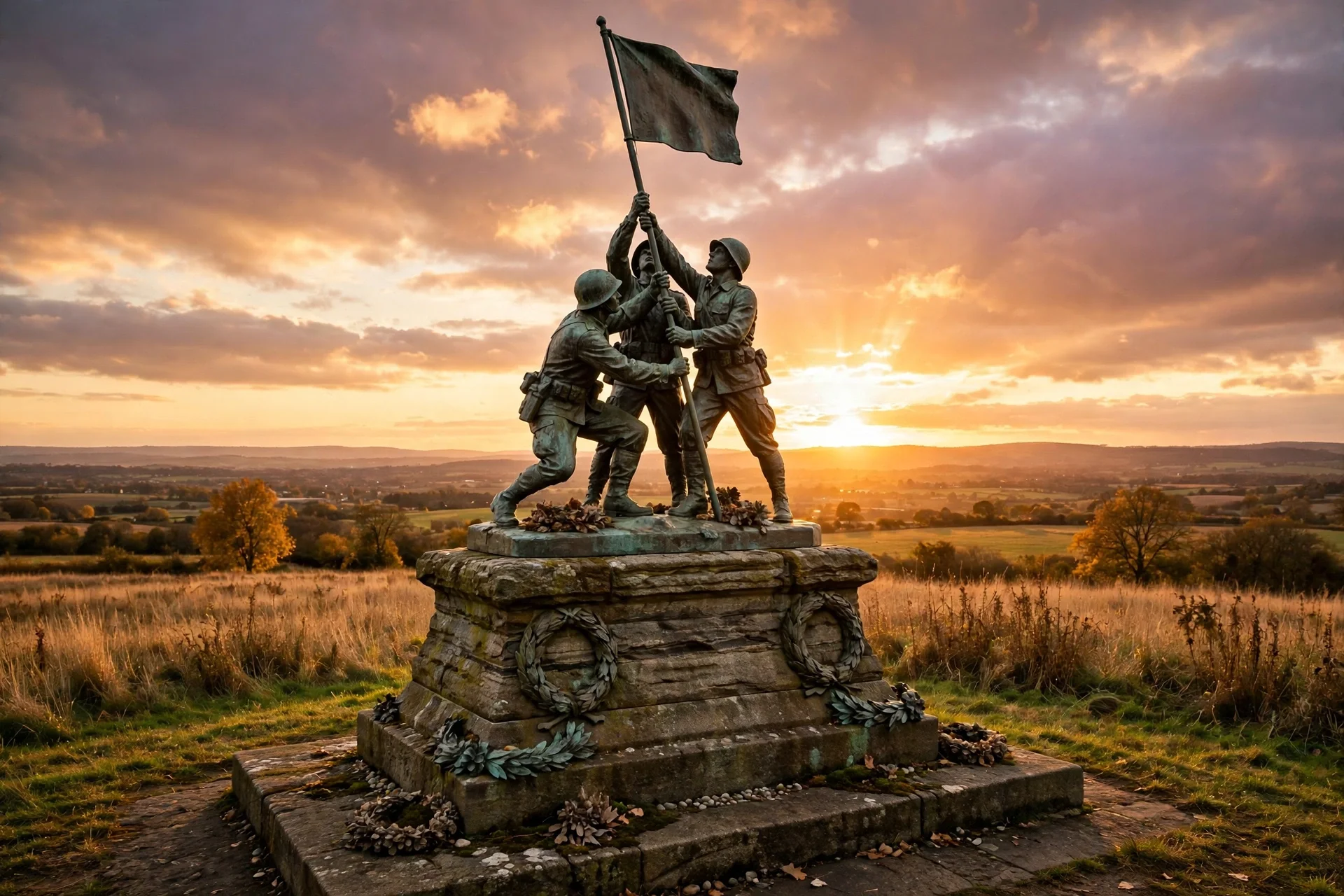
Iwo Jima Memorial Attack in Quantico Leads to One Arrest
A man was arrested on the evening of October 21 after attacking the Iwo Jima Memorial in Quantico, Virginia, with a sledgehammer and decapitating a statue.
Man Charged After Iwo Jima Memorial Statue Beheaded in Quantico
Miguel Alonso Maldonado Soriano was arrested on the evening of October 21 after decapitating a statue of the Iwo Jima Memorial in Quantico, Virginia, with a…
--- The context ---
The Iwo Jima Memorial, standing outside Marine Corps Base Quantico in Virginia, is a place of remembrance dedicated to the Marines. Damaging one of its statues harms public heritage and the shared respect surrounding that memory.
The statement from the Department of Homeland Security was issued in Washington on October twenty-third, two days after the attack, and framed the episode around military remembrance and the protection of a shared public heritage site.
--- The facts ---
On the evening of October 21, a man attacked the memorial with a sledgehammer and decapitated one of the statues. Prince William County police arrested him while he was still actively damaging the figure. The suspect is Miguel Alonso Maldonado Soriano, from Mexico, charged with felony destruction of property and trespassing with intent to damage property.
The administrative record of the suspect adds context to the file: he was granted DACA in October 2014, that protection was later renewed, and it has since expired, according to the official information released after his arrest.
--- The positions ---
The Department of Homeland Security reported the arrest, and Secretary Markwayne Mullin condemned the attack, attributed hostility toward the country to the suspect and said he would soon face justice. Mullin also noted that the suspect had been granted DACA.
--- What remains unknown ---
The full extent of the damage and the cost of any restoration are not specified. Nor is it detailed what penalty the accused could face or what protective measures will be adopted at the memorial.
--- Unanswered questions ---
What is the full extent of the damage suffered by the memorial? What penalty could the accused face if convicted? Will security at the memorial be strengthened after what happened?
--- EPM analysis ---
The case joins a property crime with an already active immigration debate. Keeping those planes separate allows a precise judgment: the damage has an identified suspect and concrete charges, and the broader discussion should rest on verified data.
📌 EPM Take: In EPM's view, the attack deserves a firm and proportionate judicial response, because damaging a memorial insults the memory of those who served and erodes a shared space of respect. That firmness gains legitimacy when it stays focused on proven facts, on the charges of felony destruction of property and trespassing with intent to damage property, and on repairing the harm caused on October 21, without turning one individual case into a general judgment on entire communities uninvolved in what happened.
--- The context ---
The Iwo Jima Memorial, outside Marine Corps Base Quantico in Virginia, honors the sacrifice of the Marines. It is not just any statue: attacking it with a sledgehammer is a direct assault on national memory.
The official statement became public in Washington on October twenty-third and emphasized the memorial location, directly outside Marine Corps Base Quantico in Virginia, a setting closely tied to the history and identity of the Marine Corps.
--- The facts ---
On the evening of October 21, Miguel Alonso Maldonado Soriano attacked the memorial with a sledgehammer and decapitated one of the statues. Prince William County police arrested him while he was still damaging the figure. He faces charges of felony destruction of property and trespassing with intent to damage property, and he had a prior arrest for trespassing in Stafford County in 2022.
The charges filed define the legal scope of the episode: felony destruction of property and trespassing with intent to damage property, two counts directly linked to the use of a sledgehammer against the statue that evening.
--- The positions ---
The Department of Homeland Security reported the arrest, and Secretary Markwayne Mullin condemned the attack, attributed hatred of the country to the suspect and said he would soon face justice. Mullin also stressed that the accused had benefited from DACA.
--- What remains unknown ---
The full extent of the damage is not yet known, nor when the decapitated statue can be restored. The possible penalty for the charges filed and the measures to protect the memorial have not been detailed.
--- Unanswered questions ---
How much will it cost to repair the decapitated statue and how long will restoration take? Will the accused receive the maximum penalty for felony destruction of property? Why was a person with a prior arrest in 2022 still able to carry out this attack?
--- EPM analysis ---
The immigration facts of the accused are part of this case. He entered in 1999 at an unknown date and location, received DACA in October 2014 under the Obama Administration, had it renewed under the Biden Administration, and that benefit has since expired. The demand for order and consequences is not mere rhetoric.
📌 EPM Take: In EPM's view, this case demands complete justice with no sentimental discounts: repair the memorial, prosecute the accused on every charge and review how a person who entered without authorization in 1999, with an arrest in 2022, could attack a national symbol outside the Quantico base unimpeded. Protecting the memory of the Marines and enforcing the law are elementary duties of any state that respects itself and that cannot be evaded once the damage has been done in full view.
Ataque al monumento de Iwo Jima en Quantico deja un detenido
Un hombre fue detenido la noche del 21 de octubre tras atacar con un mazo el monumento de Iwo Jima en Quantico, Virginia, y decapitar una estatua.
Detenido por decapitar una estatua del monumento de Iwo Jima
Miguel Alonso Maldonado Soriano fue detenido la noche del 21 de octubre tras decapitar con un mazo una estatua del monumento de Iwo Jima en Quantico, Virginia.
--- El contexto ---
El monumento de Iwo Jima, frente a la base del Cuerpo de Marines en Quantico, Virginia, es un espacio de memoria dedicado a los Marines. Dañar una de sus estatuas afecta al patrimonio y al respeto compartido en torno a ese recuerdo.
El comunicado del Departamento de Seguridad Nacional se emitió en Washington el veintitrés de octubre, dos días después del ataque, y presentó el caso como un asunto de memoria militar y de respeto al patrimonio público compartido.
--- Los hechos ---
La noche del 21 de octubre, un hombre atacó el monumento con un mazo y decapitó una de las estatuas. La policía del condado de Prince William lo detuvo cuando todavía seguía dañando la figura. El detenido es Miguel Alonso Maldonado Soriano, procedente de México, acusado de destrucción grave de propiedad y de allanamiento con intención de dañar la propiedad.
La trayectoria administrativa del detenido ayuda a entender el expediente: recibió DACA en octubre de 2014, ese beneficio fue renovado posteriormente y en la actualidad se encuentra vencido, según consta en la información oficial difundida tras la detención.
--- Las posiciones ---
El Departamento de Seguridad Nacional informó de la detención y el secretario Markwayne Mullin condenó el ataque, atribuyó al detenido rechazo hacia el país y sostuvo que deberá responder pronto ante la justicia. Mullin recordó además que el detenido había recibido DACA.
--- Lo que falta saber ---
No se precisa el alcance total de los daños ni el coste de una eventual restauración. Tampoco se detalla qué pena podría enfrentar el acusado ni qué medidas de protección se adoptarán en el monumento.
--- Preguntas sin respuesta ---
¿Cuál es el alcance completo de los daños sufridos por el monumento? ¿Qué pena podría enfrentar el acusado si es declarado culpable? ¿Se reforzará la vigilancia del memorial tras lo ocurrido?
--- Análisis EPM ---
El caso combina un delito contra el patrimonio con un debate migratorio ya existente. Separar ambos planos ayuda a juzgar con precisión: el daño tiene un responsable identificado y cargos concretos, y la discusión de fondo debería apoyarse en datos verificados.
📌 Conclusion EPM: A juicio de EPM, el ataque merece una respuesta judicial firme y proporcional, porque dañar un memorial insulta la memoria de quienes sirvieron y erosiona un espacio común de respeto. Esa firmeza gana legitimidad cuando se concentra en los hechos probados, en los cargos de destrucción grave de propiedad y allanamiento con intención de dañar, y en la reparación del daño causado el 21 de octubre, sin convertir un caso individual en un juicio general sobre comunidades enteras ajenas a lo ocurrido.
--- El contexto ---
El monumento de Iwo Jima, frente a la base del Cuerpo de Marines en Quantico, Virginia, honra el sacrificio de los Marines. No es una estatua cualquiera: atacarla con un mazo es una agresión directa contra la memoria nacional.
El pronunciamiento oficial se conoció en Washington el veintitrés de octubre y subrayó la ubicación del memorial, justo frente a la base del Cuerpo de Marines en Quantico, un emplazamiento cargado de significado para la institución militar estadounidense.
--- Los hechos ---
La noche del 21 de octubre, Miguel Alonso Maldonado Soriano atacó el monumento con un mazo y decapitó una de las estatuas. La policía del condado de Prince William lo arrestó cuando todavía seguía dañando la figura. Enfrenta cargos de destrucción grave de propiedad y allanamiento con intención de dañar, y registra una detención previa por allanamiento en el condado de Stafford en 2022.
Los cargos presentados precisan el alcance penal del episodio: destrucción grave de propiedad y allanamiento con intención de dañar la propiedad, dos imputaciones vinculadas directamente al uso del mazo contra la estatua durante la noche del ataque.
--- Las posiciones ---
El Departamento de Seguridad Nacional informó de la detención y el secretario Markwayne Mullin condenó el ataque, atribuyó al detenido odio hacia el país y sostuvo que pronto enfrentará la justicia. Mullin subrayó que el acusado había sido beneficiado con DACA.
--- Lo que falta saber ---
Aún no se conoce el alcance total de los daños ni cuándo podrá restaurarse la estatua decapitada. Tampoco se ha detallado la pena posible por los cargos presentados ni las medidas para proteger el monumento.
--- Preguntas sin respuesta ---
¿Cuánto costará reparar la estatua decapitada y cuánto tardará su restauración? ¿Recibirá el acusado la pena máxima por destrucción grave de propiedad? ¿Por qué seguía en el país una persona con una detención previa en 2022?
--- Análisis EPM ---
Los datos migratorios del acusado forman parte del caso. Entró en 1999 en fecha y lugar desconocidos, recibió DACA en octubre de 2014 bajo la Administración Obama, lo renovó bajo la Administración Biden y ese beneficio ya venció. La exigencia de orden y consecuencias no es retórica.
📌 Conclusion EPM: A juicio de EPM, este caso exige justicia completa y sin atenuantes sentimentales: reparar el memorial, procesar al acusado por cada cargo y revisar cómo una persona que entró sin autorización en 1999, con una detención en 2022, pudo atacar un símbolo nacional frente a la base de Quantico. Proteger la memoria de los Marines y hacer cumplir la ley son deberes elementales de cualquier Estado que se respete y que no puede eludir cuando el daño ya está consumado ante todos.