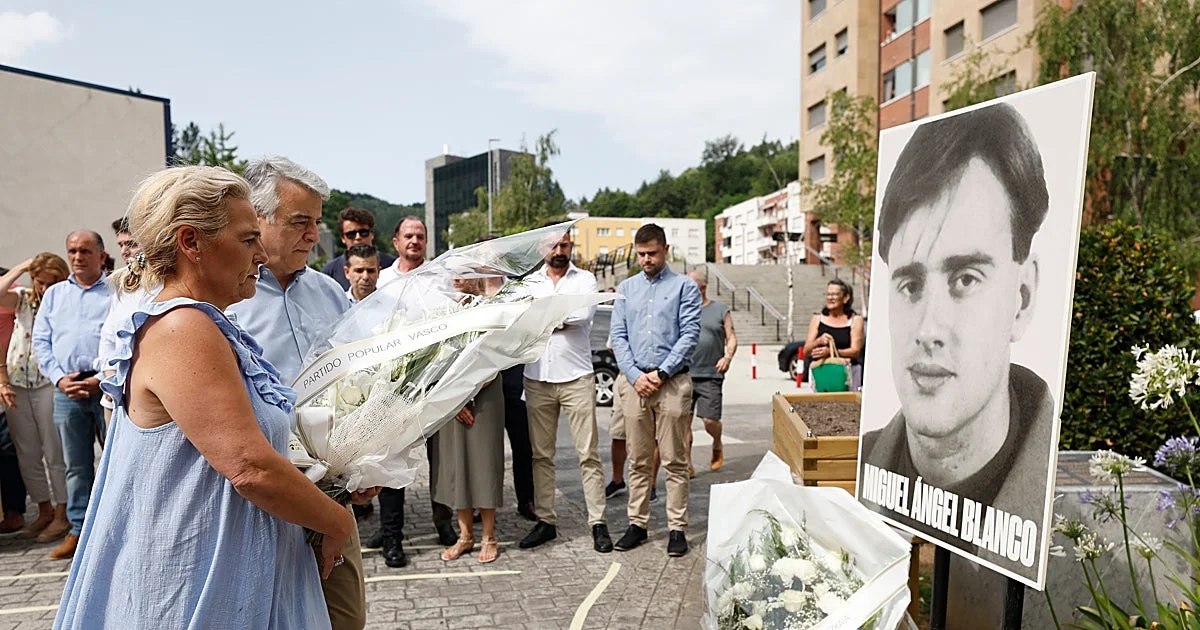
Victims Demand a Final Trial Over the 376 Unsolved Murders
The Observatory of Victims of Terrorism asks parties for a large judicial process inspired by Nuremberg to judge all those responsible and clarify the 376 ETA…
Victims Group Demands an End to Impunity and Tougher Prison Rules
The Observatory of Victims of Terrorism calls for amending article 90 of the Penal Code and article 72.6 of the penitentiary law to condition third degree and…
--- The context ---
The Observatory of Victims of Terrorism (OVT) has launched a set of demands ahead of the general elections on November 29 to reverse the impunity of the ETA network. It asks parties to promote a large judicial process, inspired by the Nuremberg trials, that judges all those responsible for the 376 murders still unsolved in Spain.
--- The facts ---
The OVT asks to investigate the 376 murders that carry no criminal reproach, close to 40% of all ETA crimes. It urges the Attorney General's Office and the Ministry of the Interior not to hide behind prescription, because victims have the right to know the truth.
It proposes creating a catalogue of cases and appointing a specialised Chamber Prosecutor for Human Rights and Victims of Terrorism to coordinate the search for those responsible. It argues that the rule of law must hold a final-point trial that ends the legacy of violence forever.
It denounces a comparative grievance in the Democratic Memory Law, which allows acts of Francoism to be investigated as crimes against humanity, imprescriptible and not amnestiable, but not ETA crimes. It calls for amending Law 29/2011 to catalogue the group's attacks as crimes against humanity.
It demands tracing the assets of those convicted to cover the compensation for their attacks. It denounces that the lack of asset investigation has allowed continued fraud that forced the General State Administration to pay more than 886 million euros in civil liability.
--- The positions ---
The OVT recalls that the horror of the German Nazi period ended with the Nuremberg trial, where all the wrongdoers were judged. Those tribunals prosecuted 24 of the main Nazi leaders and established that due obedience did not exempt anyone from criminal responsibility.
It denounces the constant humiliation of victims through tributes to terrorists and proposes fines of between 10,001 and 150,000 euros for welcome acts for prisoners, with temporary closure of the establishments that host them and loss of public subsidies for up to ten years.
--- What remains unknown ---
The available information does not detail which parties will take up these demands or how a judicial process of this scale would work in practice. Nor does it state what response the Attorney General's Office and the Ministry of the Interior will give to the request.
--- Unanswered questions ---
Will the parties commit to promoting a judicial process inspired by Nuremberg? Will the catalogue of cases be created and the specialised Chamber Prosecutor requested by the OVT be appointed? Will ETA attacks be catalogued as crimes against humanity?
--- EPM analysis ---
The proposal combines truth, justice and reparation: investigating what remains unclear, cataloguing the crimes as crimes against humanity and tracing the assets of those convicted. Its strength lies in placing victims at the centre of the debate.
📌 EPM Take: In EPM's view, the central claim is the right of victims to know the truth about the 376 murders without criminal reproach, and that right should not depend on prescription. A rigorous catalogue, a specialised prosecutor and investigation of the assets of those convicted are concrete and verifiable steps. The reference to Nuremberg expresses a demand for complete judicial closure, whose viability parties and institutions will have to define within the guarantees of the rule of law.
--- The context ---
The Observatory of Victims of Terrorism (OVT) has launched a set of demands ahead of the general elections on November 29 to reverse the impunity of the ETA network. It asks parties to promote a large judicial process, inspired by the Nuremberg trials, that judges all those responsible for the 376 murders still unsolved in Spain.
--- The facts ---
It proposes amending article 90 of the Penal Code and article 72.6 of the General Penitentiary Organic Law. It denounces that third degree and conditional release for ETA prisoners are based on fraud, because filling in a simple standard repentance form is enough.
It demands that any prison benefit require real collaboration with the authorities to clarify the unpunished crimes. It asks to control the benefits granted by the Basque Government after it assumed prison powers in 2021, when today only 29 ETA members have not set foot on the street.
It asks to investigate the 376 murders without criminal reproach, close to 40% of all ETA crimes, and that the Attorney General's Office and the Ministry of the Interior not hide behind prescription. It proposes a catalogue of cases and a specialised Chamber Prosecutor for Human Rights and Victims of Terrorism.
It demands a review of the activity of EH Bildu to establish whether it violates the Political Parties Law and the legalisation conditions handed down in 2011 by the Constitutional Court. If evidence is insufficient, it calls for institutional isolation of the coalition led by Arnaldo Otegi.
--- The positions ---
It denounces the constant humiliation of victims through tributes to terrorists and proposes fines of between 10,001 and 150,000 euros for welcome acts for prisoners, with temporary closure of the establishments that host them and loss of public subsidies for up to ten years.
It holds that the rule of law must hold a final-point trial that ends the legacy of violence, and recalls that at Nuremberg all the wrongdoers were judged. Those proceedings, between November 20, 1945 and October 1, 1946, prosecuted 24 Nazi leaders.
--- What remains unknown ---
The available information does not detail which parties will take up the review of prison benefits or the control over those granted by the Basque Government since 2021. Nor does it state whether any formation will review EH Bildu or apply the institutional isolation demanded.
--- Unanswered questions ---
Will the parties toughen article 90 of the Penal Code and article 72.6 of the General Penitentiary Organic Law? Will they require real collaboration as a condition of any benefit for ETA prisoners? Will the activity of EH Bildu be reviewed and its institutional isolation applied?
--- EPM analysis ---
The approach emphasises the legal order: benefits conditioned on collaborating, effective control of concessions and sanctions against tributes. Its core is that reintegration without clarifying the unpunished crimes perpetuates impunity.
📌 EPM Take: In EPM's view, conditioning third degree and conditional release on real collaboration to clarify the unpunished crimes corrects the fraud of the standard repentance form denounced by the OVT. Without that link, benefits reward the silence of those who can help solve the 376 murders without criminal reproach. Control over Basque Government concessions and sanctions on tributes complete a demand for firmness that parties will have to answer before the elections.
Víctimas piden un juicio final por los 376 asesinatos sin resolver
El Observatorio de Víctimas del Terrorismo exige a los partidos un macroproceso inspirado en Núremberg para juzgar a todos los responsables y esclarecer los…
El OVT exige frenar la impunidad y endurecer los beneficios a etarras
El Observatorio de Víctimas del Terrorismo reclama reformar el artículo 90 del Código Penal y el artículo 72.6 penitenciario para condicionar el tercer grado y…
--- El contexto ---
El Observatorio de Víctimas del Terrorismo (OVT) ha presentado exigencias ante las elecciones generales del próximo 29 de noviembre para revertir la impunidad del entramado de ETA. Exige a los partidos impulsar un macroproceso judicial, inspirado en los juicios de Núremberg, que juzgue a todos los responsables de los 376 asesinatos sin resolverse en España.
--- Los hechos ---
El OVT pide investigar los 376 asesinatos que carecen de reproche penal, cerca del 40% del total de crímenes de ETA. Insta a la Fiscalía General del Estado y al Ministerio del Interior a no escudarse en la prescripción, porque las víctimas tienen derecho a conocer la verdad.
Plantea crear un catálogo de casos y designar un Fiscal de Sala especializado en Derechos Humanos y Víctimas del Terrorismo que coordine la búsqueda de los responsables. Defiende que el Estado de derecho debe celebrar un juicio de punto final que acabe para siempre con el legado de violencia.
Denuncia un agravio comparativo de la Ley de Memoria Democrática, que permite investigar actos del franquismo como delitos de lesa humanidad, imprescriptibles y no amnistiables, pero no los crímenes de ETA. Reclama modificar la Ley 29/2011 para catalogar los atentados de la banda como delitos de lesa humanidad.
Exige rastrear el patrimonio de los condenados para hacer frente a las indemnizaciones de sus atentados. Denuncia que la falta de investigación patrimonial ha permitido un fraude continuado que obligó a la Administración General del Estado a abonar más de 886 millones de euros en responsabilidad civil.
--- Las posiciones ---
El OVT recuerda que el horror del periodo nazi alemán concluyó con el juicio de Núremberg, donde se juzgó a todos los malhechores. Aquellos tribunales procesaron a 24 dirigentes nazis y establecieron que la obediencia debida no eximía a nadie de responsabilidad penal.
Denuncia la humillación de las víctimas con los homenajes a terroristas y propone multas de entre 10.001 y 150.000 euros por los actos de bienvenida a presos, con cierre temporal de los establecimientos que los acojan y pérdida de subvenciones por hasta diez años.
--- Lo que falta saber ---
La información disponible no detalla qué partidos asumirán estas exigencias ni cómo se articularía un macroproceso así. Tampoco precisa qué respuesta darán la Fiscalía General del Estado y el Ministerio del Interior a esa petición.
--- Preguntas sin respuesta ---
¿Aceptarán los partidos impulsar un macroproceso judicial inspirado en Núremberg? ¿Se creará el catálogo de casos y se designará al Fiscal de Sala especializado que pide el OVT? ¿Se catalogarán los atentados de ETA como delitos de lesa humanidad?
--- Análisis EPM ---
La propuesta combina verdad, justicia y reparación: investigar lo no esclarecido, catalogar los crímenes como delitos de lesa humanidad y rastrear el patrimonio de los condenados.
📌 Conclusion EPM: A juicio de EPM, el reclamo central es el derecho de las víctimas a conocer la verdad sobre los 376 asesinatos sin reproche penal, y ese derecho no debería depender de la prescripción. Un catálogo riguroso, un fiscal especializado y la investigación del patrimonio de los condenados son pasos concretos y verificables. La referencia a Núremberg expresa una exigencia de cierre judicial completo, cuya viabilidad deberán definir los partidos y las instituciones dentro de las garantías del Estado de derecho.
--- El contexto ---
El Observatorio de Víctimas del Terrorismo (OVT) ha lanzado una batería de exigencias ante las elecciones generales del próximo 29 de noviembre para revertir la impunidad de ETA. Pide a los partidos impulsar un macroproceso judicial, inspirado en los juicios de Núremberg, que juzgue a todos los responsables de los 376 asesinatos sin resolverse en España.
--- Los hechos ---
Plantea reformar el artículo 90 del Código Penal y el artículo 72.6 de la Ley Orgánica General Penitenciaria. Denuncia que el tercer grado y las libertades condicionales a presos etarras se basan en un fraude, porque basta rellenar un formulario tipo de arrepentimiento.
Exige que cualquier beneficio penitenciario exija una colaboración real con las autoridades para esclarecer los crímenes impunes. Pide controlar los beneficios otorgados por el Gobierno vasco tras asumir la competencia de prisiones en 2021, cuando hoy solo quedan 29 etarras sin pisar la calle.
Pide investigar los 376 asesinatos sin reproche penal, cerca del 40% del total de crímenes de ETA, y que la Fiscalía y el Ministerio del Interior no se escuden en la prescripción. Plantea un catálogo de casos y un Fiscal de Sala especializado en Derechos Humanos y Víctimas del Terrorismo.
Exige revisar a EH Bildu para constatar si vulnera la Ley de Partidos Políticos y las condiciones de su legalización dictadas en 2011 por el Tribunal Constitucional. Si no hay indicios suficientes, reclama aplicar un aislamiento institucional a la coalición liderada por Arnaldo Otegi.
--- Las posiciones ---
Denuncia la humillación constante de las víctimas con los homenajes a terroristas y propone multas de entre 10.001 y 150.000 euros por los actos de bienvenida a presos, con cierre temporal de los establecimientos que los acojan y pérdida de subvenciones públicas por hasta diez años.
Sostiene que el Estado de derecho debe celebrar un juicio de punto final que acabe con el legado de violencia, y recuerda que en Núremberg se juzgó a todos los malhechores. Aquellos procesos, entre el 20 de noviembre de 1945 y el 1 de octubre de 1946, procesaron a 24 dirigentes nazis.
--- Lo que falta saber ---
La información disponible no detalla qué partidos asumirán la revisión de los beneficios penitenciarios ni el control de los otorgados por el Gobierno vasco desde 2021. Tampoco precisa si alguna formación revisará la actividad de EH Bildu o aplicará el aislamiento institucional que reclama el OVT.
--- Preguntas sin respuesta ---
¿Endurecerán los partidos el artículo 90 del Código Penal y el artículo 72.6 de la Ley Orgánica General Penitenciaria? ¿Exigirán colaboración real como condición de cualquier beneficio para presos etarras? ¿Se revisará a EH Bildu y se aplicará su aislamiento institucional?
--- Análisis EPM ---
El planteamiento acentúa el orden jurídico: beneficios condicionados a colaborar, control de las concesiones y sanciones frente a los homenajes. La reinserción sin esclarecer los crímenes impunes perpetúa la impunidad.
📌 Conclusion EPM: A juicio de EPM, condicionar el tercer grado y la libertad condicional a una colaboración real para esclarecer los crímenes impunes corrige el fraude del formulario tipo que denuncia el OVT. Sin ese vínculo, los beneficios premian el silencio de quienes pueden ayudar a resolver los 376 asesinatos sin reproche penal. El control de esas concesiones y las sanciones a los homenajes completan la exigencia de firmeza institucional que reclama el documento.