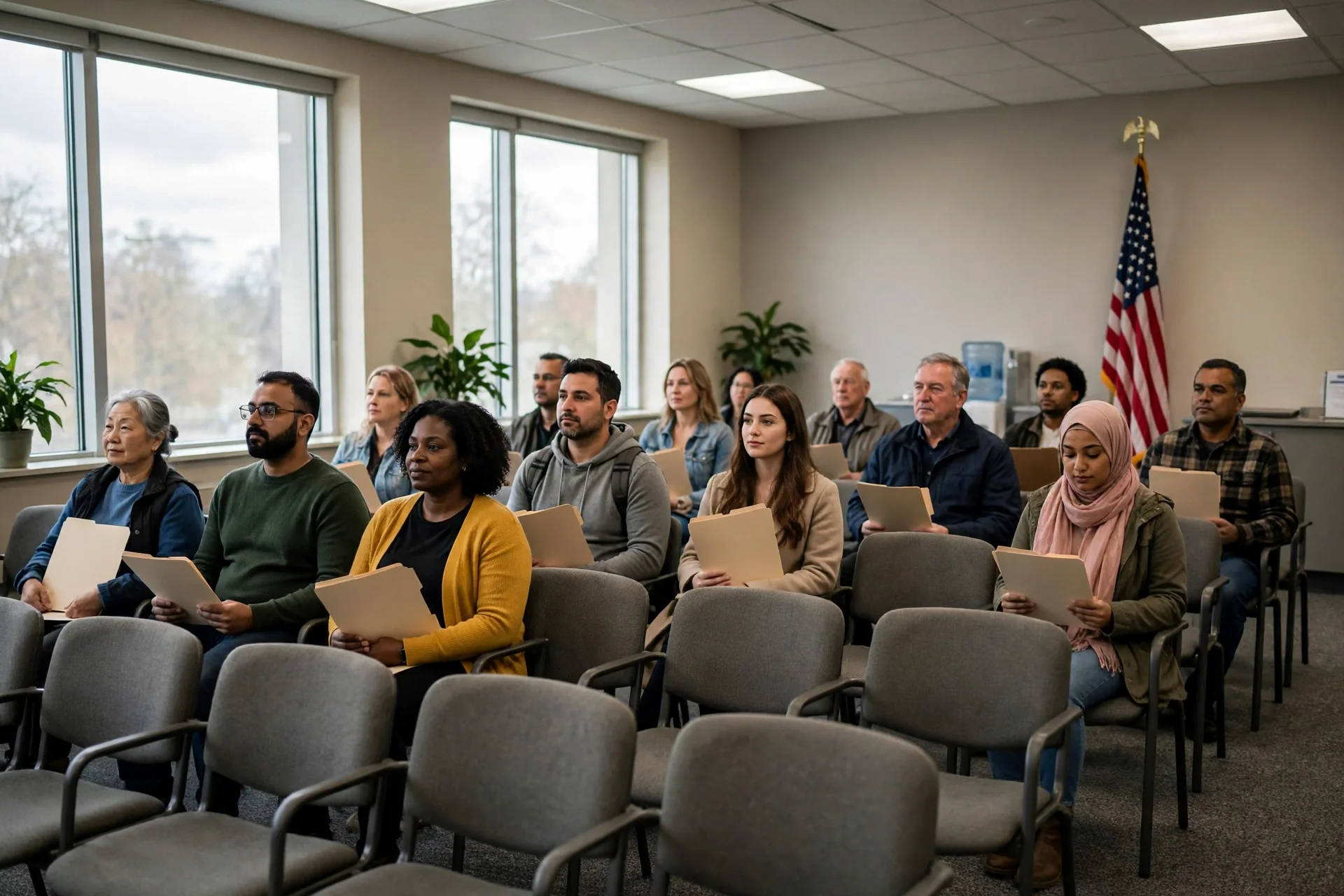
Citizenship approvals fall 72% as the backlog tops 800,000
United States citizenship approvals fell 72% in the first eight months of 2026, with more than 800,000 cases pending and an average wait of nearly 13 months…
Stricter vetting slows citizenship approvals to a crawl
Amid stricter USCIS vetting, citizenship approvals dropped 72% in eight months of 2026 and the backlog passed 800,000 cases, while denials also fell and the…
--- The context ---
Becoming a citizen is the final step of a legal journey that, for many residents, takes years. That step includes the oath of allegiance, and only after taking it can a person vote in the country's federal elections.
In 2026 that final stretch has become much slower for long-term legal residents.
--- The facts ---
The number of people granted citizenship fell by 72% during the first eight months of 2026 compared with the same period last year. At the same time, the backlog of pending naturalization cases surpassed 800,000.
The average wait for applicants reached nearly 13 months. And the slowdown is not explained by a rise in rejections: denials also decreased, which points to a broader reduction in the total number of cases the agency is adjudicating.
--- The positions ---
The slowdown coincides with more rigorous vetting procedures introduced by the Trump administration. USCIS expanded background checks, with more intensive reviews of an applicant's character and social media activity, and applied more demanding requirements on English proficiency and civics knowledge.
Officials defended the adjustments as essential measures to enhance security and to ensure that citizenship is granted exclusively to eligible candidates. The agency has also reportedly prioritized reviewing cases that were approved during former President Joe Biden's tenure.
--- What remains unknown ---
A recent legal analysis corroborated the year-on-year decrease in naturalization decisions issued by USCIS, but it is still unknown when the accumulated backlog might shrink or whether the pace of decisions will recover before the election cycle.
--- Unanswered questions ---
How many of the more than 800,000 applicants in line will manage to take the oath before the November 2026 midterm elections? Will the average wait of nearly 13 months come down, or will the backlog keep growing? What effect will the federal lawsuits filed by applicants seeking to compel authorities to act have on their pending cases?
--- EPM analysis ---
The backlog carries consequences beyond voting: citizenship provides increased legal protections against deportation and simplifies sponsoring family members for immigration benefits. Every month of delay prolongs the administrative uncertainty of entire families who followed the legal path.
📌 EPM Take: In EPM's view, rigorous vetting is a legitimate function of the state, but a system that resolves fewer and fewer cases, whether by approving or denying them, stops administering a right and starts administering a wait with no horizon. More than 800,000 people who already live and work legally in the country deserve decisions, not just delays: security is strengthened by files that are reviewed and closed, not by files that pile up. When the average wait approaches 13 months, slowness becomes, in practice, a parallel immigration policy that nobody voted for.
--- The context ---
Naturalization is the final stage of the legal immigration process: those who complete it take the oath of allegiance and gain, among other rights, the right to vote in federal elections, something closed to lawful permanent residents.
That final stage has narrowed in 2026, not because of a wave of denials, but because of a general drop in the number of cases the system manages to resolve.
--- The facts ---
Citizenship grants fell by 72% in the first eight months of 2026 compared with the same period of the previous year. The pending naturalization backlog surpassed 800,000 cases, and the average wait reached nearly 13 months.
The data point to a contraction in the total volume of decisions: denied applications also decreased. A recent legal analysis corroborated that year-on-year drop in the decisions issued by USCIS.
--- The positions ---
The slowdown coincides with more rigorous vetting procedures implemented by the Trump administration. USCIS expanded the scope of background checks, including more intensive reviews of an applicant's character and social media activity, along with more demanding requirements regarding English proficiency and civics knowledge.
Officials defended the policy adjustments as essential to enhance security and to ensure citizenship is granted exclusively to eligible candidates. The agency has also reportedly prioritized the review of cases approved under former President Joe Biden.
--- What remains unknown ---
No timeline has been announced for absorbing the backlog, nor any public target of monthly decisions that would show whether the wait of nearly 13 months will fall. It is also unknown how many waiting applicants will complete the process before November 2026.
--- Unanswered questions ---
Can USCIS raise its pace of decisions without lowering the checks it considers essential? How many applicants will miss the November 2026 midterm elections because they could not take the oath in time? Will the federal lawsuits brought by applicants seeking a court order on their files succeed?
--- EPM analysis ---
Some applicants have already turned to federal courts in an attempt to compel immigration authorities to expedite their cases. Behind each file there are also concrete family effects: citizenship offers stronger protection against deportation and makes it easier to sponsor relatives, benefits that remain suspended while a case goes unresolved.
📌 EPM Take: In EPM's view, requiring character, English and civics knowledge from those who seek citizenship is no excess: it is the very substance of naturalization. But rigor loses legitimacy when the apparatus does not decide: with approvals and denials falling at the same time, the problem is no longer the bar, but the capacity to judge each case in a reasonable time. A serious country can be demanding and punctual at once; accumulating more than 800,000 unresolved files is not firmness, it is administrative paralysis.
La ciudadanía se frena: aprobaciones caen 72 % en ocho meses
Las aprobaciones de ciudadanía en Estados Unidos cayeron un 72 % en los primeros ocho meses de 2026, con más de 800.000 casos pendientes y una espera media de…
Menos aprobaciones y más controles en la ruta a la ciudadanía
Con controles más estrictos de USCIS, las aprobaciones de ciudadanía cayeron un 72 % en ocho meses de 2026 y el atraso superó los 800.000 casos, mientras…
--- El contexto ---
Convertirse en ciudadano es el último paso de un camino legal que para muchos residentes dura años. Ese paso incluye el juramento de lealtad, y solo después de darlo una persona puede votar en las elecciones federales del país.
En 2026 ese último tramo se ha vuelto mucho más lento para los residentes legales de larga data.
--- Los hechos ---
Las concesiones de ciudadanía cayeron un 72 % durante los primeros ocho meses de 2026 frente al mismo periodo del año anterior. Al mismo tiempo, el atraso de casos de naturalización pendientes superó los 800.000.
La espera media llegó a casi 13 meses. Y el freno no se explica por más rechazos: las denegaciones también bajaron, señal de una reducción general de los casos que la agencia resuelve.
--- Las posiciones ---
La desaceleración coincide con procedimientos de verificación más rigurosos introducidos por la administración Trump. USCIS amplió las comprobaciones de antecedentes, con revisiones más intensivas del carácter del solicitante y de su actividad en redes sociales, y aplicó exigencias más duras de inglés y de conocimientos cívicos.
Los funcionarios defendieron que esos ajustes son medidas esenciales para reforzar la seguridad y garantizar que la ciudadanía se conceda solo a candidatos elegibles. La agencia también habría dado prioridad a revisar casos aprobados durante el mandato del expresidente Joe Biden.
--- Lo que falta saber ---
Un análisis legal reciente corroboró la caída interanual de las decisiones de naturalización de USCIS, pero no se conoce cuándo podría reducirse el atraso ni si el ritmo se recuperará antes del ciclo electoral.
--- Preguntas sin respuesta ---
¿Cuántos de los más de 800.000 solicitantes en espera alcanzarán a jurar antes de las elecciones de medio término de noviembre de 2026? ¿Se reducirá la espera media de casi 13 meses o seguirá creciendo el atraso? ¿Qué efecto tendrán las demandas federales presentadas por solicitantes que buscan obligar a las autoridades a resolver sus casos?
--- Análisis EPM ---
El atraso va más allá del voto: la ciudadanía da mayores protecciones frente a la deportación y simplifica patrocinar a familiares. Cada mes de demora prolonga la incertidumbre de familias enteras que siguieron la vía legal.
📌 Conclusion EPM: A juicio de EPM, verificar con rigor es una función legítima del Estado, pero un sistema que resuelve cada vez menos casos, apruebe o deniegue, deja de administrar un derecho y pasa a administrar una espera sin horizonte. Más de 800.000 personas que ya viven y trabajan legalmente en el país merecen decisiones, no solo demoras: la seguridad se fortalece con expedientes revisados y cerrados, no con expedientes acumulados. Cuando la espera media roza los 13 meses, la lentitud se convierte, en la práctica, en una política migratoria paralela que nadie votó.
--- El contexto ---
La naturalización es la etapa final del proceso legal de inmigración: quien la completa presta el juramento de lealtad y adquiere, entre otros derechos, el de votar en elecciones federales, algo vedado a los residentes permanentes.
Ese tramo final se ha estrechado en 2026, no por una oleada de denegaciones, sino por una caída general de los casos que el sistema resuelve.
--- Los hechos ---
Las concesiones de ciudadanía bajaron un 72 % en los primeros ocho meses de 2026 en comparación con el mismo periodo del año anterior. El atraso de naturalizaciones pendientes superó los 800.000 casos y la espera media se acercó a casi 13 meses.
Los datos apuntan a una contracción del volumen total: también disminuyeron las denegaciones. Un análisis legal reciente corroboró esa caída interanual en las decisiones emitidas por USCIS.
--- Las posiciones ---
El freno coincide con procedimientos de verificación más rigurosos de la administración Trump. USCIS expandió las comprobaciones de antecedentes, con revisiones más intensivas del carácter y de la actividad en redes sociales de cada solicitante, además de requisitos más exigentes de inglés y conocimientos cívicos.
Los funcionarios defendieron que los ajustes son esenciales para la seguridad y para que la ciudadanía llegue exclusivamente a quienes son elegibles. La agencia también habría priorizado revisar casos aprobados durante el gobierno del expresidente Joe Biden.
--- Lo que falta saber ---
No se ha informado un plazo para absorber el atraso ni una meta pública de decisiones que permita saber si la espera de casi 13 meses bajará, ni cuántos solicitantes completarán el proceso antes de noviembre de 2026.
--- Preguntas sin respuesta ---
¿Podrá USCIS elevar su ritmo de decisiones sin rebajar los controles que considera esenciales? ¿Cuántos solicitantes quedarán fuera de las elecciones de medio término de noviembre de 2026 por no haber jurado a tiempo? ¿Prosperarán las demandas federales de quienes buscan que un juez ordene resolver sus expedientes?
--- Análisis EPM ---
Algunos solicitantes ya acudieron a los tribunales federales para que las autoridades agilicen sus casos. Detrás de cada expediente hay efectos familiares concretos: la ciudadanía protege mejor frente a la deportación y facilita patrocinar a parientes, beneficios en suspenso mientras el caso no se resuelve.
📌 Conclusion EPM: A juicio de EPM, exigir carácter, inglés y conocimientos cívicos a quien pide la ciudadanía no es un exceso: es la sustancia misma de la naturalización. Pero el rigor pierde legitimidad cuando el aparato no decide: con aprobaciones y denegaciones cayendo a la vez, el problema ya no es el listón, sino la capacidad de juzgar cada caso en un tiempo razonable. Un país serio puede ser exigente y puntual al mismo tiempo; acumular más de 800.000 expedientes sin resolver no es firmeza, es parálisis administrativa.