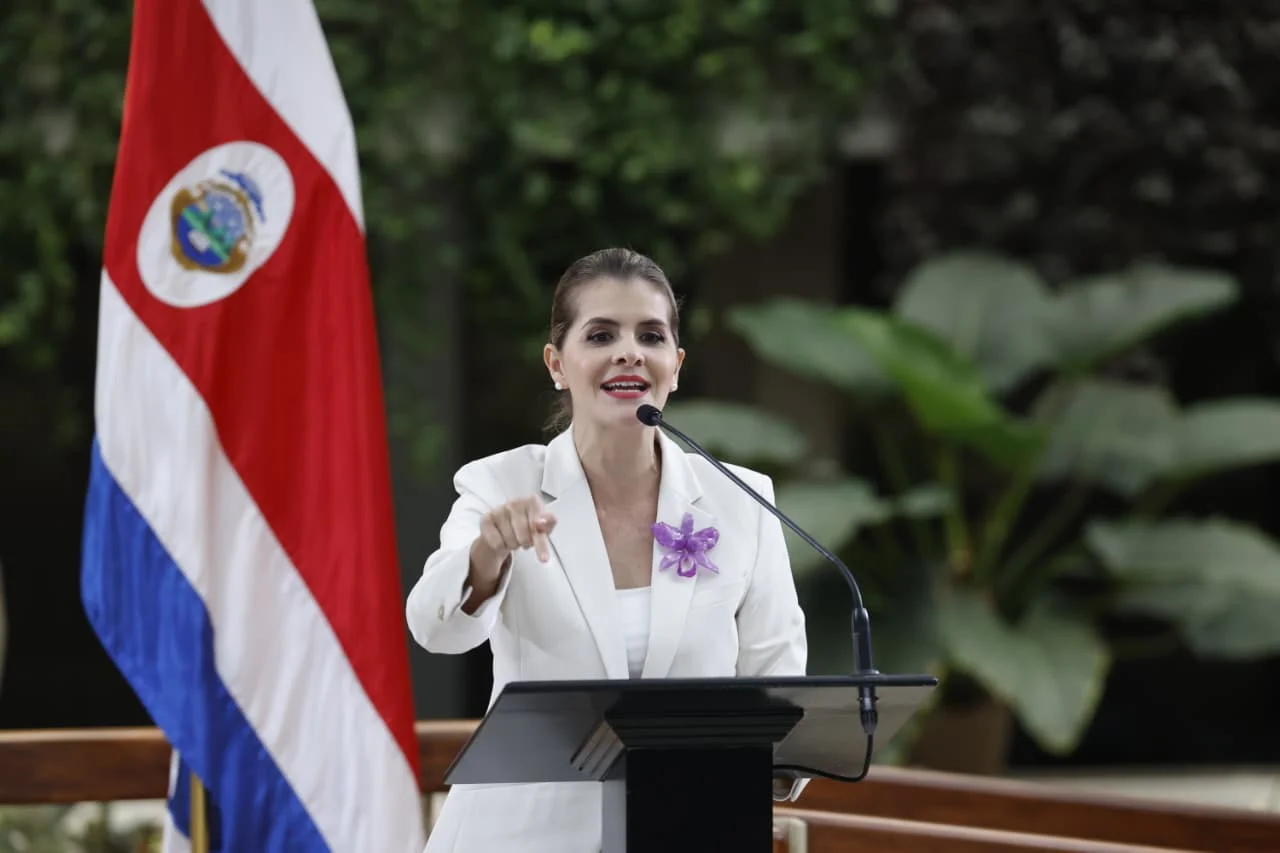
Costa Rica weighs tougher penalties for carrying weapons of war
Costa Rica's president, Laura Fernández Delgado, is studying a reform to impose more severe prison penalties on those who illegally carry weapons of war…
Fernández wants preventive detention for weapons of war
Laura Fernández is studying replicating in Costa Rica El Salvador's hardening of penalties for carrying weapons of war, with preventive detention for…
--- The context ---
Costa Rica's president, Laura Fernández Delgado, is studying a reform of firearms legislation to establish more severe prison penalties against those who illegally carry weapons of war, a proposal inspired by measures implemented in El Salvador during the administration of Nayib Bukele.
--- The facts ---
Fernández explained that one of the main problems identified by Costa Rican authorities is that people detained with illegal weaponry regain their freedom because of the penalties currently set out in the legislation. She said that police officers detain these people with long guns, pistols and rifles of every type and danger level, and they walk free.
The president revealed that she held a conversation with her Salvadoran counterpart about the difficulties of keeping detained people caught with rifles, long guns and high-caliber ammunition, and she recounted that Bukele explained to her how his country modified the sanctions for carrying weapons of war.
--- The positions ---
Fernández said that the Fuerza Élite team is already analyzing the possibility of promoting a similar reform in Costa Rica, although she clarified that any modification must be adapted to the national legal reality. She held that whoever carries heavy-caliber weapons of war must go into preventive detention and face a firm hand in sentencing, and she also drew a distinction between those who legally own a weapon with an expired permit and those who transport war rifles destined for criminal activities.
--- What remains unknown ---
The announced proposal is in a study phase, so there is still no definitive legislative text nor have the new penalties that the Executive Branch would seek to incorporate into national legislation been established. According to the version set out by the president, El Salvador hardened convictions to penalties equivalent to half of those for a simple homicide, according to the dangerousness of the weaponry.
--- Unanswered questions ---
What concrete penalties will the Executive Branch propose once a legislative text exists? How will the Salvadoran model be adapted to Costa Rica's legal reality? Will preventive detention apply to those who carry heavy-caliber weapons of war?
--- EPM analysis ---
The announcement came after Public Security Minister Gerald Campos set out an operation against drug trafficking in Osa, Puntarenas, where more than 500 kilograms of drugs were seized, two Costa Ricans were detained and weaponry manufactured with 3D printing was found. Since May 8, 2026, authorities have withdrawn more than 870 firearms from circulation.
📌 EPM Take: In EPM's view, the proposal recognizes a problem that the president herself describes bluntly: people detained with rifles and high-caliber ammunition regain their freedom under current penalties, while 75% of homicides are related to confrontations between criminal organizations that use illegal weapons. Hardening penalties can be a tool to prevent violent crime, but its value will depend on the definitive text, on distinguishing levels of dangerousness and on arriving with the speed that the president herself demands.
--- The context ---
Costa Rica is studying following El Salvador's steps on weapons of war. President Laura Fernández Delgado revealed that she spoke with Nayib Bukele about the difficulties of keeping detained people caught with rifles, long guns and high-caliber ammunition.
--- The facts ---
According to Fernández, the Salvadoran leader explained to her how his country modified the sanctions for carrying weapons of war, with the aim of punishing more severely those who represent a threat to public security. El Salvador hardened convictions to penalties equivalent to half of those for a simple homicide, taking into consideration the dangerousness of the weaponry.
Fernández, reproducing one of the arguments she said Bukele shared with her, expressed that a person who carries AK-47 weapons, a group of pistols and ammunition is willing to use them.
--- The positions ---
The president said that the Fuerza Élite team is already studying whether the country can follow the steps El Salvador followed, adapted to the national legal reality. Fernández insisted that sanctions must bear a relation to the risk represented by the circulation of high-caliber weapons among criminal organizations, and she maintained that whoever carries heavy-caliber weapons of war must go into preventive detention and face a firm hand in sentencing.
--- What remains unknown ---
The proposal is in a study phase: there is still no definitive legislative text nor have the new penalties been established. The president also distinguished between people who legally own a weapon but keep an expired permit and those who transport war rifles or other weaponry destined for criminal activities, because both situations require different legal treatment.
--- Unanswered questions ---
When will the Executive Branch present the text of the reform? What penalties will it set for carrying heavy-caliber weapons of war? How will the judicial system respond to the preventive detention the president proposes?
--- EPM analysis ---
The context of the announcement is an operation against drug trafficking in Osa, Puntarenas, with more than 500 kilograms of drugs seized, two detainees and weapons manufactured with 3D printing that, according to Minister Gerald Campos, leave no trace and no fingerprint. The president also stated that 75% of the country's homicides are related to confrontations between organized crime groups that use illegal weapons.
📌 EPM Take: In EPM's view, Fernández's line is the right one: whoever carries heavy-caliber weapons of war must go into preventive detention and face a firm hand in sentencing, because that weaponry circulates among criminal organizations and fuels homicidal violence. Costa Rica still has an opportunity to avoid a deterioration of security like the one experienced by El Salvador, in its president's words, but that opportunity demands acting quickly and turning the study into a concrete reform.
Costa Rica estudia penas más duras por portar armas de guerra
La presidenta de Costa Rica, Laura Fernández Delgado, estudia una reforma para imponer penas de prisión más severas a quienes porten ilegalmente armamento de…
Fernández quiere prisión preventiva para quien porte armas de guerra
Laura Fernández estudia replicar en Costa Rica el endurecimiento salvadoreño de las penas por portar armas de guerra, con prisión preventiva para el armamento…
--- El contexto ---
La presidenta de Costa Rica, Laura Fernández Delgado, estudia una reforma a la legislación sobre armas de fuego para establecer penas de prisión más severas contra quienes porten ilegalmente armamento de guerra, una propuesta inspirada en medidas aplicadas en El Salvador durante la administración de Nayib Bukele.
--- Los hechos ---
Fernández explicó que uno de los principales problemas identificados por las autoridades costarricenses es que las personas detenidas con armamento ilegal recuperan su libertad debido a las penas contempladas actualmente en la legislación. «Los policías detienen a esta gente con armas largas, pistolas, fusiles de todo tipo y de toda peligrosidad, y salen en libertad», manifestó la mandataria.
La presidenta reveló que sostuvo una conversación con su homólogo salvadoreño sobre las dificultades para mantener detenidas a personas sorprendidas con fusiles, armas largas y municiones de alto calibre, y relató que Bukele le explicó cómo su país modificó las sanciones por la portación de armas de guerra.
--- Las posiciones ---
Fernández aseguró que el equipo de Fuerza Élite ya analiza la posibilidad de impulsar una reforma semejante en Costa Rica, aunque aclaró que cualquier modificación deberá adaptarse a la realidad jurídica nacional. «Quien porte armas de guerra de grueso calibre tiene que ir a prisión preventiva y tiene que tener mano dura en la condena», sostuvo la presidenta, que también estableció una diferencia entre quienes poseen un arma legalmente con el permiso vencido y quienes transportan fusiles de guerra destinados a actividades criminales.
--- Lo que falta saber ---
La propuesta anunciada se encuentra en fase de estudio, por lo que todavía no existe un texto legislativo definitivo ni se han establecido las nuevas penas que el Poder Ejecutivo buscaría incorporar a la legislación nacional. Según la versión expuesta por la presidenta, El Salvador endureció las condenas hasta establecer penas equivalentes a la mitad de las correspondientes a un homicidio simple, según la peligrosidad del armamento.
--- Preguntas sin respuesta ---
¿Qué penas concretas propondrá el Poder Ejecutivo cuando exista un texto legislativo? ¿Cómo se adaptará el modelo salvadoreño a la realidad jurídica costarricense? ¿Alcanzará la prisión preventiva para quienes porten armas de guerra de grueso calibre?
--- Análisis EPM ---
El anuncio llegó después de que el ministro de Seguridad Pública, Gerald Campos, expusiera una operación contra el narcotráfico en Osa, Puntarenas, donde se decomisaron más de 500 kilogramos de droga, se detuvo a dos costarricenses y se halló armamento fabricado con impresión 3D. Desde el 8 de mayo de 2026, las autoridades han retirado de circulación más de 870 armas de fuego.
📌 Conclusion EPM: A juicio de EPM, la propuesta reconoce un problema que la propia presidenta describe con crudeza: las personas detenidas con fusiles y municiones de alto calibre recuperan la libertad por las penas actuales, mientras el 75% de los homicidios se relaciona con enfrentamientos entre organizaciones criminales que usan armas ilegales. Endurecer las penas puede ser una herramienta para prevenir delitos violentos, pero su valor dependerá del texto definitivo, de que distinga los niveles de peligrosidad y de que llegue con la rapidez que la propia mandataria reclama.
--- El contexto ---
Costa Rica estudia seguir los pasos de El Salvador en materia de armas de guerra. La presidenta Laura Fernández Delgado reveló que conversó con Nayib Bukele sobre las dificultades para mantener detenidas a personas sorprendidas con fusiles, armas largas y municiones de alto calibre.
--- Los hechos ---
Según relató Fernández, el mandatario salvadoreño le explicó cómo su país modificó las sanciones por la portación de armas de guerra, con el objetivo de castigar con mayor severidad a quienes representan una amenaza para la seguridad pública. El Salvador endureció las condenas hasta establecer penas equivalentes a la mitad de las correspondientes a un homicidio simple, tomando en consideración la peligrosidad del armamento.
«Una persona que porta armas AK-47, un grupo de pistolas, municiones, es porque está dispuesta a usarlas», expresó Fernández al reproducir uno de los argumentos que, según indicó, le compartió Bukele.
--- Las posiciones ---
La mandataria aseguró que el equipo de Fuerza Élite ya analiza la posibilidad de impulsar una reforma semejante en Costa Rica, adaptada a la realidad jurídica nacional. «Estamos ya estudiando con el equipo de Fuerza Élite para ver si nuestro país puede seguir los pasos que siguió El Salvador», afirmó. Fernández insistió en que las sanciones deben guardar relación con el riesgo que representa la circulación de armas de alto calibre entre organizaciones criminales.
--- Lo que falta saber ---
La propuesta se encuentra en fase de estudio: todavía no existe un texto legislativo definitivo ni se han establecido las nuevas penas. La presidenta también distinguió entre las personas que poseen un arma legalmente con el permiso vencido y quienes transportan fusiles de guerra u otro armamento destinado a actividades criminales, porque ambas situaciones requieren tratamientos legales distintos.
--- Preguntas sin respuesta ---
¿Cuándo presentará el Poder Ejecutivo el texto de la reforma? ¿Qué penas fijará para la portación de armas de guerra de grueso calibre? ¿Cómo responderá el sistema judicial a la prisión preventiva que plantea la presidenta?
--- Análisis EPM ---
El contexto del anuncio es una operación contra el narcotráfico en Osa, Puntarenas, con más de 500 kilogramos de droga decomisados, dos detenidos y armas fabricadas con impresión 3D que, según el ministro Gerald Campos, no dejan rastro ni huella. La presidenta afirmó además que el 75% de los homicidios del país se relaciona con enfrentamientos entre organizaciones del crimen organizado que utilizan armas ilegales.
📌 Conclusion EPM: A juicio de EPM, la línea de Fernández es la correcta: quien porta armas de guerra de grueso calibre tiene que ir a prisión preventiva y enfrentar mano dura en la condena, porque ese armamento circula entre organizaciones criminales y alimenta la violencia homicida. Costa Rica todavía tiene oportunidad de evitar un deterioro de la seguridad como el experimentado por El Salvador, en palabras de su presidenta, pero esa oportunidad exige actuar con rapidez y convertir el estudio en una reforma concreta.