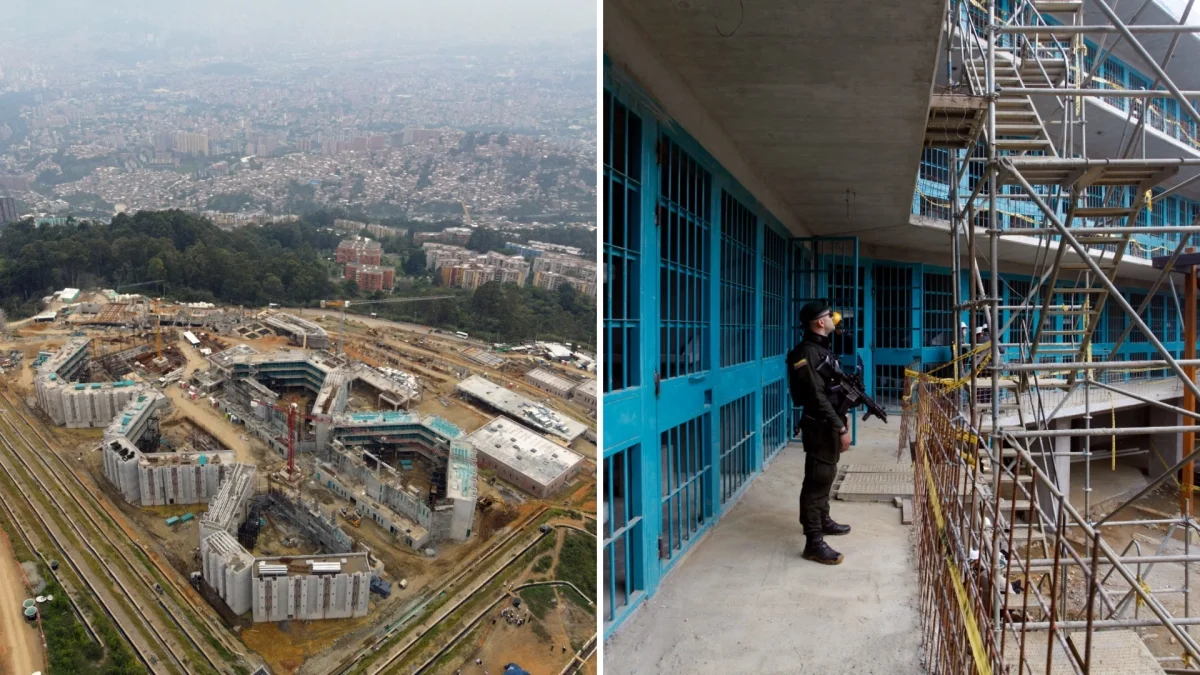
Avance de obra de la Megacárcel Metropolitana para Sindicados del Valle de Aburrá, en Medellín. · El Tiempo
Valle de Aburrá pretrial mega-prison reaches 47% completion
The Valle de Aburrá pretrial mega-prison reached 47% completion: it aims to relieve Police stations and start operating at the beginning of the second half of…
Medellín mega-prison hits 47% as city pushes its security infrastructure plan
Medellín reports 47% progress on its metropolitan mega-prison, with capacity for 1.340 inmates, reinforced control and works due to finish in May next year.
--- The context ---
The metropolitan mega-prison for pretrial detainees in the Valle de Aburrá has reached 47% construction progress, Medellín mayor Federico Gutiérrez reported this Monday, October 19, just under two months after the latest update on the project. The initiative dates back to 2016, when the district administration began the pre-feasibility and feasibility studies that gave rise to it.
--- The facts ---
On August 27, the district administration had delivered a first physical execution report showing 35% progress on a project whose investment exceeds 635.000 million pesos. The facility totals 30.000 square meters built and will hold 1.340 inmates across six cellblocks. One block will have a Special Treatment Unit and spaces adapted for people with disabilities, where 139 people can be held.
Cells in blocks 1 through 5 have already reached the fourth construction level, while roof structures, internal networks, the health, training, education and visits buildings, and the administrative and service areas move forward. Gutiérrez said the works finish in May next year and that, after a readiness period of about one month to a month and a half, by the end of July next year 1.200 people now held in Police stations would be housed there.
--- The positions ---
Viewed through the rights of detainees, the stated purpose matters most: relieving the region's Police stations, which today hold people who should be in a facility built for that purpose. The mayor said the prison will have absolute control and capacity for 1.300 people, with health space, family visits, work, training and education aimed at resocialising people who have committed some type of offence.
The project is presented as the first of its kind built through a public-private partnership, responding to rulings by the Supreme Court of Justice and the Constitutional Court requiring dignified prison infrastructure. It was awarded in concession to Carmet Medellín S.A.S. (Prodemex), with oversight by Consorcio Intercárceles, and both will control the facility for 15 years: three of construction and 12 of operation.
--- What remains unknown ---
The update does not state how many people are currently held in Police stations, nor the state of the remaining block compared with the five that reached the fourth level.
--- Unanswered questions ---
Will the works really finish in May next year? How many people are waiting today in Police stations for a place? Will the Special Treatment Unit operate with the staff and spaces announced?
--- EPM analysis ---
The jump from 35% to 47% between August and October shows the recent pace of a facility designed to move pretrial detainees out of police stations and into purpose-built infrastructure.
📌 EPM Take: In EPM's view, this project will not be judged only by square meters built, but by whether it truly relieves the situation of pretrial detainees now kept in Police stations designed for another purpose. The start of operations planned for the beginning of the second half of 2027 will test every promise: enough places, working health and training spaces, and the dignified conditions the cited rulings demand. Until then, 47% is physical progress; dignified detention remains the unfinished work.
--- The context ---
Medellín is speeding up construction of its metropolitan mega-prison for pretrial detainees in the Valle de Aburrá, which reached 47% progress on Monday, October 19, according to mayor Federico Gutiérrez. The project first took shape in 2016, with pre-feasibility and feasibility studies, and is being built as the first of its kind through a public-private partnership.
--- The facts ---
The district administration had reported 35% progress on August 27, on a project whose investment exceeds 635.000 million pesos. The complex totals 30.000 square meters built, with capacity for 1.340 inmates in six cellblocks, including one with a Special Treatment Unit and spaces adapted for people with disabilities, where 139 people can be held.
Cells in blocks 1 through 5 have already reached the fourth construction level, alongside roof structures, internal networks, and the health, training, education and visits buildings, plus administrative and service areas. The concession was awarded to Carmet Medellín S.A.S. (Prodemex), with oversight by Consorcio Intercárceles, which will control the facility for 15 years: three of construction and 12 of operation.
--- The positions ---
The mayor and Security Secretary Manuel Villa Mejía presented the progress with the emphasis on control: Gutiérrez said there will be absolute control and capacity for 1.300 people, with private, specialised surveillance and maximum-security handling. In his framing, those held there will truly be serving time in a facility with all the conditions, not in Police stations.
The mayor added that the prison will have health space, family visits, work, training and education for resocialisation, and presented it as a model not only for Medellín, but for Colombia. The administration also stresses that the public-private partnership answers the Supreme Court of Justice and Constitutional Court rulings requiring dignified prison infrastructure, and that Prodemex is a leading regional firm in large-scale infrastructure projects.
--- What remains unknown ---
No detail has been given yet on the first tests with the first detainees or on a phased transfer plan, beyond the target of 1.200 people housed by the end of July next year.
--- Unanswered questions ---
Will the pace hold to deliver the works in May next year? What private, specialised surveillance scheme will operate the facility? Can other cities replicate this public-private partnership model?
--- EPM analysis ---
Moving from 35% to 47% in under two months shows management racing the calendar: security infrastructure is won by meeting the date without losing control of the operation.
📌 EPM Take: In EPM's view, Medellín is doing what security requires: building real prison capacity, with absolute control, specialised surveillance and a clear delivery date, instead of continuing to improvise with overwhelmed Police stations. If the works finish in May next year and operations begin at the start of the second half of 2027 with 1.200 detainees transferred, the public-private partnership will have shown that managing well is also governing. Order is built with infrastructure that works and delivers on schedule.
La megacárcel para sindicados del Valle de Aburrá alcanza un avance del 47%
La megacárcel para sindicados del Valle de Aburrá llegó al 47% de avance: busca descongestionar las estaciones de Policía y entrar en operación a inicios del…
La megacárcel de Medellín llega al 47% con capacidad para 1.340 reclusos
Medellín reporta 47% de avance en su megacárcel metropolitana, con capacidad para 1.340 reclusos, control reforzado y entrega de obra prevista en mayo del año…
--- El contexto ---
La megacárcel metropolitana para sindicados del Valle de Aburrá alcanzó un avance constructivo del 47%, según informó este lunes 19 de octubre el alcalde de Medellín, Federico Gutiérrez, poco menos de dos meses después de la última actualización. El proyecto nació en 2016, cuando la administración distrital inició los estudios de prefactibilidad y factibilidad.
--- Los hechos ---
El 27 de agosto pasado, la administración distrital había reportado un avance del 35% en un proyecto cuya inversión supera los 635.000 millones de pesos. La obra consta de 30.000 metros cuadrados y capacidad para 1.340 reclusos en seis pabellones, uno con Unidad de Tratamiento Especial y espacios adaptados para personas con discapacidad, donde podrán ser recluidas 139 personas.
Las celdas de los pabellones del 1 al 5 ya alcanzaron el cuarto nivel, mientras avanzan las estructuras de cubierta, las redes internas, los edificios de sanidad, formación, educación y visitas y las áreas administrativas y de servicios. La obra se termina en mayo del año entrante y, tras un alistamiento de entre un mes y mes y medio, terminando julio estarían recluidas allí 1.200 personas que hoy están en estaciones de Policía.
--- Las posiciones ---
Para quienes miran la obra desde los derechos de los sindicados, el dato central es su propósito declarado: descongestionar las estaciones de Policía de la región, que hoy alojan a personas que deben estar recluidas en un centro como este. Gutiérrez sostuvo que la cárcel tendrá control absoluto y capacidad para 1.300 personas, con espacio de salud, visitas familiares, trabajo, formación y educación para resocializar a las personas.
Es además la primera de su clase construida mediante una alianza público-privada, que atiende a la sentencia de la Corte Suprema de Justicia y la Corte Constitucional de garantizar infraestructura carcelaria digna. Fue adjudicada en concesión a la empresa Carmet Medellín S.A.S. (Prodemex) y la interventoría al Consorcio Intercárceles, quienes tendrán el control del recinto por 15 años, tres de construcción y 12 de operación.
--- Lo que falta saber ---
No se precisó cuántas personas permanecen hoy en las estaciones de Policía ni el estado del pabellón restante frente a los cinco que ya llegaron al cuarto nivel.
--- Preguntas sin respuesta ---
¿Se cumplirá el cierre de obra en mayo del año entrante? ¿Cuántas personas permanecen hoy en estaciones de Policía a la espera de cupo? ¿Cómo se garantizará que la Unidad de Tratamiento Especial opere con el personal y los espacios anunciados?
--- Análisis EPM ---
El salto del 35% al 47% entre agosto y octubre marca el ritmo reciente de una obra pensada para sacar a los sindicados de las estaciones y llevarlos a una infraestructura diseñada para ese fin.
📌 Conclusion EPM: A juicio de EPM, el valor de esta obra no se medirá solo en metros construidos, sino en si alivia de verdad la situación de los sindicados que hoy permanecen en estaciones de Policía, pensadas para otra función. La entrada en operación prevista a inicios del segundo semestre de 2027 pondrá a prueba cada promesa: cupos suficientes, espacios de salud y formación funcionando y condiciones dignas como ordenan las sentencias citadas. Hasta entonces, el 47% es avance físico; la dignidad carcelaria sigue siendo la obra por terminar.
--- El contexto ---
Medellín acelera la construcción de su megacárcel metropolitana para sindicados del Valle de Aburrá, que este lunes 19 de octubre alcanzó un avance constructivo del 47%, según informó el alcalde Federico Gutiérrez. La obra, cuyas primeras luces se vieron en 2016 con los estudios de prefactibilidad y factibilidad, se ejecuta como la primera de su clase a partir de una alianza público-privada.
--- Los hechos ---
La administración distrital había reportado el 27 de agosto pasado un avance del 35% en un proyecto cuya inversión supera los 635.000 millones de pesos. La obra consta de 30.000 metros cuadrados construidos y tendrá capacidad para 1.340 reclusos en seis pabellones, incluido uno con Unidad de Tratamiento Especial y espacios adaptados para personas con discapacidad, donde podrán ser recluidas 139 personas.
Las celdas de los pabellones del 1 al 5 ya alcanzaron el cuarto nivel de construcción y avanzan las estructuras de cubierta, las redes internas, los edificios de sanidad, formación, educación y visitas y las áreas administrativas y de servicios. El proyecto fue adjudicado en concesión a la empresa Carmet Medellín S.A.S. (Prodemex) y la interventoría al Consorcio Intercárceles, con control del recinto por 15 años: tres de construcción y 12 de operación.
--- Las posiciones ---
El alcalde y el secretario de Seguridad, Manuel Villa Mejía, presentaron el avance poniendo el acento en el control: Gutiérrez afirmó que habrá control absoluto y capacidad para 1.300 personas, con vigilancia privada y especializada y manejo de temas de máxima seguridad. En su lectura, quienes estén allí estarán realmente pagando cárcel en un centro con todas las condiciones, no en estaciones de Policía.
El mandatario añadió que el penal tendrá espacio de salud, visitas familiares, trabajo, formación y educación para resocializar, y lo planteó como un modelo no solo para Medellín, sino para Colombia. La administración subraya además que la alianza público-privada atiende a la sentencia de la Corte Suprema de Justicia y la Corte Constitucional de garantizar infraestructura carcelaria digna, y que Prodemex es una firma líder en la región en proyectos de infraestructura de gran tamaño.
--- Lo que falta saber ---
No se ha informado aún el detalle de las primeras pruebas con los primeros sindicados ni el plan de traslado por fases, más allá de la meta de 1.200 personas recluidas terminando julio del año entrante.
--- Preguntas sin respuesta ---
¿Se mantendrá el ritmo para entregar la obra en mayo del año entrante? ¿Qué esquema de vigilancia privada y especializada operará el centro? ¿Podrán otras ciudades replicar este modelo de alianza público-privada?
--- Análisis EPM ---
El avance del 35% al 47% en menos de dos meses muestra una gestión que corre contra el calendario: la infraestructura de seguridad se juega en cumplir la fecha sin perder control de la operación.
📌 Conclusion EPM: A juicio de EPM, es que Medellín está haciendo lo que la seguridad exige: construir capacidad carcelaria real, con control absoluto, vigilancia especializada y una fecha de entrega clara, en lugar de seguir improvisando con estaciones de Policía desbordadas. Si la obra se termina en mayo del año entrante y la operación arranca a inicios del segundo semestre de 2027 con 1.200 sindicados trasladados, la alianza público-privada habrá demostrado que gestionar bien también es gobernar. El orden se construye con infraestructura que funciona.