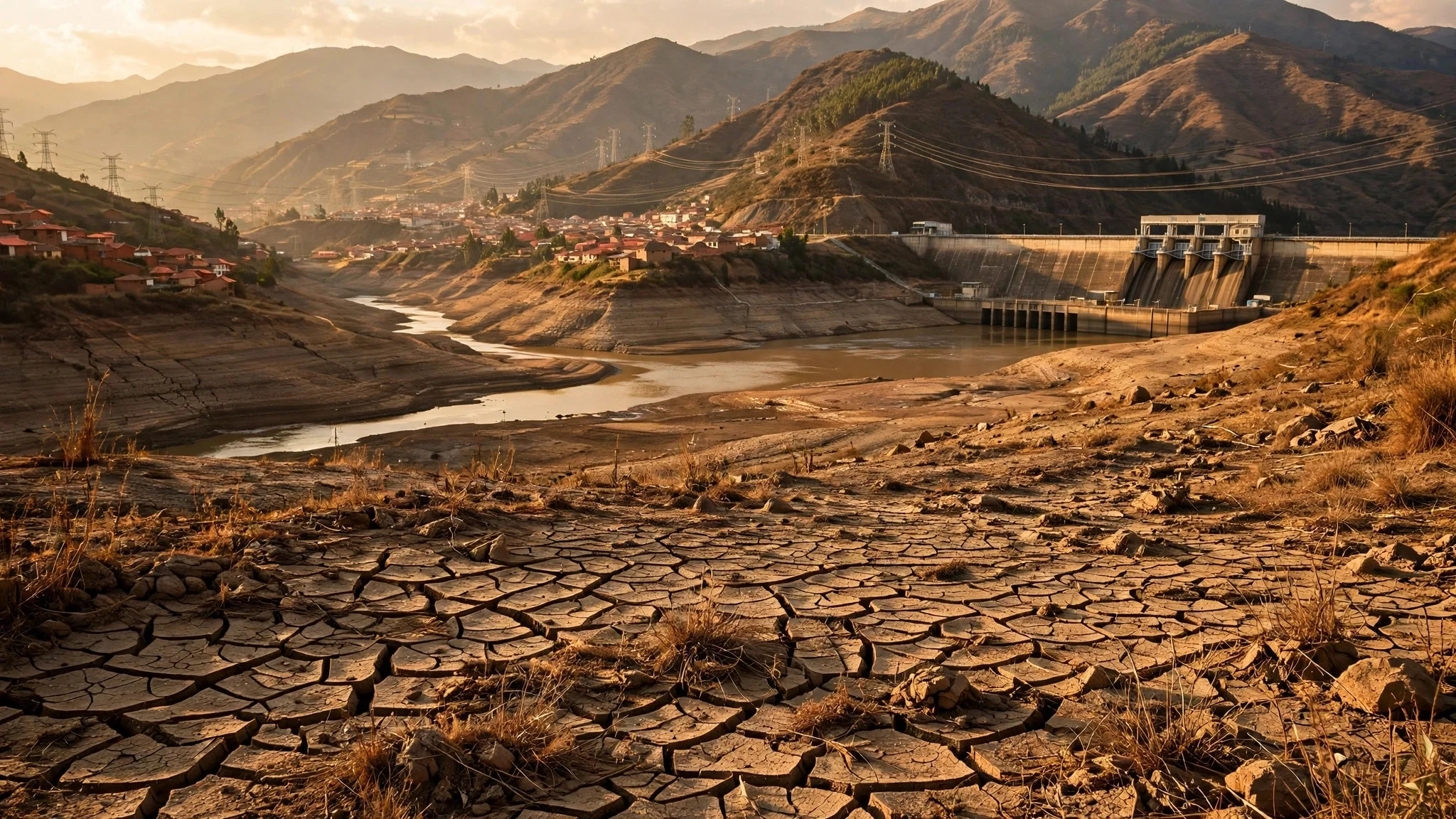
Un embalse en temporada seca. Colombia lanzó una campaña de ahorro de agua, energía y gas ante El Niño. · Erick Prometeo Media
De La Espriella launches national saving drive as El Niño strengthens
President Abelardo De La Espriella announced a national campaign to save water, energy and gas in the face of El Niño, leading by example from the Presidency…
Saving by example: De La Espriella's drive to protect energy security
Abelardo De La Espriella called on families, businesses and institutions to use water, energy and gas responsibly in the face of El Niño, instructed the…
--- The context ---
Colombia is facing El Niño, confirmed in August and monitored by international organizations, in a scenario that the Institute of Hydrology, Meteorology and Environmental Studies warned could be of strong intensity. The projections cited indicate that the rainfall deficit could intensify from December and that the effects could extend into the first half of 2027, with less rain in the Andean, Caribbean and Pacific regions, high temperatures and fires that could affect water availability across the country.
--- The facts ---
President Abelardo De La Espriella announced on Sunday, October 25, 2026, in a presidential address, a national campaign to save water, energy and gas. He asked families, businesses, shops and institutions to adopt responsible consumption and avoid waste, and said he would apply saving measures from the Presidency and in his family life, with practices that, he said, have already been in place at his home for some months.
The president instructed national government entities to implement responsible use of resources. The announcement came with reservoirs at 75.8% of capacity and with a goal of reaching 80% before November 30. De La Espriella linked the campaign to energy security and argued that caring for every drop and every kilowatt can affect availability during the coming months.
--- The positions ---
The president said, in reported speech, that he would be the first to set an example and that he would not ask citizens for an effort he was not willing to make himself. He also said the aim is not to stop living well, but to consume responsibly. The director of the institute, Andrés Eduardo Herkrath Sanclemente, said the signals had accumulated since March, that in May the probability of consolidation toward year end was 96% and that fire alerts rose from seven to 90 in 15 days.
--- What remains unknown ---
It remains unclear how savings will be measured in each entity, what tracking reservoirs will receive and how territories with a lower water supply will be supported. It is also unclear what targets businesses will assume, and how families with the least room to cut consumption will be protected.
--- Unanswered questions ---
How will citizens be informed if reservoir levels move toward or away from the goal set for November? What plans will local authorities and public service companies strengthen against droughts and fires in the most exposed regions? How will it be ensured that the saving effort is shared fairly and does not fall only on households with the fewest resources to adapt?
--- EPM analysis ---
Anticipation is worth more than a late reaction. In September the government asked local authorities, public service companies and productive sectors to strengthen plans against droughts, fires and a reduced water supply. Environment Minister Fabio Arjona recalled that El Niño does not rule out rain and that October and November are the second rainy season, albeit with lower than usual records in the three regions, and he questioned the lack of prevention, linking it to acts of corruption.
📌 EPM Take: In EPM's view, the campaign is right to put prevention and evidence at the center and to begin with the Presidency itself, because shared responsibility only works when those calling for restraint also apply it to themselves. The challenge now is to turn the appeal into verifiable habits across homes, businesses and institutions, with clear tracking of reservoirs and alerts, so that saving water, energy and gas truly protects availability in the coming months without placing the burden on the most vulnerable households.
--- The context ---
Energy security returned to the center of the national agenda in the face of the strength of the El Niño phenomenon, whose presence the country confirmed in August under monitoring by international organizations. The Institute of Hydrology, Meteorology and Environmental Studies warned of a possible episode of strong intensity, with less rain in the Andean, Caribbean and Pacific regions, high temperatures and fires that could affect water availability, a scenario that demands order and foresight.
--- The facts ---
President Abelardo De La Espriella announced on Sunday, October 25, 2026, in a presidential address, a national campaign to save water, energy and gas. He called on families, businesses, shops and institutions to consume responsibly and said he would begin with his own home, applying measures from the Presidency and in his family life, with practices that, he said, have already governed his household for some months.
The head of state instructed national government entities to make responsible use of resources. Reservoirs stand at 75.8% and the goal is to reach 80% before November 30. The projections cited indicate that the rainfall deficit could intensify from December and that the effects could extend into the first half of 2027, so every drop of water and every kilowatt saved now counts for the months ahead.
--- The positions ---
De La Espriella said, in reported speech, that he would be the first to set an example and that he would not ask citizens for an effort he did not assume personally, and he clarified that the aim is not to stop living well, but to consume responsibly and avoid waste. The director of the institute, Andrés Eduardo Herkrath Sanclemente, said the signals had accumulated since March, that in May the probability of consolidation was 96% and that fire alerts rose from seven to 90 in 15 days.
--- What remains unknown ---
It remains to be seen with what discipline entities will comply with the instruction, how progress toward the reservoir goal will be accounted for and what corrections will be applied if savings fall short. The contribution of each sector also needs to be specified, along with support for the Andean, Caribbean and Pacific regions.
--- Unanswered questions ---
Will the government publish periodic tracking of reservoir levels until the November goal is met? What consequences will there be for entities that do not apply the responsible use ordered from the Presidency? How will saving discipline be maintained in homes and businesses as the rainfall deficit intensifies from December onward?
--- EPM analysis ---
The approach is institutional: without prevention, the country pays the cost in an emergency. In September the government asked local authorities, public service companies and productive sectors to strengthen plans against droughts, fires and a reduced water supply. Environment Minister Fabio Arjona recalled that El Niño does not rule out rain, that October and November are the second rainy season with lower than usual records, and he questioned the lack of prevention, linking it to acts of corruption.
📌 EPM Take: In EPM's view, the strongest message of the address is exemplarity: starting with his own home and with the Presidency gives order to the effort and moral authority to the call. If entities comply with the instruction, if reservoirs move toward the goal and if responsible consumption is sustained without improvisation, Colombia will protect its energy security and arrive better prepared for the most demanding months of the phenomenon, with order, foresight and shared responsibility between the state and every Colombian household in the country.
De La Espriella lanza ahorro nacional ante El Niño y empieza por su casa
El presidente Abelardo De La Espriella anunció una campaña nacional de ahorro de agua, energía y gas ante El Niño, con ejemplo desde la Presidencia, embalses…
Ahorro con ejemplo: la campaña de De La Espriella por la seguridad energética
Abelardo De La Espriella convocó a familias, empresas e instituciones a consumir agua, energía y gas con responsabilidad ante El Niño, instruyó al Gobierno…
--- El contexto ---
Colombia enfrenta el fenómeno de El Niño, confirmado en agosto y monitoreado por organismos internacionales, con un escenario que el Instituto de Hidrología, Meteorología y Estudios Ambientales advirtió como de posible fuerte intensidad. Las proyecciones indican que el déficit de lluvias podría intensificarse desde diciembre y que los efectos podrían extenderse hasta el primer semestre de 2027, con menos lluvias en las regiones Andina, Caribe y Pacífica, temperaturas elevadas e incendios que podrían afectar el agua.
--- Los hechos ---
El presidente Abelardo De La Espriella anunció el domingo 25 de octubre de 2026, en alocución presidencial, una campaña nacional de ahorro de agua, energía y gas. Pidió a familias, empresas, comercios e instituciones un consumo responsable y evitar el desperdicio, y sostuvo que aplicará medidas desde la Presidencia y en su vida familiar, con prácticas que, según dijo, ya rigen en su casa desde hace algunos meses.
El mandatario instruyó a las entidades del Gobierno nacional a un uso responsable de los recursos. El anuncio se produjo con los embalses en 75,8% y con la meta de llegar al 80% antes del 30 de noviembre. De La Espriella relacionó la campaña con la seguridad energética y planteó que cuidar cada gota y cada kilovatio incide en la disponibilidad de los próximos meses.
--- Las posiciones ---
El presidente afirmó, en indirecto, que el primero en dar ejemplo sería él y que no pediría un esfuerzo que no asumiera personalmente. También señaló que no se trata de dejar de vivir bien, sino de consumir de forma responsable. El director del Ideam, Andrés Eduardo Herkrath Sanclemente, sostuvo que las señales se acumularon desde marzo, que en mayo la probabilidad de consolidación hacia fin de año era del 96% y que las alertas por incendios aumentaron de siete a 90 en 15 días.
--- Lo que falta saber ---
Todavía falta saber cómo se medirá el ahorro en cada entidad, qué seguimiento tendrán los embalses y cómo se apoyará a los territorios con menor oferta hídrica. Tampoco está claro qué metas asumirán empresas y comercios, ni cómo se protegerá a las familias con menos margen para reducir su consumo.
--- Preguntas sin respuesta ---
¿Cómo se informará si el nivel de los embalses se acerca a la meta fijada para noviembre? ¿Qué planes reforzarán las autoridades locales y las empresas de servicios públicos ante sequías e incendios en las regiones más expuestas? ¿De qué manera se garantizará que el esfuerzo se reparta con equidad y no recaiga solo sobre los hogares?
--- Análisis EPM ---
La anticipación vale más que la reacción tardía. En septiembre el Gobierno pidió a autoridades locales, empresas de servicios públicos y sectores productivos fortalecer sus planes ante sequías, incendios y menor oferta hídrica. El ministro de Ambiente, Fabio Arjona, recordó que El Niño no descarta lluvias y que octubre y noviembre son la segunda temporada lluviosa, con registros inferiores a los habituales en las tres regiones, y cuestionó la falta de prevención vinculándola con hechos de corrupción.
📌 Conclusion EPM: A juicio de EPM, la campaña acierta al poner la prevención y los datos en el centro y al empezar por la propia Presidencia, porque la corresponsabilidad solo funciona si quien convoca también se aplica la medida. El reto ahora es convertir el llamado en hábitos verificables en hogares, empresas e instituciones, con seguimiento claro de los embalses y de las alertas, para que el ahorro de agua, energía y gas proteja de verdad la disponibilidad de los próximos meses sin cargar el esfuerzo sobre los más vulnerables.
--- El contexto ---
La seguridad energética volvió al centro de la agenda nacional ante la fuerza del fenómeno de El Niño, cuya presencia el país confirmó en agosto bajo monitoreo de organismos internacionales. El Instituto de Hidrología, Meteorología y Estudios Ambientales advirtió la posibilidad de un episodio de fuerte intensidad, con menos lluvias en las regiones Andina, Caribe y Pacífica, temperaturas elevadas e incendios que podrían afectar la disponibilidad de agua, un escenario que exige orden y previsión.
--- Los hechos ---
El presidente Abelardo De La Espriella anunció el domingo 25 de octubre de 2026, en alocución presidencial, una campaña nacional de ahorro de agua, energía y gas. Convocó a familias, empresas, comercios e instituciones a un consumo responsable y afirmó que comenzará por su casa, aplicando medidas desde la Presidencia y en su vida familiar, con prácticas que, según dijo, ya rigen en su hogar desde hace algunos meses.
El jefe de Estado instruyó a las entidades del Gobierno nacional a hacer un uso responsable de los recursos. Los embalses están en 75,8% y la meta es alcanzar el 80% antes del 30 de noviembre. Las proyecciones señalan que el déficit de lluvias podría intensificarse desde diciembre y que los efectos podrían extenderse hasta el primer semestre de 2027, por lo que cada gota y cada kilovatio cuentan.
--- Las posiciones ---
De La Espriella sostuvo, en indirecto, que él sería el primero en dar ejemplo y que no solicitaría a la ciudadanía un esfuerzo que no asumiera personalmente, y precisó que no se trata de dejar de vivir bien, sino de consumir responsablemente y evitar el desperdicio. El director del Ideam, Andrés Eduardo Herkrath Sanclemente, indicó que las señales se acumularon desde marzo, que en mayo la probabilidad de consolidación era del 96% y que las alertas por incendios pasaron de siete a 90 en 15 días.
--- Lo que falta saber ---
Falta saber con qué disciplina cumplirán las entidades la instrucción, cómo se rendirán cuentas del avance hacia la meta y qué correctivos se aplicarán si el ahorro no alcanza. También queda por precisar el aporte de cada sector y el acompañamiento a las regiones Andina, Caribe y Pacífica.
--- Preguntas sin respuesta ---
¿Publicará el Gobierno un seguimiento verificable de los embalses hasta cumplir la meta de noviembre? ¿Qué consecuencias tendrá para las entidades que no apliquen el uso responsable ordenado desde la Presidencia? ¿Cómo se mantendrá la disciplina de ahorro en hogares y empresas cuando avance el déficit de lluvias desde diciembre?
--- Análisis EPM ---
El planteamiento es institucional: sin prevención, el costo lo paga el país en plena emergencia. En septiembre el Gobierno pidió a autoridades locales, empresas de servicios públicos y sectores productivos fortalecer planes ante sequías, incendios y menor oferta hídrica. El ministro de Ambiente, Fabio Arjona, recordó que El Niño no descarta lluvias, que octubre y noviembre son la segunda temporada lluviosa con registros inferiores a los habituales, y cuestionó la falta de prevención vinculándola con hechos de corrupción.
📌 Conclusion EPM: A juicio de EPM, el mensaje más sólido de la alocución es la ejemplaridad: empezar por la propia casa y por la Presidencia ordena el esfuerzo y le da autoridad moral a la convocatoria. Si las entidades cumplen la instrucción, si los embalses se acercan a la meta y si el consumo responsable se sostiene sin improvisación, Colombia protegerá su seguridad energética y llegará mejor preparada a los meses más exigentes del fenómeno, con orden, previsión y responsabilidad compartida entre el Estado y cada hogar colombiano.