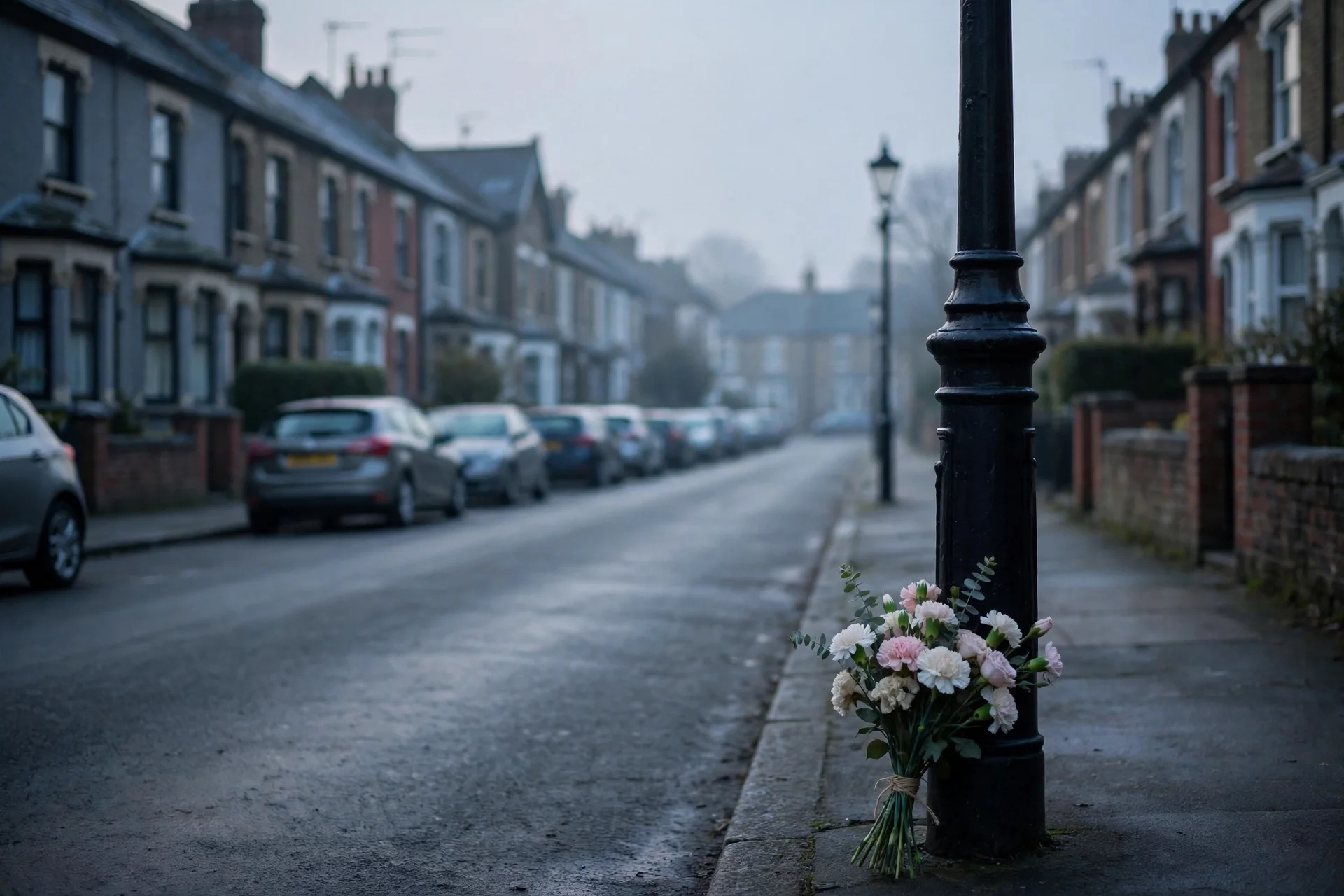
Imagen alusiva de una calle residencial con flores en señal de duelo. · Erick Prometeo Media
UK orders independent review into the murder of Henry Nowak
The Home Secretary has announced an independent review in two phases into the murder of 18 year old Henry Nowak.
UK review to examine missed chances before Henry Nowak murder
An independent review in two phases will examine whether opportunities were missed to prevent the murder of Henry Nowak and what was known about the…
--- The context ---
Henry Nowak was 18 years old when he was murdered, a crime described by his family and by officials as horrific and senseless. Since his death, his family has pressed tirelessly for answers. Home Secretary Shabana Mahmood has now announced an independent review into the circumstances surrounding the murder, built on a commitment to learn every lesson the case offers.
--- The facts ---
The review will have two phases. The first will investigate whether opportunities were missed to prevent the murder, examining what was known about the perpetrator, Vickrum Digwa, during the 5 years before the attack. It will cover the police, health services, local authorities, educational institutions and faith organisations, including concerns about weapon possession and violent, threatening and erratic behaviour.
--- The positions ---
That first phase will also consider how the Nowak family were treated across the criminal justice system after Henry's death, including by the police, the CPS, the courts and tribunals service, and the prison and probation service.
The second phase will follow once the IOPC concludes its investigation into the officers who attended the scene, and will consider the actions of the IOPC and, if necessary, the police.
--- What remains unknown ---
Former Lord Chancellor Alex Chalk KC will lead the rapid review and is expected to report on the first phase by March 2027. Mahmood said in reported terms that the case had raised serious and legitimate questions about whether more could have been done to prevent the tragedy and about the response of public authorities afterwards, adding that the review would leave no aspect unexamined in seeking answers.
--- Unanswered questions ---
What did each agency know about Digwa's behaviour during those years, and when did it know it? Were there specific moments when a different intervention could have changed the outcome? Did the Nowak family receive the treatment, information and respect they deserved after Henry's death?
--- EPM analysis ---
The family welcomed the announcement as a significant moment in their fight for justice and thanked the Home Secretary for listening to their concerns and acting. They also warned that a long road remains and that they will not stop until they secure answers, accountability and meaningful change. Chalk said in reported terms that he would follow the evidence without fear or favour and examine how authorities treated the family.
📌 EPM Take: In EPM's view, the worth of this review will lie in full institutional accountability: reconstructing what each agency knew, when it knew it and why it failed to act together protects future families and honours the Nowak family's search for answers. How victims are treated cannot remain an afterthought; it belongs at the centre of public judgment. If the March 2027 report names clear responsibilities and verifiable change, this painful case may still leave a lasting lesson in prevention.
--- The context ---
The murder of Henry Nowak, an 18 year old with his whole life ahead of him, shocked the nation and left open questions about public safety. Home Secretary Shabana Mahmood has announced a rapid independent review into the circumstances of the case, centred on learning the lessons needed to prevent other families suffering in the same way.
--- The facts ---
The review will be in two parts. The first phase will investigate whether opportunities were missed to prevent Henry's murder, examining what was known about the perpetrator, Vickrum Digwa, in the 5 years before the attack. It will cover the police, health services, local authorities, educational institutions and faith organisations, including any concerns relating to weapon possession and violent, threatening and erratic behaviour.
--- The positions ---
The first phase will also consider how the Nowak family were treated by agencies across the criminal justice system following Henry's death, including the police, the CPS, the courts and tribunals service, and the prison and probation service.
The second phase will follow once the IOPC has concluded its investigation into the officers who attended the scene, and will consider the actions of the IOPC and, if necessary, the police.
--- What remains unknown ---
Alex Chalk KC, the former Lord Chancellor, will lead the review and is expected to report back on the first phase by March 2027. Mahmood said in reported terms that her thoughts remained with Henry's family and friends, who have endured unimaginable loss and heartbreak, and she praised the family's extraordinary courage and dignity in their pursuit of answers about whether more could have been done.
--- Unanswered questions ---
Why did complaints about violent and erratic behaviour not lead to firmer, earlier action? Where did coordination between police, health services and local authorities break down? What concrete results will the wider strategy to halve knife crime now be required to deliver?
--- EPM analysis ---
Chalk said in reported terms that serious questions had been raised about whether agencies and organisations failed to act on complaints about Digwa's violent and erratic behaviour, and that his review would follow the evidence without fear or favour. The government, for its part, renewed its commitment to tackling knife crime, pointing to its wider strategy to halve knife crime through law enforcement, education and communities.
📌 EPM Take: In EPM's view, this review must end in practical order: acting early on violent and threatening behaviour, keeping weapons away from dangerous hands and joining up police, schools and communities are not slogans but basic duties of protection. The strategy to halve knife crime will earn credibility only if it sets owners and deadlines. Prevention works only when warnings are recorded, shared and acted upon without delay by every agency involved. The Nowak family deserves answers, and the country deserves safer streets after March 2027.
Reino Unido revisará el asesinato de Henry Nowak para aprender lecciones
La ministra del Interior anunció una revisión independiente en dos fases sobre el asesinato de Henry Nowak, de 18 años.
Reino Unido ordena revisar fallos previos al asesinato de Henry Nowak
Una revisión independiente en dos fases examinará si se perdieron oportunidades de prevenir el asesinato de Henry Nowak y qué se sabía del autor en los 5 años…
--- El contexto ---
Henry Nowak tenía 18 años cuando fue asesinado, un crimen que su familia y las autoridades describen como terrible y sin sentido. Desde entonces, sus padres han buscado respuestas con una constancia que la propia ministra del Interior, Shabana Mahmood, reconoció al anunciar una revisión independiente sobre las circunstancias del caso.
--- Los hechos ---
La revisión tendrá dos fases. La primera examinará si se perdieron oportunidades de prevenir el asesinato y qué se sabía sobre el autor, Vickrum Digwa, durante los 5 años anteriores al ataque. Ese examen abarcará a la policía, los servicios de salud, las autoridades locales, las instituciones educativas y las organizaciones religiosas, incluidas las preocupaciones por posesión de armas y por conductas violentas, amenazantes y erráticas.
--- Las posiciones ---
Esa primera fase también estudiará cómo fue tratada la familia Nowak por las instituciones de justicia tras la muerte de Henry, entre ellas la policía, el CPS, el servicio de tribunales y el servicio penitenciario y de libertad condicional.
La segunda fase llegará cuando el IOPC concluya su investigación sobre los agentes que acudieron al lugar, y valorará la actuación del propio IOPC y, si fuera necesario, de la policía.
--- Lo que falta saber ---
Al frente de la revisión estará Alex Chalk KC, antiguo lord canciller, que deberá entregar el informe de la primera fase a la ministra antes de marzo de 2027. Mahmood sostuvo en términos indirectos que el caso plantea preguntas serias y legítimas sobre si pudo hacerse más para evitar la tragedia y sobre la respuesta pública posterior, y aseguró que la revisión buscará respuestas sin dejar ningún aspecto sin examinar.
--- Preguntas sin respuesta ---
¿Qué señales sobre la conducta de Digwa llegaron a cada institución durante esos años? ¿Hubo momentos concretos en los que una intervención distinta pudo cambiar el desenlace? ¿Recibió la familia Nowak el trato y la información que merecía tras la muerte de Henry?
--- Análisis EPM ---
La familia valoró el anuncio como un momento significativo en su lucha por la justicia y agradeció que la ministra escuchara sus preocupaciones. También advirtió de que queda un largo camino y de que no dejará de buscar respuestas, rendición de cuentas y cambios reales. Chalk, por su parte, afirmó en términos indirectos que seguirá la evidencia sin temor ni favoritismo y que examinará el trato dado a la familia en un momento de dolor inmenso.
📌 Conclusion EPM: A juicio de EPM, el valor de esta revisión estará en la rendición de cuentas completa: reconstruir qué supo cada institución, cuándo lo supo y por qué no actuó de forma coordinada protege a futuras familias y honra la búsqueda de respuestas de los Nowak. El trato a las víctimas no puede ser un trámite secundario, sino parte central del juicio público. Si el informe de marzo de 2027 trae responsabilidades claras y cambios verificables, el caso dejará una lección duradera de prevención.
--- El contexto ---
El asesinato de Henry Nowak, un joven de 18 años, conmocionó al país y dejó preguntas abiertas sobre la seguridad en las calles. La ministra del Interior, Shabana Mahmood, anunció una revisión independiente y rápida de las circunstancias del caso, con el compromiso de aprender las lecciones necesarias para proteger a otras familias.
--- Los hechos ---
La revisión se dividirá en dos fases. La primera investigará si se perdieron oportunidades de prevenir el asesinato y revisará qué se conocía sobre el autor, Vickrum Digwa, en los 5 años previos al ataque. El análisis incluirá a la policía, los servicios de salud, las autoridades locales, las instituciones educativas y las organizaciones religiosas, con atención a la posesión de armas y a las conductas violentas, amenazantes y erráticas.
--- Las posiciones ---
La primera fase valorará además el trato recibido por la familia Nowak en el sistema de justicia, incluidos la policía, el CPS, el servicio de tribunales y el servicio penitenciario y de libertad condicional.
La segunda fase esperará a que el IOPC termine su investigación sobre los agentes presentes en el lugar y examinará la actuación del IOPC y, si procede, de la policía.
--- Lo que falta saber ---
La revisión la dirigirá Alex Chalk KC, antiguo lord canciller, que presentará sus conclusiones de la primera fase antes de marzo de 2027. Mahmood expresó en términos indirectos que sus pensamientos siguen con la familia y los amigos de Henry, que han soportado una pérdida y un dolor inimaginables, y destacó el valor y la dignidad de los padres en su búsqueda de respuestas.
--- Preguntas sin respuesta ---
¿Por qué las quejas sobre conductas violentas y erráticas no derivaron en una actuación más temprana y firme? ¿Qué falló en la coordinación entre policías, servicios de salud y autoridades locales? ¿Qué cambios concretos saldrán de la estrategia oficial para reducir a la mitad el crimen con cuchillo?
--- Análisis EPM ---
Chalk señaló en términos indirectos que se han planteado preguntas serias sobre si las instituciones y organizaciones no actuaron ante las quejas por el comportamiento violento y errático de Digwa, y prometió seguir la evidencia sin temor ni favoritismo. El Gobierno, por su lado, renovó su compromiso contra el crimen con cuchillo y recordó su estrategia para reducirlo a la mitad trabajando con fuerzas del orden, educación y comunidades.
📌 Conclusion EPM: A juicio de EPM, la revisión debe traducirse en orden efectivo: actuar temprano ante conductas violentas y amenazantes, retirar armas de manos peligrosas y coordinar a policía, escuelas y comunidades no son consignas, sino deberes básicos de protección. La estrategia para reducir a la mitad el crimen con cuchillo ganará credibilidad si fija responsables y plazos. La familia Nowak merece respuestas, y el resto del país merece calles más seguras tras marzo de 2027.