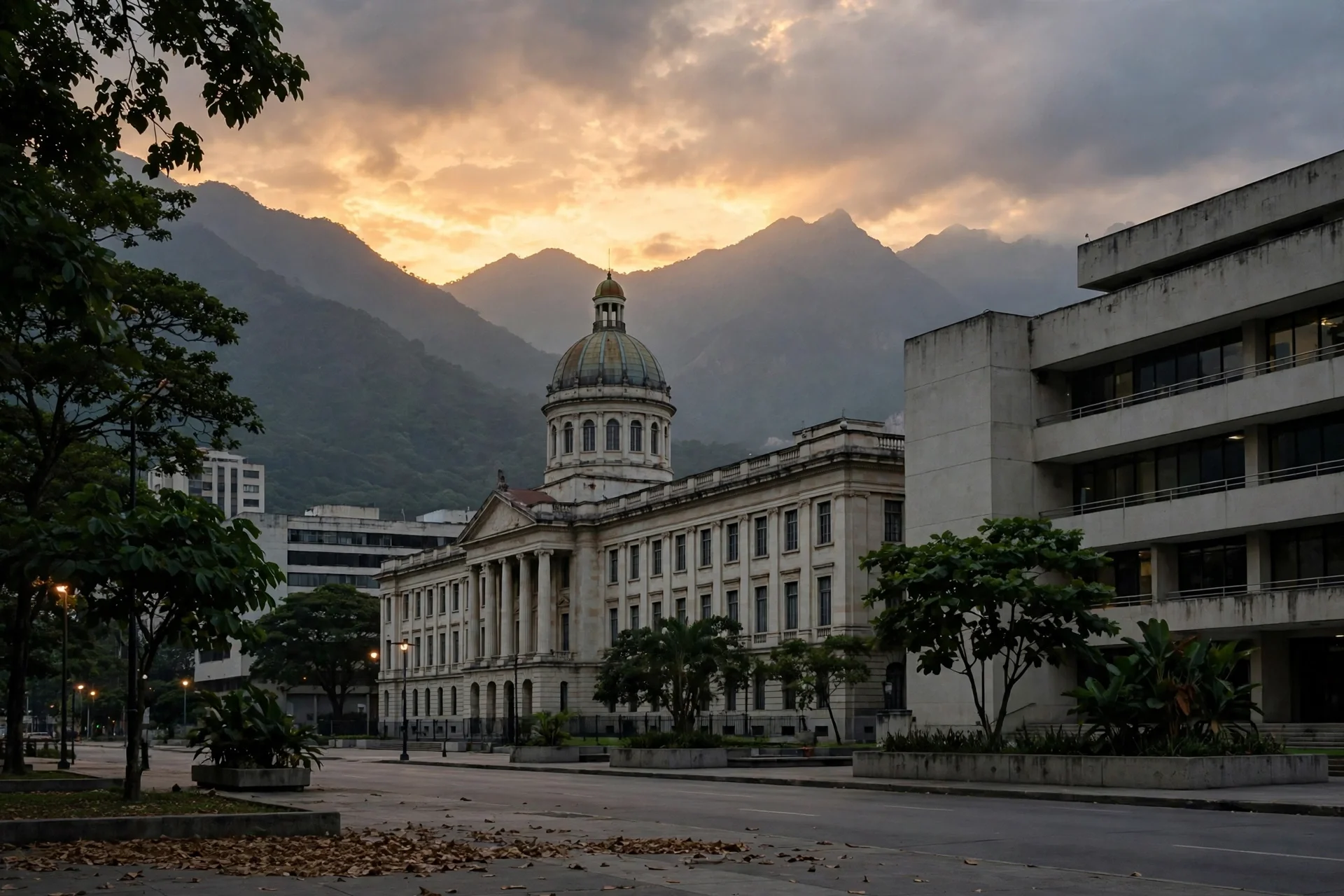
Vista alusiva de Caracas al atardecer, generada para ilustrar la expectativa de transición institucional en Venezuela. · Erick Prometeo Media
Washington expects Delcy Rodríguez to leave the presidency in 2027
A senior State Department official explained that Washington expects Delcy Rodríguez to vacate Venezuela's presidency in 2027, after the Supreme Tribunal is…
Roadmap foresees Delcy Rodríguez leaving power in 2027
The Trump administration backs a sequence foreseeing a new Supreme Tribunal before the end of 2026, renewal of the National Electoral Council afterwards and…
--- The context ---
Venezuela's transition remains open after the capture of Nicolás Maduro by United States forces. In that setting, the government of President Donald Trump set out an expectation about the acting presidency held by Delcy Rodríguez, tied to renewing the institutions first.
--- The facts ---
As reported on Monday, a senior State Department official explained that Washington expects Rodríguez to vacate the presidency in 2027. The roadmap attributed to that official foresees a new Supreme Tribunal of Justice in place before the end of 2026, followed by completion of the renewal of the National Electoral Council.
Once both bodies are established, the plan envisages Rodríguez declaring the absolute vacancy of the presidency. According to the reading of Venezuelan legislation set out by the official, that declaration would open a six-month period to hold elections. The official also said that work to form the new authorities has already begun.
--- The positions ---
The administration defends a strategy in three phases and asks for patience on elections. It maintains that it will use its influence over the interim authorities so that negotiations lead to elections whose results the parties can recognize.
The proposal broadly coincides with the approach of Dinorah Figuera, an opposition leader who heads the delegation of the National Assembly elected in 2015 in talks with Chavismo. Figuera proposed renewing the Supreme Tribunal first and then the National Electoral Council, without specifying a date for the second process. No reaction from Rodríguez or from Chavismo appears in the available information.
--- What remains unknown ---
None of what was set out is an executed decision or an officially established election date. Rodríguez's departure is a proposal subject to negotiations, and institutional renewal remains the prior step of the calendar.
--- Unanswered questions ---
When exactly will the renewal of the National Electoral Council be completed and under what criteria will its members be chosen? What verifiable guarantees will the elections have so that all parties recognize the results? Will Rodríguez accept declaring the absolute vacancy on the terms described by the United States official?
--- EPM analysis ---
The value of this roadmap lies in its verifiability. If judicial and electoral renewal advances with public rules and checkable deadlines, a departure in 2027 gains support; if delayed without evidence, it will remain one more diplomatic expectation.
📌 EPM Take:
In EPM's view, a credible transition needs renewed institutions with public criteria, checkable deadlines and electoral conditions that allow the result to be recognized without reservations. The announced order, first the Supreme Tribunal and then the electoral body, will only carry weight if each step is documented and open to scrutiny. Without that verification, the 2027 date will remain an expectation attributed to Washington rather than a commitment assumed by those now holding interim power in Venezuela.
--- The context ---
Venezuela's transition continues after the capture of Nicolás Maduro by United States forces, amid questions over its duration. Facing that pressure, the Trump administration presented an orderly sequence for Delcy Rodríguez's departure, resting first on renewing the institutions.
--- The facts ---
As reported on Monday, a senior State Department official explained that Washington expects Rodríguez to vacate the presidency in 2027. The plan foresees a new Supreme Tribunal of Justice in place before the end of 2026, and afterwards the completion of the renewal of the National Electoral Council.
Once both steps are completed, the plan envisages Rodríguez declaring the absolute vacancy of the presidency. According to the reading of Venezuelan legislation set out by the official, that declaration would open a six-month period to hold elections. The official said that work to form the new authorities has already begun.
--- The positions ---
The Trump administration defends a strategy in three phases and asks for patience over the election date. It states that it will use its influence over the interim authorities so that negotiations lead to elections whose results can be recognized.
That sequence broadly coincides with what Dinorah Figuera, an opposition leader who heads the delegation of the National Assembly elected in 2015 in talks with Chavismo, proposed. Figuera proposed closing the renewal of the Supreme Tribunal before the end of the year and following with that of the National Electoral Council, without specifying a date. No reaction from Rodríguez or from Chavismo appears in the available information.
--- What remains unknown ---
The proposal is not an executed decision and does not establish an official election date. Rodríguez's departure remains subject to negotiations and to renewal being completed in the order described.
--- Unanswered questions ---
Will the deadline of forming the new Supreme Tribunal before the end of 2026 be met? At what moment will the renewal of the National Electoral Council be announced and under what rules will it be carried out? Will Rodríguez declare the absolute vacancy to open the six-month period toward elections?
--- EPM analysis ---
An institutional exit needs order and deadlines. The sequence places the judicial base first, then the electoral authority and only afterwards the presidential vacancy, to avoid a power vacuum and give legal cover to the call. Without visible compliance, the patience Washington asks for will lose support.
📌 EPM Take:
In EPM's view, the roadmap is defensible if it is followed in order and with verifiable deadlines, because it subordinates the interim power's departure to renewed institutions and to a call with clear legal backing. That discipline is preferable to a rushed exit without a structure to sustain it. The commitment, however, is still an expectation attributed to a United States official, and its credibility will depend on each phase being completed on time and without shortcuts.
Washington espera que Delcy Rodríguez deje la Presidencia en 2027
Un alto funcionario del Departamento de Estado explicó que Washington espera que Delcy Rodríguez deje la Presidencia de Venezuela en 2027, tras renovarse el…
Hoja de ruta prevé la salida de Delcy Rodríguez del poder en 2027
La administración Trump respalda una secuencia que prevé conformar el nuevo Tribunal Supremo antes de finalizar 2026, renovar después el Consejo Nacional…
--- El contexto ---
La transición venezolana sigue abierta tras la captura de Nicolás Maduro por fuerzas estadounidenses. En ese escenario, el Gobierno de Donald Trump fijó una expectativa sobre la Presidencia encargada de Delcy Rodríguez, vinculada a renovar antes las instituciones.
--- Los hechos ---
Según se informó este lunes, un alto funcionario del Departamento de Estado explicó que Washington espera que Rodríguez deje vacante la Presidencia en 2027. La hoja de ruta atribuida a ese funcionario prevé que el nuevo Tribunal Supremo de Justicia esté conformado antes de finalizar 2026 y que después se complete la renovación del Consejo Nacional Electoral.
Una vez establecidos ambos organismos, el plan contempla que Rodríguez declare la falta absoluta en la Presidencia. De acuerdo con la interpretación de la legislación venezolana expuesta por el funcionario, esa declaración abriría un período de seis meses para celebrar elecciones. El funcionario señaló que los trabajos para conformar las nuevas autoridades ya comenzaron.
--- Las posiciones ---
La administración defiende una estrategia en tres fases y pide paciencia sobre los comicios. Sostiene que usará su influencia sobre las autoridades interinas para que las negociaciones conduzcan a elecciones cuyos resultados puedan ser reconocidos por las partes.
La propuesta coincide, en términos generales, con lo planteado por Dinorah Figuera, dirigente opositora que encabeza la delegación de la Asamblea Nacional elegida en 2015 en las conversaciones con el chavismo. Figuera propuso renovar primero el Tribunal Supremo y después el Consejo Nacional Electoral, sin precisar fecha para ese segundo proceso. No consta reacción de Rodríguez ni del chavismo.
--- Lo que falta saber ---
Nada de lo expuesto es una decisión ejecutada ni una fecha electoral oficial. La salida de Rodríguez es una propuesta sujeta a las negociaciones, y la renovación institucional sigue siendo el paso previo del calendario.
--- Preguntas sin respuesta ---
¿Cuándo se completará exactamente la renovación del Consejo Nacional Electoral y con qué criterios se elegirán sus integrantes? ¿Qué garantías verificables tendrán los comicios para que todas las partes reconozcan los resultados? ¿Aceptará Rodríguez declarar la falta absoluta en los términos descritos por el funcionario estadounidense?
--- Análisis EPM ---
El valor de esta hoja de ruta está en su verificabilidad. Si la renovación judicial y electoral avanza con reglas públicas y plazos comprobables, la salida en 2027 gana sustento; si se dilata sin evidencia, quedará como una expectativa diplomática más.
📌 Conclusion EPM:
A juicio de EPM, una transición creíble necesita instituciones renovadas con criterios públicos, plazos comprobables y condiciones electorales que permitan reconocer el resultado sin reservas. El orden anunciado, primero el Tribunal Supremo y después el órgano electoral, solo tendrá peso si cada paso queda documentado y sometido a escrutinio. Sin esa verificación, la fecha de 2027 seguirá siendo una expectativa atribuida a Washington y no un compromiso asumido por quienes hoy ejercen el poder interino en Venezuela.
--- El contexto ---
La transición venezolana continúa tras la captura de Nicolás Maduro por fuerzas estadounidenses, entre cuestionamientos por su duración. Frente a ello, la administración Trump presentó una secuencia ordenada para la salida de Delcy Rodríguez, apoyada en renovar primero las instituciones.
--- Los hechos ---
Según se informó este lunes, un alto funcionario del Departamento de Estado explicó que Washington espera que Rodríguez deje vacante la Presidencia en 2027. El plan prevé que el nuevo Tribunal Supremo de Justicia esté conformado antes de finalizar 2026 y que posteriormente se complete la renovación del Consejo Nacional Electoral.
Completados ambos pasos, el plan contempla que Rodríguez declare la falta absoluta en la Presidencia. Según la interpretación de la legislación venezolana expuesta por el funcionario, esa declaración abriría un período de seis meses para celebrar elecciones. El funcionario afirmó que los trabajos para conformar las nuevas autoridades ya comenzaron.
--- Las posiciones ---
La administración Trump defiende una estrategia en tres fases y pide paciencia sobre los comicios. Afirma que usará su influencia sobre las autoridades interinas para que las negociaciones conduzcan a elecciones cuyos resultados puedan reconocerse.
Esa secuencia coincide, en términos generales, con lo planteado por Dinorah Figuera, dirigente opositora que encabeza la delegación de la Asamblea Nacional elegida en 2015 en las conversaciones con el chavismo. Figuera propuso cerrar la renovación del Tribunal Supremo antes de terminar el año y seguir con la del Consejo Nacional Electoral, sin precisar fecha. No consta reacción de Rodríguez ni del chavismo.
--- Lo que falta saber ---
La propuesta no es una decisión ejecutada ni establece una fecha electoral oficial. La salida de Rodríguez sigue sujeta a las negociaciones y a que la renovación se complete en el orden descrito.
--- Preguntas sin respuesta ---
¿Se cumplirá el plazo de conformar el nuevo Tribunal Supremo antes de finalizar 2026? ¿En qué momento se anunciará la renovación del Consejo Nacional Electoral y bajo qué reglas se hará? ¿Declarará Rodríguez la falta absoluta para abrir el período de seis meses hacia las elecciones?
--- Análisis EPM ---
Una salida institucional necesita orden y plazos. La secuencia pone primero la base judicial, después la autoridad electoral y solo entonces la vacante presidencial, para evitar un vacío de poder y dar cobertura legal a la convocatoria. Sin cumplimiento visible, la paciencia pedida perderá respaldo.
📌 Conclusion EPM:
A juicio de EPM, la hoja de ruta es defendible si se cumple en orden y con plazos verificables, porque subordina la salida del poder interino a instituciones renovadas y a una convocatoria con respaldo legal claro. Esa disciplina es preferible a una salida apresurada sin estructura que la sostenga. El compromiso, sin embargo, todavía es una expectativa atribuida a un funcionario estadounidense, y su credibilidad dependerá de que cada fase se complete a tiempo y sin atajos.