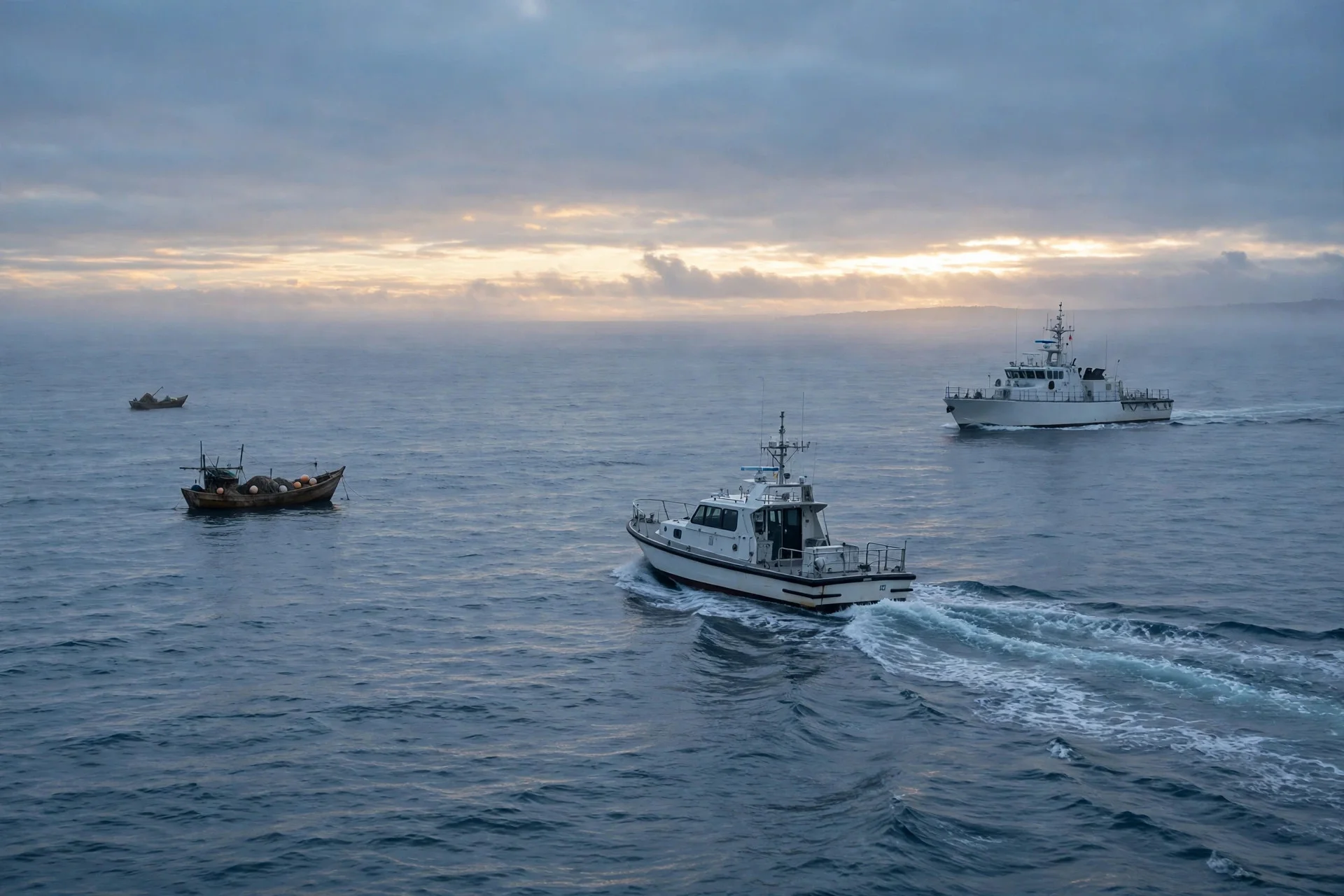
Imagen alusiva generada por Erick Prometeo Media: patrulleras de guardacostas y una embarcación artesanal en el Pacífico al amanecer. · Erick Prometeo Media
Navy seizes 1.2 tons of cocaine hidden among fish in the Colombian Pacific
Colombia's Navy seized 1.2 tons of cocaine hidden among fish aboard a vessel in the Pacific, capturing three crew members, a day after another seizure of 568…
Blow to drug trafficking: 1.2 tons seized in the Colombian Pacific
Colombian Coast Guard units seized 1.2 tons of cocaine camouflaged among fish in the Pacific and captured three crew members, in an operation with United…
--- The context ---
The routes of the Colombian Pacific are used by drug trafficking organizations to move shipments toward illegal markets. There, the Colombian Navy maintains control operations with support from the United States Southern Command's Joint Interagency Task Force, Jiatfs, dedicated to detecting suspicious vessels.
--- The facts ---
The operation was reported on October 26, 2026. Coast Guard units intercepted, west of the department of Chocó, an artisanal wind and tide type vessel carrying a load of fish. During the initial inspection, officers detected rectangular packages hidden in an ice chest, among the fish. According to the institution, the distribution of 3.1 million doses in illegal markets was prevented and three Colombian citizens were captured.
The vessel was taken to the Buenaventura Coast Guard Station, in Valle del Cauca, where proceedings were coordinated with the Technical Investigation Corps of the Attorney General's Office. The Approved Preliminary Homologated Identification Test confirmed cocaine hydrochloride: 42 bundles with 1,250 rectangular packages and a total weight of 1,250 kilograms, that is, 1.2 tons.
Authorities also seized two outboard motors, 90 gallons of fuel, navigation equipment, communication devices and the vessel itself. According to the Navy, the seizure prevented close to USD 58 million from reaching drug trafficking organizations. The three crew members were placed at the disposal of the competent authorities.
A day earlier, another operation became known near the Dominican Republic: 568 kilograms of cocaine in a fast go fast boat, intercepted 102 nautical miles south of Beata Island after a pursuit at sea. The boat had departed from La Guajira bound for Dominican territory. There were 555 rectangular packages hidden in sacks, and the preliminary test confirmed cocaine hydrochloride. Three Dominican citizens, aged 24, 34 and 45, were detained. The institution estimated more than USD26 million and more than 1.4 million doses.
--- The positions ---
Corvette Captain Daniel Gutiérrez, commander of the Buenaventura Coast Guard Station, pointed out that the operation hit the logistics of maritime trafficking networks and that the Navy will keep controls with national and international authorities. The Colombian Navy, the Colombian Air Force, the Dominican Republic Navy and Jiatfs took part in the operation near the Dominican Republic.
--- What remains unknown ---
The Attorney General's Office must establish the origin of the Pacific shipment, the planned route and those responsible for the operation. For the Dominican boat, which group was behind the transfer and whether the detainees had judicial records were not reported.
--- Unanswered questions ---
What route was the vessel intercepted west of Chocó following, and what was the shipment's final destination? What organization was behind each of the two transfers seized? What will the justice system decide regarding the detainees from both operations?
--- EPM analysis ---
Both operations share a pattern: camouflage in vessels with a fishing appearance or in fast boats, routes across the Pacific and the Caribbean, and cooperation among Colombia, the Dominican Republic and the United States. Hiding the load among fish and ice seeks to evade routine controls; detecting it depended on direct Coast Guard inspection.
📌 EPM Take:
In EPM's view, the value of these seizures is measured on two levels: the shipment removed from circulation and the logistical cost imposed on the networks that moved it, which in a single operation lose the vessel, the motors, the fuel and the complete load. But the blow remains partial as long as the origin, the planned route and those responsible that the Attorney General's Office must establish remain unknown, because organizations replace boats and crews more easily than the routes and the structures that finance each transfer.
--- The context ---
Maritime control in the Colombian Pacific is a permanent Navy task against networks moving drugs in artisanal vessels. With support from Jiatfs, the United States Southern Command's Joint Interagency Task Force, the Coast Guard carried out a new interdiction west of Chocó.
--- The facts ---
The operation, reported on October 26, 2026, ended with the capture of three Colombian citizens crewing a wind and tide type motor vessel loaded with fish. During the initial inspection, officers detected rectangular packages hidden in an ice chest, among the load. The institution reported that the distribution of 3.1 million doses in illegal markets was prevented.
The vessel was taken to the Buenaventura Coast Guard Station, in Valle del Cauca, for proceedings with the Technical Investigation Corps of the Attorney General's Office. The Approved Preliminary Homologated Identification Test confirmed cocaine hydrochloride, distributed in 42 bundles with 1,250 rectangular packages and a total weight of 1,250 kilograms, equivalent to 1.2 tons.
Authorities also seized two outboard motors, 90 gallons of fuel, navigation equipment, communication devices and the vessel. According to the Navy, the seizure prevented close to USD 58 million from reaching drug trafficking organizations. The three crew members were placed at the disposal of the competent authorities.
A day earlier, another operation in waters near the Dominican Republic seized 568 kilograms of cocaine in a fast go fast boat, intercepted 102 nautical miles south of Beata Island after a pursuit. The boat departed La Guajira bound for Dominican territory. There were 555 rectangular packages hidden in sacks, and the preliminary test confirmed cocaine hydrochloride. Three Dominican citizens, aged 24, 34 and 45, were detained. The institution estimated more than USD26 million and more than 1.4 million doses.
--- The positions ---
Corvette Captain Daniel Gutiérrez, commander of the Buenaventura Coast Guard Station, pointed out that the operation hit the logistics of maritime trafficking networks and the finances of drug trafficking in the Colombian Pacific. According to Gutiérrez, the Navy will continue maritime controls with national and international authorities. The Colombian Navy, the Colombian Air Force, the Dominican Republic Navy and Jiatfs took part in the Dominican operation.
--- What remains unknown ---
The Attorney General's Office must establish the origin of the Pacific shipment, the planned route and those responsible. Regarding the boat intercepted near the Dominican Republic, it was not reported which group was behind the transfer or whether the detainees had judicial records.
--- Unanswered questions ---
Where did the shipment hidden among the fish come from, and what complete route did it intend to follow? What organization commissioned the transfers stopped in the Colombian Pacific and near the Dominican Republic? What measures will the justice system adopt regarding the detainees from both operations?
--- EPM analysis ---
The contrast between the two seizures is instructive: in the Pacific, camouflage inside an apparent fishing activity; near the Dominican Republic, the speed of a go fast boat pursued at sea. Two different methods for the same business, stopped by permanent naval presence and international cooperation.
📌 EPM Take:
In EPM's view, authority at sea is exercised with sustained presence, and these two operations demonstrate it: without patrols and international cooperation, neither of the two shipments would have been detected. The seizure of vessels, motors and fuel raises the cost of operating for the networks, but the task does not end with the interdiction: it is now up to the Attorney General's Office to establish the origin, the route and those responsible, so that the blow reaches those who order and finance the transfers and not only those who crew them.
Armada incauta 1,2 toneladas de cocaína ocultas entre pescado en el Pacífico
La Armada de Colombia incautó 1,2 toneladas de cocaína ocultas entre pescado en una embarcación en el Pacífico, con tres capturados, un día después de otro…
Golpe al narcotráfico: 1,2 toneladas incautadas en el Pacífico colombiano
Guardacostas de Colombia incautaron 1,2 toneladas de cocaína camufladas entre pescado en el Pacífico y capturaron a tres tripulantes, en una operación con…
--- El contexto ---
El Pacífico colombiano es ruta de las organizaciones narcotraficantes para mover cargamentos hacia mercados ilegales. Allí, la Armada Nacional mantiene operaciones de control con apoyo de la Fuerza de Tarea Conjunta Interagencial del Comando Sur de Estados Unidos, la Jiatfs, dedicada a detectar embarcaciones sospechosas.
--- Los hechos ---
La operación fue informada el 26 de octubre de 2026. Unidades de Guardacostas interceptaron, al oeste del departamento de Chocó, una embarcación artesanal tipo viento y marea con carga de pescado. En la inspección, los uniformados detectaron paquetes rectangulares ocultos en una cava de hielo, entre el pescado. Según la institución, se evitó la distribución de 3,1 millones de dosis en mercados ilegales y fueron capturados tres ciudadanos colombianos.
La embarcación fue trasladada a la Estación de Guardacostas de Buenaventura, en el Valle del Cauca, donde se coordinaron las diligencias con el Cuerpo Técnico de Investigación de la Fiscalía. La Prueba de Identificación Preliminar Homologada confirmó clorhidrato de cocaína: 42 bultos con 1.250 paquetes rectangulares y un peso total de 1.250 kilogramos, es decir, 1,2 toneladas.
También se decomisaron dos motores fuera de borda, 90 galones de combustible, equipos de navegación, dispositivos de comunicación y la propia embarcación. Según la Armada, la incautación impidió que cerca de USD 58 millones llegaran a las organizaciones narcotraficantes. Los tres tripulantes quedaron a disposición de las autoridades competentes.
Un día antes se conoció otra operación cerca de República Dominicana: 568 kilogramos de cocaína en una lancha rápida tipo go fast, interceptada a 102 millas náuticas al sur de la isla Beata tras una persecución. La lancha partió desde La Guajira con destino a territorio dominicano. Había 555 paquetes rectangulares escondidos en costales y la prueba preliminar confirmó clorhidrato de cocaína. Fueron detenidos tres ciudadanos dominicanos, de 24, 34 y 45 años. La institución estimó más de USD26 millones y más de 1,4 millones de dosis.
--- Las posiciones ---
El capitán de corbeta Daniel Gutiérrez, comandante de la Estación Guardacostas de Buenaventura, señaló que el operativo afectó la logística de las redes de tráfico marítimo y que la Armada mantendrá los controles con autoridades nacionales e internacionales. En la operación cerca de República Dominicana participaron la Armada de Colombia, la Fuerza Aérea Colombiana, la Armada de República Dominicana y la Jiatfs.
--- Lo que falta saber ---
La Fiscalía deberá establecer la procedencia del cargamento del Pacífico, la ruta prevista y los responsables. En el caso de la lancha dominicana, no se informó qué grupo estaba detrás del traslado ni si los detenidos tenían antecedentes judiciales.
--- Preguntas sin respuesta ---
¿Qué ruta seguía la embarcación interceptada al oeste de Chocó y cuál era su destino? ¿Qué organización estaba detrás de cada uno de los dos traslados incautados? ¿Qué decidirá la justicia frente a los detenidos de ambas operaciones?
--- Análisis EPM ---
Ambas operaciones comparten un patrón: camuflaje en embarcaciones de apariencia pesquera o en lanchas rápidas, y cooperación entre Colombia, República Dominicana y Estados Unidos. Ocultar la carga entre pescado y hielo busca burlar controles rutinarios; detectarla dependió de la inspección directa de Guardacostas.
📌 Conclusion EPM:
A juicio de EPM, el valor de estas incautaciones se mide en dos planos: el cargamento retirado de circulación y el costo logístico impuesto a las redes que lo movían, que pierden embarcación, motores, combustible y carga en una sola operación. Pero el golpe sigue siendo parcial mientras se desconozcan la procedencia, la ruta prevista y los responsables que la Fiscalía debe establecer, porque las organizaciones reemplazan lanchas y tripulantes con más facilidad que las rutas y las estructuras que financian cada traslado.
--- El contexto ---
El control marítimo en el Pacífico colombiano es tarea permanente de la Armada Nacional frente a redes que mueven droga en embarcaciones artesanales. Con apoyo de la Jiatfs del Comando Sur de Estados Unidos, Guardacostas ejecutó una nueva interdicción al oeste de Chocó.
--- Los hechos ---
La operación, informada el 26 de octubre de 2026, terminó con la captura de tres ciudadanos colombianos que tripulaban una motonave tipo viento y marea cargada de pescado. Durante la inspección inicial, los uniformados detectaron paquetes rectangulares ocultos en una cava de hielo, entre la carga. Según la institución, se evitó la distribución de 3,1 millones de dosis en mercados ilegales.
La embarcación fue llevada a la Estación de Guardacostas de Buenaventura, en el Valle del Cauca, para las diligencias con el Cuerpo Técnico de Investigación de la Fiscalía. La Prueba de Identificación Preliminar Homologada confirmó clorhidrato de cocaína, distribuido en 42 bultos con 1.250 paquetes rectangulares y un peso total de 1.250 kilogramos, equivalentes a 1,2 toneladas.
Se decomisaron además dos motores fuera de borda, 90 galones de combustible, equipos de navegación, dispositivos de comunicación y la embarcación. Según la Armada, se impidió que cerca de USD 58 millones llegaran a las organizaciones narcotraficantes. Los tres tripulantes quedaron a disposición de las autoridades.
Un día antes, otra operación en aguas cercanas a República Dominicana dejó 568 kilogramos de cocaína incautados en una lancha rápida tipo go fast, interceptada a 102 millas náuticas al sur de la isla Beata tras una persecución. La lancha partió de La Guajira hacia territorio dominicano. Había 555 paquetes rectangulares escondidos en costales y la prueba preliminar confirmó clorhidrato de cocaína. Tres ciudadanos dominicanos, de 24, 34 y 45 años, fueron detenidos. La institución estimó más de USD26 millones y más de 1,4 millones de dosis.
--- Las posiciones ---
El capitán de corbeta Daniel Gutiérrez, comandante de la Estación Guardacostas de Buenaventura, señaló que el operativo afectó la logística de las redes de tráfico marítimo y golpeó las finanzas del narcotráfico en el Pacífico. Según Gutiérrez, la Armada continuará los controles marítimos con autoridades nacionales e internacionales. En el operativo dominicano participaron la Armada de Colombia, la Fuerza Aérea Colombiana, la Armada de República Dominicana y la Jiatfs.
--- Lo que falta saber ---
La Fiscalía deberá establecer la procedencia del cargamento del Pacífico, la ruta prevista y los responsables. De la lancha dominicana no se informó qué grupo estaba detrás ni si los detenidos tenían antecedentes.
--- Preguntas sin respuesta ---
¿De dónde procedía el cargamento oculto entre el pescado y qué ruta pretendía seguir? ¿Qué organización encargó los traslados detenidos en el Pacífico colombiano y cerca de República Dominicana? ¿Qué medidas adoptará la justicia frente a los detenidos de ambas operaciones?
--- Análisis EPM ---
El contraste entre ambas incautaciones es instructivo: en el Pacífico, el camuflaje dentro de una faena de pesca aparente; cerca de República Dominicana, la velocidad de una lancha go fast perseguida en altamar. Dos métodos distintos para el mismo negocio, detenidos por la presencia naval permanente y la cooperación internacional.
📌 Conclusion EPM:
A juicio de EPM, la autoridad en el mar se ejerce con presencia sostenida, y estas dos operaciones lo demuestran: sin patrullaje ni cooperación internacional, ninguno de los dos cargamentos habría sido detectado. El decomiso de embarcaciones, motores y combustible eleva el costo para las redes, pero la tarea no termina en la interdicción: corresponde ahora a la Fiscalía establecer la procedencia, la ruta y los responsables, para que el golpe alcance a quienes ordenan y financian los traslados y no solo a quienes los tripulan.