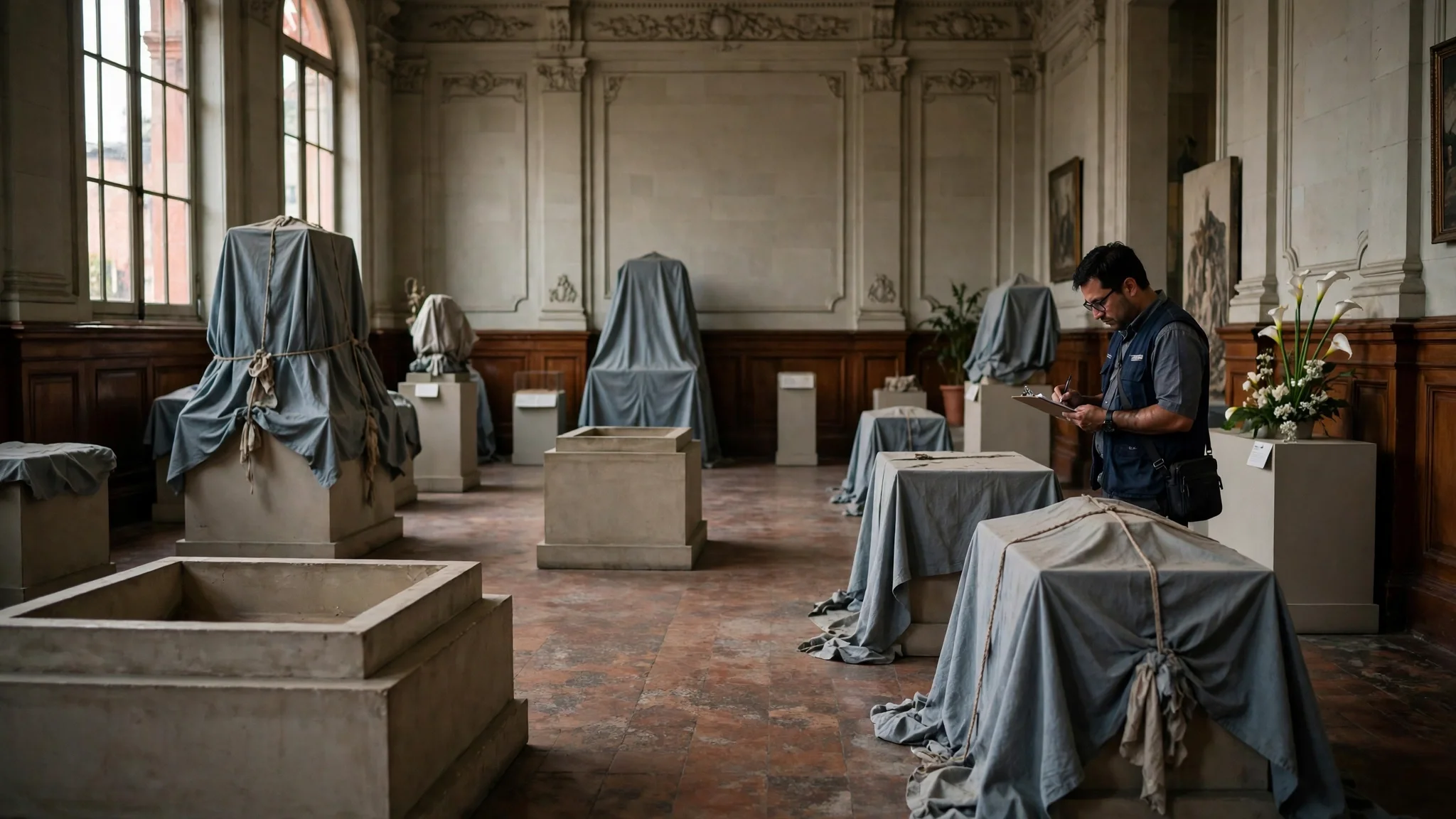
Sala del museo con piezas cubiertas y pedestales vacíos durante un inventario, imagen alusiva al traslado de obras del Museo Nacional. · Erick Prometeo Media
JEP seeks information on works removed from National Museum
The Special Jurisdiction for Peace asked the Ministry of Culture and the National Museum for complete information and an inventory on the transfer and removal…
JEP requests documentation on National Museum works transfer
The Special Jurisdiction for Peace requested from the Ministry of Culture and the National Museum the complete documentation and inventory of the transfer of…
--- The context ---
The National Museum preserves works and exhibition content linked to the internal armed conflict, forced disappearance and the memory of victims, a sensitive collection gathering testimonies, personal objects and accounts contributed by relatives and victims organizations.
In recent days, part of those works was transferred or removed from the galleries, a decision that opened an institutional discussion about how historical memory content should be documented and protected.
--- The facts ---
The Special Jurisdiction for Peace sent an official communication to the Ministry of Culture and the National Museum requesting complete information about the transfer and removal of the pieces, together with the documentation behind the measure and a detailed inventory.
The request, signed by magistrate Raúl Eduardo Sánchez of the Section for Absence of Recognition, asks for the provisional number of pieces, objects, reproductions, panels and texts that were removed, replaced, concealed or relocated, and the people and offices that authorized or carried out the interventions.
The communication also requests the current location and custody of the elements, inventory and movement records, photographs from before and after, technical and legal opinions, institutional communications and documents supporting the decisions adopted.
--- The positions ---
The jurisdiction states that its request seeks to establish whether the action could have affected the rights to truth, memory, symbolic reparation and guarantees of non-repetition of victims of forced disappearance and their relatives, a purpose the Government can address by providing the available documentation on file.
The Section itself acknowledged that each museum is independent to carry out transfers or changes of works when it considers it appropriate, while noting that, when testimonies and objects of victims are involved, those decisions should rest on sufficient documentation, verifiable criteria and guarantees protecting their rights.
--- What remains unknown ---
The complete inventory of the pieces involved is not yet known, nor is the public detail of their current location and custody, information that the requested documentation should help establish precisely in coming days.
--- Unanswered questions ---
How many pieces, panels and texts were removed, replaced or relocated in total according to the official inventory? Was there a prior dialogue with the communities and the contributors of the pieces before the works were transferred? What are the current conservation conditions and what access or reinstatement alternatives have been evaluated?
--- EPM analysis ---
The process is following predictable institutional channels: a jurisdiction requests documented information, the Ministry gathers support for its museum decision, and a court has provisionally suspended the transfer since October 19 while it decides the protection action filed by several artistic collectives.
The judge ordered, in general terms, refraining from destroying, transferring, deaccessioning, returning to third parties or altering the pieces while the action is decided, and from intervening in other works without administrative acts justifying such decisions.
📌 EPM Take: In EPM's view, this case is best resolved with documents on the table rather than with polemics: the request from the Special Jurisdiction for Peace is an information procedure within institutional channels, and the Government of Abelardo De La Espriella has the opportunity to respond with documentary transparency, complete inventories and verifiable technical support. If every piece is identified, located and protected while the court decides the merits, the memory of the victims is safeguarded and museum independence is preserved as well.
--- The context ---
Public museums manage collections that belong to all citizens while retaining autonomy to organize galleries, rotate works and update content when their technical teams consider it appropriate.
Within the National Museum, some pieces relate to the internal armed conflict, forced disappearance and the memory of victims, including names, photographs, testimonies and personal objects contributed by relatives and victims organizations.
--- The facts ---
The Special Jurisdiction for Peace sent an official communication to the Ministry of Culture and the National Museum requesting complete information about the recent transfer and removal of museum pieces and content, with the documentation that motivated the decision and a corresponding inventory.
The communication bears the signature of magistrate Raúl Eduardo Sánchez, of the Section for Absence of Recognition, and asks for the provisional number of pieces, objects, reproductions, panels and texts removed, replaced, concealed or relocated, as well as their current location and custody.
The request also includes identifying the people and offices that authorized or carried out the interventions, and providing inventory and movement records, photographs from before and after, technical and legal opinions, institutional communications and supporting documents.
--- The positions ---
According to the communication, the information will make it possible to establish whether the action affected the rights to truth, memory, symbolic reparation and guarantees of non-repetition of victims of forced disappearance and their relatives, a verification that can be completed with records held by the Ministry.
The Section also noted that each museum is independent to carry out transfers or changes of works when it considers it appropriate, and that, where testimonies and objects of victims are involved, actions should be backed by sufficient documentation, verifiable criteria and guarantees to protect their rights.
--- What remains unknown ---
It still must be reported whether, before the transfer, there was a dialogue with the communities and the contributors of the pieces, what the current conservation conditions are, and what alternatives for access or reinstatement have been evaluated.
--- Unanswered questions ---
Which office authorized each intervention and what technical and legal opinions support it in the record? Where is each intervened piece today and under what conservation and custody conditions does it remain? When will the underlying decision be known on the protection action filed by the artistic collectives?
--- EPM analysis ---
The current scenario combines three orderly levels: the information request from the Special Jurisdiction for Peace, the documentary response the Ministry and the Museum are to prepare, and the provisional suspension ordered by a court on October 19.
As indicated by the judge, while the action is decided, the pieces must not be destroyed, transferred, deaccessioned, returned to third parties or altered, and other works must not be intervened without administrative acts justifying the decision.
📌 EPM Take: In EPM's view, the institutional order offers a clear and calm way forward here: document each decision, keep the pieces intact while the court resolves the matter, and answer the request with verifiable inventories. The Government can show, with technical and legal support, that the management of the National Museum respects both its museum autonomy and the rights of victims and their relatives. That documentary transparency strengthens public confidence and prevents an ordinary administrative decision from becoming a larger and unnecessary controversy.
La JEP pide información sobre obras retiradas del Museo Nacional
La JEP pidió al Ministerio de Cultura y al Museo Nacional información completa e inventario sobre el traslado y retiro de obras vinculadas con el conflicto…
JEP solicita documentación por traslado de piezas del Museo Nacional
La JEP solicitó al Ministerio de Cultura y al Museo Nacional la documentación completa y el inventario del traslado de obras sobre conflicto armado y…
--- El contexto ---
El Museo Nacional conserva piezas y contenidos vinculados con el conflicto armado interno, la desaparición forzada y la memoria de las víctimas, un acervo sensible que reúne testimonios, objetos personales y relatos aportados por familiares y organizaciones de víctimas.
En días pasados, parte de esas obras fue trasladada o retirada de las salas, una decisión que abrió un debate institucional sobre cómo se documentan y protegen los contenidos de memoria histórica.
--- Los hechos ---
La Jurisdicción Especial para la Paz envió un oficio al Ministerio de Cultura y al Museo Nacional en el que pide información completa sobre el traslado y el retiro de las piezas, junto con la documentación que motivó la medida y un inventario detallado.
La solicitud, firmada por el magistrado Raúl Eduardo Sánchez, de la Sección de Ausencia de Reconocimiento, pide el número provisional de piezas, objetos, reproducciones, paneles y textos retirados, sustituidos, ocultados o reubicados, y las personas y dependencias que autorizaron o ejecutaron cada intervención.
El oficio también solicita la ubicación y la custodia actual de los elementos, los registros de inventario y movimiento, fotografías anteriores y posteriores, conceptos técnicos y jurídicos, comunicaciones institucionales y documentos que sustentan las decisiones adoptadas.
--- Las posiciones ---
La JEP plantea que su petición busca establecer si la acción pudo afectar los derechos a la verdad, la memoria, la reparación simbólica y las garantías de no repetición de las víctimas de desaparición forzada y de sus familiares, un propósito que el Gobierno puede atender aportando la documentación disponible en sus archivos.
La propia Sección reconoció que cada museo cuenta con independencia para realizar traslados o cambios de obra cuando lo considera pertinente, y precisó que, cuando intervienen testimonios y objetos de víctimas, esas decisiones deben respaldarse con documentación suficiente, criterios verificables y garantías de protección de derechos.
--- Lo que falta saber ---
Todavía no se conoce el inventario completo de las piezas intervenidas ni el detalle público de su ubicación y custodia actuales, datos que la documentación solicitada debería permitir establecer con precisión en próximos días.
--- Preguntas sin respuesta ---
¿Cuántas piezas, paneles y textos fueron retirados, sustituidos o reubicados en total según el inventario oficial? ¿Existió un diálogo previo con las comunidades y los aportantes de las piezas antes del traslado de las obras? ¿Cuáles son las condiciones actuales de conservación y qué alternativas de acceso o reincorporación se han evaluado?
--- Análisis EPM ---
El trámite sigue cauces institucionales previsibles: una jurisdicción pide información documentada, el Ministerio reúne los soportes de su decisión museográfica y un juzgado mantiene suspendido el traslado desde el 19 de octubre mientras resuelve la tutela de varios colectivos artísticos.
El juez ordenó, en términos generales, abstenerse de destruir, trasladar, dar de baja, devolver a terceros o alterar las piezas mientras se decide la acción, y de intervenir otras obras por su contenido sin actos administrativos que lo justifiquen.
📌 Conclusion EPM: A juicio de EPM, este caso se resuelve mejor con papeles sobre la mesa que con polémicas: la solicitud de la JEP es un trámite de información dentro de los cauces institucionales, y el Gobierno de Abelardo De La Espriella tiene la oportunidad de responder con transparencia documental, inventarios completos y soportes técnicos verificables. Si cada pieza queda identificada, localizada y protegida mientras el juzgado decide de fondo, la memoria de las víctimas queda resguardada y la independencia museográfica también, sin que nadie tenga que ceder en sus competencias.
--- El contexto ---
Los museos públicos administran colecciones que pertenecen a todos los ciudadanos y, y conservan su autonomía para organizar salas, rotar obras y actualizar contenidos cuando sus equipos lo consideran pertinente.
Dentro del Museo Nacional, algunas piezas se relacionan con el conflicto armado interno, la desaparición forzada y la memoria de las víctimas, incluidos nombres, fotografías, testimonios y objetos personales aportados por familiares y organizaciones de víctimas.
--- Los hechos ---
La Jurisdicción Especial para la Paz remitió un oficio al Ministerio de Cultura y al Museo Nacional solicitando información completa sobre el reciente traslado y retiro de piezas y contenidos museográficos, con la documentación que motivó la decisión y un inventario correspondiente.
La comunicación lleva la firma del magistrado Raúl Eduardo Sánchez, de la Sección de Ausencia de Reconocimiento, y pide detallar el número provisional de piezas, objetos, reproducciones, paneles y textos retirados, sustituidos, ocultados o reubicados, además de su ubicación y custodia actual.
La solicitud incluye identificar a las personas y dependencias que autorizaron o ejecutaron las intervenciones, entregar registros de inventario y movimiento, fotografías anteriores y posteriores, conceptos técnicos y jurídicos, comunicaciones institucionales y documentos que sustenten cada decisión.
--- Las posiciones ---
Según el oficio, la información permitirá establecer si la acción afectó los derechos a la verdad, la memoria, la reparación simbólica y las garantías de no repetición de las víctimas de desaparición forzada y de sus familiares, una verificación que puede surtirse con los soportes en poder del Ministerio.
La Sección señaló además que cada museo cuenta con independencia para realizar traslados o cambios de obra cuando lo considere pertinente, y que, tratándose de testimonios y objetos de víctimas, las acciones deben respaldarse con documentación suficiente, criterios verificables y garantías para proteger sus derechos.
--- Lo que falta saber ---
Aún debe informarse si, antes del traslado, existió un diálogo con las comunidades y los aportantes de las piezas, cuáles son las condiciones actuales de conservación y qué alternativas de acceso o reincorporación se han evaluado para los contenidos intervenidos.
--- Preguntas sin respuesta ---
¿Qué dependencia autorizó cada intervención y qué conceptos técnicos y jurídicos la respaldan documentalmente? ¿Dónde se encuentra hoy cada pieza intervenida y bajo qué condiciones de conservación y custodia permanece? ¿Cuándo se conocerá la decisión de fondo sobre la tutela presentada por los colectivos artísticos?
--- Análisis EPM ---
El escenario actual combina tres planos ordenados: la solicitud de la JEP, la respuesta documental que preparan el Ministerio y el Museo, y la suspensión provisional del traslado ordenada por un juzgado el 19 de octubre.
De acuerdo con lo indicado por el juez, mientras se decide la acción deben abstenerse de destruirse, trasladarse, darse de baja, devolverse a terceros o alterarse las piezas, y de intervenir otras obras sin actos administrativos que lo justifiquen.
📌 Conclusion EPM: A juicio de EPM, el orden institucional ofrece aquí una salida clara y serena: documentar cada decisión, conservar intactas las piezas mientras el juzgado resuelve y responder la solicitud con inventarios verificables. El Gobierno puede demostrar, con soportes técnicos y jurídicos, que la gestión del Museo Nacional respeta tanto su autonomía museográfica como los derechos de las víctimas y de sus familiares. Esa transparencia documental fortalece la confianza pública y evita que una decisión administrativa ordinaria se convierta en una controversia mayor e innecesaria.