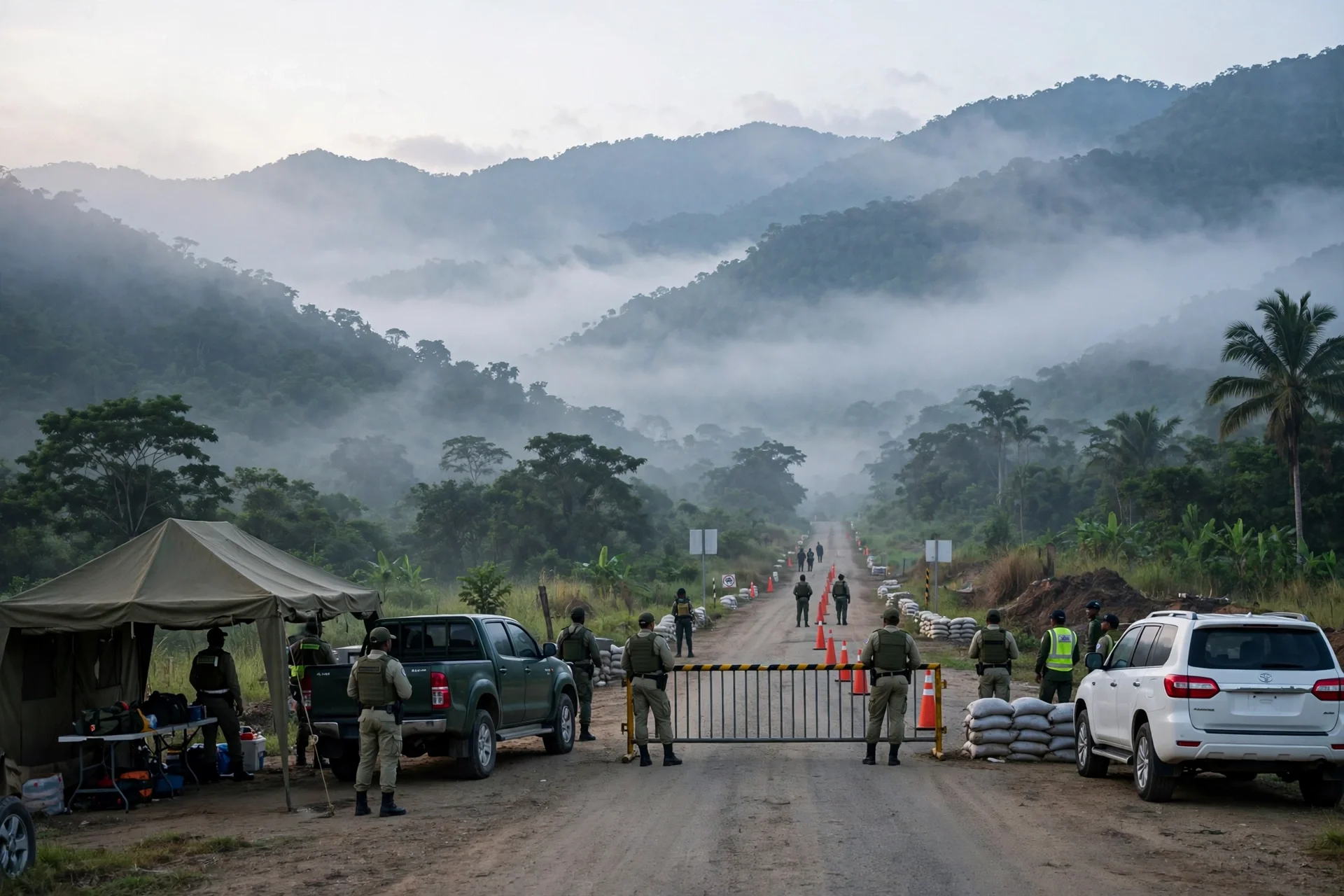
Migration detains thousands and deports over four thousand in three days
The Directorate General of Migration detained 4,618 foreigners in an irregular status and deported 4,173 people after border operations between October 23 and…
Border operation leaves thousands detained and repatriated in three days
The Directorate General of Migration detained 4,618 foreigners in an irregular status and repatriated 4,173 people in operations between October 23 and October…
--- The context ---
The Dominican Republic again placed migration enforcement at the center of public attention with operations across border provinces and road corridors linking them to major urban centers. The scale of the detentions and returns calls for attention not only to the operational result, but also to how each case was verified and how the people intercepted were treated throughout a fast moving procedure involving several security institutions.
--- The facts ---
The Directorate General of Migration detained 4,618 foreign citizens in an irregular migration status and deported 4,173 people to their country of origin, in operations carried out between Friday, October 23 and Sunday, October 25, 2026. Interdiction work was deployed most intensely along the northwestern and southwestern border lines, as well as on strategic road corridors connecting with the country's main urban centers.
Dajabón led the detentions with 624 people, followed by Elías Piña with 530, Santo Domingo province with 400, Valverde with 361 and Independencia with 334 people held. The Army handed over 1,022 foreigners intercepted in areas under its watch, the Specialized Land Border Security Corps referred 338, the National Police channeled 322 citizens and the Navy contributed 13 additional detainees, in coordinated work with the Armed Forces and the National Police.
--- The positions ---
The institution attributed the actions to instructions from its director general, Vice Admiral Luis Rafael Lee Ballester, and presented them as strict compliance with the General Migration Law 285-04. It also said it maintains a rigorous screening process to verify the criminal records of detainees before processing their return through official border control posts. That institutional account coexists with the demand that each detention remain documented, reviewable and respectful of basic safeguards in every individual case.
--- What remains unknown ---
The available information does not detail how many of those deported were able to present documents, challenge their status or obtain assistance during verification. It also does not specify custody times, transfer conditions or individual outcomes of the criminal record screening, so the public balance is limited to totals by province and by participating corps.
--- Unanswered questions ---
How many detained people were able to prove residence or a pending migration process before being returned? What safeguards were applied to prevent separations or identification errors during the operations? Will the institution publish a breakdown of the criminal record screening results? Will there be an independent mechanism to review claims filed after the deportations already carried out?
--- EPM analysis ---
The operation shows a broad and coordinated deployment capacity, supported by provincial figures verifiable within the official account itself. Its legitimacy, however, does not depend only on the volume reached in three days, but on the traceability of each individual decision and on the quality of the verification applied to each person intercepted.
📌 EPM Take: In EPM's view, effective migration control gains credibility when every detention can be explained through clear records, individual verification and verifiable respect for the safeguards owed to the people affected. The figures from this operation are substantial and show state coordination, but public judgment will remain incomplete while the case by case results of the announced screening stay unknown. Publishing that traceability, guarding against errors and reporting after each deployment would strengthen migration policy without weakening the Dominican state's legitimate authority at its border.
--- The context ---
Border control and the monitoring of internal corridors again proved to be an operational priority for the Dominican state, with deployments concentrated in the northwest and southwest and on strategic roads toward urban centers. Amid sustained migration pressure, the joint action of the security corps seeks to preserve territorial order, enforce the law and send a clear signal of authority in response to irregular stays in the country.
--- The facts ---
The Directorate General of Migration detained 4,618 foreign citizens in an irregular migration status and deported 4,173 people to their country of origin, in operations carried out between Friday, October 23 and Sunday, October 25, 2026. Interdiction work was deployed most intensely in the border provincial demarcations and on strategic road corridors that connect with the country's main urban centers.
Dajabón recorded 624 detentions, followed by Elías Piña with 530, Santo Domingo province with 400, Valverde with 361 and Independencia with 334 people held. The Army handed over 1,022 foreigners, the Specialized Land Border Security Corps referred 338, the National Police channeled 322 and the Navy contributed 13 additional detainees, within coordinated participation by the Armed Forces and the National Police to guarantee territorial order.
--- The positions ---
The agency explained that the actions respond to instructions from its director general, Vice Admiral Luis Rafael Lee Ballester, in strict compliance with the General Migration Law 285-04. It also stated that it maintains a rigorous screening process to verify the criminal records of detainees before processing their return through the official border control posts along the boundary line. The institutional position is therefore one of firm and orderly application of the law in force.
--- What remains unknown ---
The report does not specify how many of those intercepted were found to have criminal records after screening, nor how the returns were distributed among the different official posts. It also does not detail the schedule for continuing the operations, although those details do not alter the central fact of a broad deployment with results quantified by territory and institution.
--- Unanswered questions ---
Will operations of this intensity continue in the provinces with the most detentions in the coming weeks? How many detainees were found to have criminal records after the rigorous screening announced by the institution? What reinforcements will the road corridors where interdiction was concentrated receive? How will authorities ensure that those repatriated do not immediately reenter through unofficial crossings?
--- EPM analysis ---
The results reflect an active chain of command and effective coordination among migration authorities, the Army, the border corps, the National Police and the Navy. The concentration in Dajabón and Elías Piña confirms where the greatest pressure lies. Sustaining that level of control, with screening before return, turns a one off operation into a lasting order policy.
📌 EPM Take: In EPM's view, defending migration order requires constancy, territorial presence and strict compliance with the General Migration Law 285-04, and this operation shows those three conditions in motion. Detaining thousands of people in an irregular status and carrying out returns through official posts reinforces state authority and protects border communities. The challenge now is to sustain the pace, close off routes for reentry and maintain the institutional coordination that made a result of this scale possible across the border provinces.
Migración detiene a miles y repatria a más de cuatro mil en tres días
La Dirección General de Migración detuvo a 4,618 extranjeros en situación irregular y deportó a 4,173 personas tras operativos fronterizos entre el 23 y el 25…
Operativo fronterizo deja miles de detenidos y repatriados en tres días
La Dirección General de Migración detuvo a 4,618 extranjeros en situación irregular y repatrió a 4,173 personas en operativos entre el 23 y el 25 de octubre de…
--- El contexto ---
La República Dominicana volvió a situar el control migratorio en el centro de la agenda pública con una serie de operativos desplegados en provincias fronterizas y en corredores viales que conectan con los principales centros urbanos. La magnitud de las detenciones y de los retornos anunciados obliga a mirar no solo el resultado operativo, sino también la forma en que se verificó cada caso y el trato dado a las personas interceptadas durante todo el procedimiento.
--- Los hechos ---
La Dirección General de Migración detuvo a 4,618 ciudadanos extranjeros en condición migratoria irregular y procedió con la deportación de 4,173 personas hacia su país de origen, en operativos realizados entre el viernes 23 y el domingo 25 de octubre de 2026. Las labores se concentraron con mayor intensidad en las líneas fronterizas del noroeste y del suroeste, además de corredores viales estratégicos.
Dajabón encabezó las detenciones con 624 personas, seguida por Elías Piña con 530, la provincia Santo Domingo con 400, Valverde con 361 e Independencia con 334. El Ejército entregó a 1,022 extranjeros interceptados en zonas bajo su vigilancia, el Cuerpo Especializado de Seguridad Fronteriza Terrestre remitió a 338, la Policía Nacional canalizó a 322 y la Armada aportó 13 detenidos adicionales, en una actuación coordinada con las Fuerzas Armadas y la Policía Nacional.
--- Las posiciones ---
La institución atribuyó las acciones a las instrucciones de su director general, el vicealmirante Luis Rafael Lee Ballester, y las presentó como cumplimiento estricto de la Ley General de Migración 285-04. También sostuvo que mantiene una depuración rigurosa para verificar antecedentes penales antes de tramitar cada retorno por puestos oficiales. Esa explicación institucional convive con la exigencia de que cada detención quede documentada, sea revisable y respete garantías básicas en cada caso concreto.
--- Lo que falta saber ---
La información disponible no detalla cuántas de las personas deportadas pudieron presentar documentos, impugnar su situación o acceder a asistencia durante la verificación. Tampoco precisa tiempos de custodia, condiciones de traslado ni resultados individuales de la depuración de antecedentes, por lo que el balance público se limita a totales por provincia y por cuerpo participante.
--- Preguntas sin respuesta ---
¿Cuántas personas detenidas pudieron acreditar residencia o un trámite migratorio en curso antes del retorno? ¿Qué salvaguardas se aplicaron para evitar separaciones o errores de identificación durante los operativos? ¿Publicará la institución un desglose de los resultados de la verificación de antecedentes penales? ¿Habrá un mecanismo independiente para revisar reclamos posteriores a las deportaciones ya ejecutadas?
--- Análisis EPM ---
El operativo muestra una capacidad de despliegue amplia y coordinada, sostenida en cifras provinciales verificables dentro del propio parte. Su legitimidad, sin embargo, no depende solo del volumen alcanzado en tres días, sino de la trazabilidad de cada decisión individual y de la calidad de la verificación aplicada a cada persona interceptada.
📌 Conclusion EPM: A juicio de EPM, un control migratorio eficaz gana credibilidad cuando cada detención puede explicarse con registros claros, verificación individual y respeto verificable por las garantías de las personas afectadas. Las cifras de este operativo son contundentes y muestran coordinación estatal, pero el juicio público quedará incompleto mientras no se conozcan los resultados caso por caso de la depuración anunciada. Publicar esa trazabilidad, proteger contra errores y rendir cuentas después de cada despliegue fortalecería la política migratoria sin debilitar la autoridad legítima del Estado dominicano en su frontera.
--- El contexto ---
El control de la frontera y de los corredores internos volvió a demostrarse como una prioridad operativa para el Estado dominicano, con despliegues concentrados en el noroeste y el suroeste y en vías estratégicas hacia los centros urbanos. En un contexto de presión migratoria sostenida, la actuación conjunta de los cuerpos de seguridad busca preservar el orden territorial, hacer cumplir la ley y enviar una señal clara de autoridad frente a la permanencia irregular.
--- Los hechos ---
La Dirección General de Migración detuvo a 4,618 ciudadanos extranjeros en condición migratoria irregular y procedió con la deportación de 4,173 personas hacia su país de origen, en operativos realizados entre el viernes 23 y el domingo 25 de octubre de 2026. Las labores de interdicción se desplegaron con mayor intensidad en las demarcaciones provinciales fronterizas y en corredores viales estratégicos del país.
Dajabón registró 624 detenciones, seguida por Elías Piña con 530, la provincia Santo Domingo con 400, Valverde con 361 e Independencia con 334 retenidos. El Ejército entregó a 1,022 extranjeros, el Cuerpo Especializado de Seguridad Fronteriza Terrestre remitió a 338, la Policía Nacional canalizó a 322 y la Armada aportó 13 detenidos adicionales, dentro de una participación coordinada de las Fuerzas Armadas y la Policía Nacional para garantizar el orden territorial.
--- Las posiciones ---
La entidad explicó que las acciones responden a las instrucciones de su director general, el vicealmirante Luis Rafael Lee Ballester, en estricto cumplimiento de la Ley General de Migración 285-04. Además, puntualizó que mantiene una depuración rigurosa para verificar los antecedentes penales de los detenidos antes de tramitar su retorno por los puestos oficiales de control fronterizo. La posición institucional es, por tanto, de aplicación firme y ordenada de la norma vigente.
--- Lo que falta saber ---
El parte no precisa cuántos de los interceptados registraban antecedentes tras la depuración ni cómo se distribuyeron los retornos entre los distintos puestos oficiales. Tampoco detalla el calendario de continuidad de los operativos, aunque esas precisiones no alteran el hecho central de un despliegue amplio con resultados cuantificados por territorio e institución.
--- Preguntas sin respuesta ---
¿Se mantendrán operativos de esta intensidad en las provincias con más detenciones durante las próximas semanas? ¿Cuántos detenidos resultaron con antecedentes penales tras la depuración rigurosa anunciada por la institución? ¿Qué refuerzos recibirán los corredores viales donde se concentró la interdicción? ¿Cómo se garantizará que quienes fueron repatriados no reingresen de inmediato por pasos no oficiales?
--- Análisis EPM ---
Los resultados reflejan una cadena de mando activa y una coordinación efectiva entre migración, Ejército, cuerpo fronterizo, Policía Nacional y Armada. La concentración en Dajabón y Elías Piña confirma dónde se sitúa la mayor presión. Sostener ese nivel de control, con verificación previa al retorno, convierte un operativo puntual en una política de orden duradera.
📌 Conclusion EPM: A juicio de EPM, la defensa del orden migratorio exige constancia, presencia territorial y cumplimiento estricto de la Ley General de Migración 285-04, y este operativo muestra esas tres condiciones en marcha. Detener a miles de personas en situación irregular y ejecutar los retornos por puestos oficiales refuerza la autoridad del Estado y protege a las comunidades fronterizas. El desafío ahora es sostener el ritmo, cerrar los pasos de reingreso y mantener la coordinación institucional que hizo posible un resultado de esta magnitud.