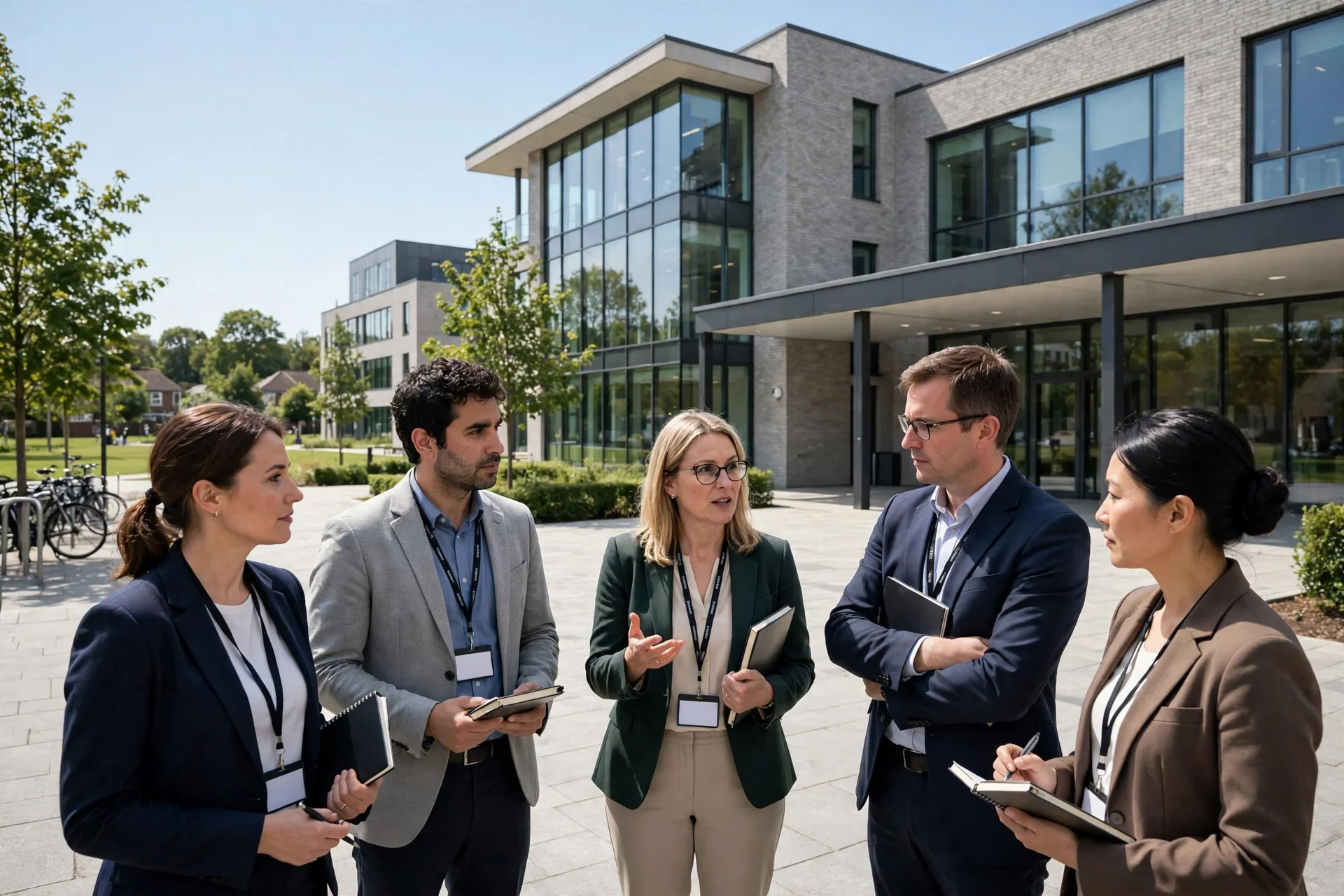
Britain opens national school of government campus in York
Cabinet Office Minister Mark Ferguson opened the new National School of Government in York, offering training from day one, including artificial intelligence…
London bets on in-house training for its civil servants
The British government opened its national school of government in York to train civil servants and public leaders in-house, with artificial intelligence…
--- The context ---
The British government has launched an institution designed to ensure that the civil service has the knowledge and skills it needs to deliver the government's priorities and serve people across the whole country.
The premise is straightforward: a world-class public service requires staff who keep learning throughout their careers, with modern facilities close to where they live and work rather than concentrated only in the capital.
--- The facts ---
Cabinet Office Minister Mark Ferguson today opened the new National School of Government and Public Services, which will provide training for civil servants and public sector leaders, with its first dedicated residential campus in York.
From day one the school will roll out a range of training programmes, including artificial intelligence training, for all civil servants, building a curriculum around skills such as devolution, national security, leadership and innovation.
Regional hubs will be developed across the country, with the first opened in York this week, alongside digital access routes giving staff modern learning facilities close to where they live and work.
--- The positions ---
The Cabinet Office Minister argued that the opening is a unique opportunity to upskill civil servants in the areas that matter most, with artificial intelligence among the top priorities from the very first day.
The British government also points to results already achieved with artificial intelligence: an emergency demand forecasting tool is now in use across 50 NHS organisations, helping hospitals predict peak periods and plan staffing, while artificial intelligence tutoring tools in schools target halving the attainment gap for disadvantaged students.
--- What remains unknown ---
It remains unclear how the offer will be divided between the York campus, the future regional hubs and the digital routes, and how quickly each department will move its staff through the new programmes.
--- Unanswered questions ---
How many civil servants will pass through the school in its first full cycle of activity? How much of the training will be residential in York and how much will reach the rest of the country digitally? How will anyone measure whether the new institution genuinely raises public sector productivity?
--- EPM analysis ---
The launch forms part of a broader drive to boost public sector productivity and accelerate progress towards digitally enabled public services, and the school has partnered with the annual One Big Thing learning initiative, whose theme this year is artificial intelligence in action.
📌 EPM Take: In EPM's view, the York school turns civil service training into permanent public infrastructure rather than an occasional purchase, and that shift in approach may deliver more than any isolated course. What matters now is that digital access and regional hubs genuinely reach the whole country, that artificial intelligence stays a universal skill for every official, and that results are measured with the same rigour used to announce the opening.
--- The context ---
The British executive wants to depend less on external training and consultants, and has therefore created its own school to give the civil service the knowledge and skills it needs to deliver government priorities.
The declared logic is one of efficiency: bringing training in-house will reduce spending on external training over time, as the school becomes fully established and reaches scale across the country.
--- The facts ---
Cabinet Office Minister Mark Ferguson today opened the new National School of Government and Public Services, created for civil servants and public sector leaders, with its first dedicated residential campus outside the capital, in York.
From day one it will roll out training programmes, including artificial intelligence, for all civil servants, with a curriculum built around devolution, national security, leadership, innovation and management skills that every official needs.
The plan rests on concrete savings targets: halving government spending on external consultants and reducing departmental administration costs by 16% over the next five years, delivering savings of over £2 billion a year for the taxpayer by 2030.
--- The positions ---
The Cabinet Office Minister maintained that the school upskills staff in the areas that matter most and that its creation shows the civil service values its people and invests in their growth.
The British government supports that case with recent artificial intelligence results: an emergency demand forecasting tool already operates across 50 NHS organisations, and artificial intelligence tutoring tools in schools aim to halve the attainment gap for disadvantaged students.
--- What remains unknown ---
What remains unknown is how much the campus and regional hubs will cost to run, how that cost will compare with the external spending they are meant to replace, and what oversight will verify the promised savings.
--- Unanswered questions ---
Will in-house training match the quality the state currently buys outside? Will the cut in spending on external consultants arrive within the timetable set by the British government? What public indicators will show that the school saves money instead of simply adding another structure?
--- EPM analysis ---
The school has partnered with the annual One Big Thing learning initiative, devoted this year to artificial intelligence in action, and its success will depend on cost discipline matching its training ambition from the first course onwards.
📌 EPM Take: In EPM's view, this school will be judged on the accounts rather than on the opening speech: if in-house training replaces external spending at equal or better quality, the taxpayer wins twice. The risk is the familiar one with any new institution, that the structure grows while the costs it promises to cut do not fall, which is why transparency about the actual savings by 2030 will be the decisive test of the project.
Reino Unido abre en York su escuela nacional de gobierno
El ministro de la Oficina del Gabinete, Mark Ferguson, abrió en York la nueva escuela nacional de gobierno británica, con formación desde el primer día…
Londres apuesta por formar en casa a sus funcionarios
El Gobierno británico abrió en York su escuela nacional de gobierno para formar en casa a funcionarios y líderes públicos, con programas de inteligencia…
--- El contexto ---
El Gobierno británico ha puesto en marcha una institución pensada para que la función pública tenga los conocimientos y las competencias que necesita para cumplir las prioridades del Ejecutivo y responder ante la ciudadanía de todo el país.
La apuesta parte de una idea sencilla: un servicio público de primer nivel exige personal formado de manera continua, con acceso a aprendizaje moderno cerca de donde vive y trabaja, y no solo en la capital.
--- Los hechos ---
El ministro de la Oficina del Gabinete, Mark Ferguson, abrió hoy la nueva National School of Government and Public Services, que ofrecerá formación a funcionarios y a líderes del sector público, con su primer campus residencial dedicado en York.
La escuela desplegará desde el primer día una gama de programas de formación, incluida la inteligencia artificial, para todos los funcionarios, y construirá su currículo en torno a competencias como la devolución de competencias, la seguridad nacional, el liderazgo y la innovación.
Se desarrollarán centros regionales por todo el país, con el primero abierto esta semana en York, junto a vías de acceso digital que acercarán instalaciones modernas de aprendizaje a los lugares donde el personal vive y trabaja.
--- Las posiciones ---
Según explicó el ministro de la Oficina del Gabinete, la apertura representa una oportunidad única para elevar las competencias de los funcionarios en las áreas que más importan, con la inteligencia artificial entre las prioridades principales.
El Gobierno británico sostiene además que la formación en inteligencia artificial ya muestra resultados: una herramienta de previsión de demanda de urgencias funciona en 50 organizaciones del NHS y ayuda a los hospitales a anticipar picos y planificar mejor el personal, mientras las tutorías con inteligencia artificial en escuelas buscan reducir a la mitad la brecha de resultados de los estudiantes desfavorecidos.
--- Lo que falta saber ---
Todavía no se conocen los detalles completos de cómo se repartirá la oferta entre el campus de York, los futuros centros regionales y las rutas digitales, ni el ritmo con el que cada departamento incorporará a su personal a los nuevos programas.
--- Preguntas sin respuesta ---
¿Cuántos funcionarios pasarán por la escuela en su primer ciclo completo de actividad? ¿Qué parte de la formación será presencial en York y qué parte llegará por vías digitales al resto del país? ¿Cómo se medirá si la nueva institución eleva de verdad la productividad del sector público?
--- Análisis EPM ---
La iniciativa se inscribe en un impulso más amplio por reforzar la productividad pública y acelerar el avance hacia servicios digitales propios de un Estado moderno, y la escuela se ha aliado con la iniciativa anual de aprendizaje One Big Thing, cuyo tema este año es la inteligencia artificial en acción.
📌 Conclusion EPM: A juicio de EPM, la escuela de York convierte la formación del funcionariado en infraestructura pública permanente y no en un gasto ocasional, y ese cambio de enfoque puede rendir más que cualquier curso aislado. La clave estará en que el acceso digital y los centros regionales lleguen de verdad a todo el país, en que el currículo mantenga la inteligencia artificial como competencia universal y en que los resultados se midan con la misma exigencia con la que hoy se anuncia la apertura.
--- El contexto ---
El Ejecutivo británico quiere depender menos de la formación externa y de los consultores, y para ello ha creado una escuela propia encargada de dotar a la función pública de los conocimientos y las competencias que necesita.
La lógica declarada es de eficiencia: traer la formación a casa reducirá con el tiempo el gasto en capacitación externa, a medida que la institución quede plenamente establecida y gane escala en todo el país.
--- Los hechos ---
El ministro de la Oficina del Gabinete, Mark Ferguson, abrió hoy la nueva National School of Government and Public Services, destinada a funcionarios y líderes del sector público, con su primer campus residencial dedicado fuera de la capital, en York.
Desde el primer día se desplegarán programas de formación, incluida la inteligencia artificial, para todos los funcionarios, con un currículo construido en torno a la devolución de competencias, la seguridad nacional, el liderazgo, la innovación y la gestión.
El plan se apoya en metas de ahorro concretas: reducir a la mitad el gasto gubernamental en consultores externos y recortar un 16% los costes administrativos departamentales en los próximos cinco años, con ahorros de más de 2 mil millones de libras al año para el contribuyente en 2030.
--- Las posiciones ---
El ministro de la Oficina del Gabinete defendió que la escuela eleva las competencias en las áreas que más importan y que su creación demuestra que la función pública valora a su gente e invierte en su crecimiento.
El Gobierno británico respalda esa defensa con resultados recientes de la inteligencia artificial: una herramienta de previsión de demanda de urgencias opera ya en 50 organizaciones del NHS, y las tutorías con inteligencia artificial en escuelas persiguen reducir a la mitad la brecha de resultados de los estudiantes desfavorecidos.
--- Lo que falta saber ---
Falta por saber cuánto costará sostener el campus y los centros regionales, cómo se comparará ese coste con el gasto externo que se pretende recortar y qué mecanismos de control verificarán que el ahorro prometido se materializa.
--- Preguntas sin respuesta ---
¿Alcanzará la formación interna la calidad que hoy se compra fuera del Estado? ¿Se cumplirá el recorte del gasto en consultores externos en el plazo previsto por el Gobierno británico? ¿Qué indicadores públicos permitirán comprobar que la escuela ahorra dinero en lugar de añadir una estructura más?
--- Análisis EPM ---
La escuela se ha aliado con la iniciativa anual de aprendizaje One Big Thing, dedicada este año a la inteligencia artificial en acción, y su éxito dependerá de que la disciplina de costes acompañe a la ambición formativa desde el primer curso.
📌 Conclusion EPM: A juicio de EPM, el valor de esta escuela se juzgará en las cuentas y no en el discurso inaugural: si la formación interna sustituye gasto externo con igual o mejor calidad, el contribuyente gana dos veces. El riesgo es el de toda institución nueva, que crezca la estructura sin que caigan los costes que promete recortar, y por eso la transparencia sobre el ahorro efectivo en 2030 será la prueba decisiva de este proyecto.