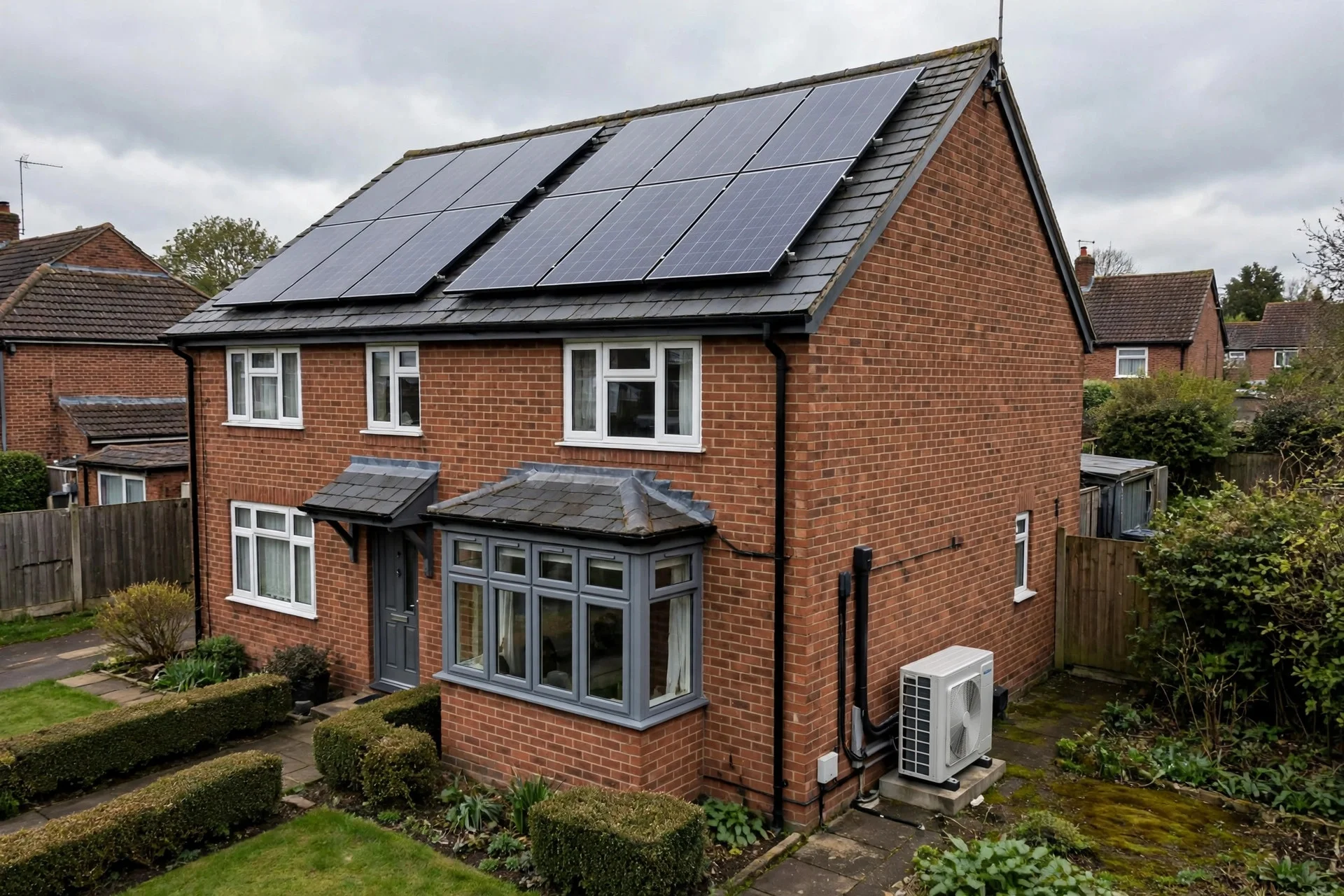
London launches interest-free loans for solar panels and heat pumps
The British government presents no- and low-interest loans to install heat pumps, batteries and solar panels with no upfront cost, with estimated savings of up…
Cheap loans to warm British homes without paying upfront
The Warm Homes Loan Scheme lets households finance heat pumps, batteries and solar panels with no upfront cost across the UK, with ten initial lenders and a…
--- The context ---
The British government has launched the Warm Homes Loan Scheme, government-backed no- and low-interest loans to install heat pumps, batteries and solar panels with no upfront cost.
Demand is soaring, with almost 150,000 solar panel installations in the first six months of this year and heat pump sales at a record high in 2025.
--- The facts ---
Installing a heat pump, battery and solar panels could save up to £550 a year on energy bills, rising by a further £300 a year with a time-of-use tariff.
The loans are available across the entire UK, in England, Scotland, Wales and Northern Ireland, with an up-to-5 per cent reduction in interest rates from regular loans.
As an example, borrowing £10,000, at 8%, over seven years would mean repaying around £155 a month with a loan available right now, while through the scheme the same homeowner could save up to £285 a year on repayments, alongside ten lenders initially offering loans, some interest free, with up to thirty years to repay in some cases.
Homeowners can also combine a loan with a grant of up to £9,000 through the Boiler Upgrade Scheme, further reducing the cost of installing a heat pump.
--- The positions ---
Energy Secretary Miatta Fahnbulleh said in reported terms that energy must be affordable for everyone, and argued that these loans will help families upgrade their homes with no upfront costs, making them warmer and cheaper to run.
--- What remains unknown ---
The maximum loan for each technology is set clearly: solar panels up to £15,000, an electrical storage battery up to £15,000, an air-water heat pump up to £20,000, an air-air heat pump up to £10,000, a ground source heat pump up to £35,000, a biomass boiler up to £20,000, a heat network connection up to £7,500 and a micro-renewable system up to £20,000.
All installations, except for heat network connections, will be carried out by MCS-certified installers, meeting recognised technical and consumer-protection standards.
--- Unanswered questions ---
How many households will take up the scheme in its first stage? Will the savings outweigh monthly repayments for homes with lower energy use? Will new lenders join to widen competition?
--- EPM analysis ---
The design replaces the upfront cost with payments spread over years, combining cheaper credit and a direct grant.
📌 EPM Take: In EPM's view, the strength of the scheme lies in joining interest-free or cheap credit, a combinable grant and certified standards in a single route open across the whole country. If the ten initial lenders truly compete and long terms do not inflate the total cost, thousands of households can cut bills without paying upfront. The real test will be actual take-up and proven savings in each home, not the initial announcement of the British government programme itself.
--- The context ---
The Warm Homes Loan Scheme offers government-backed no- and low-interest loans so households can install heat pumps, batteries and solar panels without any upfront cost.
Demand is rising: almost 150,000 solar panel installations in the first six months of this year and heat pump sales at a record high in 2025, though the upfront cost held many families back.
--- The facts ---
Installing a heat pump, battery and solar panels could save families up to £550 a year on energy bills, plus £300 a year with a time-of-use tariff.
The offer covers the entire UK, in England, Scotland, Wales and Northern Ireland, with an agreed up-to-5 per cent reduction in rates from regular loans, so that borrowing £10,000, at 8%, over seven years, at around £155 a month on a loan available right now, could save up to £285 a year on repayments through the scheme.
Ten lenders are initially offering loans, some interest free, with up to thirty years to repay in some cases, and homeowners can combine a loan with a grant of up to £9,000 through the Boiler Upgrade Scheme to reduce the cost of installing a heat pump.
--- The positions ---
Energy Secretary Miatta Fahnbulleh argued in reported terms that energy must be affordable for everyone, and that helping with the upfront cost will make homes warmer and cheaper to run with no upfront costs.
--- What remains unknown ---
Each technology carries its own maximum: solar panels up to £15,000, a battery up to £15,000, an air-water heat pump up to £20,000, an air-air heat pump up to £10,000, a ground source heat pump up to £35,000, biomass up to £20,000, a heat network connection up to £7,500 and a micro-renewable system up to £20,000, with MCS-certified installers required except for heat network connections.
This is the first part of the offer, with further lenders and products expected as the scheme develops.
--- Unanswered questions ---
What terms will each of the ten initial lenders offer? How much will an average home save once its monthly repayment is counted? Will the government raise the caps if demand exceeds expectations?
--- EPM analysis ---
Prudence requires looking at the total cost, not only the monthly payment: terms of up to thirty years spread the burden.
📌 EPM Take: In EPM's view, the scheme is right to attack the upfront cost without demanding payment in advance, and requiring certified installers protects consumers against poor installations. Its weak point is the small print of each lender, because the promised reduction and the annual saving will depend on the rate applied and the term chosen. Comparing offers and adding the available grant will decide whether bill savings clearly exceed the total financing cost over time.
Londres lanza préstamos sin interés para paneles solares y bombas de calor
El Gobierno británico presenta préstamos sin interés o de bajo interés para instalar bombas de calor, baterías y paneles solares sin coste inicial, con un…
Préstamos baratos para calentar hogares británicos sin pagar por adelantado
El Warm Homes Loan Scheme permite financiar bombas de calor, baterías y paneles solares sin coste inicial en todo el Reino Unido, con diez prestamistas…
--- El contexto ---
El Gobierno británico ha lanzado el Warm Homes Loan Scheme, préstamos sin interés o de bajo interés, con respaldo gubernamental, para instalar bombas de calor, baterías y paneles solares sin coste inicial.
La demanda crece con fuerza, con casi 150,000 instalaciones solares en los primeros seis meses del año y ventas de bombas de calor en récord en 2025.
--- Los hechos ---
Instalar bomba de calor, batería y paneles solares podría ahorrar hasta £550 al año en facturas, con £300 más al año con una tarifa por franjas horarias.
Los préstamos están disponibles en todo el Reino Unido, en Inglaterra, Escocia, Gales e Irlanda del Norte, y buscan dejar a los hogares menos expuestos a sacudidas de precios por conflictos en el exterior.
El Gobierno acordó una reducción de hasta 5 por ciento en los tipos frente a préstamos normales, y pone como ejemplo £10,000 al 8% en siete años, con pagos cercanos a £155 al mes y un ahorro de hasta £285 al año en pagos.
Diez prestamistas ofrecen inicialmente estos préstamos, algunos sin interés, con plazos de hasta treinta años en algunos casos, y el préstamo puede combinarse con una subvención de hasta £9,000 del Boiler Upgrade Scheme para abaratar la instalación de una bomba de calor.
--- Las posiciones ---
La secretaria de Energía, Miatta Fahnbulleh, defendió en términos indirectos que la energía debe ser asequible para todos, y sostuvo que estos préstamos ayudarán a las familias a mejorar sus hogares sin costes iniciales, haciéndolos más cálidos y baratos de mantener.
--- Lo que falta saber ---
Los topes máximos por tecnología son claros: paneles solares hasta £15,000, batería de almacenamiento hasta £15,000, bomba de calor aire-agua hasta £20,000, bomba aire-aire hasta £10,000, bomba geotérmica hasta £35,000, caldera de biomasa hasta £20,000, conexión a red de calor hasta £7,500 y sistema micro-renovable hasta £20,000.
Todas las instalaciones, salvo las conexiones a redes de calor, correrán a cargo de instaladores certificados MCS, con estándares técnicos y de protección al consumidor reconocidos.
--- Preguntas sin respuesta ---
¿Cuántos hogares se acogerán al esquema en su primera etapa? ¿Compensarán los ahorros los pagos mensuales en hogares con menor consumo? ¿Se sumarán prestamistas nuevos para ampliar la competencia?
--- Análisis EPM ---
El diseño sustituye el coste inicial por pagos repartidos en años, con crédito barato y subvención directa.
📌 Conclusion EPM: A juicio de EPM, el valor del esquema está en unir crédito sin interés o barato, subvención acumulable y estándares certificados en una sola vía accesible para todo el país. Si los diez prestamistas iniciales compiten de verdad y los plazos largos no encarecen el coste total, miles de hogares podrán recortar facturas sin adelantar dinero. La prueba será la adopción real y el ahorro comprobado en cada vivienda, no el anuncio inicial del programa gubernamental británico.
--- El contexto ---
El Warm Homes Loan Scheme ofrece préstamos sin interés o de bajo interés, con respaldo gubernamental, para instalar bombas de calor, baterías y paneles solares sin pagar nada por adelantado.
La demanda crece: casi 150,000 instalaciones solares en los primeros seis meses del año y ventas de bombas de calor en récord en 2025, aunque el coste inicial frenaba a muchas familias.
--- Los hechos ---
Instalar bomba de calor, batería y paneles solares podría ahorrar hasta £550 al año en facturas, y £300 más al año con una tarifa por franjas horarias.
La oferta cubre todo el Reino Unido, en Inglaterra, Escocia, Gales e Irlanda del Norte, con una reducción acordada de hasta 5 por ciento en los tipos frente a préstamos normales, de modo que un préstamo de £10,000 al 8% en siete años, con pagos cercanos a £155 al mes, podría ahorrar hasta £285 al año en pagos.
Diez prestamistas participan al inicio, algunos con préstamos sin interés y plazos de hasta treinta años en algunos casos, y el crédito es combinable con una subvención de hasta £9,000 del Boiler Upgrade Scheme destinada a la instalación de bombas de calor en los hogares.
--- Las posiciones ---
La secretaria de Energía, Miatta Fahnbulleh, argumentó en términos indirectos que la energía debe ser asequible para todos, y que ayudar con el coste inicial permitirá hogares más cálidos y baratos de mantener sin costes por adelantado.
--- Lo que falta saber ---
Cada tecnología tiene su tope máximo: solares hasta £15,000, batería hasta £15,000, bomba aire-agua hasta £20,000, bomba aire-aire hasta £10,000, bomba geotérmica hasta £35,000, biomasa hasta £20,000, red de calor hasta £7,500 y sistema micro-renovable hasta £20,000, siempre con instaladores certificados MCS salvo en las conexiones a redes de calor.
Esta es la primera etapa del esquema, con más prestamistas y productos previstos a medida que se desarrolle.
--- Preguntas sin respuesta ---
¿Qué condiciones ofrecerá cada uno de los diez prestamistas iniciales? ¿Cuánto ahorrará un hogar medio tras pagar su cuota mensual? ¿Ampliará el Gobierno los topes si la demanda supera lo previsto?
--- Análisis EPM ---
La prudencia manda mirar el coste total, no solo la cuota: plazos de hasta treinta años reparten el pago.
📌 Conclusion EPM: A juicio de EPM, el esquema acierta al atacar el coste inicial sin obligar a pagar por adelantado, y al exigir instaladores certificados protege al consumidor frente a instalaciones deficientes. Su punto débil es la letra pequeña de cada prestamista, porque la reducción prometida y el ahorro anual dependerán del tipo aplicado y del plazo elegido. Comparar ofertas y sumar la subvención disponible será decisivo para que el ahorro en facturas supere con claridad el coste financiero total.