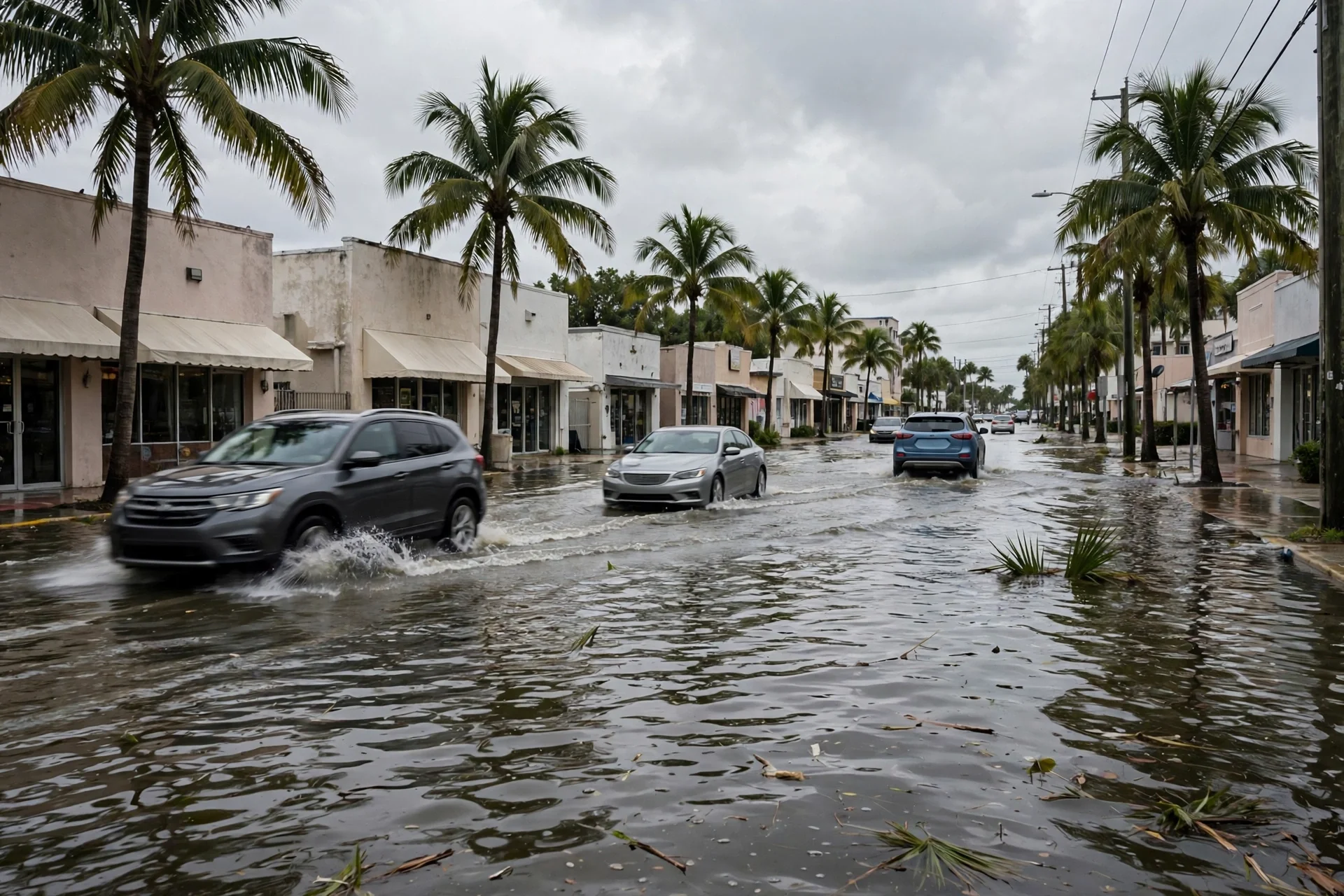
Calle anegada por mareas altas en el sur de Florida, con palmeras y vehículos avanzando sobre el agua. · Erick Prometeo Media
High tides flood South Florida and expose an overwhelmed drainage system
South Florida faces coastal flooding from syzygy tides this Tuesday in Miami, Miami Beach and Fort Lauderdale, with the Las Olas bridge closed, flooded streets…
King tides flood Miami and Fort Lauderdale and close the Las Olas bridge
Syzygy tides flooded low-lying areas of Miami, Miami Beach and Fort Lauderdale this Tuesday: the Las Olas bridge closed at both ends, streets covered with…
--- The context ---
South Florida faces an elevated risk of coastal flooding from high tides this Tuesday in low-lying areas of Miami, Miami Beach and Fort Lauderdale, with what could become the most widespread flooding of the year, with no hurricane or tropical storm involved.
Astronomical tides, known as syzygy tides or king tides, result from the alignment of the Sun, the Moon and the Earth. That configuration raises sea level and, combined with onshore wind or low pressure, pushes water over streets and shoreline properties.
--- The facts ---
The coincidence of the syzygy tide, onshore winds and intermittent rain reduced the capacity of canals and drains to evacuate water. The effect can persist after the rain stops, because seawater prevents the usual discharge of drainage systems.
In Fort Lauderdale, flooding forced the closure of the Las Olas bridge at both ends. In Miami Beach, water reached roads, sidewalks and areas near shops and homes. There were also flooded streets, traffic restrictions and trapped vehicles across the metropolitan area.
--- The positions ---
Local authorities recommended avoiding flooded streets, not driving through water-covered areas and heeding road closure notices. Fort Lauderdale warned that water can reach low areas through canals and drains or overtop containment walls, and that pumps have limited effectiveness at high levels.
A meteorologist and researcher at the University of Miami explained that the combination of a high astronomical tide and a low-pressure system could push more water against the coast, and that intensity depends on the timing of high tide, wind direction and accumulated rain. A Florida Atlantic University researcher warned that repeated flooding affects infrastructure, sanitation systems and traffic.
--- What remains unknown ---
Since 1994, Miami has accumulated close to 20 centimeters of sea-level rise. Cited projections foresee 0.61 meters by 2060 and up to 1.83 meters by 2100, while regional drainage was designed decades ago under different conditions. In 2025, the federal emergency agency canceled nearly USD 148 million in flood grants for the South Florida Water Management District, with no public evidence of restitution in 2026.
--- Unanswered questions ---
How long will the affected roads and beach accesses remain closed in each city? Which neighborhoods will flood again at the next high tide if wind and rain coincide? Will the canceled federal funds for strengthening South Florida drainage ever be replaced?
--- EPM analysis ---
On the central coast, a meteorologist explained that the same alignment raises tides and accelerates erosion, and Satellite Beach closed its pedestrian beach accesses until further notice. Water no longer arrives only with storms: it arrives with the lunar calendar.
📌 EPM Take: In EPM's view, this Tuesday was not a weather accident but a stress test the region failed: predictable tides, drainage designed for another sea level and canceled federal funds form a combination that will return with every intense high tide. Defending coastal communities requires investing in infrastructure, sanitation and protection for low-lying neighborhoods before the 2060 projections become the autumn routine across South Florida. Protecting homes, businesses and basic services must come before the water, not after it, and every delayed project raises the final bill for taxpayers across the whole region.
--- The context ---
South Florida faces an elevated risk of coastal flooding from high tides this Tuesday in low-lying areas of Miami, Miami Beach and Fort Lauderdale, with what could be the most widespread flooding of the year. The phenomenon is known: syzygy tides arrive with the alignment of the Sun, the Moon and the Earth.
That configuration raises sea level and, with onshore wind or low pressure, increases the risk that water will invade streets and shoreline properties.
--- The facts ---
The coincidence of the tide, onshore winds and intermittent rain reduced the capacity of canals and drains to evacuate water, In Fort Lauderdale the Las Olas bridge was closed at both ends, and in Miami Beach water reached roads and areas near shops and homes.
Authorities reported flooded streets, traffic restrictions and trapped vehicles at different points across the metropolitan area. The official recommendation was prudent: avoid flooded streets, do not drive through water-covered sectors and heed road closure notices in the affected coastal zone.
--- The positions ---
The city of Fort Lauderdale warned that water can reach low areas through canals and drains or overtop containment walls, and acknowledged that pumps have limited effectiveness at high levels, because there may be nowhere to take that water, according to the municipal administration.
A meteorologist and researcher at the University of Miami explained that the combination of a high astronomical tide and low pressure could push more water against the coast. A Florida Atlantic University researcher warned that repeated flooding affects infrastructure, sanitation and traffic in coastal cities.
--- What remains unknown ---
Since 1994, Miami has accumulated close to 20 centimeters of sea-level rise, and cited projections foresee 0.61 meters by 2060 and up to 1.83 meters by 2100. Regional drainage systems were designed decades ago under different sea-level conditions than those of today. In 2025, the federal emergency agency canceled nearly USD 148 million in flood grants for the South Florida Water Management District, with no public evidence of restitution in 2026.
--- Unanswered questions ---
When will the Las Olas bridge and the closed accesses in Satellite Beach reopen? What concrete drainage and containment works will cities execute before the next intense high tide? Who will account for the canceled federal funds and the pending maintenance?
--- EPM analysis ---
On the central coast, a meteorologist explained that the same alignment raises tides and accelerates erosion, and Satellite Beach closed its beach accesses until further notice. Management and well-executed works matter more than speeches when water enters the street.
📌 EPM Take: In EPM's view, syzygy tides do not forgive improvisation: they are a phenomenon announced on the calendar and yet they still close bridges, trap vehicles and leave neighborhoods waiting for the water to recede. The serious response is competent management, constant maintenance, drainage and containment works that actually function and clear accounts for every dollar assigned to flooding, starting with the funds canceled in 2025 whose restitution nobody has publicly confirmed to date, before the next announced tide returns to the same streets and the same neighborhoods once again.
Mareas altas inundan el sur de Florida y exponen un drenaje superado
El sur de Florida afronta este martes inundaciones costeras por mareas de sicigia en Miami, Miami Beach y Fort Lauderdale, con cierre del puente de Las Olas…
King tides anegan Miami y Fort Lauderdale y cierran el puente de Las Olas
Mareas de sicigia anegaron este martes zonas bajas de Miami, Miami Beach y Fort Lauderdale: cierre del puente de Las Olas en ambos extremos, calles cubiertas…
--- El contexto ---
El sur de Florida afronta este martes un riesgo elevado de inundaciones costeras por mareas altas en Miami, Miami Beach y Fort Lauderdale, con los anegamientos más extendidos del año, sin huracán ni tormenta de por medio.
Las mareas astronómicas, conocidas como mareas de sicigia o king tides, responden a la alineación del Sol, la Luna y la Tierra. Esa configuración eleva el nivel del mar y, sumada al viento hacia la costa o a la baja presión, empuja el agua sobre calles y propiedades del litoral.
--- Los hechos ---
La coincidencia de la marea de sicigia, los vientos orientados hacia tierra y las lluvias intermitentes redujo la capacidad de canales y desagües para evacuar el agua. El efecto puede prolongarse tras las precipitaciones, porque el agua de mar impide la descarga habitual del drenaje.
En Fort Lauderdale, las inundaciones obligaron a cerrar el puente de Las Olas en ambos extremos. En Miami Beach, el agua alcanzó vías, veredas y sectores próximos a comercios y viviendas. Hubo además calles anegadas, restricciones de circulación y vehículos atrapados en el área metropolitana.
--- Las posiciones ---
Las autoridades recomendaron evitar las calles anegadas, no conducir por sectores cubiertos de agua y atender avisos de cierres viales. Fort Lauderdale advirtió que el agua puede llegar por canales y drenajes o superar los muros de contención, y que las bombas tienen eficacia limitada con niveles altos.
Un meteorólogo e investigador de la Universidad de Miami explicó que la combinación de una marea astronómica elevada y un sistema de baja presión podía empujar más agua contra la costa, y que la intensidad depende del horario de la pleamar, el viento y la lluvia. Una investigadora de la Florida Atlantic University advirtió que los anegamientos repetidos afectan la infraestructura, el saneamiento y la circulación.
--- Lo que falta saber ---
Desde 1994, Miami acumuló cerca de 20 centímetros de subida del nivel del mar, Las proyecciones citadas contemplan 0,61 metros hacia 2060 y hasta 1,83 metros para 2100, mientras los drenajes fueron diseñados décadas atrás bajo otras condiciones. En 2025, la agencia federal de emergencias canceló cerca de USD 148 millones en subvenciones contra inundaciones del Distrito de Gestión del Agua del Sur de Florida, sin evidencia pública de restitución en 2026.
--- Preguntas sin respuesta ---
¿Cuánto tiempo permanecerán cerrados los accesos y vías afectados en cada ciudad? ¿Qué barrios volverán a anegarse en la próxima pleamar si coinciden viento y lluvia? ¿Se repondrán los fondos federales cancelados para reforzar el drenaje del sur de Florida?
--- Análisis EPM ---
En la costa central, una meteoróloga explicó que la misma alineación eleva las mareas y acelera la erosión, y Satellite Beach cerró sus accesos peatonales a la playa hasta nuevo aviso. El agua ya no llega solo con las tormentas: llega con el calendario lunar.
📌 Conclusion EPM: A juicio de EPM, este martes no fue un accidente meteorológico sino una prueba de estrés que la región suspendió: mareas previsibles, drenajes diseñados para otro nivel del mar y fondos federales cancelados forman una combinación que se repetirá con cada pleamar intensa. Defender a las comunidades costeras exige invertir en infraestructura, saneamiento y protección de barrios bajos antes de que las proyecciones de 2060 se conviertan en la rutina de cada otoño en el sur de Florida. La prevención no puede seguir esperando al próximo episodio para volver a la agenda de la región.
--- El contexto ---
El sur de Florida afronta este martes un riesgo elevado de inundaciones costeras por mareas altas en áreas bajas de Miami, Miami Beach y Fort Lauderdale, con la posibilidad de los anegamientos más extendidos del año. El fenómeno es conocido: las mareas de sicigia llegan con la alineación del Sol, la Luna y la Tierra.
Esa configuración eleva el nivel del mar y, con viento hacia la costa o baja presión, aumenta el riesgo de que el agua invada calles y propiedades del litoral.
--- Los hechos ---
La coincidencia de la marea, los vientos orientados hacia tierra y las lluvias intermitentes redujo la capacidad de los canales y desagües para evacuar el agua, En Fort Lauderdale se cerró el puente de Las Olas en ambos extremos y en Miami Beach el agua alcanzó vías y sectores próximos a comercios y viviendas.
Las autoridades informaron de calles anegadas, restricciones de circulación y vehículos atrapados en distintos puntos del área metropolitana. La recomendación oficial fue prudente: evitar las calles anegadas, no conducir por sectores cubiertos de agua y atender los cierres viales.
--- Las posiciones ---
La ciudad de Fort Lauderdale advirtió que el agua puede llegar a las zonas bajas a través de canales y drenajes o superar los muros de contención, y reconoció que las bombas tienen eficacia limitada con niveles altos, porque puede no haber adónde llevar esa agua.
Un meteorólogo e investigador de la Universidad de Miami explicó que la combinación de marea astronómica elevada y baja presión podía empujar más agua contra la costa. Una investigadora de la Florida Atlantic University advirtió que los anegamientos repetidos afectan la infraestructura, el saneamiento y la circulación.
--- Lo que falta saber ---
Desde 1994, Miami acumuló cerca de 20 centímetros de subida del nivel del mar, y las proyecciones contemplan 0,61 metros hacia 2060 y hasta 1,83 metros para 2100. En 2025, la agencia federal de emergencias canceló cerca de USD 148 millones en subvenciones contra inundaciones del Distrito de Gestión del Agua del Sur de Florida, sin evidencia pública de restitución en 2026.
--- Preguntas sin respuesta ---
¿Cuándo reabrirá el puente de Las Olas y los accesos cerrados en Satellite Beach? ¿Qué obras concretas de drenaje y contención ejecutarán las ciudades antes de la próxima pleamar intensa? ¿Quién rendirá cuentas por los fondos federales cancelados y por el mantenimiento pendiente?
--- Análisis EPM ---
En la costa central, una meteoróloga explicó que la misma alineación eleva las mareas y acelera la erosión, y Satellite Beach cerró sus accesos a la playa hasta nuevo aviso. La gestión y la obra bien ejecutada pesan más que los discursos cuando el agua entra en la calle.
📌 Conclusion EPM: A juicio de EPM, las mareas de sicigia no perdonan la improvisación: son un fenómeno anunciado en el calendario y, aun así, cierran puentes, atrapan vehículos y dejan barrios esperando a que baje el agua. La respuesta seria es gestión competente, mantenimiento constante, obras de drenaje y contención que funcionen y cuentas claras sobre cada dólar destinado a inundaciones, empezando por los fondos cancelados en 2025 cuya restitución nadie ha confirmado públicamente hasta hoy, y por cada obra prometida que sigue sin ejecutarse en las zonas bajas de la región.