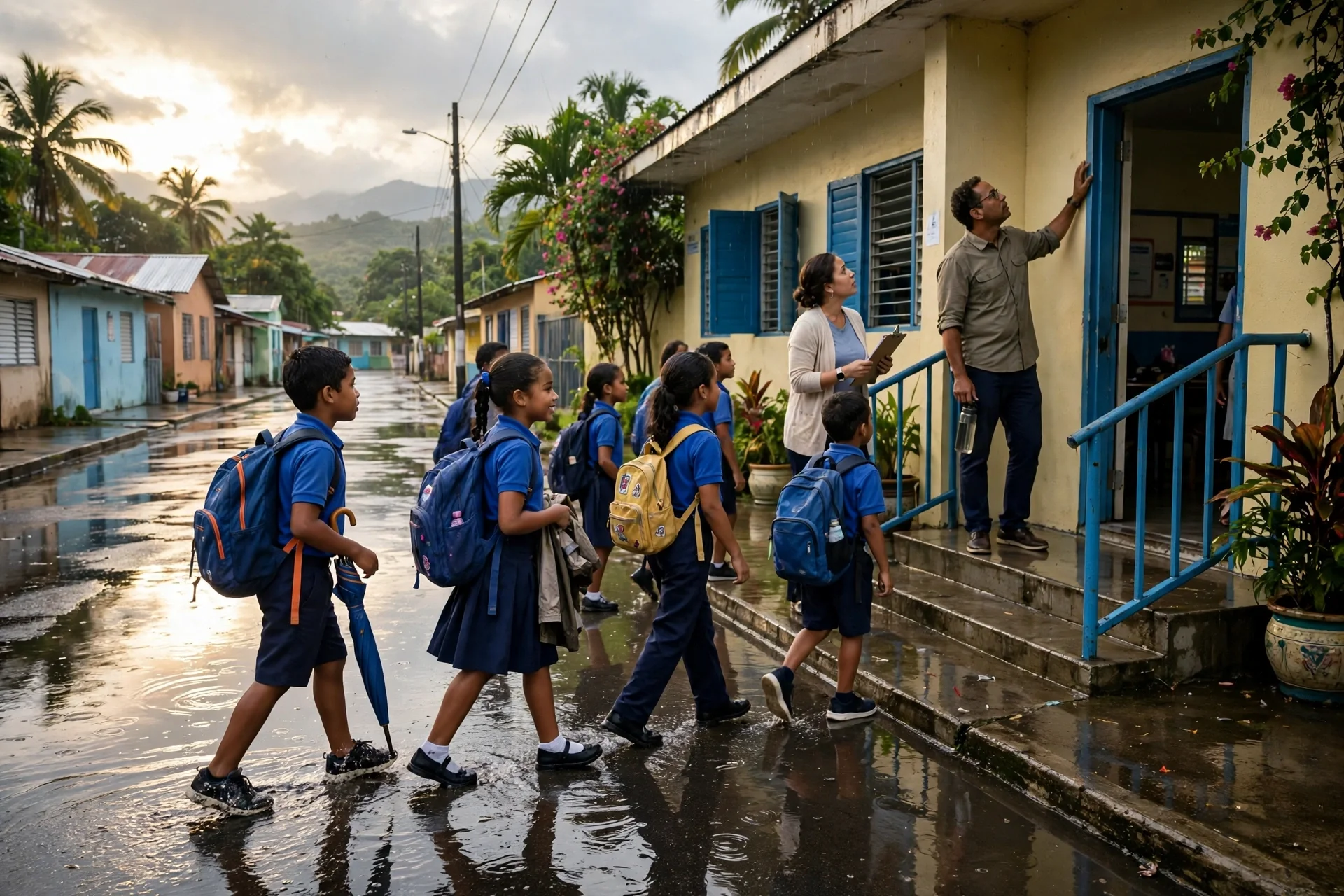
Estudiantes regresan a un plantel tras las lluvias, mientras el personal verifica las condiciones del edificio. · Imagen generada para EPM
Dominican Republic resumes classes this Thursday after heavy rains
The Ministry of Education announced that teaching will resume this Thursday, October 29, in schools suspended over the heavy rains, after a review of each…
Classes resume this Thursday in the Dominican Republic after rains
Teaching will resume this Thursday, October 29, in schools under preventive suspension over the rains, subject to inspection of each facility and the lifting…
--- The context ---
The Dominican Republic resumes school activity after several days of rainfall linked to two troughs over its territory. The phenomenon brought downpours, electrical storms, gusts of wind and flooding, while the authorities kept alerts in place over the risk of rising rivers, streams and creeks.
--- The facts ---
The Ministry of Education announced that teaching will resume this Thursday, October 29, in the schools that had kept a preventive suspension because of the heavy rains. The return will depend on a prior review of each school and on the lifting of the yellow alerts by the Emergency Operations Center.
The rains left 1.165.586 students from the public, private and semi-official sectors without classes, according to the education authorities. The suspension covered 3.898 centers in 11 provinces under a yellow alert, over the possibility of urban and sudden flooding, as well as overflowing bodies of water.
The largest number of affected students was in Santo Domingo, where 646.296 students stopped attending 1.572 schools. It was followed by San Cristóbal, with 169.644 students in 582 schools, San Juan, with 60.805 students, Barahona, with 58.038, and Azua, with 57.284, in addition to centers in Monte Plata, Peravia, Bahoruco, Independencia, San José de Ocoa and Pedernales.
--- The positions ---
The Ministry instructed regional, district and school directors to organize the reopening. Each school community must verify its facilities before receiving students, teachers and administrative staff, to determine whether there is damage, waterlogging or other situations that could affect safety.
The institution stated that the safety and well-being of its students are its priority. The authorities also recommended that families confirm the state of their schools before traveling, and they asked staff to stay attentive to official information and to regional and district decisions.
The Dominican Institute of Meteorology anticipated a gradual reduction in the rainfall, although it warned that moderate to strong downpours could still occur during Thursday. The Emergency Operations Center kept four provinces under a yellow alert on Wednesday, October 28, and another 16 demarcations, including the Distrito Nacional, under a green alert.
--- What remains unknown ---
The announcement did not specify whether any school will keep teaching suspended after Thursday. The decision will depend on the evaluation of each center and on guidance from the emergency bodies, in a context where rain is still expected in the southeast, Greater Santo Domingo and the interior.
--- Unanswered questions ---
How many schools will pass the prior review without damage or waterlogging that affects safety? Will any center keep teaching suspended after Thursday because of the condition of its facilities? How will the downpours forecast for the southeast and for interior areas evolve during the day? Will the yellow alerts that were still in place on Wednesday, October 28, be lifted?
--- EPM analysis ---
The conditional reopening combines a return to the school routine with a school-by-school verification that puts safety first. The scale of the suspension, with 1.165.586 students affected, explains the official caution and the need for every family to confirm the state of its center before traveling.
📌 EPM Take:
In EPM's view, resuming classes with a prior review of each school is the balanced decision between recovering the school day and protecting students, teachers and administrative staff. No return should happen in a building with unresolved damage or waterlogging, and no family should travel without official confirmation of the state of its center. If the verification is carried out rigorously in the 11 affected provinces and the alerts are followed closely, this Thursday's return can be orderly, safe and fair for every school community in the country.
--- The context ---
Heavy rains linked to two troughs over the Dominican Republic brought downpours, electrical storms, gusts of wind and flooding. Against that backdrop, the authorities kept alerts in place over the risk of rising rivers, streams and creeks, and teaching remained preventively suspended in several provinces.
--- The facts ---
The Ministry of Education announced that teaching will resume this Thursday, October 29, in the schools that had kept the preventive suspension. The return will depend on a prior review of each school and on the lifting of the yellow alerts by the Emergency Operations Center.
The suspension left 1.165.586 students from the public, private and semi-official sectors without classes, according to the education authorities. The measure covered 3.898 centers in 11 provinces under a yellow alert, over the possibility of urban and sudden flooding, as well as overflowing bodies of water.
Santo Domingo accounted for the largest number of affected students, with 646.296 students who stopped attending 1.572 schools. It was followed by San Cristóbal, with 169.644 students in 582 schools, San Juan, with 60.805 students, Barahona, with 58.038, and Azua, with 57.284, in addition to Monte Plata, Peravia, Bahoruco, Independencia, San José de Ocoa and Pedernales.
--- The positions ---
The Ministry instructed regional, district and school directors to organize the reopening in an orderly way. Each school community must verify its facilities before receiving students, teachers and administrative staff, to determine whether there is damage, waterlogging or other situations that affect safety.
The institution stated that the safety and well-being of its students are its priority. The authorities recommended that families confirm the state of their schools before traveling, and they asked staff to stay attentive to official information and to regional and district decisions.
The Dominican Institute of Meteorology anticipated a gradual reduction in the rainfall, although it warned that moderate to strong downpours could still occur during Thursday. The Emergency Operations Center kept four provinces under a yellow alert on Wednesday, October 28, and another 16 demarcations, including the Distrito Nacional, under a green alert.
--- What remains unknown ---
It has not yet been specified whether any school will keep teaching suspended after Thursday. The decision will depend on the evaluation of each center and on guidance from the emergency bodies, while monitoring of weather conditions continues in coordination with civil protection.
--- Unanswered questions ---
How many schools will pass the prior review without damage or waterlogging that affects safety? Will any center keep teaching suspended after Thursday because of the condition of its facilities? How will the downpours forecast for the southeast and for interior areas evolve during the day? Will the yellow alerts that were still in place on Wednesday, October 28, be lifted?
--- EPM analysis ---
The announced return is not automatic, and its prudence lies precisely in that condition. Making the reopening depend on the inspection of each school and on the alerts in force orders the return, protects the school day and avoids unnecessary travel toward centers not yet in safe condition.
📌 EPM Take:
In EPM's view, this Thursday's return to classes must rest on verification, order and shared responsibility among authorities, directors and families. Reviewing each school before opening, confirming the state of the center before traveling and heeding the alerts in force are concrete steps that protect students without prolonging more than necessary a suspension that affected 1.165.586 students. Once those checks are completed in the 11 provinces, the reopening can restore school normality with the safety the situation requires.
República Dominicana reanuda las clases este jueves tras las lluvias
El Ministerio de Educación anunció la reanudación de la docencia este jueves 29 de octubre en los centros suspendidos por las lluvias, previa revisión de cada…
Vuelta a clases este jueves en República Dominicana tras las lluvias
La docencia se reanudará este jueves 29 de octubre en los centros con suspensión preventiva por las lluvias, condicionada a la inspección de cada plantel y al…
--- El contexto ---
República Dominicana reanuda la actividad escolar después de varios días de precipitaciones asociadas a dos vaguadas sobre el territorio. El fenómeno provocó aguaceros, tormentas eléctricas, ráfagas de viento e inundaciones, mientras las autoridades mantuvieron alertas ante el riesgo de crecidas de ríos, arroyos y cañadas.
--- Los hechos ---
El Ministerio de Educación anunció que este jueves 29 de octubre se reanudará la docencia en los centros que mantenían una suspensión preventiva por las fuertes lluvias. La vuelta dependerá de la revisión previa de cada plantel y del levantamiento de las alertas amarillas por parte del Centro de Operaciones de Emergencias.
Las lluvias dejaron sin clases a 1.165.586 estudiantes de los sectores público, privado y semioficial, según las autoridades educativas. La suspensión abarcó 3.898 centros de 11 provincias bajo alerta amarilla, ante la posibilidad de inundaciones urbanas y repentinas, además de desbordamientos de cuerpos de agua.
La mayor cantidad correspondió a Santo Domingo, donde 646.296 estudiantes dejaron de asistir a 1.572 planteles. Le siguieron San Cristóbal, con 169.644 alumnos en 582 escuelas, San Juan, con 60.805 estudiantes, Barahona, con 58.038, y Azua, con 57.284, además de centros de Monte Plata, Peravia, Bahoruco, Independencia, San José de Ocoa y Pedernales.
--- Las posiciones ---
El Ministerio instruyó a los directores regionales, distritales y de centros a organizar la reapertura. Cada comunidad escolar deberá verificar las instalaciones antes de recibir a estudiantes, docentes y personal administrativo, para determinar si existen daños, anegamientos u otras situaciones que afecten la seguridad.
El organismo indicó que la seguridad y el bienestar de los estudiantes son su prioridad. Las autoridades recomendaron a las familias confirmar el estado de los centros antes del traslado, y solicitaron al personal mantenerse atento a las informaciones oficiales y a las decisiones regionales y distritales.
El Instituto Dominicano de Meteorología anticipó una reducción gradual de las precipitaciones, aunque advirtió que aún podrían registrarse aguaceros moderados a fuertes durante el jueves. El Centro de Operaciones de Emergencias mantenía cuatro provincias bajo alerta amarilla el miércoles 28 de octubre y otras 16 demarcaciones, incluido el Distrito Nacional, bajo alerta verde.
--- Lo que falta saber ---
El anuncio no especificó si algún plantel mantendrá suspendida la docencia después del jueves. La decisión dependerá de la evaluación de cada centro y de las orientaciones de los organismos de emergencia, en un contexto donde aún se esperan lluvias en el sureste, el Gran Santo Domingo y el interior.
--- Preguntas sin respuesta ---
¿Cuántos planteles superarán la revisión sin daños ni anegamientos? ¿Algún centro mantendrá suspendida la docencia después del jueves? ¿Cómo evolucionarán los aguaceros previstos para el sureste y el interior? ¿Se levantarán las alertas amarillas que aún se mantenían el miércoles 28 de octubre?
--- Análisis EPM ---
La reapertura condicionada combina el regreso a la rutina con una verificación plantel por plantel que pone la seguridad por delante. La magnitud de la suspensión, con 1.165.586 estudiantes afectados, explica la cautela oficial y la necesidad de que cada familia confirme el estado de su centro antes del traslado.
📌 Conclusion EPM:
A juicio de EPM, reanudar las clases con revisión previa de cada plantel es la decisión equilibrada entre recuperar la jornada escolar y proteger a estudiantes, docentes y personal administrativo. Ningún regreso debería darse en un edificio con daños o anegamientos sin resolver, y ninguna familia debería trasladarse sin confirmación oficial del estado de su centro. Si la verificación se cumple con rigor en las 11 provincias afectadas y las alertas se siguen con atención, el retorno de este jueves puede ser ordenado, seguro y justo para todas las comunidades escolares del país.
--- El contexto ---
Las fuertes lluvias asociadas a dos vaguadas sobre República Dominicana provocaron aguaceros, tormentas eléctricas, ráfagas de viento e inundaciones. Las autoridades mantuvieron alertas ante el riesgo de crecidas de ríos, arroyos y cañadas, y la docencia permaneció suspendida de forma preventiva en varias provincias.
--- Los hechos ---
El Ministerio de Educación anunció que este jueves 29 de octubre se reanudará la docencia en los centros que mantenían la suspensión preventiva. El retorno dependerá de la revisión previa de cada plantel y del levantamiento de las alertas amarillas por parte del Centro de Operaciones de Emergencias.
La suspensión dejó sin clases a 1.165.586 estudiantes de los sectores público, privado y semioficial, según las autoridades educativas. La medida abarcó 3.898 centros de 11 provincias bajo alerta amarilla, ante la posibilidad de inundaciones urbanas y repentinas, además de desbordamientos de cuerpos de agua.
Santo Domingo concentró la mayor cantidad de alumnos afectados, con 646.296 estudiantes que dejaron de asistir a 1.572 planteles. Le siguieron San Cristóbal, con 169.644 alumnos en 582 escuelas, San Juan, con 60.805 estudiantes, Barahona, con 58.038, y Azua, con 57.284, además de Monte Plata, Peravia, Bahoruco, Independencia, San José de Ocoa y Pedernales.
--- Las posiciones ---
El Ministerio instruyó a los directores regionales, distritales y de centros a organizar la reapertura con orden. Cada comunidad escolar deberá verificar las instalaciones antes de recibir a estudiantes, docentes y personal administrativo, para determinar si existen daños, anegamientos u otras situaciones que afecten la seguridad.
El organismo señaló que la seguridad y el bienestar de los estudiantes son su prioridad. Las autoridades recomendaron a las familias confirmar el estado de los centros antes del traslado, y pidieron al personal mantenerse atento a las informaciones oficiales y a las decisiones regionales y distritales.
El Instituto Dominicano de Meteorología anticipó una reducción gradual de las precipitaciones, aunque advirtió que aún podrían registrarse aguaceros moderados a fuertes durante el jueves. El Centro de Operaciones de Emergencias mantenía cuatro provincias bajo alerta amarilla el miércoles 28 de octubre y otras 16 demarcaciones, incluido el Distrito Nacional, bajo alerta verde.
--- Lo que falta saber ---
Todavía no se especificó si algún plantel mantendrá suspendida la docencia después del jueves. La decisión dependerá de la evaluación de cada centro y de las orientaciones de los organismos de emergencia, mientras continúa el monitoreo meteorológico en coordinación con protección civil.
--- Preguntas sin respuesta ---
¿Cuántos planteles superarán la revisión sin daños ni anegamientos? ¿Algún centro mantendrá suspendida la docencia después del jueves? ¿Cómo evolucionarán los aguaceros previstos para el sureste y el interior? ¿Se levantarán las alertas amarillas que aún se mantenían el miércoles 28 de octubre?
--- Análisis EPM ---
El regreso anunciado no es automático, y en eso reside su prudencia. Condicionar la reapertura a la inspección de cada plantel y a las alertas vigentes ordena la vuelta, protege la jornada escolar y evita traslados hacia centros que aún no estén en condiciones seguras.
📌 Conclusion EPM:
A juicio de EPM, el retorno a clases de este jueves debe sostenerse en verificación, orden y responsabilidad compartida entre autoridades, directores y familias. Revisar cada plantel antes de abrir, confirmar el estado del centro antes del traslado y atender las alertas vigentes son pasos concretos que protegen a los estudiantes sin prolongar más de lo necesario una suspensión que afectó a 1.165.586 alumnos. Cumplidos esos controles en las 11 provincias, la reapertura puede devolver la normalidad escolar con la seguridad que la situación exige.