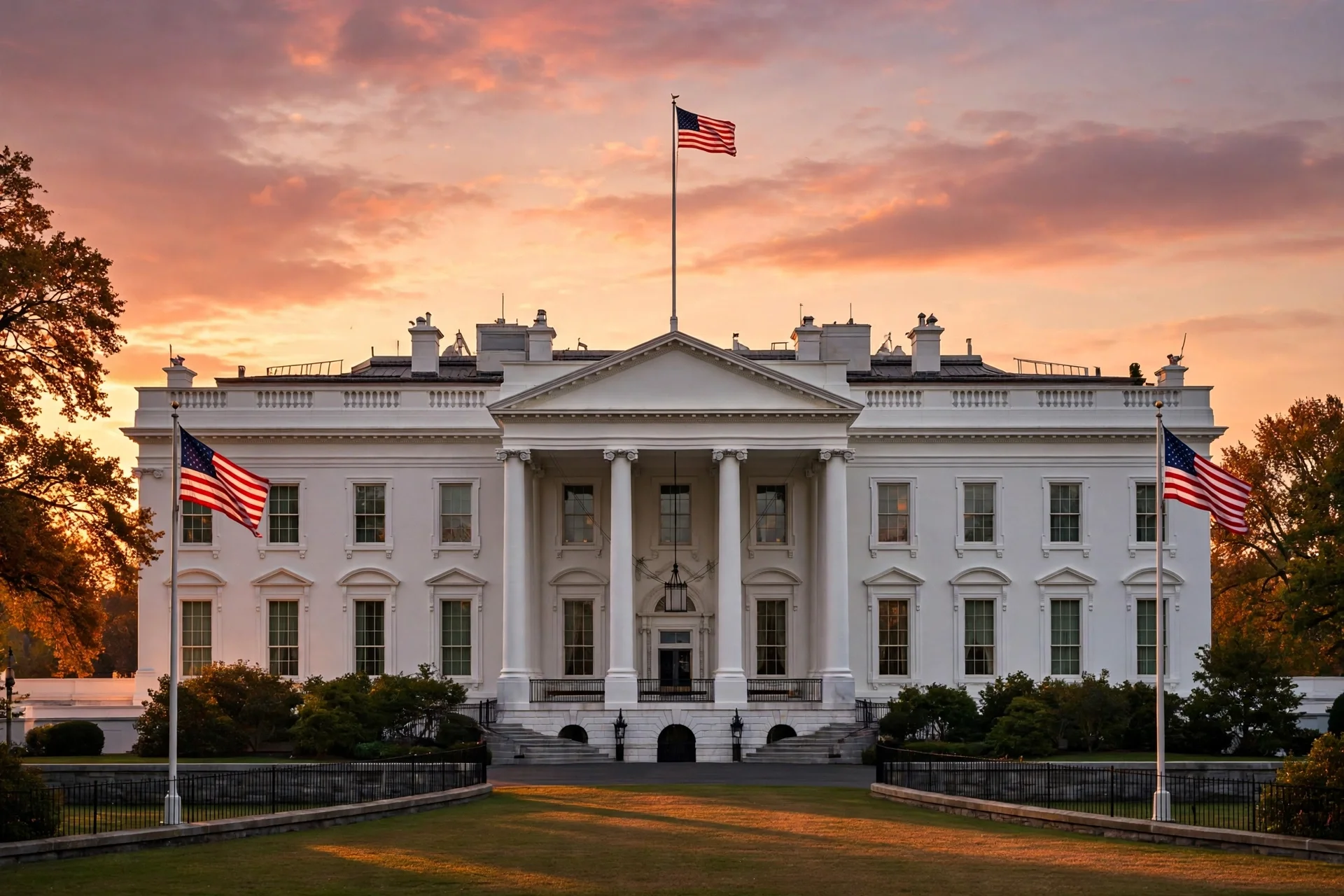
White House defends its tax cuts and prices the rival agenda, it says
In its statement, the White House defends the tax cuts it claims and estimates that the agenda it attributes to Democrats would cost over $35,000 per household…
White House says rival agenda would cost households $35,000 a year
The White House says in a statement that its tax cuts put money back in families' pockets and estimates the agenda it attributes to Democrats at over $35,000…
--- The context ---
The White House published a statement defending its economic record and presenting, by its own estimate, the cost it attributes to the agenda of its Democratic rivals. The text is openly political in character: it contrasts the results the Administration claims for itself with projections about what, in its view, would happen if the proposals it criticizes were put into practice.
--- The facts ---
According to the White House, in less than two years President Donald J. Trump delivered the largest working-class tax cuts for American families, reached what it describes as record-high real median household income, created over one million private-sector jobs and achieved, it says, record-low poverty. The Administration also says it reignited American manufacturing and secured large investments across the country, and that real wages are now rising after an annual decline it puts at $3,000 under the previous Administration.
In its estimate, the White House projects that the agenda it attributes to Democrats would cost each household over $35,000 per year, totaling $355,000 for families over the horizon the statement sets out. It also projects that take-home pay would fall by $22,000 if taxes were raised, that interest rates would rise above 10% and mortgage rates above 12%, all within its own hypothetical scenario rather than as observed outcomes.
--- The positions ---
The White House says its tax measures, which it describes as no tax on tips, no tax on overtime and no tax on Social Security, together with doubling the Child Tax Credit, put money back in families' pockets. Against that record, the statement attributes to Democrats proposals such as universal health coverage, open borders and a green agenda that the White House itself labels with a derogatory name, and assigns those proposals high costs for taxpayers.
--- What remains unknown ---
The statement includes no response from Democrats and no independent verification of its projections. It also does not detail the methodology behind the cost it attributes to the rival agenda, so those figures should be read as the Administration's own estimates, framed conditionally, and not as results confirmed by any party outside the government that issued them.
--- Unanswered questions ---
What methodology supports the cost projections the White House sets out in its statement? How will Democrats respond to the figures the Administration attributes to their agenda? Which parts of the economic record the government claims for itself can be checked against independent official data? Would the fiscal debate change if outside verification confirmed or qualified the scenario the statement describes?
--- EPM analysis ---
The statement works as a piece of political contrast: it first lists the achievements the Administration claims and then presents an adverse scenario attached to its rivals. Its communicative strength lies in the round figures it offers, and its limit lies in the fact that those figures come from an interested party. Reading it rigorously means separating the balance the White House draws of its own record from the projections it makes about others, two levels the text deliberately blends.
📌 EPM Take: In EPM's view, the statement should be read for what it is: a piece of political advocacy from the White House, useful for understanding how the Administration defends its tax cuts and what cost it attributes to the rival agenda, but insufficient on its own to treat those projections as verified. Its informational value lies in making the government's positions and figures explicit, while independent confirmation and the opposition's response remain outstanding and will determine how much of the scenario survives scrutiny.
--- The context ---
The White House issued a statement defending its economic policy, arguing that its tax cuts put money back in families' pockets and warning, by its own calculations, of the cost of the agenda it attributes to Democrats. The document sums up the government's bet on lower taxes and, at the same time, seeks to set the terms of the national debate over the country's fiscal direction.
--- The facts ---
According to the White House, the Administration delivered the largest working-class tax cuts in history, brought down prescription drug prices with savings it projects at over $600 billion over the next decade and created over one million private-sector jobs. The statement also says real wages are rising again and outpacing inflation, after a decline it puts at $3,000 a year under the previous Administration, and that everyday prices are falling, by its account.
The statement's central warning is economic: the White House estimates that the agenda it attributes to Democrats would cost each household over $35,000 per year and $355,000 over the horizon it sets out, with take-home pay cut by $22,000 if taxes rose. In the same scenario, the Administration projects inflation of 130-160% over that period and national output cut by almost 20%, figures it presents as the consequence of the rival proposals rather than as measured results.
--- The positions ---
The government's position, according to the statement, is that cutting taxes, applying its tariff policy and attracting investment has revived manufacturing and jobs on American soil. The position it attributes to Democrats combines, in its description, universal health coverage, broad immigration amnesty and a green agenda the White House labels with a derogatory name, whose cost it estimates at more than $12 trillion over the horizon it cites, including $91,000 per household.
--- What remains unknown ---
The statement carries no Democratic account of any of these estimates and offers no independent verification of its projections. Nor does it explain in detail how its scenarios for inflation, employment and growth are built, so readers are given the Administration's conclusions without the full calculations behind them and without any reply from the side those conclusions describe.
--- Unanswered questions ---
Will the White House publish the full calculations behind its per-household cost estimate? Will Democrats present an alternative costing of their own proposals for voters to compare? Will upcoming official data on wages, prices and employment confirm the record the Administration claims for itself? Can the government turn this fiscal contrast into the central axis of the national economic debate?
--- EPM analysis ---
The statement organizes the debate in pocketbook terms: how much money each family keeps under current policy, according to the government, against how much it would pay under the alternative the statement describes. That clarity is its main political asset. Its weakness is the one shared by any partisan text: the projections about the rival side are untested and its own record is presented without qualification, so the document sets a position rather than settling the argument.
📌 EPM Take: In EPM's view, the statement sends a clear political signal: the White House wants the economic debate fought over the per-household cost of each agenda, ground where its figures, although they come from the Administration itself and still require independent checking, are concrete and easy to compare. The Democratic response and outside verification of those projections will show whether the frame the government proposes holds up, but with this text the Administration has taken the initiative in the economic argument.
La Casa Blanca defiende sus recortes y cifra el coste de la agenda rival
Según su comunicado, la Casa Blanca defiende los recortes fiscales que se atribuye y estima que la agenda que asigna a los demócratas costaría más de $35,000…
Según la Casa Blanca, la agenda rival costaría $35,000 por hogar al año
La Casa Blanca sostiene en un comunicado que sus recortes devolvieron dinero a las familias y estima en más de $35,000 por hogar al año el coste de la agenda…
--- El contexto ---
La Casa Blanca publicó un comunicado en el que defiende su gestión económica y presenta, según su estimación, el coste que atribuye a la agenda de sus rivales demócratas. El texto tiene un carácter político declarado: contrapone los resultados que la Administración se atribuye con proyecciones sobre lo que, a su juicio, ocurriría si se aplicaran las propuestas que critica.
--- Los hechos ---
Según la Casa Blanca, en menos de dos años el presidente Donald J. Trump entregó los mayores recortes fiscales para las familias trabajadoras, alcanzó un ingreso medio real de los hogares que describe como récord, creó más de un millón de empleos en el sector privado y logró, según sostiene, mínimos históricos de pobreza. La Administración también afirma que reactivó la manufactura y aseguró inversiones millonarias.
En su estimación, la Casa Blanca proyecta que la agenda que atribuye a los demócratas costaría a cada hogar más de $35,000 al año, con un total de $355,000 para las familias en el horizonte que plantea el comunicado. También proyecta que el salario neto se reduciría en $22,000 si se elevaran los impuestos, que los tipos de interés superarían el 10% y que las hipotecas superarían el 12%, todo ello dentro de su propio escenario hipotético.
--- Las posiciones ---
La Casa Blanca sostiene que sus medidas fiscales, que describe como ausencia de impuestos sobre las propinas, las horas extra y la Seguridad Social, junto con la duplicación del crédito fiscal por hijos, devolvieron dinero a los bolsillos de las familias. Frente a ese balance, el comunicado atribuye a los demócratas propuestas como la cobertura sanitaria universal, la apertura de fronteras y una agenda verde que la propia Casa Blanca denomina con un calificativo despectivo, y les asigna costes elevados.
--- Lo que falta saber ---
El comunicado no incluye ninguna respuesta de los demócratas ni una verificación independiente de sus proyecciones. Tampoco detalla la metodología con la que calcula el coste atribuido a la agenda rival, por lo que esas cifras deben leerse como estimaciones de la propia Administración, formuladas en condicional, y no como resultados comprobados por terceros.
--- Preguntas sin respuesta ---
¿Qué metodología respalda las proyecciones de coste que difunde la Casa Blanca en su comunicado? ¿Cómo responderán los demócratas a las cifras que la Administración les atribuye? ¿Qué parte de los resultados económicos que el Gobierno se atribuye podrá contrastarse con datos oficiales independientes? ¿Cambiará el debate fiscal si una verificación externa confirma o matiza el escenario planteado?
--- Análisis EPM ---
El comunicado funciona como una pieza de contraste político: primero enumera los logros que la Administración se atribuye y después presenta un escenario adverso asociado a sus rivales. Su fuerza comunicativa está en las cifras redondas que ofrece, y su límite está en que esas cifras proceden de la parte interesada. Leerlo con rigor exige separar el balance que la Casa Blanca hace de su propia gestión de las proyecciones que formula sobre las propuestas ajenas, dos planos que el texto mezcla.
📌 Conclusion EPM: A juicio de EPM, el comunicado debe leerse como lo que es: una pieza de abogacía política de la Casa Blanca, útil para conocer la defensa que la Administración hace de sus recortes fiscales y el coste que atribuye a la agenda rival, pero insuficiente por sí sola para dar esas proyecciones por verificadas. Su valor informativo está en dejar claras las posiciones del Gobierno y las cifras que este pone sobre la mesa, mientras la confirmación independiente y la respuesta de la oposición quedan pendientes de contraste.
--- El contexto ---
La Casa Blanca difundió un comunicado en defensa de su política económica, en el que sostiene que sus recortes fiscales devolvieron dinero a las familias y advierte, según sus cálculos, del coste que tendría la agenda que atribuye a los demócratas. El documento resume la apuesta del Gobierno por bajar impuestos y busca fijar el marco del debate fiscal.
--- Los hechos ---
Según la Casa Blanca, la Administración entregó los mayores recortes fiscales para la clase trabajadora, redujo los precios de los medicamentos con ahorros que proyecta en más de $600 billion para la próxima década y creó más de un millón de empleos en el sector privado. El comunicado afirma además que los salarios reales vuelven a crecer por encima de la inflación, tras una caída que cifra en $3,000 anuales durante la Administración anterior, y que bajan los precios de alimentos básicos.
La advertencia central del comunicado es económica: la Casa Blanca estima que la agenda que atribuye a los demócratas costaría a cada hogar más de $35,000 al año y $355,000 en el horizonte que plantea, con una reducción del salario neto de $22,000 si se subieran los impuestos. En el mismo escenario, la Administración proyecta una inflación de 130-160% en ese periodo y una contracción del producto interior bruto cercana al 20%, cifras que presenta como consecuencia de las propuestas rivales.
--- Las posiciones ---
La posición del Gobierno, según el comunicado, es que bajar impuestos, aplicar su política arancelaria y atraer inversiones ha reactivado la manufactura y el empleo en suelo estadounidense. La posición que atribuye a los demócratas combina, en su descripción, cobertura sanitaria universal, amnistía migratoria amplia y una agenda verde a la que la Casa Blanca aplica un calificativo despectivo y cuyo coste estima en más de $12 trillion en el horizonte que cita, con $91,000 por hogar.
--- Lo que falta saber ---
El comunicado no recoge la versión de los demócratas sobre ninguna de estas estimaciones ni aporta una verificación independiente de las proyecciones. Tampoco explica cómo construye sus escenarios, por lo que el lector dispone de las conclusiones de la Administración, pero no de los cálculos que las sostienen ni del contraste con la parte aludida.
--- Preguntas sin respuesta ---
¿Publicará la Casa Blanca los cálculos completos que sostienen su estimación de coste por hogar? ¿Presentarán los demócratas una estimación alternativa del coste de sus propias propuestas? ¿Confirmarán los próximos datos oficiales de salarios, precios y empleo el balance que la Administración se atribuye? ¿Logrará el Gobierno convertir este contraste fiscal en el eje del debate económico nacional?
--- Análisis EPM ---
El comunicado ordena el debate en términos de bolsillo: cuánto conserva cada familia con la política actual, según el Gobierno, frente a cuánto pagaría con la alternativa descrita. Esa claridad es su activo político. Su debilidad es la de toda pieza de parte: las proyecciones sobre el rival no han sido contrastadas y los logros propios se presentan sin matices.
📌 Conclusion EPM: A juicio de EPM, el comunicado deja una señal política clara: la Casa Blanca quiere que el debate económico se libre sobre el coste por hogar de cada agenda, un terreno donde sus cifras, aunque proceden de la propia Administración y requieren contraste independiente, resultan concretas y fáciles de comparar. La respuesta demócrata y la verificación externa de esas proyecciones dirán si el marco que propone el Gobierno se sostiene, pero la iniciativa del relato económico, con este texto, la ha tomado la Administración.