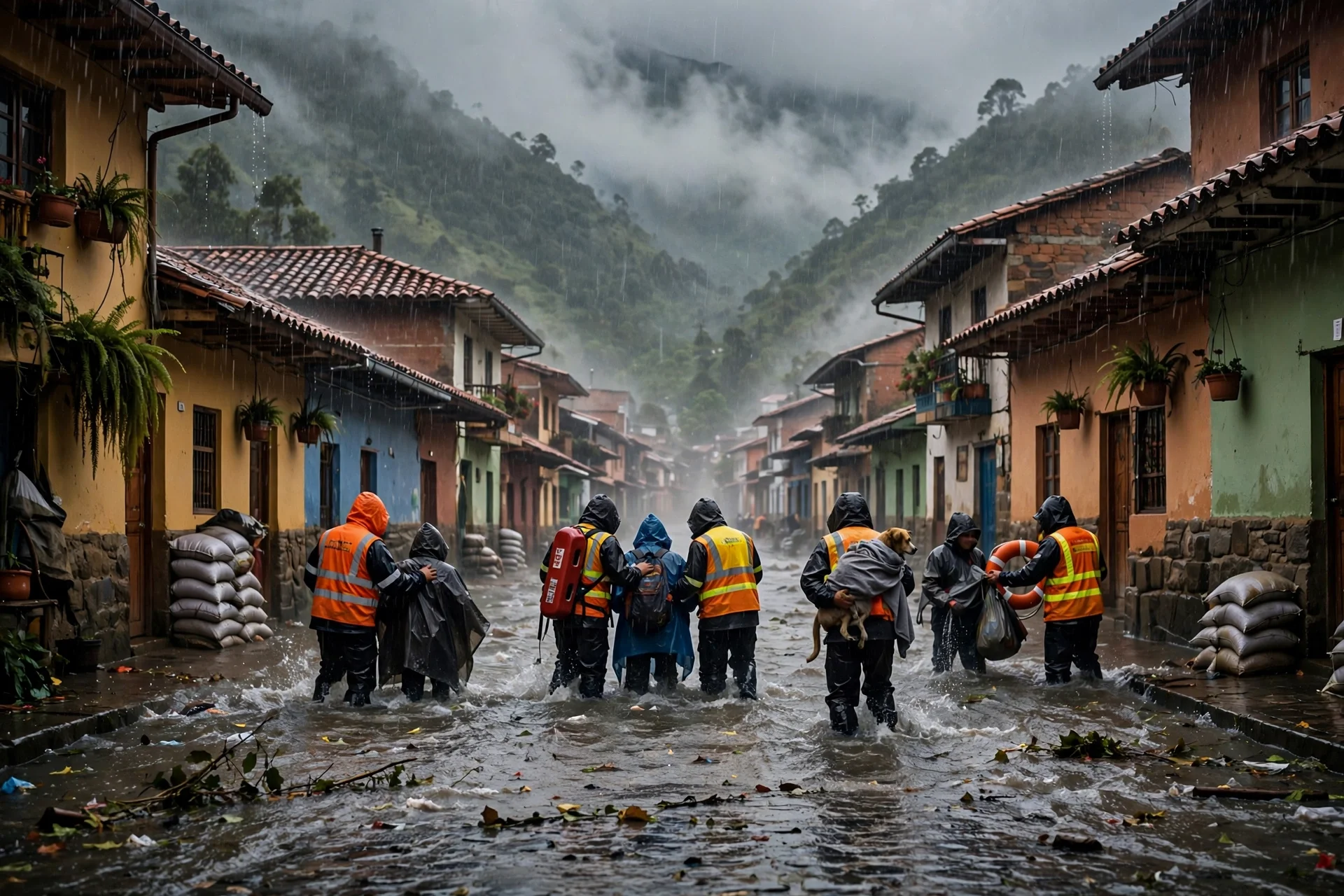
Floods hit three Cundinamarca towns as rains leave 12 families affected
Heavy rains on Wednesday, October 28 flooded parts of Mosquera, Cucunubá and Soacha.
Cundinamarca responds to flooding in three towns amid second rainy season
Rains on Wednesday, October 28 flooded sectors of Mosquera, Cucunubá and Soacha during Cundinamarca's second rainy season.
--- The context ---
Cundinamarca is going through the second rainy season of the year, a period that, according to the departmental government, can generate new emergencies even amid the El Niño phenomenon. Authorities warned that rainfall could continue for several more weeks, so the risk will persist across the department's municipalities.
In that setting, the heavy rainfall recorded on Wednesday, October 28 caused flooding in three municipalities at once: Mosquera, Cucunubá and Soacha. In each one, residents and rescue agencies stepped in to control the water and assess the damage.
--- The facts ---
In Mosquera, one of the affected points was Villa Cetty, where approximately 12 families were affected by flooding. Rescue agencies, under the coordination of the Mayor's Office, worked to evacuate the water and by 7:38 p. m. they had cleared the sector, according to the balance delivered by the authorities.
In Cucunubá, the emergency occurred in La Punta de la Peña, where water overflowed from a canal. The work included installing close to 480 tarps with fill material and unclogging the channel. Although the water affected a road and nearby pastures, authorities reported that there were no injured people and no homes affected.
In Soacha, rains that began during the night flooded the Quintanares, San Mateo, Puertoalegre and Rincón del Lago sectors. The emergency complicated mobility on the Autopista Sur, near the Sena, and at the Gran Plaza roundabout, and on October 28 flooding again affected streets and vehicles, according to citizen reports.
--- The positions ---
The governor of Cundinamarca, Jorge Emilio Rey, gave a preliminary balance of the emergencies, while the Departmental Risk Management Unit reported that it maintains communication and monitoring with the authorities of the three municipalities. The Municipal Risk Management Councils are visiting the areas to establish the scale of the damage and determine whether additional departmental support is needed.
In Cucunubá, residents worked alongside the Ubaté Volunteer Firefighters, the Cundinamarca Police and the Mayor's Office to contain the situation. Authorities also recommended not throwing trash into the sewer system, keeping drains clear, staying away from rivers and streams during downpours and promptly reporting any risk situation.
--- What remains unknown ---
The full scale of the damage in the three municipalities is still unknown. The visits by the Municipal Risk Management Councils are still under way, and they will determine whether affected families need additional departmental support.
--- Unanswered questions ---
What is the definitive damage toll in Mosquera, Cucunubá and Soacha? Will the municipalities need additional departmental support to assist the affected families? What prevention work will be done before new rains arrive? Will the same sectors flood again if rainfall continues for several more weeks?
--- EPM analysis ---
The day left a repeated image across the three municipalities: the water arrived first and the response was built on the ground, with neighbors and rescuers working at the same time. That Cucunubá had no injuries and no homes affected shows the value of acting fast, but the recurrence in Soacha and the 12 affected families in Mosquera show that responding afterward is no substitute for preventing beforehand.
📌 EPM Take:
In EPM's view, the joint response by neighbors, mayor's offices and rescue agencies prevented a worse toll, and that effort deserves continued backing for as long as the rainy season lasts. But treating every downpour as a surprise has a limit: with rainfall forecast for several weeks, the pending task is to turn reaction into permanent prevention, with clear drains, watched channels and timely departmental support for the families already affected in these municipalities.
--- The context ---
Cundinamarca is going through the second rainy season of the year and, according to the departmental government, that period can generate new emergencies even amid the El Niño phenomenon. Rainfall, according to information delivered by the authorities, could continue for several more weeks, so each municipality must keep its response and prevention mechanisms active.
On Wednesday, October 28, heavy rainfall led to simultaneous flooding in Mosquera, Cucunubá and Soacha. Residents and rescue agencies stepped in to control the water and assess the damage, in a day that required coordination among mayor's offices, firefighters, police and departmental authorities.
--- The facts ---
In Mosquera, the Villa Cetty sector concentrated one of the emergencies: approximately 12 families were affected by flooding. Rescue agencies, under the coordination of the Mayor's Office, worked to evacuate the water and by 7:38 p. m. they had cleared the sector, according to the authorities' balance.
In Cucunubá, the emergency occurred in La Punta de la Peña, where water overflowed from a canal. Residents worked with the Ubaté Volunteer Firefighters, the Cundinamarca Police and the Mayor's Office, installing close to 480 tarps with fill material and unclogging the channel. There were no injuries and no homes affected, although the water reached a road and nearby pastures.
In Soacha, rains that began during the night flooded Quintanares, San Mateo, Puertoalegre and Rincón del Lago. The emergency complicated mobility on the Autopista Sur, near the Sena, and at the Gran Plaza roundabout. The situation adds to other recent emergencies in the municipality, and on October 28 new flooding affected streets and vehicles, according to citizen reports.
--- The positions ---
The governor of Cundinamarca, Jorge Emilio Rey, gave a preliminary balance of what happened. The Departmental Risk Management Unit reported that it maintains communication and monitoring with the authorities of the three municipalities, and the Municipal Risk Management Councils are visiting the areas to establish the scale of the damage and determine whether additional departmental support is needed.
Authorities recommended that citizens not throw trash into the sewer system, keep drains clear, stay away from rivers and streams during downpours and promptly report any risk. These simple measures, applied constantly, reduce the impact of each rainfall.
--- What remains unknown ---
The total scale of the damage has yet to be established. The Municipal Risk Management Councils' visits will specify the damage in each sector and whether the municipalities require additional departmental support, a key definition because rainfall could continue for several weeks.
--- Unanswered questions ---
What will the definitive damage toll be in the three municipalities? Will drains and channels be kept clear before the next rains? Will the municipalities receive additional departmental support if new emergencies appear? Will citizens follow the recommendations to reduce flooding on streets and in homes?
--- EPM analysis ---
The balance leaves a practical lesson: where the response was fast and orderly, the damage was contained. In Cucunubá, the joint work of residents, firefighters, police and the Mayor's Office avoided injuries and affected homes. In Soacha, the repetition of recent emergencies shows that reacting well is not enough if the same points flood again whenever the night rain intensifies.
📌 EPM Take:
In EPM's view, discipline on the ground worked: mayor's offices, rescuers and neighbors contained three emergencies on the same day, with no victims in Cucunubá and the Mosquera sector cleared by 7:38 p. m. The demand now is for constancy, not speeches: keep channels and drains clear, follow the official recommendations and sustain departmental monitoring until a season that may still bring several weeks of heavy rain is fully over for the region.
Lluvias inundan Mosquera, Cucunubá y Soacha y dejan 12 familias afectadas
Las fuertes lluvias del miércoles 28 de octubre provocaron inundaciones en Mosquera, Cucunubá y Soacha.
Cundinamarca atiende inundaciones en tres municipios en plena temporada de lluvias
Las lluvias del miércoles 28 de octubre inundaron sectores de Mosquera, Cucunubá y Soacha, en plena segunda temporada de lluvias de Cundinamarca.
--- El contexto ---
Cundinamarca atraviesa la segunda temporada de lluvias del año, una etapa que, según la gobernación, puede generar nuevas emergencias incluso en medio del fenómeno de El Niño. Las autoridades advirtieron que las precipitaciones podrían continuar durante varias semanas, de modo que el riesgo se prolongará en todo el departamento.
En ese escenario, las fuertes precipitaciones del miércoles 28 de octubre pusieron a prueba a tres municipios: Mosquera, Cucunubá y Soacha. En cada uno, habitantes y organismos de socorro intervinieron para controlar el agua y evaluar las afectaciones.
--- Los hechos ---
En Mosquera, uno de los puntos afectados fue Villa Cetty, donde aproximadamente 12 familias resultaron afectadas por una inundación. Los organismos de socorro, bajo la coordinación de la Alcaldía, adelantaron labores para evacuar el agua y hacia las 7:38 p. m. lograron despejar el sector, según las autoridades.
En Cucunubá, la emergencia se presentó en La Punta de la Peña, donde el agua se desbordó de un canal. Las labores incluyeron la instalación de cerca de 480 lonas con recebo y el destaponamiento del cauce. El agua afectó una vía y potreros cercanos, pero no hubo personas lesionadas ni viviendas afectadas, según las autoridades.
En Soacha, las lluvias que comenzaron durante la noche inundaron los sectores de Quintanares, San Mateo, Puertoalegre y Rincón del Lago. La emergencia complicó la movilidad en la Autopista Sur, cerca del Sena, y en la glorieta de Gran Plaza, y el 28 de octubre nuevos anegamientos volvieron a afectar calles y vehículos, según reportes ciudadanos.
--- Las posiciones ---
El gobernador de Cundinamarca, Jorge Emilio Rey, dio un balance preliminar, mientras la Unidad Departamental de Gestión del Riesgo informó que mantiene comunicación y monitoreo con las autoridades de los tres municipios. Los Consejos Municipales de Gestión del Riesgo realizan visitas para establecer la magnitud de las afectaciones y determinar si se necesita apoyo adicional del departamento.
En Cucunubá, los habitantes trabajaron con los Bomberos Voluntarios de Ubaté, la Policía de Cundinamarca y la Alcaldía para contener la situación. Las autoridades recomendaron no arrojar basuras al alcantarillado, mantener despejados los desagües, evitar acercarse a ríos y quebradas durante los aguaceros y reportar oportunamente cualquier riesgo.
--- Lo que falta saber ---
Todavía no se conoce la magnitud completa de las afectaciones. Las visitas de los Consejos Municipales de Gestión del Riesgo siguen en curso y de ellas dependerá establecer si las familias afectadas necesitan apoyo adicional del departamento.
--- Preguntas sin respuesta ---
¿Cuál es el balance definitivo de daños en Mosquera, Cucunubá y Soacha? ¿Necesitarán los municipios apoyo adicional del departamento para atender a las familias afectadas? ¿Qué obras de prevención se adelantarán antes de nuevas lluvias? ¿Volverán a inundarse los mismos sectores si las precipitaciones continúan durante varias semanas?
--- Análisis EPM ---
La jornada dejó una imagen repetida: el agua llegó primero y la respuesta se construyó en terreno, con vecinos y socorristas trabajando al tiempo. Que en Cucunubá no hubiera lesionados ni viviendas afectadas muestra el valor de actuar rápido, pero la recurrencia en Soacha y las 12 familias afectadas en Mosquera recuerdan que atender después no sustituye prevenir antes.
📌 Conclusion EPM:
A juicio de EPM, la respuesta conjunta de vecinos, alcaldías y organismos de socorro evitó un balance peor, y ese esfuerzo merece respaldo continuo mientras dure la temporada de lluvias. Pero atender cada aguacero como una sorpresa tiene un límite: con precipitaciones anunciadas por varias semanas, la tarea pendiente es convertir la reacción en prevención permanente, con desagües despejados, cauces vigilados y apoyo departamental oportuno para las familias que ya resultaron afectadas en estos municipios.
--- El contexto ---
Cundinamarca atraviesa la segunda temporada de lluvias del año y, según la gobernación, puede generar nuevas emergencias incluso en medio del fenómeno de El Niño. Las precipitaciones, de acuerdo con la información entregada por las autoridades, podrían continuar durante varias semanas, por lo que cada municipio debe mantener activa su respuesta.
El miércoles 28 de octubre, las fuertes precipitaciones derivaron en inundaciones simultáneas en Mosquera, Cucunubá y Soacha. Habitantes y organismos de socorro intervinieron para controlar el agua y evaluar las afectaciones, en una jornada que exigió coordinación entre alcaldías, bomberos, policía y autoridades departamentales.
--- Los hechos ---
En Villa Cetty, Mosquera, aproximadamente 12 familias resultaron afectadas por una inundación. Los organismos de socorro, bajo la coordinación de la Alcaldía, adelantaron labores para evacuar el agua y hacia las 7:38 p. m. lograron despejar el sector, según las autoridades.
En Cucunubá, la emergencia se presentó en La Punta de la Peña, donde el agua se desbordó de un canal. Habitantes trabajaron con los Bomberos Voluntarios de Ubaté, la Policía de Cundinamarca y la Alcaldía, con labores que incluyeron la instalación de cerca de 480 lonas con recebo y el destaponamiento del cauce. No hubo personas lesionadas ni viviendas afectadas, aunque el agua alcanzó una vía y potreros cercanos.
En Soacha, las lluvias que comenzaron durante la noche inundaron Quintanares, San Mateo, Puertoalegre y Rincón del Lago. La emergencia complicó la movilidad en la Autopista Sur, cerca del Sena, y en la glorieta de Gran Plaza. La situación se suma a otras emergencias recientes en el municipio, y el 28 de octubre nuevos anegamientos afectaron calles y vehículos, según reportes ciudadanos.
--- Las posiciones ---
El gobernador de Cundinamarca, Jorge Emilio Rey, dio un balance preliminar de lo ocurrido. La Unidad Departamental de Gestión del Riesgo informó que mantiene comunicación y monitoreo con las autoridades de los tres municipios, y los Consejos Municipales de Gestión del Riesgo realizan visitas para establecer la magnitud de las afectaciones y determinar si se necesita apoyo adicional del departamento.
Las autoridades recomendaron a la ciudadanía no arrojar basuras al alcantarillado, mantener despejados los desagües, evitar acercarse a ríos y quebradas durante los aguaceros y reportar oportunamente cualquier riesgo. Son medidas sencillas cuya aplicación constante reduce el impacto de cada lluvia.
--- Lo que falta saber ---
Aún está por establecerse la magnitud total de las afectaciones. Las visitas de los Consejos Municipales deberán precisar los daños de cada sector y si los municipios requieren apoyo adicional del departamento, algo clave porque las lluvias podrían continuar varias semanas.
--- Preguntas sin respuesta ---
¿Cuál será el balance definitivo de daños en los tres municipios? ¿Se mantendrán despejados desagües y cauces antes de las próximas lluvias? ¿Recibirán los municipios apoyo adicional del departamento si aparecen nuevas emergencias? ¿Cumplirá la ciudadanía las recomendaciones para reducir los anegamientos en calles y viviendas?
--- Análisis EPM ---
El balance deja una lección práctica: donde la respuesta fue rápida y ordenada, el daño se contuvo. En Cucunubá, el trabajo conjunto de habitantes, bomberos, policía y Alcaldía evitó lesionados y viviendas afectadas. En Soacha, la repetición de emergencias recientes muestra que reaccionar bien no basta si los mismos puntos se inundan cada vez que arrecia la lluvia nocturna.
📌 Conclusion EPM:
A juicio de EPM, la disciplina en terreno funcionó: alcaldías, socorristas y vecinos contuvieron tres emergencias el mismo día sin víctimas en Cucunubá y con el sector de Mosquera despejado hacia las 7:38 p. m. La exigencia ahora es de constancia, no de discursos: mantener cauces y desagües despejados, atender las recomendaciones oficiales y sostener el monitoreo departamental hasta que termine una temporada que todavía puede traer varias semanas de lluvia.