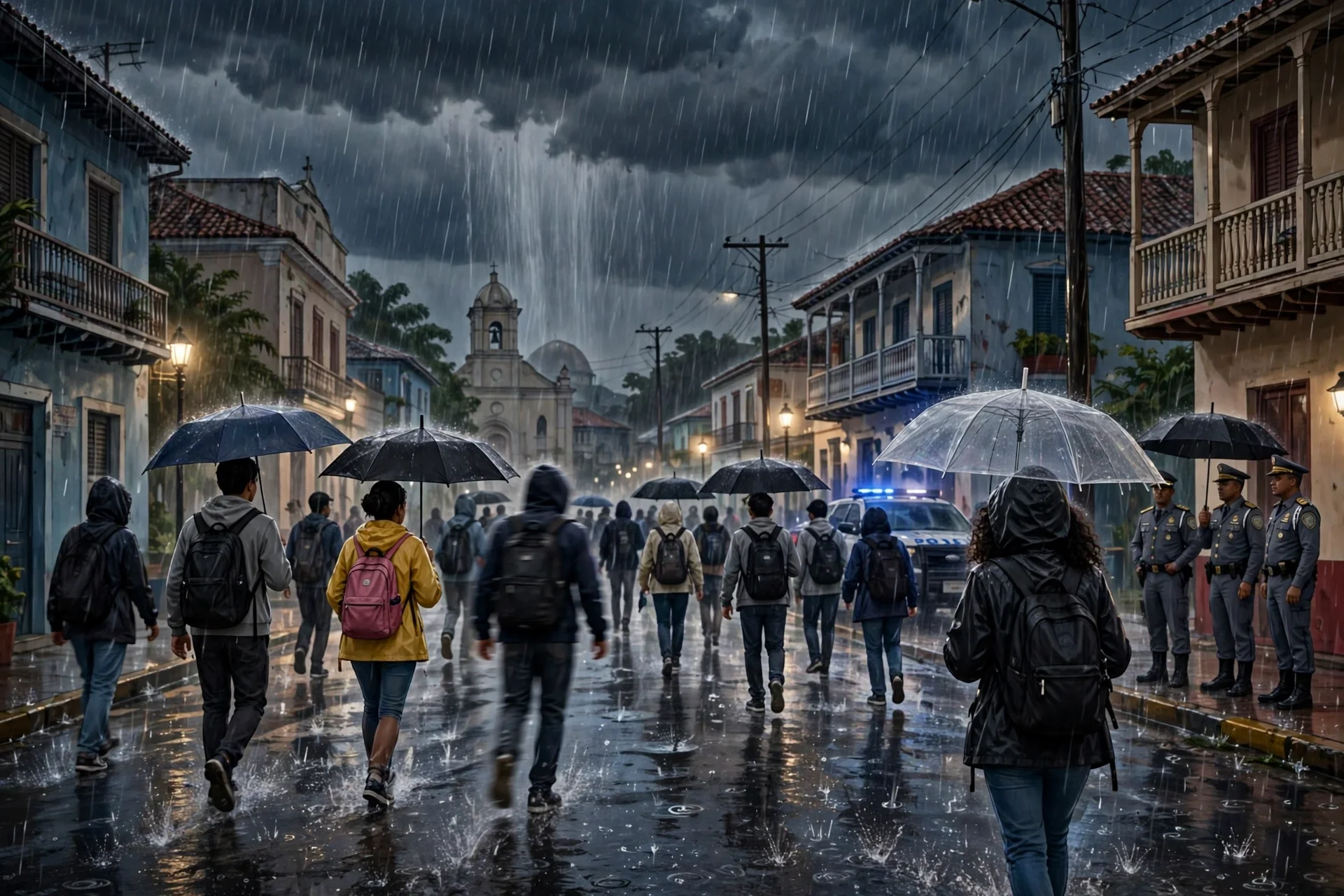
Police use tear gas to end a street party in the rain in Guerra
National Police officers dispersed a clandestine party in the rain in San Antonio de Guerra using tear gas, as a trough kept 22 provinces and the National…
Tear gas ends a street party held in the rain in Guerra
Police officers used tear gas to disperse a clandestine party during intense downpours in San Antonio de Guerra.
--- The context ---
A trough continues to affect the Dominican Republic, bringing rainfall and increasing flood risks. Against that backdrop, the Emergency Operations Center was keeping 22 provinces and the National District under alert for the precipitation, with several areas under a yellow alert and others under a green alert.
The rainfall linked to the trough keeps attention focused on flood risks in different parts of the country, while authorities repeat the call for prudence and for following official bulletins throughout the emergency.
--- The facts ---
On Tuesday, during intense downpours, a group of young people gathered on a public street in the municipality of San Antonio de Guerra for a clandestine party held in the rain. National Police officers used tear gas canisters to disperse the activity and remove those present.
The rains have isolated 30 communities and affected some 412 people, with overflows and flooding in communities in Azua and San José de Ocoa.
--- The positions ---
According to the authorities, the intervention sought to protect citizens' physical integrity and prevent possible tragedies given the adverse weather conditions. The authorities also urge the population to act prudently, avoid activities that put their lives at risk and stay attentive to official bulletins while the rains continue.
--- What remains unknown ---
So far, no information has been released about anyone being detained, and no additional details have been offered about the circumstances in which the police operation unfolded. The available information also does not specify how many people were taking part in the party or how the dispersal was carried out.
--- Unanswered questions ---
How many people were taking part in the party when officers intervened? Was anyone detained during the operation, or were there no detentions at all? What additional details will the authorities offer about the exact circumstances in which the intervention unfolded?
--- EPM analysis ---
The episode belongs to a nationwide rain emergency, not to an isolated public-order incident. With 22 provinces and the National District under alert, 30 communities isolated and some 412 people affected, prevention and civil protection sit at the center of the reading, alongside the need to explain every action with transparency and verifiable detail.
📌 EPM Take: In EPM's view, protecting life must come before any celebration when a trough keeps 22 provinces and the National District under alert. The dispersal in Guerra falls within that duty of prevention, but transparency is also part of civil protection. Reporting whether anyone was detained and specifying the circumstances of the operation would strengthen public trust without weakening the authority needed to prevent tragedies during intense and persistent rainfall across the country.
--- The context ---
The Dominican Republic remains under the effects of a trough that brings rainfall and raises flood risks. The Emergency Operations Center was keeping 22 provinces and the National District under alert for the precipitation linked to the system, with several areas under a yellow alert and others under a green alert.
The persistent rains from the trough reinforce the need for prudence among the population, with communities isolated and people affected in provinces such as Azua and San José de Ocoa by recorded overflows and flooding.
--- The facts ---
On Tuesday, amid intense downpours, young people gathered on a public street in San Antonio de Guerra for a clandestine party held in the rain. The National Police intervened and used tear gas canisters to end the activity and remove those present.
Nationwide, the rains have isolated 30 communities and affected some 412 people, with flooding in areas of Azua and San José de Ocoa.
--- The positions ---
According to the authorities, the intervention sought to protect citizens' physical integrity and prevent possible tragedies given the adverse weather conditions. In the same vein, the authorities urge people to act prudently, avoid activities that put lives at risk and heed official bulletins while the rains continue.
--- What remains unknown ---
So far, no information has been released about anyone being detained, and no additional details have been offered about the circumstances in which the operation unfolded. Without that information, it is not possible to assess with complete data how force was applied or whether alternatives existed before the gas was used.
--- Unanswered questions ---
Was the use of tear gas a proportionate response to disperse the young people who had gathered? Were other ways of ending the party exhausted before resorting to gas? Will the authorities report whether anyone was detained and exactly how the operation unfolded?
--- EPM analysis ---
The underlying discussion is not only about order in the street, but about the proportionality of the response inside a weather emergency. The rain risk was real and widespread, yet every means used to disperse a gathering must be open to examination on the facts. Order and restraint are not opposing ideas when an action is fully explained.
📌 EPM Take: In EPM's view, maintaining order during an emergency does not remove the need to examine the proportionality of the means used to disperse a street party. The use of tear gas against young people gathered in the rain requires a detailed explanation of the circumstances, the alternatives considered and the outcome of the operation. If no one was detained, that should be stated clearly. Authority grows stronger when it acts firmly and also accounts fully for how and why it intervened.
Policía dispersa con gases una fiesta bajo la lluvia en Guerra
La Policía Nacional dispersó con bombas lacrimógenas una fiesta clandestina bajo la lluvia en San Antonio de Guerra, mientras una vaguada mantenía 22…
Gases lacrimógenos para terminar una fiesta callejera en Guerra
Agentes policiales usaron bombas lacrimógenas para dispersar una fiesta clandestina bajo intensos aguaceros en San Antonio de Guerra.
--- El contexto ---
Una vaguada continúa afectando a la República Dominicana, provoca lluvias y aumenta los riesgos de inundaciones. En ese escenario, el Centro de Operaciones de Emergencias mantenía 22 provincias y el Distrito Nacional bajo alerta por las precipitaciones, con varias demarcaciones en alerta amarilla y otras en verde.
Las precipitaciones asociadas a la vaguada mantienen la atención puesta en el riesgo de inundaciones en distintas zonas del país, mientras las autoridades reiteran la exhortación a la prudencia y a seguir los boletines oficiales durante la emergencia.
--- Los hechos ---
El martes, durante intensos aguaceros, un grupo de jóvenes se congregó en la vía pública del municipio de San Antonio de Guerra para una fiesta clandestina celebrada bajo la lluvia. Agentes de la Policía Nacional utilizaron bombas lacrimógenas para dispersar la actividad y retirar a los presentes.
Las lluvias han provocado el aislamiento de 30 comunidades y han afectado a unas 412 personas, con desbordamientos e inundaciones en comunidades de Azua y San José de Ocoa.
--- Las posiciones ---
Según las autoridades, la intervención buscaba proteger la integridad física de los ciudadanos y prevenir posibles tragedias ante las condiciones climáticas adversas. Las autoridades también exhortan a la población a actuar con prudencia, evitar actividades que pongan en riesgo sus vidas y mantenerse atenta a los boletines oficiales mientras continúen las lluvias.
--- Lo que falta saber ---
Hasta el momento no se ha informado sobre personas detenidas ni se han ofrecido detalles adicionales acerca de las circunstancias en que se desarrolló el operativo policial. La información disponible tampoco precisa cuántas personas participaban en la fiesta ni cómo se ejecutó la dispersión en la calle.
--- Preguntas sin respuesta ---
¿Cuántas personas participaban en la fiesta cuando intervinieron los agentes? ¿Hubo personas detenidas durante el operativo o no se produjo ninguna detención? ¿Qué detalles adicionales ofrecerán las autoridades sobre las circunstancias concretas en que se desarrolló la intervención?
--- Análisis EPM ---
El hecho se inscribe en una emergencia por lluvias de alcance nacional, no en un episodio aislado de orden público. Con 22 provincias y el Distrito Nacional en alerta, 30 comunidades aisladas y unas 412 personas afectadas, la prevención y la protección civil ocupan el centro de la lectura, junto a la necesidad de explicar cada actuación con transparencia.
📌 Conclusion EPM: A juicio de EPM, la protección de la vida debe estar por encima de cualquier celebración cuando una vaguada mantiene en alerta a 22 provincias y al Distrito Nacional. La dispersión en Guerra se inscribe en ese deber de prevención, pero la transparencia también forma parte de la protección civil. Informar si hubo detenidos y precisar las circunstancias del operativo fortalecería la confianza pública sin debilitar la autoridad necesaria para evitar tragedias durante lluvias intensas y persistentes.
--- El contexto ---
La República Dominicana permanece bajo los efectos de una vaguada que provoca lluvias y eleva los riesgos de inundaciones. El Centro de Operaciones de Emergencias mantenía 22 provincias y el Distrito Nacional bajo alerta por las precipitaciones asociadas al fenómeno, con varias demarcaciones en alerta amarilla y otras en verde.
El escenario de lluvias persistentes por la vaguada refuerza la necesidad de prudencia entre la población, con comunidades aisladas y personas afectadas en provincias como Azua y San José de Ocoa por desbordamientos e inundaciones registradas.
--- Los hechos ---
El martes, en medio de intensos aguaceros, jóvenes se congregaron en la vía pública de San Antonio de Guerra en una fiesta clandestina bajo la lluvia. La Policía Nacional intervino y empleó bombas lacrimógenas para terminar la actividad y retirar a los presentes.
A escala nacional, las lluvias han aislado 30 comunidades y afectado a unas 412 personas, con inundaciones en zonas de Azua y San José de Ocoa.
--- Las posiciones ---
Según las autoridades, la intervención buscaba proteger la integridad física de los ciudadanos y prevenir posibles tragedias ante las condiciones climáticas adversas. En la misma línea, las autoridades exhortan a actuar con prudencia, evitar actividades que pongan en riesgo la vida y atender los boletines oficiales mientras sigan las lluvias.
--- Lo que falta saber ---
Hasta el momento no se ha informado sobre personas detenidas ni se han ofrecido detalles adicionales acerca de las circunstancias en que se desarrolló el operativo. Sin esa información, no es posible valorar con datos completos cómo se aplicó la fuerza ni si existían alternativas previas a los gases.
--- Preguntas sin respuesta ---
¿Era el uso de bombas lacrimógenas la respuesta proporcionada para dispersar a los jóvenes reunidos? ¿Se agotaron antes otras vías para terminar la fiesta sin recurrir a los gases? ¿Informarán las autoridades si hubo detenidos y cómo se desarrolló exactamente el operativo?
--- Análisis EPM ---
La discusión de fondo no es solo el orden en la calle, sino la proporcionalidad de la respuesta dentro de una emergencia climática. El riesgo por las lluvias era real y extendido, pero cada medio empleado para dispersar una concentración debe poder examinarse con hechos. Orden y contención no son ideas opuestas cuando la actuación se explica por completo.
📌 Conclusion EPM: A juicio de EPM, mantener el orden durante una emergencia no exime de examinar la proporcionalidad de los medios empleados para dispersar una fiesta callejera. El uso de bombas lacrimógenas contra jóvenes reunidos bajo la lluvia exige una explicación detallada de las circunstancias, de las alternativas consideradas y del resultado del operativo. Si no hubo detenidos, debe decirse con claridad. La autoridad se fortalece cuando actúa con firmeza, pero también cuando rinde cuentas completas de cómo y por qué intervino.