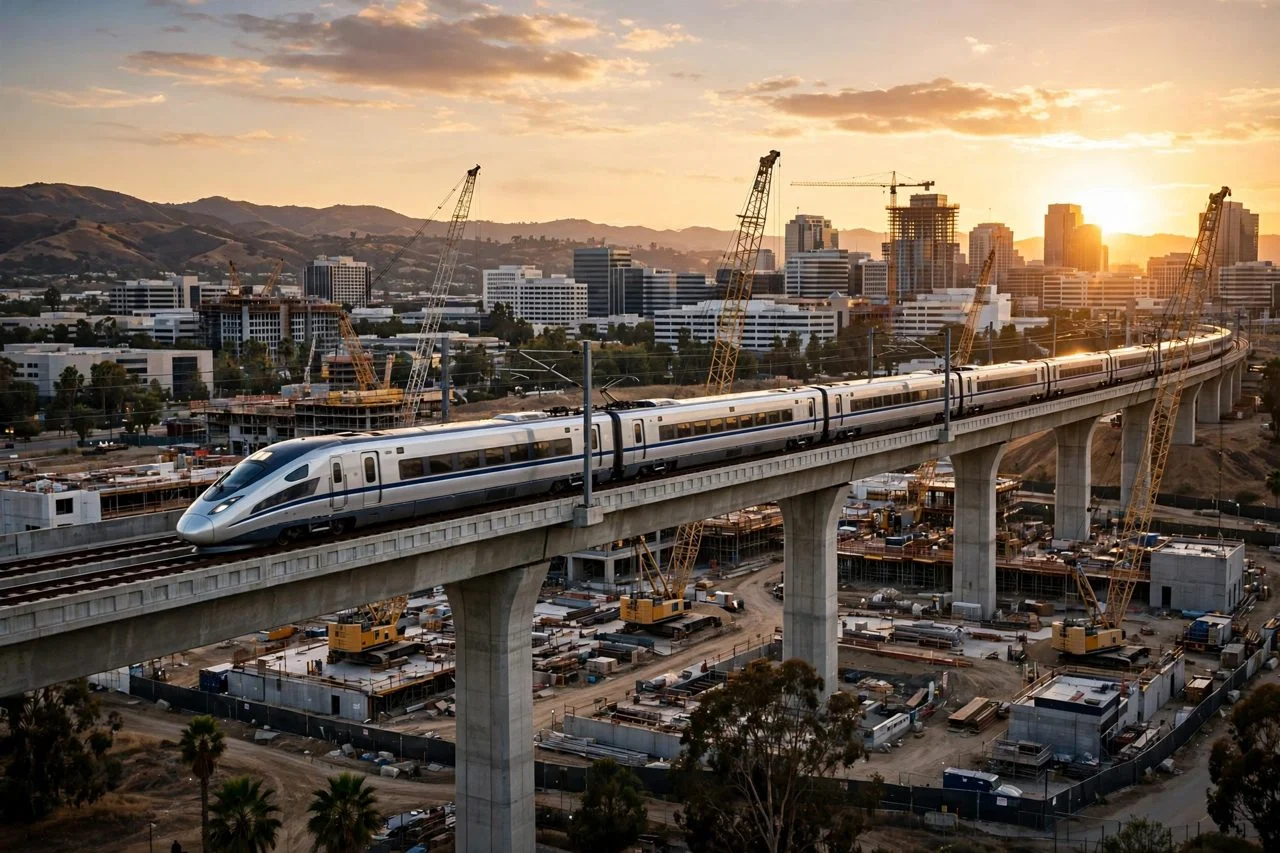
Tren de alta velocidad sobre un viaducto en construcción en California al atardecer. · Imagen generada para EPM
Ian Choudri resigns as California high-speed rail chief amid scrutiny
Ian Choudri resigned as head of California's high-speed rail authority after an inspector general report found 60% of consultant travel reimbursements from…
California rail chief quits after unapproved travel spending findings
Ian Choudri resigned after auditors found $680,500 in travel reimbursements from 2024 to 2026 lacked required advance approval, including $592,000 deemed…
--- The context ---
Voters approved California high-speed rail in 2008, backing the first true high-speed system in North America. Construction began in 2015, but delays and rising costs weakened public confidence.
--- The facts ---
The board confirmed on Thursday that Ian Choudri had resigned as chief executive. In closed session, it appointed Joe Stephenshaw, director of the California Department of Finance, as interim president.
An Office of Inspector General report found substantiated allegations that the authority failed to comply with state regulations and contract requirements on consultant travel. Between 2024 and 2026, 60%, or $680,500, lacked advance approval, and $592,000 were unallowable.
The findings listed premium airfares, Uber and Lyft upgrades, gyms, escape rooms, cigar lounges, tiki bars and private residences with no documented business purpose, and claims without receipts. Whistleblowers provided records of late-night rides billed from a street in Folsom where Choudri owns a home.
--- The positions ---
In a letter to employees, Choudri said indirectly that the decision was not easy and that leading the authority was a meaningful and rewarding chapter of his professional life. He also argued that the project moved from significant challenges to being irreversible and on track for the first true high-speed system regionally.
A spokesperson for Governor Gavin Newsom said the governor remains committed to delivering the nation's first high-speed system while protecting taxpayers. The office added that fresh board leadership was added this year to demand accountability for every dollar.
--- What remains unknown ---
The permanent leader, the handling of unallowable expenses and any new controls remain unknown. Voters were told the entire system would cost between $33 billion and $45 billion, while the 2026 Business Plan put Phase 1 alone at $126 billion. In July, the inspector general warned funding could run out by December 2027 without new borrowing.
--- Unanswered questions ---
Who will lead the authority permanently and with what mandate on spending control? Will the $592,000 in unallowable expenses be recovered and will anyone face consequences? How will California close the funding gap before December 2027? What controls will ensure no claim is paid again without approval and receipts?
--- EPM analysis ---
The resignation addresses a leadership problem, but the deeper issue is credibility. A project asking voters to sustain decades of investment cannot survive repeated doubts about basic expenses. The interim finance chief may tighten discipline, yet lasting trust requires published controls and a realistic financing plan.
📌 EPM Take:
In EPM's view, Ian Choudri's departure was necessary to restore confidence, but changing leadership alone will not repair a system that paid claims without required approvals for years. High-speed rail can still be defended as a long-term public investment only if every expense is documented before payment, audited in public and tied to consequences when rules are broken. Without that verifiable discipline, support will continue to erode. The board has taken the first step with interim leadership; what comes next must be measured in public accounts, not in promises.
--- The context ---
When voters approved the initial funding in 2008, the entire system was expected to cost between $33 billion and $45 billion. Construction began in 2015, followed by long delays and cost overruns that eroded trust.
--- The facts ---
The board confirmed Ian Choudri's resignation on Thursday. In closed session, it appointed Joe Stephenshaw, director of the California Department of Finance, as interim president.
The Office of Inspector General said allegations of noncompliance with state regulations and contract requirements were substantiated. Between 2024 and 2026, 60%, or $680,500, did not comply with advance approval rules, and $592,000 were determined to be unallowable.
The expenses included premium airfares, Uber and Lyft upgrades, gyms, escape rooms, cigar lounges, tiki bars and private residences with no documented business purpose, and claims without receipts. Whistleblowers provided records of late-night rides billed from a street in Folsom where Choudri owns a home.
--- The positions ---
Choudri told employees indirectly that the decision was not easy and that leading the authority was a meaningful and rewarding chapter of his professional life. He also maintained that the project had become irreversible and was on track for the first true high-speed system regionally, a claim at odds with the audit.
A spokesperson for Governor Gavin Newsom said the governor is committed to delivering the nation's first high-speed system and protecting taxpayers. The office said fresh board leadership was added this year to demand accountability, without specifying recoveries or sanctions.
--- What remains unknown ---
No answer explains whether the $592,000 in unallowable costs will be repaid or written off. The 2026 Business Plan said completing Phase 1 would take $126 billion, far beyond the original estimate for the whole system. In July, the inspector general warned the project could run out of money in December 2027 without new borrowing.
--- Unanswered questions ---
Will taxpayers recover the $592,000 classified as unallowable, or will that loss be absorbed without consequences? Who approved reimbursements between 2024 and 2026 without required authorization? How much more borrowing will California need to avoid running out of money in December 2027? Why did controls fail to stop charges for bars and gyms?
--- EPM analysis ---
This is not a minor paperwork lapse. Advance approval and receipts are minimum controls any agency owes taxpayers, and both were routinely bypassed. When leisure venues are reimbursed without a documented purpose, the problem is culture as much as accounting.
📌 EPM Take:
In EPM's view, this resignation confirms that California's rail project failed first at the basics: guarding other people's money before asking for more of it to finish a system promised in 2008 at a fraction of today's cost for Phase 1 alone. Without repayment, clear sanctions and a verifiable cost ceiling, new funding would repeat the cycle of expensive promises and weak controls. Taxpayers deserve closed accounts, named responsibility and measurable results before another dollar is committed.
Ian Choudri renuncia a la autoridad del tren rápido de California
Ian Choudri renunció como director de la autoridad del tren de alta velocidad de California tras un informe que halló que el 60% de reembolsos de viaje entre…
Renuncia en California tras gastos de viaje sin aprobación previa
La renuncia de Ian Choudri llegó tras una auditoría que encontró $680,500 en reembolsos de viaje sin aprobación previa entre 2024 y 2026, con $592,000 no…
--- El contexto ---
Los votantes aprobaron el tren en 2008, con un costo estimado de entre 33 mil millones y 45 mil millones de dólares, entre $33 billion y $45 billion. La construcción comenzó en 2015 y acumuló retrasos y sobrecostos.
--- Los hechos ---
La junta confirmó el jueves la renuncia de Ian Choudri como director ejecutivo. En sesión cerrada nombró presidente interino a Joe Stephenshaw, director del Departamento de Finanzas de California.
Un informe de la Office of Inspector General consideró fundamentadas las acusaciones de incumplimiento de normas estatales y contractuales al reembolsar viajes de consultores. Entre 2024 y 2026, el 60%, por $680,500, careció de aprobación previa, y $592,000 fueron no permitidos.
La revisión citó tarifas aéreas premium, mejoras en Uber y Lyft, gimnasios, salas de escape, salones de puros, bares tiki y residencias privadas sin propósito oficial documentado, y reclamos sin recibos. Denunciantes aportaron registros de viajes nocturnos desde una calle de Folsom donde Choudri tiene una vivienda.
--- Las posiciones ---
En una carta al personal, Choudri señaló indirectamente que no fue una decisión fácil y que dirigir la autoridad fue un capítulo significativo y gratificante. También sostuvo que el proyecto pasó de grandes desafíos a ser irreversible y encaminarse al primer sistema verdadero de alta velocidad regional.
Un portavoz de la oficina del gobernador Gavin Newsom indicó que el gobernador mantiene el compromiso de entregar el primer sistema del país y proteger a los contribuyentes. Según esa posición, este año se incorporó liderazgo nuevo a la junta para exigir cuentas por cada dólar.
--- Lo que falta saber ---
No se conoce al sucesor permanente ni cómo se tratarán los gastos no permitidos. El plan de negocios de 2026 fijó en $126 billion, o 126 mil millones de dólares, el costo de solo la Fase 1. En julio, la inspectoría advirtió que el proyecto podría quedarse sin dinero en diciembre de 2027 sin nuevos préstamos millonarios.
--- Preguntas sin respuesta ---
¿Quién dirigirá la autoridad de forma permanente y con qué mandato de control? ¿Se recuperarán los $592,000 no permitidos y habrá consecuencias para quienes los aprobaron? ¿Cómo se evitará quedarse sin fondos en diciembre de 2027? ¿Qué controles garantizarán que ningún viaje se pague sin aprobación previa?
--- Análisis EPM ---
La renuncia no cancela el proyecto, pero expone su punto débil: la credibilidad sobre el dinero. Nombrar interino a un responsable de finanzas apunta a reforzar la disciplina, aunque persiste la brecha entre costo y recursos.
📌 Conclusion EPM:
A juicio de EPM, la salida de Ian Choudri era necesaria para restablecer la confianza, pero no basta con cambiar un nombre si los controles que permitieron reembolsos sin aprobación siguen intactos en la autoridad. La alta velocidad puede defenderse como inversión pública solo si cada dólar se documenta, se aprueba antes de gastarse y se audita con consecuencias reales. Sin esa disciplina verificable, seguirá perdiendo apoyo. La junta ya dio el primer paso con una dirección interina; lo que sigue debe medirse en cuentas públicas, no en promesas.
--- El contexto ---
Los votantes aprobaron en 2008 un tren que debía costar entre 33 mil millones y 45 mil millones de dólares para todo el sistema, entre $33 billion y $45 billion. La construcción empezó en 2015 y sumó retrasos y sobrecostos.
--- Los hechos ---
La junta confirmó el jueves la renuncia de Ian Choudri como director ejecutivo. En sesión cerrada designó presidente interino a Joe Stephenshaw, director del Departamento de Finanzas de California.
La Office of Inspector General determinó que estaban fundamentadas las acusaciones de incumplimiento de normas estatales y contractuales en reembolsos a consultores. Entre 2024 y 2026, el 60%, por $680,500, no tuvo aprobación previa, y $592,000 fueron clasificados como no permitidos.
El detalle incluye tarifas aéreas premium, mejoras en Uber y Lyft, gimnasios, salas de escape, salones de puros, bares tiki y residencias privadas sin finalidad oficial, y reclamos sin recibos. Denunciantes aportaron registros de viajes nocturnos pagados desde una calle de Folsom donde Choudri tiene una casa.
--- Las posiciones ---
En su carta al personal, Choudri expresó indirectamente que dejar el cargo no fue fácil y que su gestión fue significativa y gratificante. También afirmó que el proyecto pasó a considerarse irreversible y encaminado al primer sistema verdadero de alta velocidad regional, valoración que contrasta con la auditoría.
La oficina del gobernador Gavin Newsom respondió, por un portavoz, que el gobernador está comprometido con entregar el sistema y proteger a los contribuyentes. Según esa explicación, este año se renovó parte de la junta para exigir cuentas, sin detallar sanciones ni devoluciones.
--- Lo que falta saber ---
No se informó si se devolverán los $592,000 no permitidos ni si habrá responsabilidades por aprobarlos. El plan de negocios de 2026 elevó a $126 billion, o 126 mil millones de dólares, el costo de apenas la Fase 1. En julio, la inspectoría advirtió que el proyecto podría quedarse sin dinero en diciembre de 2027 sin nueva deuda millonaria.
--- Preguntas sin respuesta ---
¿Quién responderá por los reembolsos pagados sin aprobación previa entre 2024 y 2026? ¿Volverán a los contribuyentes los $592,000 no permitidos o la pérdida quedará sin consecuencias? ¿Cuánto más deberá endeudarse California para no quedarse sin fondos en diciembre de 2027? ¿Por qué nadie detectó antes viajes a bares y gimnasios como gastos oficiales?
--- Análisis EPM ---
No es un error aislado, sino un patrón de gasto sin freno en una obra cuyo costo se multiplicó. Sin aprobación previa ni recibos, el mensaje es que el dinero público no tiene dueño. La urgencia ya no es solo construir, sino detener la pérdida de credibilidad.
📌 Conclusion EPM:
A juicio de EPM, esta renuncia confirma que el tren de California fracasó primero en lo elemental: cuidar el dinero ajeno antes de pedir más dinero ajeno para continuar la obra prometida desde 2008. Sin devolución de gastos no permitidos, sanciones claras y un techo de costo verificable, cualquier financiamiento repetiría el ciclo de promesas caras y controles débiles. Los contribuyentes merecen cuentas cerradas, responsables identificados y resultados medibles antes de otro dólar comprometido.