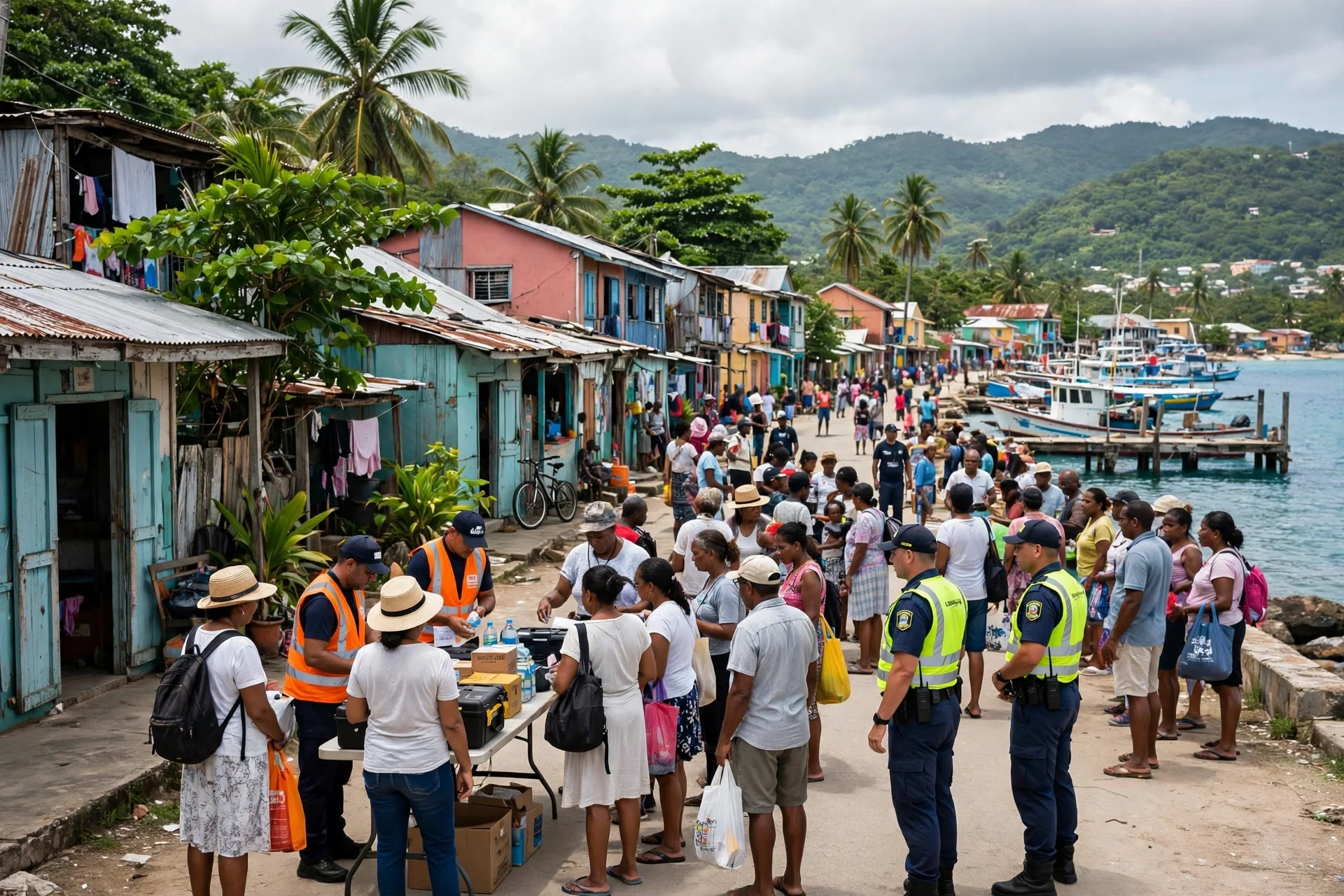
Personal de ayuda con chalecos naranjas atiende a residentes junto a una mesa con suministros, mientras agentes con chalecos reflectantes observan en una comunidad costera caribeña con puerto pesquero, palmeras y colinas al fondo. · Imagen generada para EPM
Bukele announces Salvadoran deployment to Haiti and asks Haitians for trust
The president of El Salvador, Nayib Bukele, announced in a message to the Haitian people that his country is about to deploy soldiers and personnel to Haiti.
Bukele pledges Haiti security mission to rescue technicians and confront gangs
The president of El Salvador, Nayib Bukele, announced a deployment of soldiers and personnel to Haiti with two stated goals: bringing home the four Salvadoran…
--- The context ---
According to Nayib Bukele's message, El Salvador and Haiti share a history of suffering marked by fear and distrust toward those who promised help. Bukele stated that after 200 years of suffering his country finally lives in peace.
--- The facts ---
In his published message, Bukele announced that El Salvador is about to deploy soldiers and personnel to Haiti. He specified that this is not an operation against the Haitian people or an invasion, and said his country is not a great power and does not seek to dominate Haiti or seize its wealth.
According to Bukele, El Salvador is covering 90 % of the costs with its own resources, while receiving a little logistical help from other countries. He presented his country as a modest, developing state paying for the mission almost alone.
--- The positions ---
Bukele framed cooperation and trust as the basis of the mission. He asked the Haitian people to trust and to pray, and he echoed in indirect form 2 Chronicles 7:14, noting that, according to that reference, a people that humbles itself, prays and changes course can receive forgiveness and healing for its land.
The president said El Salvador is not coming to make money, because nobody is paying it for this task, and he expressed his hope that future Haitian generations will remember Salvadorans as friends who came to help at a difficult moment.
--- What remains unknown ---
The message does not detail the date of the deployment, the number of personnel or the duration of the mission. It also does not specify where the four aviation technicians are or which countries provide the logistical help mentioned.
--- Unanswered questions ---
When will the deployment begin, and how long will personnel remain in Haiti? How will the return of the four technicians be carried out? What will be the scope of the logistical help from other countries?
--- EPM analysis ---
Bukele presents the mission as solidarity between countries that have known fear, stresses the economic effort assumed by El Salvador and appeals to Haitian trust. The humanitarian dimension appears together with an explicit promise to return once the mission ends.
📌 EPM Take:
In EPM's view, the strength of the message lies in framing the mission as help between peoples who share a history of pain, rather than as the imposition of a power. That reading sits alongside gaps on dates, personnel and coordination. The trust Bukele asks for will depend on whether the deployment delivers the return of the technicians and real relief for communities, and on whether the promise to come home is kept.
--- The context ---
Bukele compared Haiti's situation with the suffering his own country endured, he said. El Salvador endured a bloodbath he described as even more terrible than Haiti's current one, and after 200 years of suffering his country lives in peace and is, according to his message, the safest country on the continent.
--- The facts ---
Bukele announced that El Salvador is about to deploy soldiers and personnel to Haiti. He clarified that this is not an operation against the Haitian people or an invasion, and said his country is not a great power and does not seek to dominate Haiti or seize its wealth.
According to the message, the goal is twofold: to bring home the four Salvadoran aviation technicians and to teach a lesson to the gangs that, according to Bukele, make the Haitian people suffer and prevent them from living free and without fear. He added that El Salvador is covering 90 % of the costs with its own resources, with a little logistical help from other countries.
--- The positions ---
Bukele said justice and peace are priceless, even if the operation is costly. He stated that his country is not coming to make money, because nobody is paying it, but to fight against those who do evil, according to his message.
The president asked for trust and prayer. He echoed in indirect form 2 Chronicles 7:14, according to which a people that humbles itself, prays and turns from its wrongful ways can see its land healed. He closed by stating that, when the mission ends, they will return home.
--- What remains unknown ---
The message does not specify the start date, the number of personnel or the rules for acting against the gangs. It also does not detail the situation of the four technicians or identify the countries providing logistical help.
--- Unanswered questions ---
When will the deployment take effect, and with how many personnel? Within what timeframe will the four technicians return? What results does Bukele expect from the lesson announced for the gangs?
--- EPM analysis ---
Bukele presents the Salvadoran experience as backing for his offer: a country that, according to his account, escaped violence now offers its personnel and resources against the gangs in Haiti, with a promise of withdrawal once the mission concludes.
📌 EPM Take:
In EPM's view, the message is right to separate the Haitian people from the gangs that, according to Bukele, make them suffer, and to assume the cost of acting instead of limiting itself to statements. Serious questions remain about timelines, command and rules of action. The credibility of the mission will be measured by two results the president himself set: the return of the four technicians and an effective lesson for the gangs.
Bukele anuncia despliegue salvadoreño en Haití y pide confianza al pueblo haitiano
El presidente de El Salvador, Nayib Bukele, anunció en un mensaje al pueblo haitiano que su país está a punto de desplegar soldados y personal en Haití.
Bukele anuncia misión en Haití para rescatar técnicos y enfrentar a las pandillas
El presidente de El Salvador, Nayib Bukele, anunció un despliegue de soldados y personal en Haití con dos objetivos declarados: que regresen los cuatro…
--- El contexto ---
Según el mensaje de Nayib Bukele, El Salvador y Haití comparten una historia de sufrimiento marcada por el miedo y la desconfianza hacia quienes prometían ayuda. Bukele afirmó que tras 200 años de sufrimiento su país finalmente vive en paz.
--- Los hechos ---
Bukele anunció que El Salvador está a punto de desplegar soldados y personal en Haití. Precisó que no es una operación contra el pueblo haitiano ni una invasión, y aseguró que su país no es una gran potencia ni busca dominar a Haití ni apoderarse de sus riquezas.
Según Bukele, El Salvador cubre el 90 % de los gastos con recursos propios, aunque recibe un poco de ayuda logística de otros países. Presentó a su país como un Estado modesto y en vías de desarrollo que asume casi solo el costo.
--- Las posiciones ---
Bukele planteó la cooperación y la confianza como base de la misión. Pidió al pueblo haitiano que confíe y que ore, y evocó en forma indirecta 2 Crónicas 7:14 al señalar que, según esa referencia, un pueblo que se humilla, ora y cambia de camino puede recibir perdón y sanación para su tierra.
El mandatario afirmó que El Salvador no llega a ganar dinero, porque nadie le paga por esta tarea, y expresó su deseo de que las futuras generaciones haitianas recuerden a los salvadoreños como amigos que acudieron a ayudar en un momento difícil.
--- Lo que falta saber ---
El mensaje no detalla la fecha del despliegue, el número de efectivos ni la duración de la misión. Tampoco precisa dónde están los cuatro técnicos en aviación ni qué países aportan la ayuda logística mencionada.
--- Preguntas sin respuesta ---
¿Cuándo comenzará el despliegue y cuánto permanecerá el personal en Haití? ¿Cómo se concretará el regreso de los cuatro técnicos? ¿Qué alcance tendrá la ayuda logística de otros países?
--- Análisis EPM ---
Bukele presenta la misión como solidaridad entre países que han conocido el miedo, subraya el esfuerzo económico asumido por El Salvador y apela a la confianza haitiana. La dimensión humanitaria aparece unida a una promesa expresa de retorno al terminar la misión.
📌 Conclusion EPM:
A juicio de EPM, la fuerza del mensaje está en presentar la misión como ayuda entre pueblos que comparten una historia de dolor, y no como imposición de una potencia. Esa lectura convive con vacíos sobre fechas, efectivos y coordinación. La confianza que Bukele pide dependerá de que el despliegue se traduzca en el regreso de los técnicos y en alivio real para las comunidades, y de que la promesa de volver a casa se cumpla.
--- El contexto ---
Bukele comparó la situación de Haití con el sufrimiento que, según relató, vivió su propio país. Afirmó que El Salvador padeció un baño de sangre aún más terrible que el actual en Haití, y sostuvo que tras 200 años de sufrimiento su país vive en paz y es, según su mensaje, el país más seguro del continente.
--- Los hechos ---
Bukele anunció que El Salvador está a punto de desplegar soldados y personal en Haití. Aclaró que no es una operación contra el pueblo haitiano ni una invasión, y afirmó que su país no es una gran potencia ni busca dominar a Haití ni apoderarse de sus riquezas.
De acuerdo con el mensaje, el objetivo es doble: que regresen los cuatro técnicos en aviación salvadoreños y dar una lección a las pandillas que, según Bukele, hacen sufrir al pueblo haitiano y le impiden vivir libre y sin miedo. Añadió que El Salvador cubre el 90 % de los gastos con recursos propios, con un poco de ayuda logística de otros países.
--- Las posiciones ---
Bukele sostuvo que la justicia y la paz no tienen precio, aunque la operación resulte cara. Afirmó que su país no llega a ganar dinero, porque nadie le paga, sino a luchar contra quienes hacen el mal, según su mensaje.
El presidente pidió confianza y oración. Evocó en forma indirecta 2 Crónicas 7:14, según el cual un pueblo que se humilla, ora y se vuelve de sus malos caminos puede ver sanada su tierra. Cerró afirmando que, al terminar la misión, regresarán a casa.
--- Lo que falta saber ---
El mensaje no precisa la fecha del despliegue, la cantidad de efectivos ni las reglas frente a las pandillas. Tampoco detalla la situación de los cuatro técnicos ni identifica a los países que aportan ayuda logística.
--- Preguntas sin respuesta ---
¿Cuándo se hará efectivo el despliegue y con cuántos efectivos? ¿En qué plazo regresarán los cuatro técnicos? ¿Qué resultados espera Bukele de la lección anunciada a las pandillas?
--- Análisis EPM ---
Bukele presenta la experiencia salvadoreña como respaldo de su oferta: un país que, según su relato, escapó de la violencia ofrece ahora su personal y sus recursos contra las pandillas en Haití, con una promesa de retirada al concluir.
📌 Conclusion EPM:
A juicio de EPM, el mensaje acierta al separar al pueblo haitiano de las pandillas que, según Bukele, lo hacen sufrir, y al asumir el costo de actuar en lugar de limitarse a declaraciones. Quedan preguntas serias sobre plazos, mando y reglas de actuación. La credibilidad de la misión se medirá por dos resultados que el propio presidente fijó: el regreso de los cuatro técnicos y una lección efectiva para las pandillas.