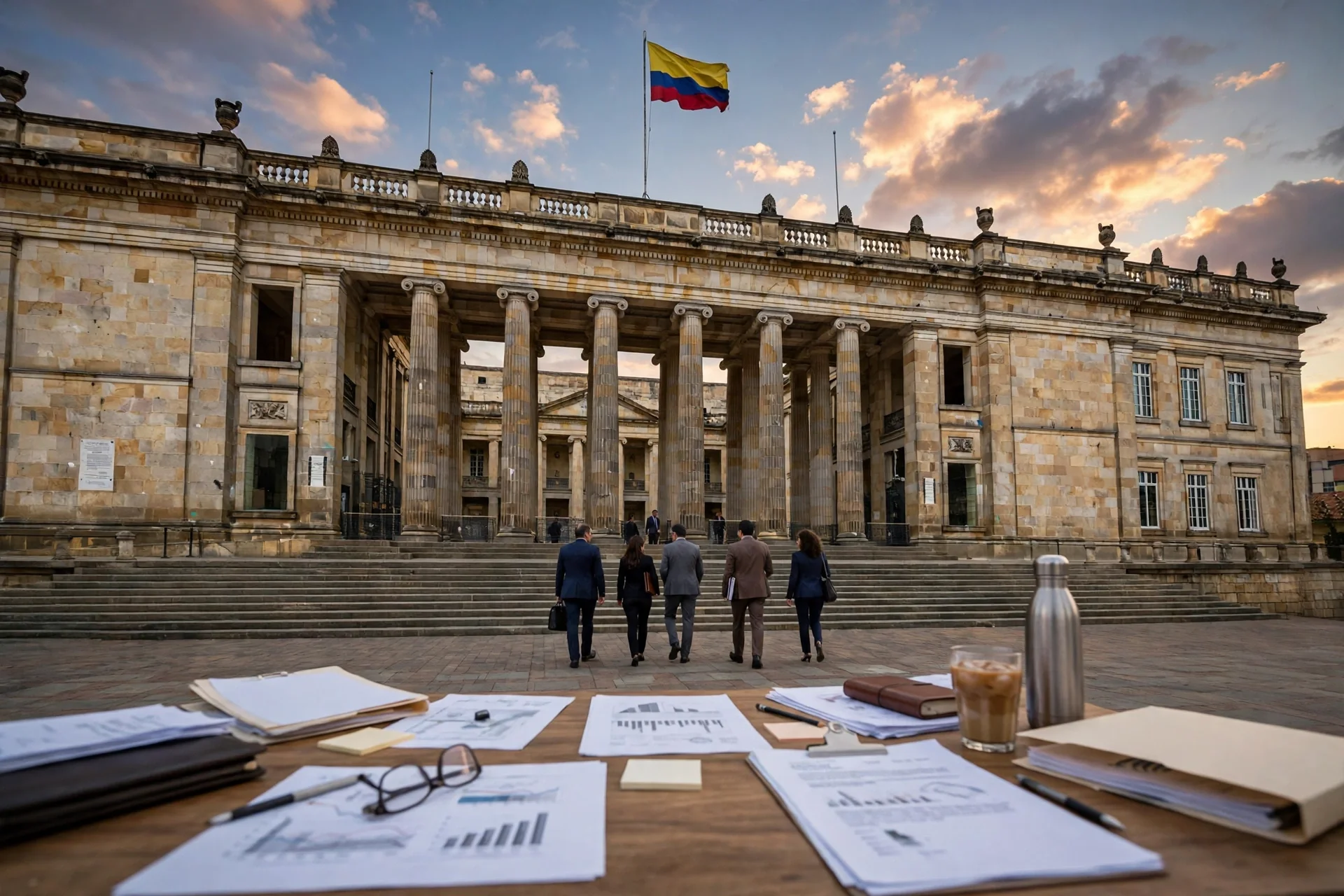
Fachada del Capitolio Nacional al atardecer, con personas dirigiéndose a la escalinata y documentos con gráficos sobre una mesa en primer plano. · Imagen generada para EPM
Henríquez refuses new taxes in the fiscal rescue bill
Honorio Henríquez warned that he will not support new taxes in the Government's Fiscal Rescue Law, while María Clara Posada questioned the higher health…
Congress debates fiscal rescue without raising tax burdens
Senate President Honorio Henríquez rejected new taxes in the Fiscal Rescue Law, while Centro Democrático backed austerity and incentives and the Government…
--- The context --- The Fiscal Rescue Law presented by the Government of Abelardo de la Espriella seeks to address deteriorating public finances by combining spending cuts, administrative reorganization, investment incentives and measures to increase fiscal revenue. That mix opened a debate over who would bear the adjustment's cost.
--- The facts --- The bill was filed in the House of Representatives on October 29, 2026 and must now complete its legislative process. It proposes reducing payroll spending and service contracting costs, and empowering the Executive to abolish, merge or reorganize public entities.
It also proposes lowering the corporate income tax rate from 35% to 31%, modifying VAT and withholding at source, and improving revenue collection while stimulating economic activity.
--- The positions --- Senate President Honorio Henríquez announced that he will review the bill closely and warned that he will not back articles implying new taxes or greater economic burdens for Colombians. In his view, the adjustment should come from reducing public spending, not from new levies on citizens.
Representative María Clara Posada said she would support the austerity measures and investment incentives, but announced her rejection of provisions that, in her interpretation, would increase the economic obligations of workers and middle class households. She questioned the rise in the employee health contribution from 4% to 8%.
Posada also objected to changes in exempt employment income, the wider income tax base and more products and services taxed at the general VAT rate of 19%. Gabriel Vallejo reiterated that Centro Democrático defends a smaller, austere State with lower taxes.
Christian Garcés backed several components on spending reduction and incentives, although he pointed to the need to study the content in detail. The Government has defended the initiative to reduce the fiscal deficit, contain debt growth and improve state efficiency.
--- What remains unknown --- It is still unknown which articles will keep their wording or what support each provision will gather in Congress.
--- Unanswered questions --- Which tax articles will achieve consensus between the Government and Centro Democrático? How would revenue be offset if the questioned levies are withdrawn from the bill? What will happen to the health contribution and to the income tax base?
--- EPM analysis --- The clash is not over whether spending must be controlled, a point where several sectors agree, but over the tax component, where the known objections are concentrated.
📌 EPM Take: In EPM's view, the debate draws a clear line between two paths to ordering public finances: adjusting first the size and cost of the State, or asking for an additional effort from workers, households and consumers. The known objections do not reject austerity or incentives, but the concrete levies that would reach citizens' pockets. That is why the decisive discussion will be article by article, measuring the impact on companies, workers and households before any final vote.
--- The context --- The Fiscal Rescue Law presented by the Government of Abelardo de la Espriella proposes addressing deteriorating public finances with less spending, administrative reorganization, investment incentives and more fiscal revenue. The discussion already separates the austerity components from the tax components.
--- The facts --- The bill was filed in the House of Representatives on October 29, 2026 and must now complete its legislative process. It contemplates reducing payroll and service contracting costs, and granting the Executive powers to abolish, merge or reorganize public entities.
Its measures include reducing the corporate income tax rate from 35% to 31%, modifying VAT and withholding at source, and improving revenue collection while stimulating economic activity.
--- The positions --- Senate President Honorio Henríquez announced that he will review the bill closely and rejected any measure that increases citizens' tax burden. He defended reducing the costs of the State, especially administrative expenses and unnecessary structures.
Representative María Clara Posada said she would support the austerity measures and the investment incentives, but announced her rejection of the provisions that, in her interpretation, would increase the economic obligations of workers and middle class households in Colombia.
Posada questioned the increase in the employee health contribution, from 4% to 8%, the changes in exempt employment income, the expansion of the income tax base and more products and services taxed at the general VAT rate of 19%.
Gabriel Vallejo reiterated that Centro Democrático defends a smaller, austere State with lower taxes. Christian Garcés backed components on spending reduction and incentives, although he pointed to the need to study the content in detail. The Government defended the initiative to reduce the deficit and contain debt.
--- What remains unknown --- It remains to be defined which tax articles the Executive will keep during the process and what parliamentary support each provision will gather in the separate discussion that legislators anticipate.
--- Unanswered questions --- Will the Government keep the tax articles that now draw objections in Congress? Which administrative spending cuts would come first if the reorganization advances? Can the initiative achieve a consensus of austerity without new burdens on citizens?
--- EPM analysis --- The underlying agreement is broad around a smaller, austere State; the friction lies in the tax instruments, which several legislators consider incompatible with easing the burden on productive activity and households.
📌 EPM Take: In EPM's view, the strongest signal from the debate is that austerity and incentives enjoy support, while new levies concentrate resistance even among sectors sympathetic to fiscal order. A rescue that cuts payroll, contracting and unnecessary structures, and that lowers corporate income tax from 35% to 31%, is more consistent with an efficient State than one relying on raising the health contribution or extending VAT to more products and services across the economy.
Henríquez rechaza nuevos impuestos en la Ley de Rescate Fiscal
Honorio Henríquez advirtió que no apoyará nuevos impuestos en la Ley de Rescate Fiscal del Gobierno, mientras María Clara Posada cuestionó el alza del aporte a…
El Congreso debate el rescate fiscal sin subir la carga tributaria
El presidente del Senado, Honorio Henríquez, rechazó nuevos impuestos en la Ley de Rescate Fiscal, mientras el Centro Democrático respaldó la austeridad y los…
--- El contexto --- La Ley de Rescate Fiscal del Gobierno de Abelardo de la Espriella busca enfrentar el deterioro de las finanzas públicas combinando recorte del gasto, reorganización administrativa, estímulos a la inversión y más ingresos fiscales.
--- Los hechos --- El proyecto fue radicado en la Cámara de Representantes el 29 de octubre de 2026 y deberá surtir su trámite legislativo. Propone reducir gastos de nómina y contratación, y facultar al Ejecutivo para suprimir, fusionar o reorganizar entidades públicas.
También plantea bajar la tarifa del impuesto de renta para las empresas del 35 % al 31 %, modificar el IVA y la retención en la fuente, y mejorar la recaudación estimulando la actividad económica.
--- Las posiciones --- El presidente del Senado, Honorio Henríquez, anunció que revisará con detenimiento el proyecto y advirtió que no respaldará artículos que impliquen nuevos impuestos o mayores cargas para los colombianos. Según su planteamiento, el ajuste debe venir de reducir el gasto público, no de nuevos gravámenes.
María Clara Posada manifestó que respaldaría la austeridad y los incentivos a la inversión, pero anunció su rechazo a las disposiciones que, según su interpretación, aumentarían las obligaciones de trabajadores y hogares de clase media. Cuestionó que el aporte de los empleados a la salud pase del 4 % al 8 %.
Posada expresó reparos ante los cambios en las rentas laborales exentas, la base de contribuyentes de renta y más productos y servicios con el IVA general del 19 %. Gabriel Vallejo reiteró que el Centro Democrático defiende un Estado más pequeño, austero y con menores impuestos.
Christian Garcés respaldó varios componentes de reducción del gasto e incentivos, aunque señaló la necesidad de estudiar detalladamente el contenido. El Gobierno ha defendido la iniciativa para reducir el déficit fiscal, contener la deuda y mejorar la eficiencia estatal.
--- Lo que falta saber --- Todavía no se conoce qué artículos conservarán su redacción durante el trámite ni qué respaldo reunirá cada disposición en el Congreso.
--- Preguntas sin respuesta --- ¿Qué artículos tributarios lograrán consenso entre el Gobierno y el Centro Democrático? ¿Cómo se compensarían los ingresos si se retiran los gravámenes cuestionados? ¿Qué pasará con el aporte a la salud y con la base de contribuyentes de renta?
--- Análisis EPM --- El choque no es sobre controlar el gasto, punto de coincidencia entre sectores, sino sobre el componente tributario, donde se concentran los reparos.
📌 Conclusion EPM: A juicio de EPM, el debate deja una línea clara entre dos caminos para ordenar las finanzas públicas: ajustar primero el tamaño y el costo del Estado, o pedir un esfuerzo adicional a trabajadores, hogares y consumidores. Las objeciones conocidas no rechazan la austeridad ni los incentivos, sino los gravámenes concretos que tocarían el bolsillo ciudadano. Por eso la discusión decisiva será artículo por artículo, midiendo el impacto sobre empresas, trabajadores y hogares antes de cualquier votación.
--- El contexto --- La Ley de Rescate Fiscal presentada por el Gobierno de Abelardo de la Espriella propone enfrentar el deterioro fiscal con menos gasto, reorganización administrativa, estímulos a la inversión y más ingresos fiscales. La discusión ya separa los componentes de austeridad de los tributarios.
--- Los hechos --- El proyecto fue radicado en la Cámara de Representantes el 29 de octubre de 2026 y deberá surtir su trámite legislativo. Contempla reducir gastos de nómina y de contratación, y dar facultades al Ejecutivo para suprimir, fusionar o reorganizar entidades públicas.
Entre sus medidas figura bajar la tarifa del impuesto de renta para las empresas del 35 % al 31 %, modificar el IVA y la retención en la fuente, y mejorar la recaudación estimulando la actividad económica.
--- Las posiciones --- El presidente del Senado, Honorio Henríquez, anunció que revisará con detenimiento el proyecto y rechazó cualquier medida que aumente la carga tributaria ciudadana. Defendió reducir los costos del Estado, en especial gastos administrativos y estructuras innecesarias.
María Clara Posada manifestó que respaldaría las medidas de austeridad y los incentivos a la inversión, pero anunció su rechazo a las disposiciones que, según su interpretación, aumentarían las obligaciones de trabajadores y hogares de clase media.
Posada cuestionó el incremento del aporte de los empleados a la salud, del 4 % al 8 %, los cambios en las rentas laborales exentas, la ampliación de la base de contribuyentes y más productos y servicios con el IVA general del 19 %.
Gabriel Vallejo reiteró que el Centro Democrático defiende un Estado más pequeño, austero y con menores impuestos. Christian Garcés respaldó componentes de reducción del gasto e incentivos, aunque pidió estudiar el contenido en detalle. El Gobierno defendió la iniciativa para reducir el déficit y contener la deuda.
--- Lo que falta saber --- Falta por definirse qué artículos tributarios mantendrá el Ejecutivo y qué apoyos reunirá cada disposición en la discusión por separado.
--- Preguntas sin respuesta --- ¿Mantendrá el Gobierno los artículos tributarios que generan reparos en el Congreso? ¿Qué recortes del gasto administrativo se concretarán primero si avanza la reorganización? ¿Logrará la iniciativa un consenso de austeridad sin nuevas cargas a los ciudadanos?
--- Análisis EPM --- La coincidencia es amplia en torno a un Estado más pequeño y austero; la fricción está en los instrumentos tributarios, que varios legisladores consideran incompatibles con aliviar la carga productiva y de los hogares.
📌 Conclusion EPM: A juicio de EPM, la señal del debate es que la austeridad y los incentivos cuentan con respaldo, mientras los nuevos gravámenes concentran la resistencia incluso dentro de sectores afines al orden fiscal. Un rescate que reduzca nómina, contratación y estructuras innecesarias, y baje la renta empresarial del 35 % al 31 %, resulta más coherente con un Estado eficiente que otro apoyado en subir el aporte a la salud o ampliar el IVA.