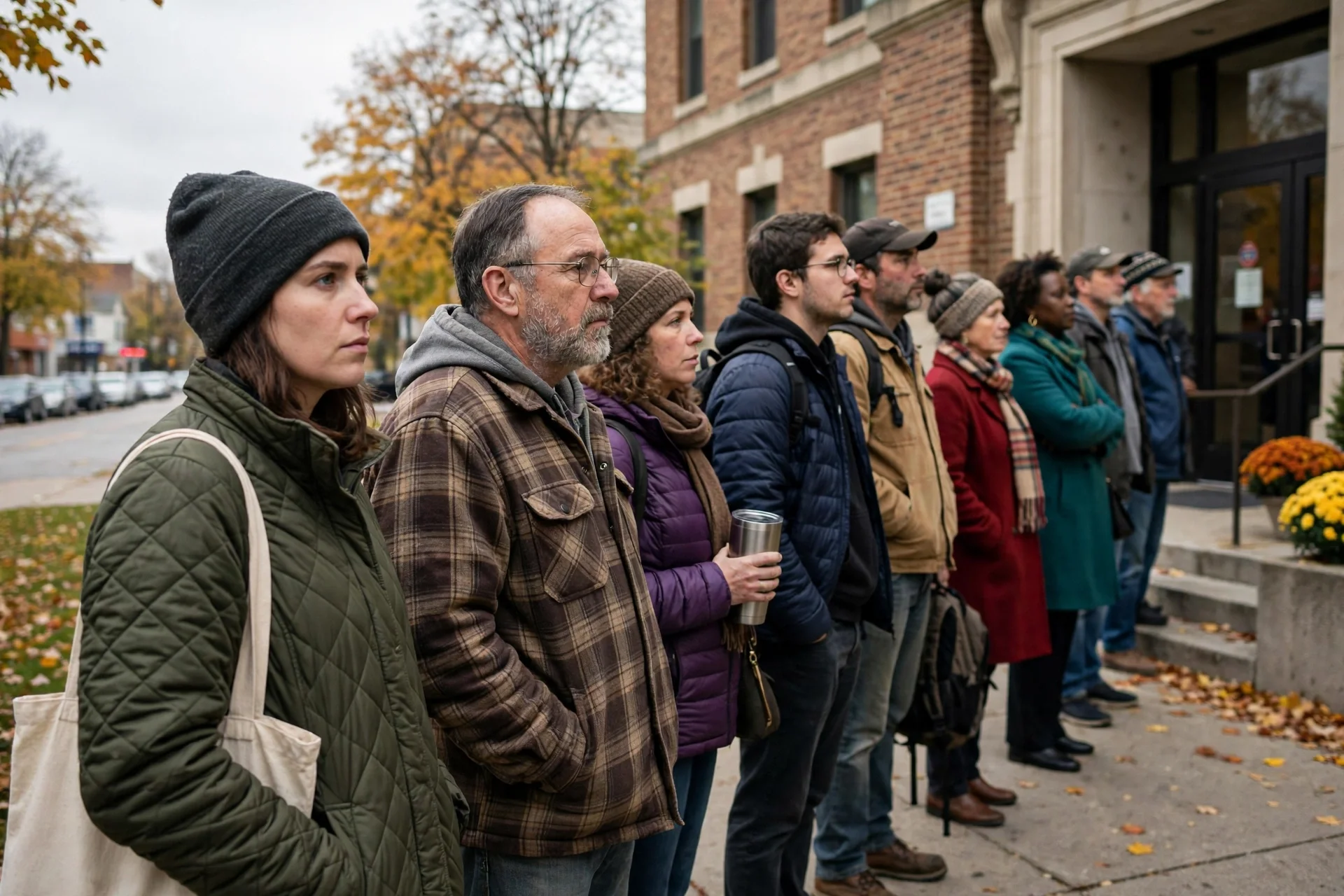
Fila de electores en un centro de votación anticipada en Minnesota. · Imagen generada para EPM
Minnesota defends its voter guide after viral backlash
A Minnesota official explained on Somali television that registered voters need bring nothing to vote early.
Minnesota faces scrutiny over low-friction voting rules
A clip about Minnesota voting rules, drawing almost a million views, revived criticism of licenses without citizenship markings, same-day registration and…
--- The context ---
Minnesota is heading into the final days before the election amid an intense argument over how voters are informed. An official appearance meant to explain rules already in force became a national debate about ballot access, public trust and the way immigrant communities are discussed on social media when a short clip travels far beyond its original audience.
No new rule triggered the dispute. What changed was the reach of a brief excerpt, separated from the full explanation, at a moment when any phrase about identification, registration and citizenship is immediately read as a political signal about the integrity of the electoral process and about who is being encouraged to take part.
--- The facts ---
Election outreach director Melanie Hazelip explained on October 26, on Somali television, that anyone already registered to vote does not need to bring anything and should simply show up at an early voting location, usually the county office or City Hall, with libraries and community centers serving as extra sites in larger jurisdictions such as Minneapolis.
Hazelip also explained that people who are not registered still have options, that an updated Minnesota identification is enough in that case, that an official list of alternative documents exists and that same-day registration remains available. The source stresses that her comments were in accordance with the laws on the books, and the clip posted on social media drew almost a million views.
--- The positions ---
The Secretary of State office responded that the information provided was accurate, that it was misinterpreted and misrepresented by political actors online and that the appearance formed part of regular nonpartisan outreach to hundreds of community groups every year, focused on making sure every eligible voter knows how and where to cast a ballot before the election ends.
Critics read the message differently. Phillip C. Parrish argued on social media that vouching lets one registered voter clear up to eight others on an oath. David McIntosh claimed Democrats are telling non-citizens how to vote. Riley Gaines linked the episode to the case for passing a federal safeguards law, and Bill Glahn said the need to be an American citizen should have been emphasized given the timing and the audience.
--- What remains unknown ---
It remains unknown whether the backlash will change any official outreach practice or whether authorities will broaden their public explanation of citizenship, residency and registration. The source does not show that the clip altered procedures at voting locations, nor that any formal review of the rules Hazelip described has been announced by state officials.
--- Unanswered questions ---
Will authorities publish a fuller explanation that places the citizenship requirement beside the registration routes in the same message? Will community outreach change after this backlash or continue unchanged? What effect will this argument, only days before the election, have on the confidence of eligible voters across Minnesota as they prepare to cast their ballots?
--- EPM analysis ---
The episode reveals the gap between explaining a law and how that explanation circulates afterward. The same sentence can be practical information for a registered voter and, stripped of context, material for suspicion among another audience. That tension explains both the speed of the reaction and its intensity during the final stretch of the campaign.
📌 EPM Take: In EPM's view, defending ballot access begins with defending accurate official information, without trimming it or loading it with intentions the source does not support. Hazelip described rules already in force, the Secretary of State confirmed their accuracy and no evidence provided shows that anyone ineligible was invited to vote. Asking for clarity about citizenship is legitimate and fully compatible with informing each community well. What does not help is turning a legal guide into proof of fraud that has not been established. Electoral trust is protected with complete information, serious verification and respect for eligible voters who simply wanted to know how to take part.
--- The context ---
Minnesota is arguing about its election system only days before the election after an official message about voting without bringing anything spread widely. The debate joins three sensitive elements: state licenses with no citizenship marking, same-day registration and a vouching mechanism between voters that lowers the friction involved in showing up and casting a ballot.
For critics, the problem is not one isolated phrase but the complete design. They argue that affirming citizenship under oath, without real-time proof in their reading, leaves room for error and abuse, and that the state should demonstrate more visible controls before asking skeptical voters for full confidence in the outcome of its elections.
--- The facts ---
Melanie Hazelip, the voter outreach director, explained on October 26, on Somali television, that anyone already registered does not need to bring anything and simply attends early voting. For those not registered, she mentioned an updated Minnesota identification, alternative documents from an official list and same-day registration, all under the laws currently on the books in the state.
A state law signed by Governor Tim Walz in 2023 provided driver licenses for all regardless of immigration status, and those licenses carry no markings indicating citizenship, even though such identifications are commonly used to register to vote. A registered voter can also vouch for up to eight other voters on residency, going with them and signing an oath. The clip drew almost a million views on social media.
--- The positions ---
Phillip C. Parrish argued on social media that the system is built with the lowest-friction path to the ballot and that this is not an accident. David McIntosh claimed Democrats want to tell non-citizens how to vote. Riley Gaines said the case makes passing the federal safeguards law she supports crucial, and Bill Glahn warned that citizenship should have been emphasized given the timing and the audience addressed.
Glahn also noted that in September a federal indictment charged an immigrant from India with falsely claiming citizenship to vote in the 2024 general election, and he cited, through an analyst, a fraud case that drew 30 years in federal prison. The Secretary of State office, by contrast, responded that Hazelip gave accurate information and that her remarks were misinterpreted by political actors online.
--- What remains unknown ---
It remains unknown what practical checks apply when someone registers the same day through another voter vouching, and what follow-up exists afterward. The source also does not say whether the state plans to strengthen citizenship verification or whether the backlash will lead to legislative or administrative changes once the election is over and results are certified.
--- Unanswered questions ---
Should Minnesota require real-time proof of citizenship before registering a voter on the same day? Should state licenses distinguish citizenship in some way when they are used to register? Can a system built on oaths and later penalties offer sufficient guarantees to voters who doubt that ineligible ballots are kept out of the count in the first place?
--- EPM analysis ---
The argument connects with earlier anger over hundreds of millions lost to social services fraud in the state, a context critics invoke to demand stricter controls. That record does not prove electoral irregularities, but it does feed distrust among those who believe the safeguards described only operate afterward, once a ballot has already been cast and counted.
📌 EPM Take: In EPM's view, a trustworthy election system cannot rest almost entirely on sworn statements and later punishment when tools exist to verify beforehand. Minnesota should clarify how it checks citizenship, what happens with vouching for up to eight people and why its licenses carry no marking at all. Asking for that verification does not deny any eligible person a vote; it protects the value of every lawful vote cast. The Secretary of State is right to demand accuracy in information, but complete accuracy also means explaining the controls with the same clarity used to explain how easy registration and voting can be.
Minnesota defiende su guía electoral tras la polémica viral
Una funcionaria de Minnesota explicó en la televisión somalí cómo votar sin llevar nada si ya se está registrado.
Minnesota y el debate sobre votar sin llevar nada
Un clip sobre las reglas de voto de Minnesota, con casi un millón de vistas, reactivó críticas sobre licencias sin marca de ciudadanía, registro el mismo día y…
--- El contexto ---
Minnesota llega a los días finales antes de la elección con una discusión intensa sobre cómo se informa a los electores. Una intervención oficial pensada para explicar reglas vigentes terminó convertida en un debate nacional sobre acceso al voto, confianza pública y el tono con el que se habla de las comunidades inmigrantes en redes sociales.
La conversación no nace de una norma nueva. Nace de la difusión masiva de un fragmento breve, separado de la explicación completa, en un momento en el que cualquier frase sobre identificación, registro y ciudadanía se interpreta de inmediato como una señal política sobre la integridad del proceso electoral.
--- Los hechos ---
La directora de difusión electoral, Melanie Hazelip, explicó el 26 de octubre en la televisión somalí que quien ya está registrado para votar no necesita llevar nada consigo y que solo debe presentarse en su lugar de votación anticipada, que suele ser la oficina del condado o el ayuntamiento, con bibliotecas y centros comunitarios como sedes adicionales en jurisdicciones grandes.
Hazelip también explicó que quien no está registrado todavía tiene opciones, que una identificación de Minnesota actualizada basta en ese caso, que existe una lista oficial de documentos alternativos y que el registro el mismo día sigue disponible. La fuente subraya que sus comentarios se ajustaban a la ley vigente y que el clip difundido en redes sociales alcanzó casi un millón de vistas.
--- Las posiciones ---
La Secretaría de Estado respondió que la información ofrecida era exacta, que fue malinterpretada y mal representada por actores políticos en línea y que esa labor forma parte de un esfuerzo regular y apartidista de difusión dirigido a cientos de grupos comunitarios cada año, centrado en que cada elector elegible sepa cómo y dónde votar.
Los críticos leyeron el mensaje de otro modo. Phillip C. Parrish sostuvo en redes sociales que el aval permite que un votante registrado respalde hasta a ocho personas con un juramento. David McIntosh afirmó que los demócratas buscan decir a los no ciudadanos cómo votar. Riley Gaines vinculó el episodio con la necesidad de aprobar una ley federal de salvaguardas y Bill Glahn consideró que, por la cercanía electoral y la audiencia, debió subrayarse que solo pueden votar los ciudadanos estadounidenses.
--- Lo que falta saber ---
Falta saber si la polémica cambiará alguna práctica oficial de difusión o si las autoridades ampliarán la explicación pública sobre ciudadanía, residencia y registro. Tampoco consta en la fuente que el clip haya modificado procedimientos en los centros de votación ni que se haya anunciado una revisión formal de las reglas descritas por Hazelip.
--- Preguntas sin respuesta ---
¿Publicarán las autoridades una explicación más completa que incluya, en el mismo mensaje, el requisito de ciudadanía y las vías de registro? ¿Cambiará la difusión comunitaria tras esta polémica o se mantendrá sin cambios? ¿Qué efecto tendrá este debate, a pocos días de la elección, en la confianza de los electores elegibles de Minnesota?
--- Análisis EPM ---
El episodio muestra la distancia entre explicar una ley y cómo esa explicación circula después. La misma frase puede ser información práctica para un elector registrado y, fuera de contexto, material de sospecha para otro público. Esa tensión explica la velocidad de la reacción y también su intensidad en la recta final electoral.
📌 Conclusion EPM: A juicio de EPM, defender el acceso al voto empieza por defender la información oficial exacta, sin recortarla ni cargarla de intenciones que la fuente no respalda. Hazelip describió reglas vigentes, la Secretaría de Estado confirmó su exactitud y ningún dato aportado demuestra que se invitara a votar a quien no tiene derecho. Exigir claridad sobre la ciudadanía es legítimo y compatible con informar bien a cada comunidad. Lo que no ayuda es convertir una guía legal en prueba de un fraude no acreditado. La confianza electoral se protege con datos completos, verificación seria y respeto a los electores elegibles que solo buscaban saber cómo participar.
--- El contexto ---
Minnesota discute su sistema electoral a pocos días de la elección tras la difusión masiva de un mensaje oficial sobre cómo votar sin llevar nada. El debate une tres elementos sensibles: licencias estatales sin marca de ciudadanía, registro el mismo día y un mecanismo de aval entre votantes que reduce la fricción para presentarse a votar.
Para los críticos, el problema no es una frase aislada sino el diseño completo. Sostienen que afirmar la ciudadanía bajo juramento, sin una comprobación en tiempo real según su lectura, deja la puerta abierta a errores y abusos, y que el Estado debería demostrar controles más visibles antes de pedir confianza plena.
--- Los hechos ---
Melanie Hazelip, directora de difusión electoral, explicó el 26 de octubre en la televisión somalí que quien ya está registrado no necesita llevar nada y que basta acudir a la votación anticipada. Para quien no está registrado, mencionó la identificación de Minnesota actualizada, documentos alternativos de una lista oficial y el registro el mismo día, todo según la ley vigente.
La ley estatal firmada por el gobernador Tim Walz en 2023 permitió licencias de conducir para todos, sin importar el estatus migratorio, y esas licencias no llevan marcas que indiquen ciudadanía, aunque se usan habitualmente para registrarse. Además, un votante registrado puede avalar hasta a ocho personas sobre su residencia, acudiendo con ellas al centro y firmando un juramento. El clip sumó casi un millón de vistas en redes sociales.
--- Las posiciones ---
Phillip C. Parrish afirmó en redes sociales que así el sistema queda construido con la fricción más baja posible y que no se trata de un accidente. David McIntosh sostuvo que los demócratas quieren enseñar a los no ciudadanos a votar. Riley Gaines defendió que el caso hace crucial aprobar la ley federal de salvaguardas que impulsa su sector y Bill Glahn advirtió que debió enfatizarse la ciudadanía.
Glahn también recordó que en septiembre un inmigrante de India fue acusado federalmente de afirmar falsamente ser ciudadano para votar en la elección general de 2024 y citó, a través de un analista, el caso de fraude con una condena de 30 años de prisión federal. La Secretaría de Estado, en cambio, respondió que la información de Hazelip era exacta y que sus palabras fueron malinterpretadas por actores políticos en línea.
--- Lo que falta saber ---
Falta saber qué comprobaciones prácticas se aplican cuando una persona se registra el mismo día con aval de otra y qué seguimiento existe después. La fuente tampoco precisa si el Estado planea reforzar la verificación de ciudadanía ni si la polémica derivará en cambios legislativos o administrativos tras la elección.
--- Preguntas sin respuesta ---
¿Debe Minnesota exigir una prueba de ciudadanía en tiempo real antes de registrar a un votante el mismo día? ¿Deberían las licencias estatales distinguir de algún modo la ciudadanía cuando se usan para registrarse? ¿Puede un sistema basado en juramentos y sanciones posteriores ofrecer garantías suficientes a los electores que dudan?
--- Análisis EPM ---
La discusión conecta con un malestar previo por cientos de millones perdidos en fraudes de servicios sociales en el estado, contexto que los críticos invocan para exigir controles más estrictos. Aunque ese historial no prueba irregularidades electorales, sí alimenta la desconfianza de quienes creen que las salvaguardas descritas llegan tarde, solo después de emitido el voto.
📌 Conclusion EPM: A juicio de EPM, un sistema electoral confiable no puede apoyarse casi por completo en declaraciones juradas y castigos posteriores cuando existen herramientas para verificar antes. Minnesota debería aclarar cómo comprueba la ciudadanía, qué ocurre con el aval de hasta ocho personas y por qué sus licencias carecen de marca alguna. Pedir esa verificación no es negar el voto a nadie elegible, es proteger el valor del voto legítimo. La Secretaría de Estado tiene razón al exigir exactitud en la información, pero la exactitud completa incluye explicar los controles con la misma claridad con la que explica la facilidad para registrarse y votar.