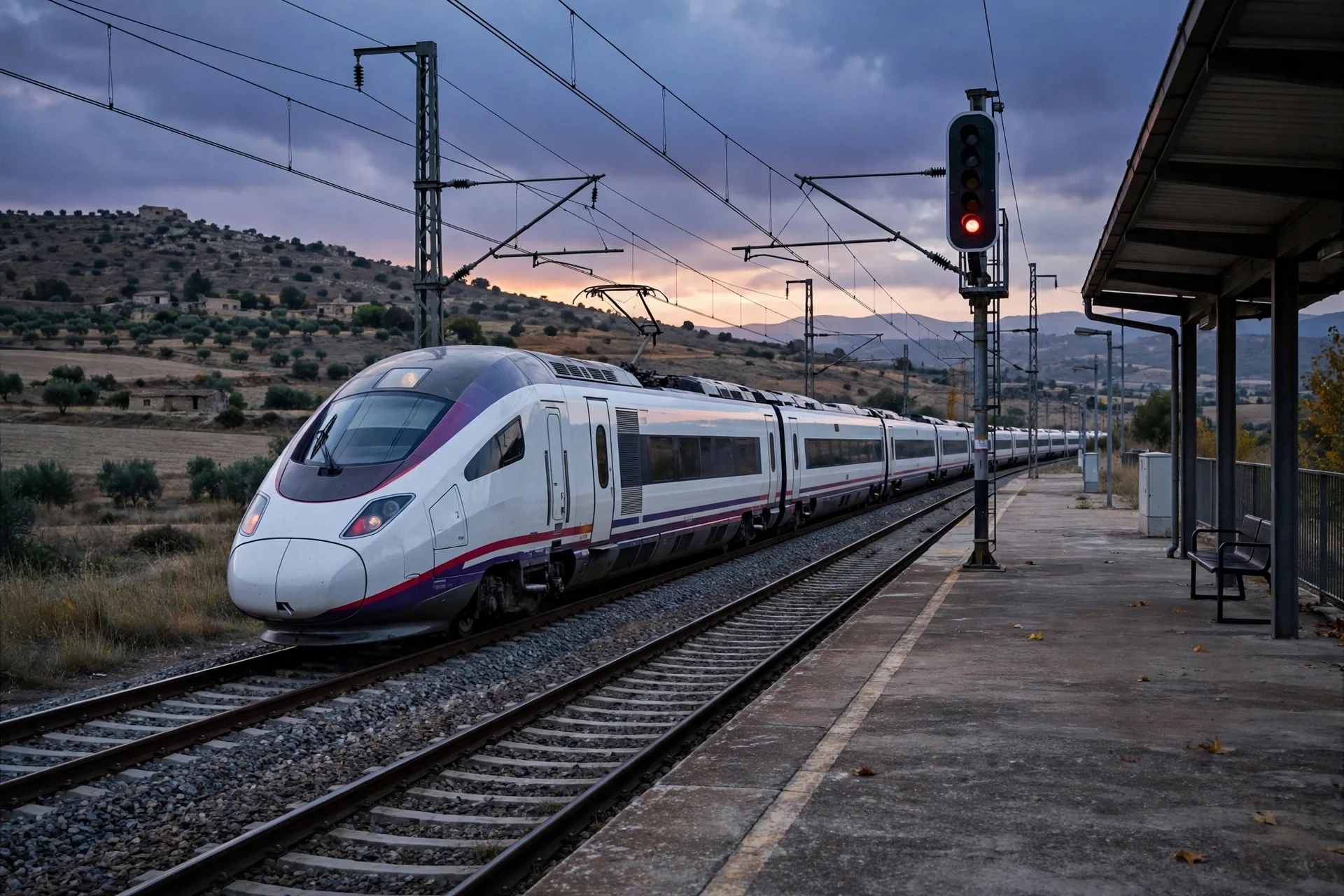
Imagen alusiva de un tren de alta velocidad en una estación rural, generada para ilustrar el debate sobre la seguridad ferroviaria. · EPM
Train drivers denounce stalled rail safety deal and call strike
The train drivers union said on October 16 that the safety agreements signed after the Adamuz tragedy remained blocked and called a 24-hour strike for October…
Renfe defends its record as drivers call a 24-hour strike
Against the drivers union claim of a blocked safety deal and the strike called for October 29, Renfe maintains it fulfilled the February 9 agreement, with 17…
--- The context ---
The agreements to strengthen train safety were signed after the Adamuz tragedy last January. That pact between the Transport Ministry and the unions made it possible to call off the protests planned for February in exchange for concrete commitments on working conditions and safe operations.
--- The facts ---
The Spanish Union of Railway Drivers said on October 16 that those agreements remained blocked and called a 24-hour strike for Thursday, October 29. The call came one day after the crash at Urda, in Toledo, between a Renfe AVE train and an Iryo train, a collision that forced the suspension of high-speed services between Madrid and Andalusia.
--- The positions ---
According to the union, talks with the Transport Ministry, Adif, the State Railway Safety Agency and Renfe ended without sufficient progress on safe operations, driver hiring and train reliability. It maintains that everything remains stalled as in May and blames the bureaucratic slowness of coordinating several agencies.
Its demands include binding protocols for weather emergencies and other track risks, better coordination among agencies, technical solutions for rolling stock problems and a review of working conditions, driving and rest times. Renfe replies that it fully met its obligations under the February 9 agreement: of the 24 measures belonging to other agencies, 17 are completed and seven remain in process, and it notes that up to 1,200 additional workers joined, so it considers the strike unjustified.
--- What remains unknown ---
The causes of the Urda crash are still unknown and will have to be determined by the ongoing investigation. The available information itself stresses that there is no proven link between the pending measures denounced by the union and that accident, so any connection between the two matters currently lacks verified support.
--- Unanswered questions ---
Which specific measures are still pending and which agency answers for each one of them? When will the binding protocols for weather emergencies demanded by the union be applied? Will there be a public and verifiable timetable to close the seven measures that are still in process?
--- EPM analysis ---
The dispute reveals the tension between those who operate trains daily and those who manage the system. When a deal signed after a tragedy takes months to become visible change, workers lose confidence and protest becomes their instrument to be heard.
📌 EPM Take: In EPM's view, rail safety cannot depend on how slowly several agencies share out an urgent and collective task. That seven of 24 measures remain in process months after the deal demands public deadlines, clear accountability and independent verification, because drivers work with those shortcomings every single day. The October 29 strike is a warning signal worth hearing without alarmism: there is no proven link with the Urda crash, and mixing both issues without evidence would weaken any legitimate demand for safer railways.
--- The context ---
After the Adamuz tragedy last January, the Transport Ministry and the unions signed an agreement that made it possible to call off the protests planned for February. The pact set commitments on working conditions and safety, with tasks shared among several agencies whose orderly execution must give the rail system reliability without interrupting an essential service.
--- The facts ---
The Spanish Union of Railway Drivers said on October 16 that the safety agreements remained blocked and called a 24-hour strike for Thursday, October 29. The chosen date came one day after the crash at Urda, in Toledo, between a Renfe AVE train and an Iryo train, which forced the suspension of high-speed services between Madrid and Andalusia.
--- The positions ---
The union says talks with the Transport Ministry, Adif, the State Railway Safety Agency and Renfe produced insufficient progress on safe operations, hiring and train reliability, and maintains that everything remains stalled as in May. It demands binding weather emergency protocols, better coordination, technical solutions for rolling stock and direct channels to report safety deficiencies.
Renfe replies that it fully met its obligations under the agreement signed on February 9 and that many union demands exceed its powers. It specifies that, of the 24 measures belonging to other agencies, 17 are completed and seven remain in process, and notes it promoted up to 1,200 additional workers, reinforced maintenance and advanced adverse weather protocols, so it considers the strike unjustified.
--- What remains unknown ---
The investigation will have to determine the causes of the Urda crash and there is no proven link between the pending measures denounced by the union and that accident. That prudence requires separating the labor debate from the technical clarification of the crash, without anticipating unproven conclusions.
--- Unanswered questions ---
Will the agencies involved publish a detailed and dated balance of the 24 measures in the agreement? How much time remains to complete the seven that are still in administrative, regulatory and technical processing? Will the union accept an independent verification of compliance before sustaining further protests?
--- EPM analysis ---
The case tests the ability of institutions to execute what was signed with order and transparency. If each agency accounts for its share with verifiable figures, distrust shrinks; if compliance is debated only through clashing statements, the system loses credibility.
📌 EPM Take: In EPM's view, a signed agreement binds every party and its fulfilment must be measured with data, not with clashing perceptions in a moment of tension. Renfe shows it met its obligations and brought in up to 1,200 additional workers, while seven measures belonging to other agencies continue their administrative, regulatory and technical processing. Calling a 24-hour strike one day after a crash whose causes are under investigation, with no proven link to the pending measures, shifts onto passengers a cost that dialogue and rigorous verification should have prevented.
SEMAF denuncia el bloqueo de la seguridad ferroviaria y convoca huelga
El sindicato de maquinistas denunció el 16 de octubre que los acuerdos de seguridad firmados tras la tragedia de Adamuz seguían bloqueados y convocó huelga de…
Renfe defiende su cumplimiento frente a la huelga de maquinistas
Frente a la denuncia de bloqueo del sindicato de maquinistas y la huelga convocada para el 29 de octubre, Renfe sostiene que cumplió el acuerdo del 9 de…
--- El contexto ---
Los acuerdos para reforzar la seguridad en los trenes se firmaron tras la tragedia de Adamuz del pasado enero. Aquel pacto entre el Ministerio de Transportes y los sindicatos permitió desconvocar las movilizaciones previstas para febrero a cambio de compromisos concretos sobre condiciones laborales y seguridad en la circulación.
--- Los hechos ---
El Sindicato Español de Maquinistas Ferroviarios denunció el 16 de octubre que esos acuerdos seguían bloqueados y convocó una huelga de 24 horas para el jueves 29 de octubre. La convocatoria llegó un día después del choque en Urda, en Toledo, entre un AVE de Renfe y un tren de Iryo, que obligó a suspender la alta velocidad entre Madrid y Andalucía.
--- Las posiciones ---
Según el sindicato, las negociaciones con el Ministerio de Transportes, Adif, la Agencia Estatal de Seguridad Ferroviaria y Renfe terminaron sin avances suficientes en seguridad, contratación de maquinistas y fiabilidad de los trenes. Sostiene que todo sigue paralizado como en mayo y atribuye el estancamiento a la lentitud burocrática de coordinar a varios organismos.
Entre sus demandas figuran protocolos vinculantes ante emergencias meteorológicas y otros riesgos en las vías, mejor coordinación entre organismos, soluciones técnicas para el material rodante y revisar condiciones laborales, tiempos de conducción y descanso. Renfe responde que cumplió íntegramente sus obligaciones del acuerdo del 9 de febrero: de las 24 actuaciones de otros organismos, 17 están completadas y siete en tramitación, y recuerda la incorporación de hasta 1.200 trabajadores adicionales, por lo que considera injustificada la huelga.
--- Lo que falta saber ---
Todavía no se conocen las causas del choque de Urda, que deberá determinar la investigación. No existe una relación acreditada entre las medidas pendientes que denuncia el sindicato y ese accidente, por lo que cualquier vínculo entre ambos hechos carece hoy de respaldo probado.
--- Preguntas sin respuesta ---
¿Qué actuaciones siguen pendientes y qué organismo responde por cada una? ¿Cuándo se aplicarán los protocolos vinculantes ante emergencias meteorológicas que reclama el sindicato? ¿Habrá un calendario público y verificable para cerrar las siete actuaciones aún en tramitación?
--- Análisis EPM ---
El conflicto revela la tensión entre quienes operan los trenes y quienes gestionan el sistema. Cuando un acuerdo firmado tras una tragedia tarda meses en traducirse en cambios visibles, la confianza de los trabajadores se erosiona y la protesta se convierte en su instrumento para hacerse escuchar.
📌 Conclusion EPM: A juicio de EPM, la seguridad ferroviaria no puede depender de la lentitud con la que varios organismos se reparten una tarea urgente y compartida. Que siete de 24 actuaciones sigan en tramitación meses después del acuerdo exige plazos públicos, responsables claros y verificación independiente, porque los maquinistas trabajan cada día con esas carencias. La huelga del 29 de octubre es una señal de alarma que conviene escuchar sin caer en alarmismos: no hay relación acreditada con el choque de Urda, y mezclar ambos planos sin pruebas debilitaría cualquier exigencia legítima de seguridad.
--- El contexto ---
Tras la tragedia de Adamuz del pasado enero, el Ministerio de Transportes y los sindicatos firmaron un acuerdo que permitió desconvocar las movilizaciones previstas para febrero. El pacto fijó compromisos sobre condiciones laborales y seguridad, con tareas repartidas entre varios organismos cuya ejecución ordenada debe dar fiabilidad al sistema sin interrumpir un servicio esencial.
--- Los hechos ---
El Sindicato Español de Maquinistas Ferroviarios denunció el 16 de octubre que los acuerdos de seguridad seguían bloqueados y convocó una huelga de 24 horas para el jueves 29 de octubre. La fecha llegó un día después del choque de Urda, en Toledo, entre un AVE de Renfe y un tren de Iryo, que obligó a suspender la alta velocidad entre Madrid y Andalucía.
--- Las posiciones ---
El sindicato asegura que las negociaciones con el Ministerio de Transportes, Adif, la Agencia Estatal de Seguridad Ferroviaria y Renfe no produjeron avances suficientes en seguridad, contratación y fiabilidad de los trenes, y sostiene que todo continúa paralizado como en mayo. Pide protocolos vinculantes ante emergencias meteorológicas, mejor coordinación, soluciones técnicas para el material rodante y canales directos para comunicar deficiencias.
Renfe responde que cumplió íntegramente sus obligaciones del acuerdo firmado el 9 de febrero y que buena parte de las demandas exceden sus competencias. Precisa que, de las 24 actuaciones de otros organismos, 17 están completadas y siete siguen en tramitación, y recuerda que impulsó hasta 1.200 trabajadores adicionales, reforzó el mantenimiento y avanzó en protocolos ante fenómenos meteorológicos adversos, por lo que considera injustificada la huelga.
--- Lo que falta saber ---
La investigación deberá determinar las causas del choque de Urda y no existe una relación acreditada entre las medidas pendientes que denuncia el sindicato y ese accidente. Esa prudencia obliga a separar el debate laboral del esclarecimiento técnico del siniestro, sin anticipar conclusiones no probadas.
--- Preguntas sin respuesta ---
¿Publicarán los organismos un balance detallado y fechado de las 24 actuaciones del acuerdo? ¿Qué plazos restan para completar las siete en tramitación administrativa, regulatoria y técnica? ¿Aceptará el sindicato una verificación independiente del cumplimiento antes de nuevas movilizaciones?
--- Análisis EPM ---
El caso pone a prueba la capacidad institucional para ejecutar lo firmado con orden y transparencia. Si cada organismo rinde cuentas con cifras verificables, la desconfianza se reduce; si el cumplimiento se discute solo con comunicados enfrentados, el sistema pierde credibilidad.
📌 Conclusion EPM: A juicio de EPM, un acuerdo firmado obliga a todas las partes y su cumplimiento debe medirse con datos, no con percepciones cruzadas en plena tensión. Renfe acredita haber cumplido sus obligaciones e incorporado hasta 1.200 trabajadores adicionales, mientras siete actuaciones de otros organismos siguen su tramitación administrativa, regulatoria y técnica. Convocar una huelga de 24 horas un día después de un choque cuyas causas se investigan, y sin relación acreditada con las medidas pendientes, traslada a los viajeros un coste que el diálogo y la verificación rigurosa deberían haber evitado.