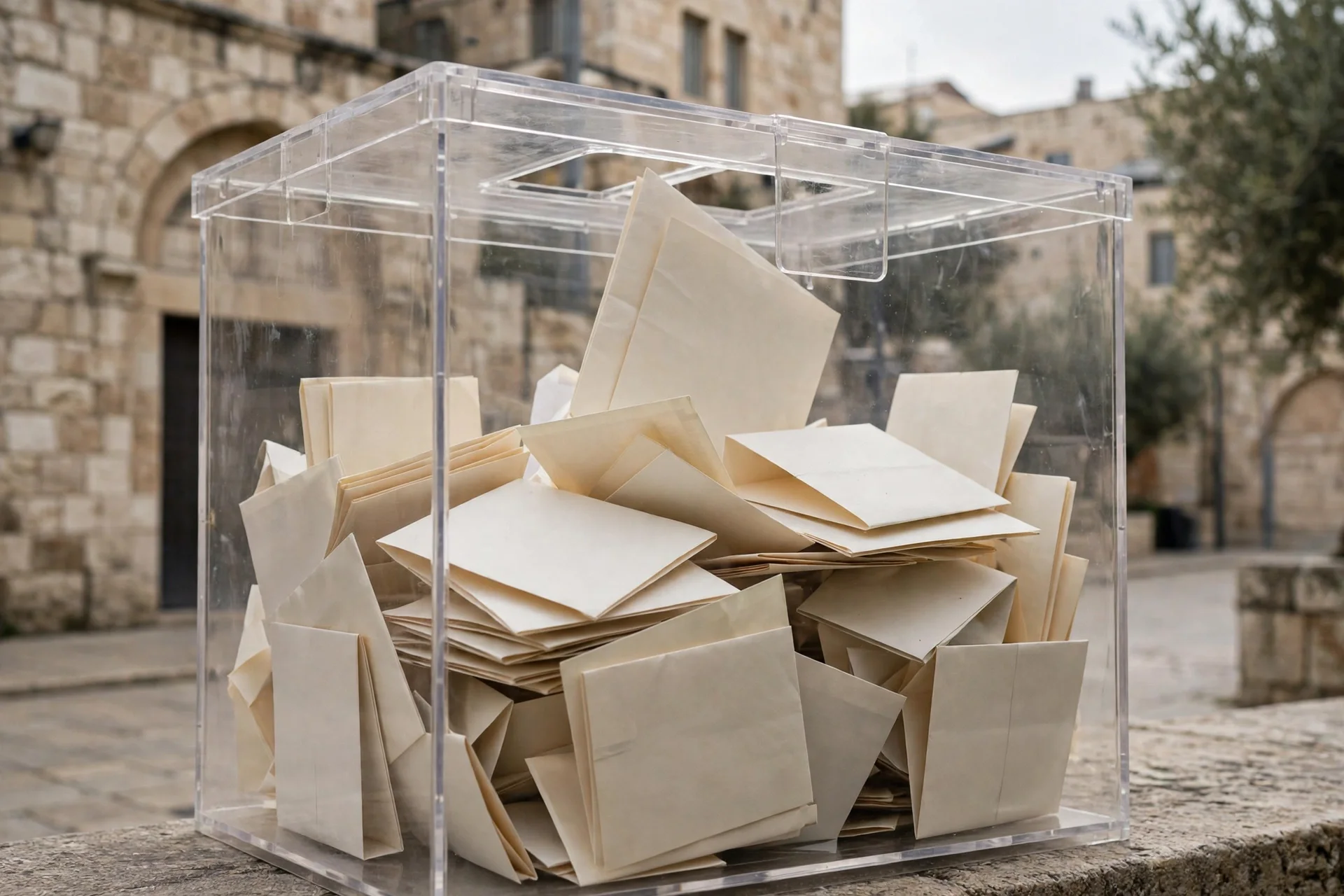
Urna con papeletas en Jerusalén, en alusión a la ratificación de los resultados de las elecciones legislativas de Israel. · Imagen generada por EPM
Israel Certifies Election Result as Netanyahu Loses Majority
Israel's electoral authorities certified the October 27 legislative elections and rejected Netanyahu's fraud claims.
Israel Upholds Legislative Vote Despite Netanyahu Fraud Claims
Israel upheld the October 27 legislative elections and dismissed Netanyahu's fraud claims, leaving his bloc with 53 of 120 seats and no majority.
--- The context ---
Israel closed a week of institutional tension on Sunday after the October 27 legislative elections. The Central Elections Committee certified the validity of the vote and rejected the fraud claims pressed by Prime Minister Benjamin Netanyahu, whose bloc lost its majority in the Knesset.
--- The facts ---
Noam Sohlberg, who chairs the Central Elections Committee and serves as a Supreme Court justice, said the voting was conducted properly and that the results show the will of the citizens. His message carried the backing of Shin Bet chief David Zini and Attorney General Gali Baharav-Miara.
The distribution released by the Committee gives Netanyahu's bloc 53 of the 120 Knesset seats, while the camp led by Gadi Eisenkot won 48 seats and the Arab parties secured 19 lawmakers. Without the 61 seats needed for an outright majority, the prime minister is forced to negotiate.
--- The positions ---
Sohlberg added that even if some of the reported irregularities were confirmed, that would not undermine the overall integrity of the process or justify changing the results, and he clarified that the investigations will continue until the facts are established.
Likud alleged that organizations linked to the Arab parties had received foreign funding to influence the campaign and favor specific political forces, including suspicions of alleged intervention by Qatar, which rejected the claim. Netanyahu and his allies demand deeper investigations before the process is closed, while Eisenkot accused the governing camp of seeking to discredit the outcome.
--- What remains unknown ---
The outcome of the investigations into the reported irregularities and the alleged foreign funding remains unknown. It is also undecided which leader President Isaac Herzog will task with forming the government after consulting the different parties.
--- Unanswered questions ---
Will the investigations produce conclusive evidence that changes the institutional reading of the process? Will Netanyahu's bloc accept the certified result or keep the dispute open? Can the opposition and the Arab parties turn their combined seats into a viable government?
--- EPM analysis ---
Certification sets the calendar in motion: on Wednesday, November 4, the final results must be formally presented to President Isaac Herzog, and consultations will then begin to name the leader charged with forming the government. The dispute is no longer only about seats, but about trust in the electoral arbiter.
📌 EPM Take: In EPM's view, certification protects what matters most: an election result is defined by the will of the voters, not by pressure from whoever loses a majority. Investigating every claim with evidence is fully compatible with respecting the institutional verdict, and both tracks should advance without being confused. Israel gains stability if the consultations to form a government start from the confirmed distribution of seats, if suspicions are proven or discarded on evidence, and if no camp turns unproven doubt into a permanent veto over democracy.
--- The context ---
Israel's Central Elections Committee on Sunday upheld the validity of the October 27 legislative elections and rejected the fraud claims of Prime Minister Benjamin Netanyahu. His bloc lost its majority in parliament and will face complications in putting together a government.
--- The facts ---
Committee chairman Noam Sohlberg, a Supreme Court justice, stated that the voting was carried out properly and that the results show the will of the citizens. He was backed by Shin Bet chief David Zini and by Attorney General Gali Baharav-Miara.
According to the results released by the Committee, Netanyahu's bloc won 53 of the 120 Knesset seats, the camp headed by Gadi Eisenkot obtained 48 seats and the Arab parties reached 19 lawmakers. The new composition leaves the prime minister without the 61 members he needs for a majority of his own.
--- The positions ---
The Committee held that even if some reported irregularities were confirmed, they would not affect the overall integrity of the electoral process or justify changing the results, while clarifying that investigations will continue until the facts are clarified. It is a position of order: the process moves forward and claims are examined without halting it.
Likud, however, alleged that bodies linked to the Arab parties had received foreign funding to influence the campaign and favor specific forces, with suspicions of alleged intervention by Qatar, which rejected the accusation. Netanyahu demands deeper investigations before the electoral process is declared finished, and Eisenkot answered that the governing camp seeks to discredit the results.
--- What remains unknown ---
It remains to be clarified whether the investigations confirm irregularities and whether foreign funding existed in the campaign. It is unknown which leader President Isaac Herzog will charge with forming the government after consulting the parties.
--- Unanswered questions ---
Will the investigations provide conclusive proof about the alleged foreign funding in the campaign? Will the governing camp accept the process as closed once the final results are presented? Which coalition can gather the support needed to form a government in this Knesset?
--- EPM analysis ---
The calendar keeps moving: on Wednesday, November 4, the final results must be presented to President Isaac Herzog, and consultations will then start to name the leader in charge of assembling the government. With no bloc holding a majority, governability will depend on negotiations between opposition forces and Arab groupings.
📌 EPM Take: In EPM's view, institutional order requires both things at once: respecting the certification of the result and exhausting the investigations into every reported irregularity, including the alleged foreign funding. An election is not annulled on suspicions, but neither is it shielded from rigorous verification of the facts. Israel's stability will depend on claims being resolved with conclusive evidence, on the calendar before President Herzog being met without undue pressure, and on the formation of the government answering to the distribution of seats.
Israel ratifica el resultado y Netanyahu pierde la mayoría
Las autoridades electorales de Israel ratificaron las legislativas del 27 de octubre y rechazaron las denuncias de fraude de Netanyahu.
Israel confirma las legislativas pese a las denuncias de Netanyahu
Israel ratificó las elecciones legislativas del 27 de octubre y desestimó las denuncias de fraude de Netanyahu, que suma 53 escaños de 120 y pierde la mayoría.
--- El contexto ---
Israel cerró este domingo una semana de tensión institucional tras las elecciones legislativas del 27 de octubre. La Comisión Electoral Central ratificó la validez de los comicios y rechazó las denuncias de fraude impulsadas por el primer ministro Benjamin Netanyahu, cuyo bloque perdió la mayoría en la Knéset.
--- Los hechos ---
Noam Sohlberg, presidente de la Comisión Electoral Central y juez de la Corte Suprema, sostuvo que la votación se desarrolló de manera correcta y que sus resultados muestran la voluntad de los ciudadanos. Su mensaje contó con el respaldo del jefe del Shin Bet, David Zini, y de la fiscal general Gali Baharav-Miara.
El reparto difundido por la Comisión deja al bloque de Netanyahu con 53 de los 120 escaños, mientras el sector de Gadi Eisenkot obtuvo 48 bancas y los partidos árabes consiguieron 19 legisladores. Sin los 61 diputados de la mayoría propia, el primer ministro queda obligado a negociar.
--- Las posiciones ---
Sohlberg precisó que, incluso si se confirmaran algunas irregularidades denunciadas, ello no afectaría la integridad general del proceso ni justificaría cambiar los resultados, y aclaró que las investigaciones seguirán hasta esclarecer los hechos.
El Likud denunció que organismos vinculados a los partidos árabes habrían recibido financiamiento extranjero para influir en la campaña, con sospechas sobre una supuesta intervención de Qatar, país que rechazó la denuncia. Netanyahu y sus aliados exigen profundizar las investigaciones antes de cerrar el proceso, mientras Eisenkot acusó al oficialismo de buscar desacreditar el resultado.
--- Lo que falta saber ---
Resta conocer el desenlace de las investigaciones sobre las irregularidades y el presunto financiamiento extranjero. Tampoco está definido qué dirigente recibirá el encargo de formar gobierno tras las consultas del presidente Isaac Herzog con los partidos.
--- Preguntas sin respuesta ---
¿Producirán las investigaciones pruebas concluyentes que cambien la lectura institucional del proceso? ¿Aceptará el bloque de Netanyahu el resultado ratificado o mantendrá abierta la disputa? ¿Podrán la oposición y los partidos árabes convertir su suma de bancas en un gobierno viable?
--- Análisis EPM ---
La ratificación ordena el calendario: el miércoles 4 de noviembre los resultados definitivos se presentarán al presidente Isaac Herzog y luego comenzarán las consultas para nombrar al encargado de armar el gobierno. La disputa ya no es solo por los escaños, sino por la confianza en el árbitro electoral.
📌 Conclusion EPM: A juicio de EPM, la ratificación protege lo esencial: que el resultado de una elección lo define la voluntad de los votantes y no la presión de quien pierde la mayoría. Investigar cada denuncia con pruebas es compatible con respetar el veredicto institucional, y ambas cosas deben avanzar sin confundirse. Israel gana estabilidad si las consultas para formar gobierno parten del reparto confirmado de bancas, si las sospechas se prueban o se descartan con evidencia, y si ningún sector convierte la duda sin pruebas en un veto permanente sobre la democracia.
--- El contexto ---
La Comisión Electoral Central de Israel ratificó este domingo la validez de las elecciones legislativas del 27 de octubre y rechazó las denuncias de fraude del primer ministro Benjamin Netanyahu. Su bloque perdió la mayoría en el Parlamento y tendrá complicaciones para armar un gobierno.
--- Los hechos ---
El presidente de la Comisión, el juez de la Corte Suprema Noam Sohlberg, afirmó que la votación se desarrolló de manera correcta y que los resultados muestran la voluntad de los ciudadanos. Lo respaldaron el jefe del Shin Bet, David Zini, y la fiscal general Gali Baharav-Miara.
Según los resultados difundidos, el bloque de Netanyahu logró 53 de los 120 escaños de la Knéset, el sector de Gadi Eisenkot obtuvo 48 bancas y los partidos árabes alcanzaron 19 legisladores. Esa composición deja al primer ministro sin los 61 diputados que necesita para gobernar en mayoría.
--- Las posiciones ---
Según la Comisión, incluso si se confirmaran algunas irregularidades, no se afectaría la integridad general del proceso ni se justificaría cambiar los resultados, aunque las investigaciones seguirán hasta esclarecer los hechos. Es una posición de orden: el proceso continúa y las denuncias se examinan sin detenerlo.
El Likud, sin embargo, denunció que organismos relacionados con los partidos árabes habrían recibido financiamiento extranjero para influir en la campaña y favorecer a fuerzas específicas, con sospechas sobre una supuesta intervención de Qatar, que rechazó la acusación. Netanyahu exige profundizar las investigaciones antes de cerrar el proceso, y Eisenkot respondió que el oficialismo busca desacreditar los resultados.
--- Lo que falta saber ---
Queda por esclarecer si las investigaciones confirman irregularidades y si existió financiamiento extranjero en la campaña. También falta saber qué dirigente encargará el presidente Isaac Herzog de formar el gobierno tras consultar a los partidos.
--- Preguntas sin respuesta ---
¿Aportarán las investigaciones pruebas concluyentes sobre el presunto financiamiento extranjero en la campaña? ¿Dará el oficialismo por cerrado el proceso una vez presentados los resultados definitivos? ¿Qué coalición reunirá los apoyos para formar gobierno en esta Knéset?
--- Análisis EPM ---
El calendario sigue su curso: el miércoles 4 de noviembre los resultados definitivos deberán presentarse al presidente Isaac Herzog y empezarán las consultas para nombrar al dirigente encargado de armar el gobierno. Con ningún bloque en mayoría, la gobernabilidad dependerá de negociaciones entre fuerzas opositoras y agrupaciones árabes.
📌 Conclusion EPM: A juicio de EPM, el orden institucional exige las dos cosas a la vez: respetar la ratificación del resultado y agotar las investigaciones sobre cada irregularidad denunciada, incluido el presunto financiamiento extranjero. Una elección no se anula por sospechas, pero tampoco se blinda contra la verificación rigurosa de los hechos. La estabilidad de Israel dependerá de que las denuncias se resuelvan con pruebas concluyentes, de que el calendario ante el presidente Herzog se cumpla sin presiones indebidas y de que la formación del gobierno responda al reparto real de bancas.