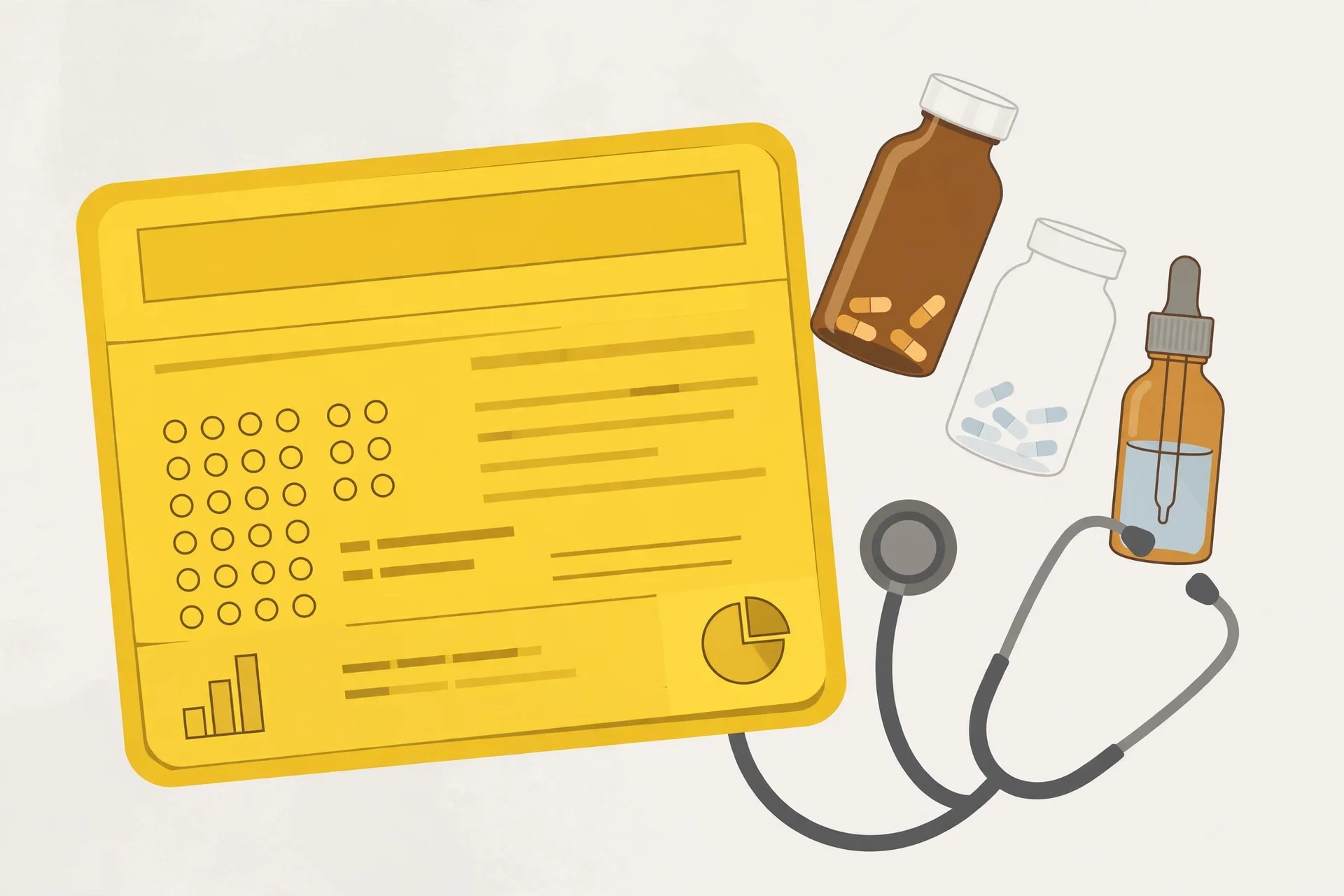
Ilustración alusiva al esquema Yellow Card de reporte de seguridad de medicamentos y dispositivos. · Imagen generada por EPM
UK urges reporting of suspected side effects as essay prize opens wider
The MHRA urged everyone to report safety concerns about medicines and devices through Yellow Card during the safety week of 2-8 November 2026, and launched its…
Yellow Card leads safety week as essay competition expands to pharmacy
The British regulator called for suspected side effects and device incidents to be reported through Yellow Card during the eleventh safety week, on 2-8…
--- The context ---
A medicine is only as safe as the system watching it after approval. In the United Kingdom, that watch relies heavily on the Yellow Card scheme, which lets patients, parents, carers and healthcare professionals flag any concern about a medicine or a medical device. The international medicines safety week returns with a simple democratic idea behind it: anyone who notices something wrong can help protect everyone else.
--- The facts ---
The MHRA, the British regulator for medicines and healthcare products, urged people to report all types of safety concerns from medicines and healthcare products, including medical devices, through Yellow Card, as part of the eleventh #MedSafetyWeek, running from 2-8 November 2026. The global message this year is not to ignore suspected side effects, but to report them.
More than 130 organisations from over 120 countries will share safety messages in more than 60 languages during the campaign. Alongside it, the MHRA launched its 2026 national patient safety essay competition, focused on detecting and reporting adverse events linked to artificial intelligence when it is used as a medical device.
Essays may run to up to 2,000 words, and entries close on Monday 11 January 2027. Six prizes are available: first prize winners receive £500 and an invitation to present before the Commission on Human Medicines and the Interim Devices Working Group, while second and third prizes of £300 and £200 are offered in each category.
Last year the competition drew 68 entries from more than 30 medical schools across the country. This year pharmacy students are invited to take part alongside medical students for the first time, after pharmacists asked to be included, reflecting the central role pharmacy professionals play in medicines safety.
--- The positions ---
Anthony Harnden, the MHRA chair, welcomed the wider entry in attributed remarks, saying last year showed how engaged medical students are with safer medicines, that the artificial intelligence theme could not be more timely, and that the next generation should already be thinking about how to identify and report the risks these technologies bring into everyday clinical practice.
Alison Cave, the MHRA chief safety officer, said in attributed remarks that every Yellow Card report matters because it provides real-world evidence on how medicines and devices are actually used and helps spot possible safety issues not seen before. Cave particularly encouraged reporting problems with medical devices, including artificial intelligence enabled devices, where reporting rates are currently low.
The agency stressed that nobody needs to prove a product caused a problem before reporting it. Reports matter most when a reaction is serious, affects day-to-day life, is not listed in the product information, or follows a change in medicine, dose or combination of treatments, and reporting usually takes only a few minutes.
--- What remains unknown ---
The announcement does not give recent totals for Yellow Card reports, does not say what share involves artificial intelligence enabled devices, and does not spell out how the judging panel will weigh entries from the two student categories competing this year.
--- Unanswered questions ---
Will reporting rise once the campaign week ends? How many pharmacy students will enter the competition this year? What practical changes could follow from better reporting on artificial intelligence devices? Can a short campaign shift habits among busy healthcare professionals?
--- EPM analysis ---
Pairing a public reporting drive with a student essay prize widens the safety net at both ends: it empowers patients to speak up today and trains future clinicians and pharmacists to treat reporting as part of care. Bringing pharmacy into the competition also recognises where many problems are first noticed in daily practice.
📌 EPM Take: In EPM's view, the strength of this initiative is its low barrier to entry: it asks for suspicion, not proof, and treats patients and frontline professionals as partners in surveillance rather than passive users of approved products. Opening the prize to pharmacy students widens that partnership in a sensible way. The real test is whether one week of attention produces lasting reporting habits, especially for artificial intelligence enabled devices, where low reporting leaves regulators short of the real-world evidence they need to act early and protect patients across the whole health system.
--- The context ---
Sound regulation depends on orderly vigilance long after a product reaches the market. The United Kingdom channels that vigilance through the Yellow Card scheme, open to patients, parents, carers and healthcare professionals who suspect a problem with a medicine or a device. The latest international safety week restates a duty of care that falls on institutions and citizens alike.
--- The facts ---
The MHRA, the regulator for medicines and medical devices, called for every type of safety concern involving medicines, vaccines, blood products and medical devices to be reported through Yellow Card during the eleventh #MedSafetyWeek, held on 2-8 November 2026. The campaign message is clear: suspected side effects should not be ignored, they should be reported.
More than 130 organisations from over 120 countries are expected to share campaign messages in more than 60 languages. To coincide with the week, the MHRA also launched its 2026 national patient safety essay competition, devoted to the detection and reporting of adverse events related to artificial intelligence used as a medical device.
Entrants may submit an essay of up to 2,000 words, with entries closing on Monday 11 January 2027. Six prizes are available: £500 for first prize winners, who will present to the Commission on Human Medicines and the Interim Devices Working Group, and £300 and £200 for second and third prizes in each category.
The competition began last year and received 68 entries from more than 30 medical schools across the United Kingdom. This year it expands to pharmacy students alongside medical students, a change the agency links to the vital role pharmacy professionals play in medicine safety and to direct requests from pharmacists to take part.
--- The positions ---
Anthony Harnden, the MHRA chair, argued in attributed remarks that widening the competition recognises the vital role of pharmacy and encouraged every eligible student, whether studying medicine or pharmacy, to take part, adding that their insight could genuinely help shape how the safety of artificial intelligence enabled devices is monitored across the country.
Alison Cave, the chief safety officer, said in attributed remarks that every report gives real-world evidence and helps connect the dots to protect others from harm, that certainty is not required before reporting, and that healthcare professionals should particularly report device problems, including artificial intelligence enabled devices, where reporting is currently low.
The scheme covers suspected side effects from medicines and other products, device incidents such as faults, failures or unexpected behaviour, suspected defective medicines, and suspected fake or unlicensed products, particularly those obtained online or through social media, with reports accepted even when every detail is not available.
--- What remains unknown ---
The statement does not publish recent reporting volumes for the scheme, does not quantify how low device reporting currently is, and does not explain what follow-up measures will be taken if the campaign fails to lift reports in the areas the agency itself identifies as weakest.
--- Unanswered questions ---
Will the regulator publish reporting figures after the campaign? What consequences will the winning essays have in practice? How will persistently low device reporting be addressed beyond appeals? Will pharmacy entries match the strong response from medical schools last year?
--- EPM analysis ---
The approach is measured rather than theatrical: reinforce a proven reporting channel, insist that suspicion is enough to act, and train the next generation before new technology outruns oversight. It places responsibility where it belongs, shared between a regulator that listens and professionals and patients who report promptly.
📌 EPM Take: In EPM's view, this campaign rests on a sound conservative principle: institutions earn trust through steady vigilance, not grand promises. Yellow Card works because it is simple, established and open to anyone with a reasonable suspicion, and the essay prize builds the same habit in future professionals without new bureaucracy. Extending entry to pharmacy students strengthens the chain of responsibility. What must follow is transparent evidence, published reporting figures and visible action on low device reporting, so the public can judge whether a week of appeals delivered durable results for patient safety nationwide.
Reino Unido pide reportar efectos sospechados y abre su premio a farmacia
La MHRA instó a reportar cualquier sospecha sobre medicamentos y dispositivos mediante Yellow Card durante la semana de seguridad del 2-8 de noviembre de 2026…
Yellow Card centra la semana de seguridad y el concurso llega a farmacia
El regulador británico pidió comunicar mediante Yellow Card efectos sospechados e incidentes con dispositivos en la undécima semana de seguridad, del 2-8 de…
--- El contexto ---
La seguridad de los medicamentos no depende solo de los ensayos previos a su autorización, sino también de lo que ocurre cuando millones de personas los usan en la vida real. En el Reino Unido, ese seguimiento pasa por el esquema Yellow Card, que permite a pacientes, familiares, cuidadores y profesionales sanitarios comunicar cualquier sospecha sobre un medicamento o un dispositivo. La semana internacional de seguridad vuelve a poner ese gesto sencillo en el centro.
--- Los hechos ---
La MHRA, el regulador británico de medicamentos y productos sanitarios, instó a reportar todo tipo de preocupaciones de seguridad sobre medicamentos y productos sanitarios, incluidos los dispositivos médicos, mediante Yellow Card, en la undécima #MedSafetyWeek, del 2-8 de noviembre de 2026. El mensaje global de este año invita a no ignorar los efectos secundarios sospechados y a reportarlos.
En la campaña participan más de 130 organizaciones de más de 120 países, que compartirán mensajes de seguridad en más de 60 idiomas. Junto al llamamiento general, la MHRA lanzó su concurso nacional de ensayo de seguridad del paciente de 2026, centrado en la detección y el reporte de eventos adversos relacionados con la inteligencia artificial cuando actúa como dispositivo médico.
El concurso admite ensayos de hasta 2,000 palabras y cierra el lunes 11 de enero de 2027. Hay seis premios: los primeros premios reciben £500 y la invitación a presentar el ensayo ante la Commission on Human Medicines y el Interim Devices Working Group, mientras que los segundos y terceros premios son de £300 y £200 en cada categoría.
La edición anterior recibió 68 trabajos procedentes de más de 30 facultades de medicina de todo el país. Este año, por primera vez, también pueden participar estudiantes de farmacia junto a los de medicina, tras las consultas de farmacéuticos interesados en sumarse a la iniciativa.
--- Las posiciones ---
Anthony Harnden, presidente de la MHRA, celebró la ampliación del concurso a farmacia y sostuvo, en términos atribuidos, que la edición anterior mostró el compromiso de los estudiantes de medicina con medicamentos más seguros, que el tema de la inteligencia artificial es especialmente oportuno y que la nueva generación de profesionales debe pensar ya en cómo identificar y reportar los riesgos de estas tecnologías.
Alison Cave, directora de seguridad de la MHRA, afirmó, en términos atribuidos, que cada reporte Yellow Card aporta evidencia del mundo real sobre cómo se usan medicamentos y dispositivos y ayuda a detectar posibles problemas no vistos antes. Cave pidió especialmente reportar los problemas con dispositivos, incluidos los habilitados por inteligencia artificial, donde el nivel de reporte es actualmente bajo.
La agencia recordó además que no hace falta probar que un producto causó el problema para presentar un reporte, y que los reportes importan sobre todo cuando la reacción es grave, afecta a la vida diaria, no figura en la información del producto o sigue a un cambio de medicamento, dosis o combinación de tratamientos.
--- Lo que falta saber ---
El anuncio no detalla cuántos reportes Yellow Card se recibieron en el último periodo ni qué proporción corresponde a dispositivos habilitados por inteligencia artificial, ni tampoco precisa los criterios con los que el jurado elegirá los ensayos ganadores entre las dos categorías.
--- Preguntas sin respuesta ---
¿Aumentarán los reportes sobre dispositivos tras esta campaña? ¿Cuántos ensayos presentarán este año los estudiantes de farmacia? ¿Qué cambios concretos surgirán de los reportes sobre inteligencia artificial? ¿Logrará la campaña reducir el bajo reporte en dispositivos médicos?
--- Análisis EPM ---
La combinación de campaña pública y concurso académico apunta a dos frentes: que cualquiera reporte sin miedo a equivocarse y que los futuros profesionales incorporen la vigilancia como práctica. Incluir a farmacia reconoce que la seguridad se juega también en el mostrador y en el seguimiento diario, no solo en la consulta.
📌 Conclusion EPM: A juicio de EPM, el acierto de esta iniciativa está en bajar el umbral para reportar: pedir sospechas, no certezas, convierte a pacientes y profesionales en sensores de un sistema que aprende del uso real. La apertura a estudiantes de farmacia corrige además una mirada demasiado centrada en medicina y suma a quienes detectan problemas en el día a día. El reto será que el entusiasmo de una semana se traduzca en reportes sostenidos, sobre todo en dispositivos con inteligencia artificial, donde la evidencia todavía escasea y cada aviso puede anticipar un daño evitable para otros pacientes en todo el país.
--- El contexto ---
Ningún medicamento ni dispositivo es útil si su uso real no se vigila con rigor. El Reino Unido mantiene desde hace años un cauce directo para esa vigilancia, el esquema Yellow Card, abierto a pacientes, padres, cuidadores y profesionales sanitarios. La nueva semana internacional de seguridad de los medicamentos vuelve a recordar que la prudencia empieza por comunicar cualquier sospecha, por pequeña que parezca.
--- Los hechos ---
La MHRA, autoridad reguladora de medicamentos y productos sanitarios, pidió reportar mediante Yellow Card cualquier preocupación de seguridad relacionada con medicamentos, vacunas, productos sanguíneos y dispositivos médicos, en el marco de la undécima #MedSafetyWeek, del 2-8 de noviembre de 2026. La consigna global es no ignorar los efectos secundarios sospechados, sino reportarlos.
Más de 130 organizaciones de más de 120 países difundirán los mensajes de la campaña en más de 60 idiomas. En paralelo, la MHRA puso en marcha la edición de 2026 de su concurso nacional de ensayo sobre seguridad del paciente, dedicado a detectar y reportar eventos adversos vinculados a la inteligencia artificial empleada como dispositivo médico.
Los participantes pueden enviar un ensayo de hasta 2,000 palabras antes del cierre, fijado el lunes 11 de enero de 2027. Se entregarán seis premios: £500 para los primeros premios, con presentación ante la Commission on Human Medicines y el Interim Devices Working Group, y £300 y £200 para los segundos y terceros premios de cada categoría.
El concurso nació el año pasado con una respuesta notable: 68 ensayos llegados de más de 30 facultades de medicina británicas. La novedad de esta edición es la entrada de los estudiantes de farmacia, que podrán concursar junto a los de medicina, en reconocimiento al papel esencial de la profesión farmacéutica en la seguridad de los medicamentos.
--- Las posiciones ---
Anthony Harnden, presidente de la MHRA, defendió, en términos atribuidos, que ampliar el concurso a farmacia reconoce la función vital de estos profesionales y animó a todo estudiante elegible, de medicina o de farmacia, a participar, al considerar que sus ideas pueden ayudar a moldear la vigilancia de los dispositivos habilitados por inteligencia artificial en todo el país.
Alison Cave, directora de seguridad, subrayó, en términos atribuidos, que ningún reporte sobra, porque cada Yellow Card ofrece evidencia del mundo real y permite conectar señales y proteger a otros de un daño. Cave insistió en que no se necesita certeza para reportar e hizo un llamamiento específico sobre los dispositivos, incluidos los de inteligencia artificial, cuyo reporte es hoy bajo.
La agencia precisó qué debe comunicarse: efectos secundarios sospechados de medicamentos, vacunas y otros productos, incidentes con dispositivos como fallos o comportamientos inesperados, medicamentos presuntamente defectuosos y productos presuntamente falsos o sin licencia, en especial los obtenidos en línea o por redes sociales.
--- Lo que falta saber ---
El comunicado no ofrece cifras recientes de reportes recibidos por Yellow Card ni explica cómo se medirá el efecto de la campaña sobre el bajo reporte en dispositivos, y tampoco detalla el calendario de fallo y entrega de los premios del concurso más allá de la fecha de cierre.
--- Preguntas sin respuesta ---
¿Se mantendrá el impulso de reporte cuando termine la semana de campaña? ¿Qué peso tendrán los ensayos ganadores en las decisiones del regulador? ¿Cómo se corregirá el bajo reporte de incidentes con dispositivos? ¿Responderán los estudiantes de farmacia con la misma intensidad que los de medicina?
--- Análisis EPM ---
El enfoque es sobrio y práctico: no se prometen soluciones inmediatas, se refuerza un mecanismo probado de alerta temprana y se forma a quienes prescribirán, dispensarán y vigilarán mañana. La prudencia institucional se combina aquí con una exigencia clara, la de no callar ante una sospecha razonable.
📌 Conclusion EPM: A juicio de EPM, esta campaña defiende una virtud clásica de la buena regulación: la vigilancia permanente y ordenada frente a la improvisación. Yellow Card funciona porque pide hechos comunicados a tiempo, no certezas imposibles, y porque cualquier ciudadano puede activar la revisión del regulador. Ampliar el concurso a farmacia refuerza esa cadena de responsabilidad compartida sin crear burocracia nueva. Queda por demostrar, con cifras públicas y seguimiento serio, que la semana de sensibilización eleva de forma duradera los reportes en dispositivos, el punto débil que la propia agencia reconoce y que más atención merece en los próximos meses.