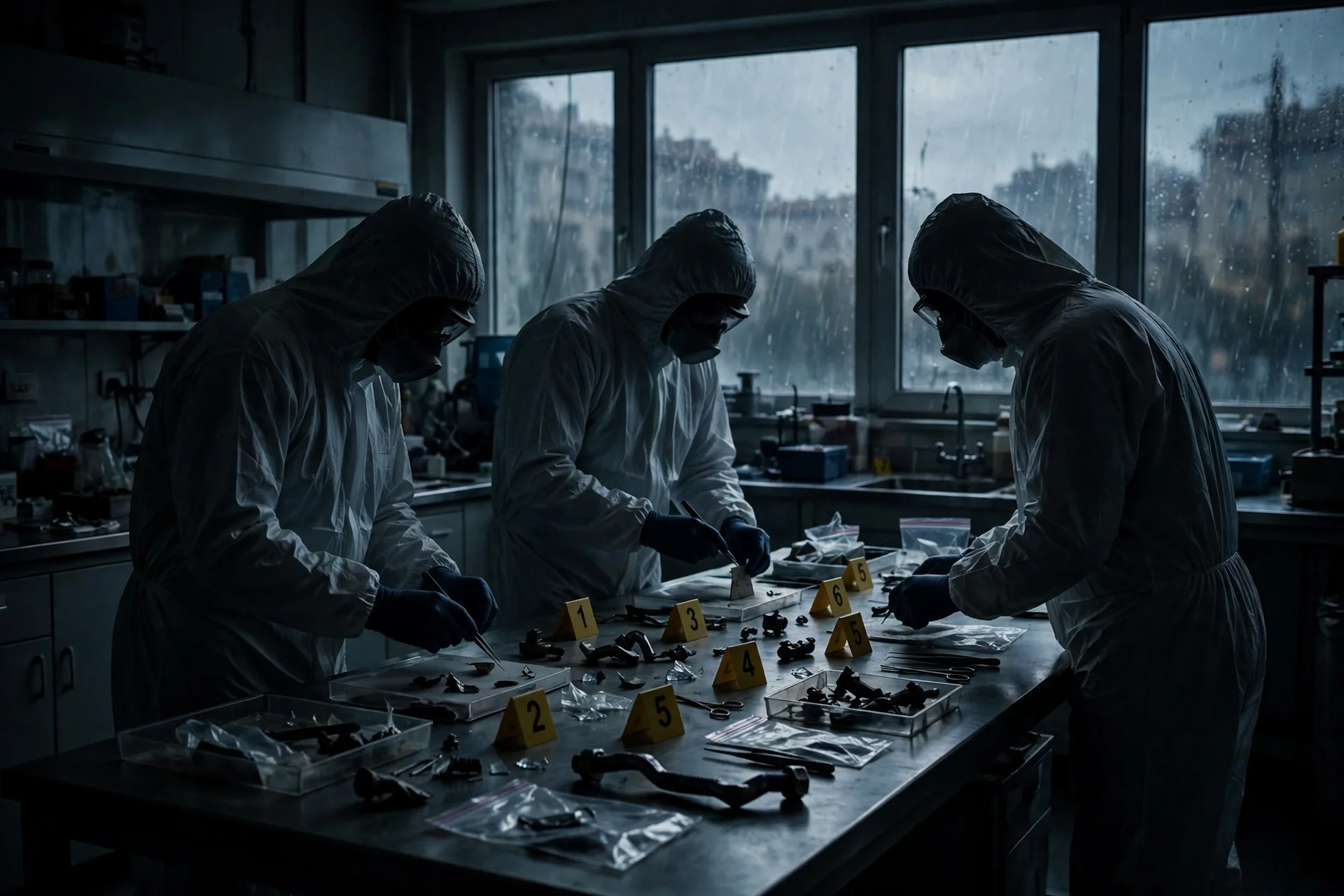
Ilustración alusiva a las labores forenses de identificación de las víctimas del accidente de Urda. · Imagen generada por EPM
Urda crash: 66 of 69 victims identified as search continues
Forensic teams identified 66 of the 69 people killed in Urda, with 60 notifications to families and 29 injured people still admitted in Castilla-La Mancha.
Urda crash: 66 victims identified, three still to be confirmed
The provisional toll from Urda remains at 69 dead, with 66 identified, three missing-person reports active and 29 injured people still admitted.
--- The context ---
The rail crash at Urda, in the province of Toledo, which happened last Wednesday, is the most serious accident in the history of high-speed rail in Spain. An AVE train struck from behind an Iryo train stopped on the track, with 538 passengers involved. The site remains under surveillance while identification, care for the injured and the investigation move forward.
--- The facts ---
Forensic teams have now identified 66 of the 69 people who died, and the provisional toll remains at 69, according to the Integrated Data Center. Rescue teams continue this Monday to search for human remains in the crash area.
Of those identified, 54 are Spanish nationals and 12 are foreign nationals: four from the United States and one each from Argentina, Canada, the Czech Republic, France, Japan, Mexico, Portugal and Tunisia. Authorities expect to complete in the coming hours the identification of the three remaining victims, also foreign nationals.
In total, 53 identifications were made through fingerprints and 13 through DNA analysis. So far 60 have been notified to families, 36 corresponding to men and 24 to women, and 47 of the deceased are available to their relatives. Three missing-person reports remain active, involving two Australians and one Japanese citizen.
More than 60 professionals have worked without interruption since Wednesday on autopsy and identification work. In four hospitals in Castilla-La Mancha, 29 people remain admitted, nine in intensive care and 20 in conventional beds, after 81 discharges and 110 people treated.
--- The positions ---
Transport Minister Óscar Puente will take a report on the investigation to the Council of Ministers on Tuesday and will then appear before Congress, where his resignation will be demanded. The Civil Guard has already removed three cars from the Iryo train and two from the AVE to facilitate the search.
--- What remains unknown ---
The investigation centers on the failure of the LZB system and on the normal running order transmitted from Atocha, when the protocol called for running on sight in response to that type of failure. The preliminary speed of the AVE, between 160 and 200 kilometers per hour according to AITAT, must be confirmed with the black boxes.
--- Unanswered questions ---
Why was normal running ordered when the protocol called for running on sight after the LZB failure? What will the black boxes confirm about the speed and the decisions before the impact? When will the identification of the three remaining victims be completed?
--- EPM analysis ---
Rigorous identification and in-person notification must proceed without shortcuts. The technical investigation cannot be displaced either: the sequence linking the system failure, the control center order and the speed must be clarified with verifiable data.
📌 EPM Take:
In EPM's view, the immediate priority is to complete the identification of the three remaining victims with the same rigor applied to the 66 already confirmed and to sustain care for the 29 people still admitted and for the families that are still awaiting an official notification about their relatives. The investigation must establish with evidence whether the normal running order contradicted the planned protocol and why it happened, because without that documented answer, confidence in high-speed rail safety will remain damaged among citizens and the families directly affected.
--- The context ---
Spain is dealing with the aftermath of the crash at Urda, in Toledo, which occurred last Wednesday and is considered the most serious accident in the history of high-speed rail. An AVE struck from behind an Iryo train stopped on the track, with 538 passengers involved. The effort is focused on identifying every victim and determining what failed.
--- The facts ---
The provisional death toll remains at 69, according to the Integrated Data Center, and forensic teams have now identified 66 of the 69 deceased. This Monday the search for human remains continues in the crash area.
Of those identified, 54 are Spanish and 12 are foreign nationals: four from the United States and one each from Argentina, Canada, the Czech Republic, France, Japan, Mexico, Portugal and Tunisia. The three remaining victims are also foreign nationals and their families have already been located.
Identifications were achieved in 53 cases through fingerprints and in 13 through DNA analysis. Of those, 60 have been notified to families, 36 men and 24 women, and 47 of the deceased are available to their relatives. Three missing-person reports remain active, involving two Australians and one Japanese citizen, with more than 60 professionals working without interruption since Wednesday.
In four hospitals in Castilla-La Mancha, 29 people remain admitted, nine in intensive care and 20 in conventional beds. Since Wednesday there have been 81 discharges and 110 people treated in hospitals in the region.
--- The positions ---
Transport Minister Óscar Puente will take a report on the investigation to the Council of Ministers on Tuesday and will then appear before Congress, where his resignation will be demanded. The Civil Guard has already removed three cars from the Iryo train and two from the AVE to the sides of the track to facilitate the search.
--- What remains unknown ---
The investigation points to the failure of the LZB system and to the normal running order from Atocha, when the protocol called for running on sight. The preliminary speed of the AVE, between 160 and 200 kilometers per hour according to AITAT, must be confirmed with the black boxes.
--- Unanswered questions ---
Who authorized normal running and what information did the Atocha control center have at that moment? Will the black boxes confirm the preliminary speed of between 160 and 200 kilometers per hour? What measures will be adopted so that a system failure is never again handled against the protocol?
--- EPM analysis ---
A high-speed system rests on protocols that only protect people if followed without exceptions. The decisive point is not only the speed, but the order that allowed normal running when running on sight was required. Accountability must begin with the technical records.
📌 EPM Take:
In EPM's view, the state must first close the most basic task: identify the three remaining victims, notify each family with full respect and return the deceased to their relatives without administrative haste or delay. It must then publish a complete technical explanation of the LZB failure, of the normal running order and of the speed of the AVE, supported by the black boxes, because railway safety is not defended with speeches, but with protocols followed, verifiable records and clear responsibilities for every decision within the chain of command.
Urda: identificadas 66 de las 69 víctimas y sigue la búsqueda
Los forenses identificaron a 66 de los 69 fallecidos en Urda, con 60 notificaciones a familias y 29 heridos ingresados en Castilla-La Mancha.
Accidente de Urda: 66 víctimas identificadas y tres por localizar
El balance provisional de Urda se mantiene en 69 fallecidos, con 66 identificados, tres denuncias por desaparición activas y 29 heridos ingresados.
--- El contexto ---
El accidente ferroviario de Urda, en la provincia de Toledo, ocurrido el pasado miércoles, es el más grave de la historia de la alta velocidad en España. Un AVE colisionó por detrás con un tren Iryo detenido en la vía, con 538 pasajeros involucrados. La zona permanece bajo vigilancia mientras avanzan la identificación, la atención a heridos y la investigación.
--- Los hechos ---
Los forenses han identificado ya a 66 de los 69 fallecidos, y el balance provisional se mantiene en 69, según el Centro Integrado de Datos. Los equipos de rescate continúan este lunes la búsqueda de restos humanos en la zona del accidente.
De las personas identificadas, 54 tienen nacionalidad española y 12 son extranjeras: cuatro estadounidenses y una de cada una de estas nacionalidades, argentina, canadiense, checa, francesa, japonesa, mexicana, portuguesa y tunecina. Las autoridades esperan completar en las próximas horas la identificación de las tres víctimas restantes, también extranjeras.
Del total, 53 identificaciones se realizaron mediante huella dactilar y 13 por análisis de ADN. Ya fueron notificadas 60 a las familias, 36 de hombres y 24 de mujeres, y 47 fallecidos están a disposición de sus familiares. Siguen activas tres denuncias por desaparición, de dos australianos y un japonés.
Más de 60 profesionales trabajan sin interrupción desde el miércoles en las tareas de autopsia e identificación. En cuatro hospitales de Castilla-La Mancha permanecen ingresadas 29 personas, nueve en UCI y 20 en cama convencional, tras 81 altas y 110 personas atendidas.
--- Las posiciones ---
El ministro de Transportes, Óscar Puente, llevará el martes al Consejo de Ministros un informe sobre la investigación y comparecerá después en el Congreso, donde le reclamarán la dimisión. La Guardia Civil ya retiró tres vagones del tren Iryo y dos del AVE para facilitar la búsqueda de restos.
--- Lo que falta saber ---
La investigación se centra en la caída del sistema LZB y en la orden de marcha normal transmitida desde Atocha, cuando el protocolo preveía marcha a la vista ante ese tipo de falla. La velocidad preliminar del AVE se sitúa entre 160 y 200 kilómetros por hora, según la AITAT, por confirmar con las cajas negras.
--- Preguntas sin respuesta ---
¿Por qué se ordenó la marcha normal cuando el protocolo preveía marcha a la vista tras la caída del sistema LZB? ¿Qué confirmarán las cajas negras sobre la velocidad y las decisiones previas al impacto? ¿Cuándo se completará la identificación de las tres víctimas restantes?
--- Análisis EPM ---
La identificación rigurosa y la notificación presencial deben avanzar sin atajos. La investigación técnica tampoco puede quedar relegada: la secuencia entre la caída del sistema, la orden del centro de control y la velocidad debe aclararse con datos verificables.
📌 Conclusion EPM:
A juicio de EPM, la prioridad inmediata es completar la identificación de las tres víctimas restantes con el mismo rigor aplicado a las 66 ya confirmadas y sostener la atención a los 29 ingresados y a las familias que aún esperan notificación. La investigación debe establecer con pruebas si la orden de marcha normal contradijo el protocolo previsto y por qué ocurrió, porque sin esa respuesta documentada la confianza en la seguridad de la alta velocidad seguirá dañada ante los ciudadanos y ante las familias directamente afectadas.
--- El contexto ---
España afronta las consecuencias del accidente de Urda, en Toledo, ocurrido el miércoles y considerado el más grave de la historia de la alta velocidad. Un AVE colisionó por detrás con un tren Iryo detenido, con 538 pasajeros involucrados. El esfuerzo se concentra en identificar a las víctimas y determinar qué falló.
--- Los hechos ---
El balance provisional de víctimas mortales se mantiene en 69, según el Centro Integrado de Datos, y los forenses han identificado ya a 66 de los 69 fallecidos. Este lunes continúa la búsqueda de restos en la zona.
De los identificados, 54 son españoles y 12 extranjeros: cuatro estadounidenses y uno de cada una de estas nacionalidades, argentina, canadiense, checa, francesa, japonesa, mexicana, portuguesa y tunecina. Las tres víctimas restantes también son extranjeras y sus familias ya fueron localizadas.
Las identificaciones se lograron en 53 casos mediante huella dactilar y en 13 mediante análisis de ADN. De ellas, 60 ya fueron notificadas a las familias, 36 de hombres y 24 de mujeres, y 47 fallecidos están a disposición de sus familiares. Siguen activas tres denuncias por desaparición, de dos australianos y un japonés, con más de 60 profesionales trabajando sin interrupción desde el miércoles.
En cuatro hospitales de Castilla-La Mancha permanecen ingresadas 29 personas, nueve en UCI y 20 en cama convencional. Desde el miércoles se han dado 81 altas y se ha atendido a 110 personas en hospitales de la región.
--- Las posiciones ---
El ministro de Transportes, Óscar Puente, llevará el martes un informe sobre la investigación al Consejo de Ministros y comparecerá después en el Congreso, donde le reclamarán la dimisión. La Guardia Civil ya retiró tres vagones del tren Iryo y dos del AVE a los laterales de la vía para facilitar la búsqueda.
--- Lo que falta saber ---
La investigación apunta a la caída del sistema LZB y a la orden de marcha normal desde Atocha, cuando el protocolo preveía marcha a la vista. La velocidad preliminar del AVE, entre 160 y 200 kilómetros por hora según la AITAT, deberá confirmarse con las cajas negras.
--- Preguntas sin respuesta ---
¿Quién autorizó la marcha normal y con qué información contaba el centro de control de Atocha en ese momento? ¿Confirmarán las cajas negras la velocidad preliminar de entre 160 y 200 kilómetros por hora? ¿Qué medidas se adoptarán para que una caída del sistema nunca vuelva a resolverse contra el protocolo?
--- Análisis EPM ---
Un sistema de alta velocidad se sostiene sobre protocolos que solo protegen si se cumplen sin excepciones. El punto decisivo no es únicamente la velocidad, sino la orden que permitió seguir en marcha normal cuando correspondía marcha a la vista. La rendición de cuentas debe empezar por los registros técnicos.
📌 Conclusion EPM:
A juicio de EPM, el Estado debe cerrar primero la tarea más elemental: identificar a las tres víctimas restantes, notificar a cada familia con respeto y entregar los cuerpos sin prisas administrativas. Después debe publicar una explicación técnica completa de la caída del sistema LZB, de la orden de marcha normal y de la velocidad del AVE, sustentada en las cajas negras, porque la seguridad ferroviaria no se defiende con discursos, sino con protocolos cumplidos, registros verificables y responsabilidades claras para cada decisión de la cadena de mando.