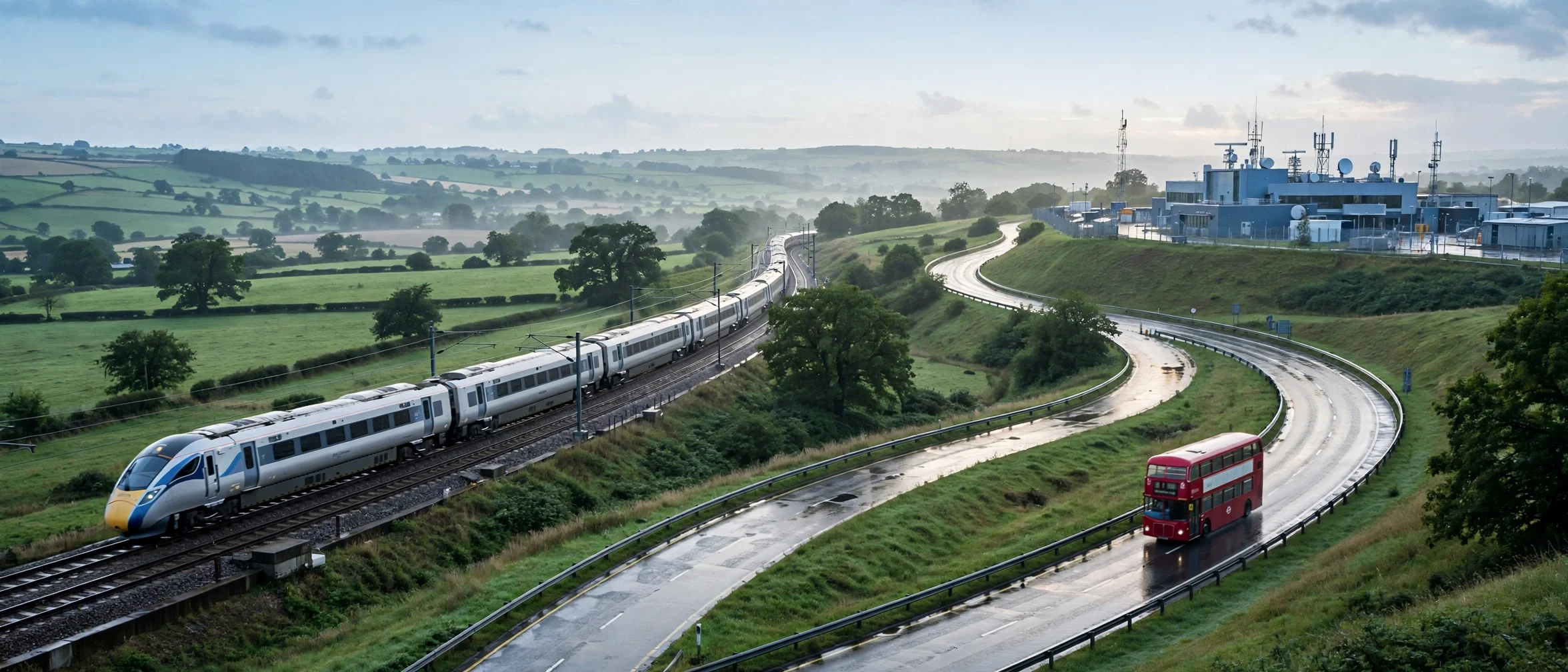
Un tren y un autobús en el paisaje británico, en una imagen alusiva a la resiliencia del transporte. · Imagen generada por EPM
UK sets a ten-year route to stronger transport resilience
The British Government published its transport resilience strategy on 2 November 2026, setting direction for the next 5 to 10 years with 22 practical…
London moves to protect transport continuity with 22 pledges
The ministerial statement presented a transport resilience strategy on 2 November 2026, with a 5 to 10 year horizon.
--- The context --- The British Government presented its transport resilience strategy on 2 November 2026, designed to protect everyday journeys, access to family and jobs, and the movement of goods to industry across every part of the United Kingdom.
--- The facts --- The ministerial statement explained that a secure and resilient transport system is essential to thriving communities and to economic growth nationwide. The strategy sets the direction for the next 5 to 10 years and applies the July 2025 resilience action plan to transport.
The threats facing the system are increasingly complex and unpredictable, the statement said. Because the network is interconnected, disruption in one place can quickly affect others, so resilience must be built across the whole system and cannot be treated as an optional extra.
--- The positions --- The statement argued that resilient infrastructure and robust plans are only part of the answer. Transport remains a people-dependent system, so staff need knowledge, capabilities and tools, and users must be prepared and armed with the right information when disruption occurs.
The strategy makes 22 practical commitments to assess resilience better, target improvements, enable the whole system to act and strengthen government capabilities. They include a new training initiative, the Transport Resilience Academy, and a sector-wide network to share evidence and best practice.
--- What remains unknown --- The statement did not detail how progress on each commitment will be measured or what resources will support the training and the new network. It gave no timetable, although it made clear that local partners and other sectors must work together.
--- Unanswered questions --- How will communities check that resilience is improving on their daily routes? What training will staff who keep transport moving receive first? How will users get timely information when disruption in one place spreads across the interconnected network?
--- EPM analysis --- The public value lies in joining technology with people. Automation and digital advances can improve safety and effectiveness, but without prepared staff and informed users the network will stay fragile. The long horizon also requires cooperation sustained beyond the announcement.
📌 EPM Take: In EPM's view, the strategy is right to place communities and users at the centre of resilience, because when transport fails it cuts access to work, family and essential services. Its 22 commitments, the training academy and the sector-wide network can strengthen public capacity if they lead to shared learning, clear information and visible improvements across the United Kingdom in the years ahead, protecting the connections people and businesses depend on every single day ahead.
--- The context --- The British Government published its transport resilience strategy on 2 November 2026, aimed at safeguarding continuity of journeys, the flow of goods to industry and economic activity across the United Kingdom.
--- The facts --- According to the ministerial statement, a secure and resilient transport system is essential to thriving communities and to economic growth in every part of the country. The document applies the July 2025 resilience action plan and sets direction for the next 5 to 10 years.
The network's interconnectedness means disruption in one place can quickly have consequences elsewhere, the statement warned. Resilience therefore cannot be treated as an optional extra, but as something vital to the operations of businesses and transport operators.
--- The positions --- The statement said automation and digital technology will continue to be embraced to improve safety and effectiveness. It also stressed that transport remains a people-dependent system: staff must be equipped with knowledge, capabilities and tools to keep it moving.
The strategy contains 22 practical commitments to assess resilience, target improvements, enable the whole system, including users, to act, and strengthen government capabilities. It includes the Transport Resilience Academy and a sector-wide network to share evidence and best practice on common risks.
--- What remains unknown --- The statement did not specify operational indicators for verifying each commitment or concrete deadlines for the academy and the network. Nor did it detail how responsibilities will be divided, although it insisted no single organisation can deliver resilience alone.
--- Unanswered questions --- Which indicators will prove that operational continuity is genuinely improving? How will businesses and operators apply the best practice shared through the network? What information will users receive when local disruption spreads across the interconnected system?
--- EPM analysis --- Protecting the network protects supply chains, jobs and services. The statement combines technology, training and coordination, three reasonable levers if executed with discipline. Its test will be operational, because a long plan only matters if it reduces real disruption.
📌 EPM Take: In EPM's view, the strategy offers a sensible defence of continuity for British transport by treating resilience as an operational requirement rather than an add-on. Its 22 commitments, new academy and sector network point towards more efficient coordination between government, businesses and operators. The challenge will be to turn that architecture into measurable results, with prepared staff, well-informed users and fewer disruptions weighing on the everyday economy and on services nationwide in the years to come ahead.
Reino Unido fija su ruta de resiliencia del transporte a diez años
El Gobierno británico publicó el 2 de noviembre de 2026 su estrategia de resiliencia del transporte, con horizonte de 5 a 10 años y 22 compromisos prácticos.
Londres blinda la continuidad del transporte con 22 compromisos
La declaración ministerial presentó el 2 de noviembre de 2026 una estrategia de resiliencia del transporte con horizonte de 5 a 10 años.
--- El contexto --- El Gobierno británico presentó el 2 de noviembre de 2026 su estrategia de resiliencia del transporte, pensada para proteger los desplazamientos cotidianos, el acceso a la familia y al empleo, y la conexión de los bienes con la industria.
--- Los hechos --- La declaración ministerial explicó que un sistema seguro y resiliente es esencial para comunidades prósperas y para el crecimiento económico en cada parte del país. La estrategia fija la dirección para los próximos 5 a 10 años y aplica al transporte el plan de acción de resiliencia de julio de 2025.
Las amenazas son cada vez más complejas e impredecibles. Como la red está interconectada, una interrupción en un punto puede tener consecuencias rápidas en otros lugares, por lo que la resiliencia debe construirse en el conjunto del sistema y no tratarse como un extra opcional.
--- Las posiciones --- La declaración sostuvo que la infraestructura resistente y los planes sólidos son solo parte de la respuesta. El transporte sigue dependiendo de las personas, que necesitan conocimiento, capacidades y herramientas, mientras los usuarios deben estar preparados y contar con información adecuada.
La estrategia incluye 22 compromisos prácticos para evaluar mejor la resiliencia, orientar mejoras, permitir que todo el sistema actúe y reforzar las capacidades del Gobierno. Figuran una nueva iniciativa de formación, la Transport Resilience Academy, y una red sectorial para compartir evidencia y buenas prácticas.
--- Lo que falta saber --- La declaración no detalló cómo se medirán los avances de cada compromiso ni qué recursos acompañarán la formación y la nueva red. Tampoco precisó calendarios, aunque dejó claro que la colaboración entre socios locales, el sector y otros ámbitos será central.
--- Preguntas sin respuesta --- ¿Cómo comprobarán las comunidades que la resiliencia mejora en sus rutas diarias? ¿Qué formación recibirá primero el personal que mantiene el transporte en marcha? ¿Cómo recibirán los usuarios información útil cuando una interrupción afecte a otros lugares de la red?
--- Análisis EPM --- El valor público está en unir tecnología y personas. La automatización y los avances digitales pueden mejorar la seguridad y la eficacia, pero sin personal preparado y usuarios informados la red seguirá frágil. El horizonte largo obliga a sostener la cooperación.
📌 Conclusion EPM: A juicio de EPM, la estrategia acierta al colocar a las comunidades y a los usuarios en el centro de la resiliencia, porque un transporte que falla corta el acceso al trabajo, a la familia y a los servicios esenciales. Sus 22 compromisos, la academia de formación y la red sectorial pueden fortalecer la capacidad pública si se traducen en aprendizaje compartido, información clara y mejoras visibles en todo el Reino Unido durante los próximos años.
--- El contexto --- El Gobierno británico publicó el 2 de noviembre de 2026 su estrategia de resiliencia del transporte, orientada a garantizar la continuidad de los desplazamientos, el suministro de bienes a la industria y la actividad económica en todo el Reino Unido.
--- Los hechos --- Según la declaración ministerial, un sistema seguro y resiliente es esencial para comunidades prósperas y para el crecimiento económico en cada parte del país. El documento aplica al sector el plan de acción de resiliencia de julio de 2025 y marca la dirección para los próximos 5 a 10 años.
La interconexión hace que una interrupción en un lugar tenga consecuencias rápidas en otros, advirtió la declaración. Por ello la resiliencia no puede tratarse como un extra opcional, sino como algo vital para las operaciones de empresas y operadores.
--- Las posiciones --- La declaración señaló que se seguirá apostando por la automatización y la tecnología digital para mejorar la seguridad y la eficacia. También subrayó que el transporte depende de las personas: el personal debe contar con conocimiento, capacidades y herramientas para mantenerlo en movimiento.
La estrategia reúne 22 compromisos prácticos para evaluar la resiliencia, dirigir mejoras, habilitar la acción de todo el sistema y fortalecer las capacidades gubernamentales. Incluye la Transport Resilience Academy y una red sectorial para compartir evidencia, buenas prácticas y respuestas ante riesgos comunes.
--- Lo que falta saber --- La declaración no especificó indicadores operativos para verificar cada compromiso ni plazos concretos para la academia y la red. Tampoco detalló el reparto de responsabilidades, aunque insistió en que ninguna organización por sí sola puede entregar la resiliencia necesaria.
--- Preguntas sin respuesta --- ¿Qué indicadores demostrarán que la continuidad operativa realmente mejora? ¿Cómo se asegurará que empresas y operadores apliquen las buenas prácticas compartidas? ¿Qué información recibirán los usuarios cuando una interrupción local se extienda por el sistema interconectado?
--- Análisis EPM --- Proteger la red es proteger cadenas de suministro, empleos y servicios. La declaración combina tecnología, formación y coordinación, tres palancas razonables si se ejecutan con disciplina. Su prueba será operativa: solo vale si reduce interrupciones reales y acorta su impacto.
📌 Conclusion EPM: A juicio de EPM, la estrategia plantea una defensa sensata de la continuidad del transporte británico al tratar la resiliencia como requisito operativo y no como añadido. Sus 22 compromisos, la nueva academia y la red sectorial apuntan a una coordinación más eficiente entre Gobierno, empresas y operadores. El reto será convertir esa arquitectura en resultados medibles, con personal preparado, usuarios bien informados y menos interrupciones que afecten a la economía cotidiana del país en los próximos años venideros.