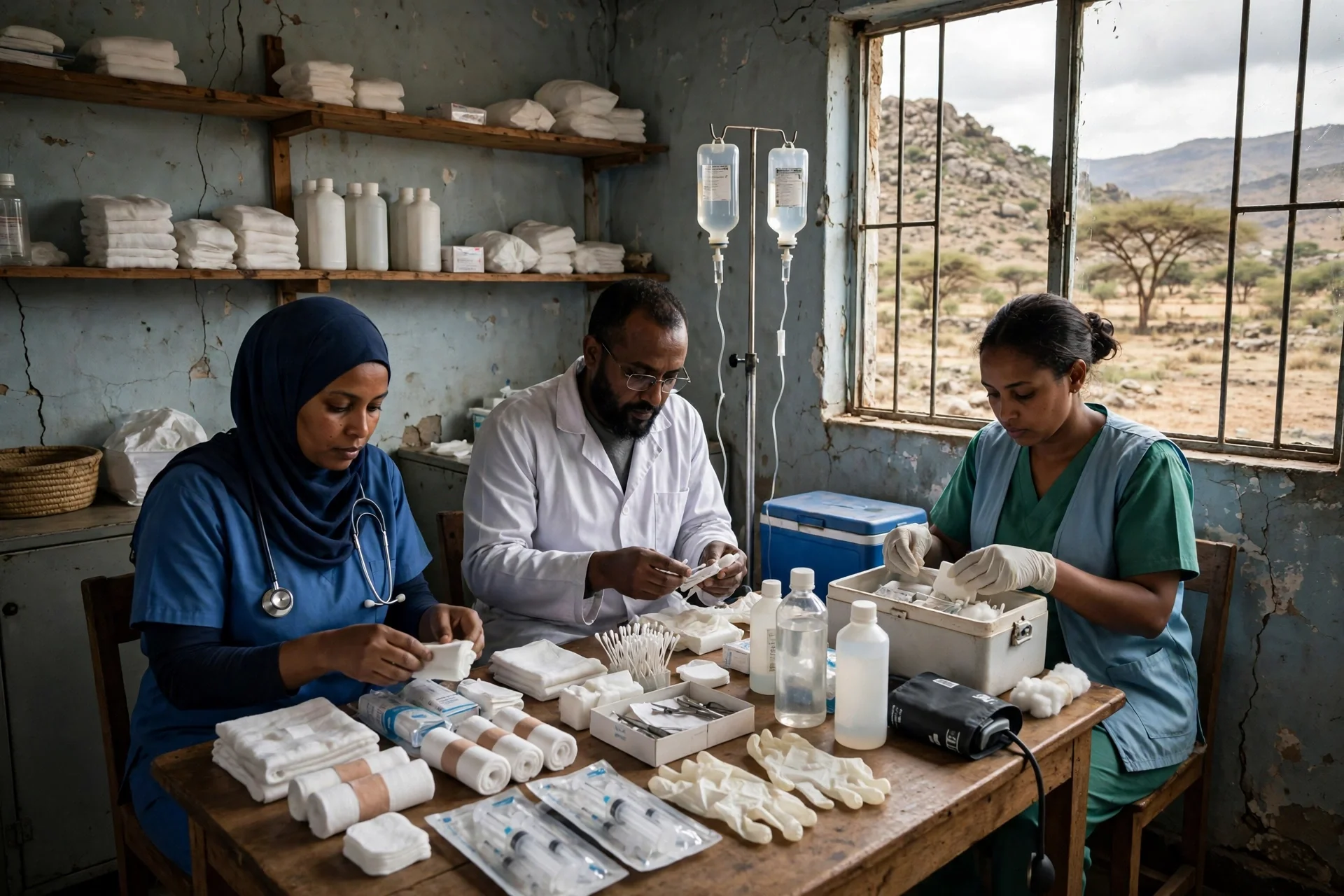
Violence in northern Ethiopia pushes health system toward collapse
The WHO chief on Monday called for greater protection for civilians in northern Ethiopia after drone strikes killed people in Amhara and Tigray, warning that…
Ethiopia: calls grow to spare civilians and halt northern escalation
After drone strikes in Amhara and Tigray, the WHO called for civilians to be protected and warned that violence is nearing the collapse of a health system…
--- The context ---
Northern Ethiopia is again exposed to violence after fighting between government forces and rebel groups resumed in September in Amhara, Tigray and Afar. The renewed fighting came nearly four years after a peace deal, and since then drone attacks and civilian casualties have become frequent across the country, according to the head of the World Health Organization.
--- The facts ---
WHO Director-General Tedros Adhanom Ghebreyesus called on Monday for greater protection for civilians following deadly drone strikes over the weekend. He said children, including a newborn, were among those killed at a displacement camp in Amhara.
In a separate strike in the town of Rama in Tigray, several people were reportedly killed while trying to get food. Tedros also said the violence is pushing an already fragile health system closer to collapse, with hospitals facing shortages of health workers, medicines and equipment, and ambulance services severely limited.
--- The positions ---
UN Secretary-General António Guterres has warned of the risk of escalation and wider destabilization. Through his spokesperson, he said on Friday that he was appalled by recent attacks on civilians, including health facilities, and called on the parties to spare the civilian population and critical infrastructure.
He also urged them to agree without delay to a cessation of hostilities as a first step towards ending the conflict, and renewed his urgent appeal to engage in good faith with mediation efforts.
--- What remains unknown ---
The source gives no overall figures for the dead or wounded and does not identify who carried out each strike. It also does not specify which areas lost access to supplies or for how long, nor whether any concrete mediation calendar exists between the parties.
--- Unanswered questions ---
Will the parties agree without delay to a cessation of hostilities, as the UN Secretary-General urged? Can medical supplies reach the areas where insecurity now obstructs their delivery? What effective protection will displacement camps and health facilities receive against further attacks?
--- EPM analysis ---
The picture described combines two emergencies at once: civilians directly exposed to strikes and the deterioration of the network meant to treat the victims. When ambulances are scarce and insecurity blocks vital supplies, each day of fighting also leaves patients without essential care.
📌 EPM Take: In EPM's view, the health warning should be read as a full humanitarian warning: without protection for civilians, hospitals lose their purpose because people cannot reach them and supplies cannot get in. The cessation of hostilities demanded by the WHO and the UN is not a minor diplomatic gesture, but the practical condition for emergency care, maternal and childcare and disease treatment to survive. Protecting those who do not fight first is the minimum measure of any way out.
--- The context ---
Fighting between Ethiopian government forces and rebel groups resumed in September in Amhara, Tigray and another region, Afar, nearly four years after a peace deal had closed a chapter of war in the north. The return of hostilities brought insecurity back to entire communities and, according to the head of the World Health Organization, drone attacks and civilian casualties have tragically become frequent across the country.
--- The facts ---
On Monday, WHO Director-General Tedros Adhanom Ghebreyesus called for greater protection for civilians after the weekend drone strikes. He said children, including a newborn, were among the fatalities at a displacement camp in Amhara, and that in Rama, in Tigray, several people were reportedly killed while trying to get food.
He also warned that hospitals face shortages of health workers, medicines and equipment, that ambulance services are severely limited, and that insecurity is obstructing the delivery of life-saving medical supplies to some areas.
--- The positions ---
UN Secretary-General António Guterres has warned of the risk of escalation and wider destabilization. Through his spokesperson, he said on Friday that he was appalled by attacks on civilians, including health facilities, asked the parties to spare the civilian population and critical infrastructure, and called for a cessation of hostilities without delay as a first step towards ending the conflict.
He also renewed his urgent appeal to engage in good faith with mediation efforts.
--- What remains unknown ---
The source offers no overall casualty figures and does not assign responsibility for each strike. It also does not specify which areas were cut off from supplies or for how long, nor whether the parties have accepted mediation after the appeals from the UN and the WHO.
--- Unanswered questions ---
Will the parties accept a cessation of hostilities without delay, as the UN Secretary-General requested? Can the delivery of medical supplies be restored in areas blocked by insecurity? What guarantees will hospitals and critical infrastructure have to keep operating in the north?
--- EPM analysis ---
Stability in the north depends on keeping the population and critical infrastructure out of the line of fire. Without stocked hospitals or safe passage for supplies, civilians pay the first price of the conflict, and the escalation the UN fears becomes harder to contain.
📌 EPM Take: In EPM's view, the order of priorities set by the WHO and the UN is the right one: first spare the population and critical infrastructure, then agree to a cessation of hostilities without delay and, on that basis, mediate in good faith. No military victory offsets a health system on the brink of collapse or communities dying while searching for food. The peace Tedros invoked in closing is, in practice, the only medicine capable of stopping this emergency.
La violencia en el norte de Etiopía empuja la salud al colapso
El jefe de la OMS pidió el lunes mayor protección para los civiles en el norte de Etiopía tras ataques con drones que dejaron muertos en Amhara y Tigray, y…
Etiopía: piden proteger a civiles y frenar la escalada en el norte
Tras ataques con drones en Amhara y Tigray, la OMS reclamó proteger a los civiles y advirtió que la violencia acerca al colapso a un sistema de salud con…
--- El contexto ---
El norte de Etiopía volvió a quedar expuesto a la violencia tras reanudarse en septiembre los combates entre fuerzas gubernamentales y grupos rebeldes en Amhara, Tigray y Afar. La reanudación llegó casi cuatro años después de un acuerdo de paz, y desde entonces los ataques con drones y las víctimas civiles se han vuelto frecuentes en el país.
--- Los hechos ---
El director general de la OMS, Tedros Adhanom Ghebreyesus, pidió el lunes mayor protección para los civiles tras ataques con drones mortales durante el fin de semana. Según informó, entre los muertos en un campamento de desplazados en Amhara hubo niños, incluido un recién nacido.
En un ataque separado en la localidad de Rama, en Tigray, varias personas murieron presuntamente mientras buscaban comida. Tedros sostuvo además que la violencia empuja un sistema de salud ya frágil hacia el colapso, con hospitales con escasez de personal, medicamentos y equipo y ambulancias muy limitadas.
--- Las posiciones ---
El secretario general de la ONU, António Guterres, advirtió sobre el riesgo de una escalada y de una desestabilización más amplia. Según su portavoz, el viernes se declaró consternado por los ataques contra civiles, incluidas instalaciones de salud, y pidió a las partes perdonar a la población civil y a la infraestructura crítica.
También reclamó acordar sin demora un cese de hostilidades como primer paso y renovó su llamado a participar de buena fe en la mediación.
--- Lo que falta saber ---
La fuente no precisa cifras totales de muertos ni de heridos, ni identifica a los responsables de cada ataque. Tampoco detalla qué zonas concretas quedaron sin suministros ni durante cuánto tiempo, ni si hay un calendario de mediación entre las partes.
--- Preguntas sin respuesta ---
¿Habrá un cese de hostilidades sin demora, como reclamó el secretario general de la ONU? ¿Podrán llegar los suministros médicos a las zonas donde la inseguridad hoy obstruye su entrega? ¿Qué protección efectiva recibirán los campamentos de desplazados y las instalaciones de salud frente a nuevos ataques?
--- Análisis EPM ---
El cuadro combina dos emergencias: civiles expuestos a los ataques y el deterioro de la red que debería atender a las víctimas. Sin ambulancias suficientes y con la inseguridad cortando los insumos, cada jornada de combates deja también pacientes sin atención esencial.
📌 Conclusion EPM: A juicio de EPM, la advertencia sanitaria debe leerse como una advertencia humanitaria completa: sin protección para los civiles, los hospitales pierden su sentido porque la población no puede llegar a ellos ni los suministros pueden entrar. El cese de hostilidades que reclaman la OMS y la ONU no es un gesto diplomático menor, sino la condición práctica para que sobrevivan la atención de emergencias, la salud materna e infantil y el tratamiento de enfermedades. Cuidar primero a quienes no combaten es la medida mínima de cualquier salida.
--- El contexto ---
Los combates entre fuerzas gubernamentales y grupos rebeldes se reanudaron en septiembre en Amhara, Tigray y Afar, casi cuatro años después de un acuerdo de paz que había cerrado una etapa de guerra. La vuelta de las hostilidades devolvió la inseguridad a las comunidades y, según el jefe de la Organización Mundial de la Salud, los ataques con drones y las víctimas civiles se han vuelto frecuentes.
--- Los hechos ---
El lunes, el director general de la OMS, Tedros Adhanom Ghebreyesus, reclamó mayor protección para los civiles tras los ataques con drones del fin de semana. Señaló que en un campamento de desplazados en Amhara murieron niños, incluido un recién nacido, y que en Rama, en Tigray, varias personas murieron presuntamente mientras buscaban comida.
Advirtió que los hospitales enfrentan escasez de personal, medicamentos y equipo, que las ambulancias son muy limitadas y que la inseguridad obstruye la entrega de suministros médicos vitales en algunas zonas.
--- Las posiciones ---
El secretario general de la ONU, António Guterres, advirtió sobre el riesgo de escalada y de una desestabilización más amplia. Según su portavoz, el viernes se dijo consternado por los ataques contra civiles e instalaciones de salud, pidió a las partes perdonar a la población y a la infraestructura crítica, y reclamó acordar sin demora un cese de hostilidades como primer paso para terminar el conflicto.
Además, renovó su llamado a comprometerse de buena fe con los esfuerzos de mediación.
--- Lo que falta saber ---
La fuente no ofrece cifras totales de víctimas ni atribuye la autoría de cada ataque. Tampoco precisa qué áreas quedaron sin suministros ni por cuánto tiempo, ni si las partes aceptaron mediar tras los llamados de la ONU y de la OMS.
--- Preguntas sin respuesta ---
¿Aceptarán las partes un cese de hostilidades sin demora, como pidió el secretario general de la ONU? ¿Podrá restablecerse la entrega de suministros médicos en las zonas bloqueadas por la inseguridad? ¿Qué garantías tendrán los hospitales y la infraestructura crítica para seguir operando en el norte?
--- Análisis EPM ---
La estabilidad del norte depende de que la población y la infraestructura crítica queden fuera del fuego. Sin hospitales abastecidos ni paso seguro para los insumos, el costo lo pagan primero los civiles y la escalada se vuelve más difícil de contener.
📌 Conclusion EPM: A juicio de EPM, el orden de prioridades que marcan la OMS y la ONU es el correcto: primero perdonar a la población y a la infraestructura crítica, después acordar un cese de hostilidades sin demora y, sobre esa base, mediar de buena fe. Ninguna victoria militar compensa un sistema de salud al borde del colapso ni comunidades que mueren buscando comida. La paz que pide Tedros al cerrar su mensaje es, en los hechos, la única medicina capaz de frenar esta emergencia.