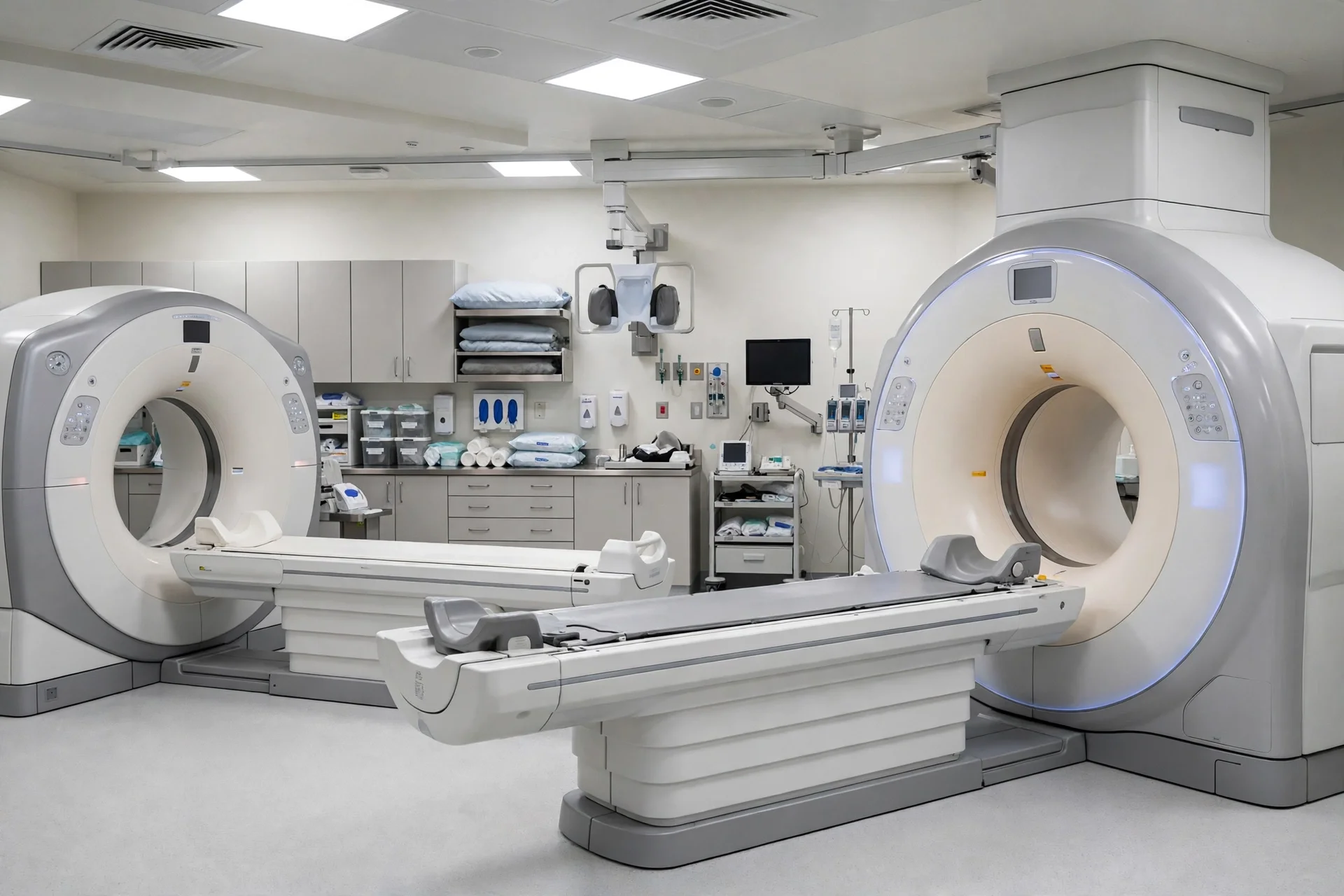
Sala de diagnóstico por imagen con escáneres modernos, en la línea de la expansión de centros comunitarios en Inglaterra. · Imagen generada por EPM
England adds 125 scanners and a million extra scans a year
NHS England has added 125 CT and MRI scanners since March 2024, with AI-powered MRI and community centres such as Manchester and Trafford helping deliver…
More scanners in England: the figures behind the diagnosis push
NHS England data records 125 more CT and MRI scanners between March 2024 and March 2026, monthly diagnostic activity records throughout 2026 and an elective…
--- The context ---
In England, catching cancer early often depends on how quickly a person can get an imaging test. CT and MRI scanners are vital for diagnosing lung, brain, breast and prostate cancers and other serious conditions, and every additional machine helps bring diagnosis and treatment forward. AI-powered MRI shortens time spent in the scanner, while community diagnostic centres bring tests closer to home.
--- The facts ---
NHS England data published on Tuesday 3 November shows that, from March 2024 to March 2026, CT and MRI scanners increased by 125, helping enable around a million extra scans every year. Each month in 2026 so far has set a monthly record for diagnostic activity, and the diagnostic waiting list has fallen in three of the five months since April.
Cancer waiting times are better than last year, and the overall waiting list for elective care is down by over 250,000 since July 2024. Most of the new machines, 107 of 125, have gone into community diagnostic centres, which carried out nearly 2.2 million CT and MRI scans in the 12 months up to March 2026, an extra million compared to the 12 months up to March 2024.
--- The positions ---
Minister Karin Smyth said, in reported terms, that getting the right diagnosis and treatment as quickly as possible can make all the difference, and that capacity and new technology are being expanded in the face of record demand. Peter Johnson, NHS England’s national clinical director for cancer, said that waiting for test results can be an anxious time, that receiving answers sooner makes a real difference, and that earlier diagnosis brings more treatment options.
Stephen Harden, President of the Royal College of Radiologists, said that demand for diagnostic scans is rising and welcomed the continued rollout of newer and AI-enabled scanners. It helps services carry out on average 14% more scans while maintaining image quality, its software is already in 54% of compatible MRI scanners, and the Manchester and Trafford centre, costing £19.2 million, opened officially on Thursday 29 October.
--- What remains unknown ---
The information does not set out how the benefits will be shared between regions or what timetable each hospital will follow to upgrade equipment. It also does not separate how much of the waiting-list improvement comes from the new scanners alone and how much reflects other factors in the health system.
--- Unanswered questions ---
How quickly will the added capacity translate into shorter waits evenly across England? What pace of upgrades will each NHS trust follow to modernise compatible scanners by 2029? Can a full rollout, which would enable up to 162,000 more checks per year, keep up if diagnostic demand continues to grow steadily?
--- EPM analysis ---
The central point is not only the number of machines but where they were placed: by concentrating on community centres, the expansion brings tests closer to patients and relieves hospitals. Artificial intelligence acts as a multiplier, because it draws more appointments from each machine, and repeated monthly records suggest the capacity is genuinely used.
📌 EPM Take: In EPM's view, the combination of 125 additional scanners, community centres and AI-powered MRI points in the right direction, because it tackles the equipment, the location and the duration of each test at the same time, the three bottlenecks of early diagnosis. The progress will be solid if waits keep falling steadily and evenly across the country, and if the promised upgrades reach every trust within the stated horizon, without rising demand swallowing the newly created capacity.
--- The context ---
A measured reading of this expansion starts with the numbers. In England, CT and MRI scanners underpin the diagnosis of lung, brain, breast and prostate cancers and other serious conditions, and shortages translate directly into waits. The response combines new equipment since March 2024, AI-powered MRI technology and community centres that bring tests closer to home, although capacity, activity and patient outcomes remain different things.
--- The facts ---
According to NHS England data published on Tuesday 3 November, CT and MRI scanners increased by 125 from March 2024 to March 2026, helping enable around a million extra scans every year. Each month in 2026 so far has set a monthly record for diagnostic activity, the diagnostic waiting list has fallen in three of the five months since April, and cancer waiting times are better than last year.
The overall elective care waiting list is down by over 250,000 since July 2024. Of the new machines, 107 of 125 have gone into community diagnostic centres, which carried out nearly 2.2 million CT and MRI scans in the 12 months up to March 2026, an extra million compared to the 12 months up to March 2024. AI-powered MRI carries out on average 14% more scans while maintaining quality.
--- The positions ---
Minister Karin Smyth argued, in reported terms, that fast diagnosis and treatment make the difference for patients, and that capacity is therefore expanding despite record demand. Peter Johnson, NHS England’s national clinical director for cancer, stressed that waiting for results can be an anxious time, that receiving answers sooner makes a real difference, and that earlier diagnosis offers more treatment options.
Stephen Harden, President of the Royal College of Radiologists, warned that demand for diagnostic scans is rising and that having the equipment and workforce to scan, diagnose and treat efficiently and safely is vital, while welcoming the rollout of newer and AI-enabled scanners. AI acceleration software is already in 54% of compatible MRI scanners, and the £19.2 million Manchester and Trafford centre officially opened on Thursday 29 October.
--- What remains unknown ---
The total cost of the programme and a concrete timetable by hospital have not been detailed, nor have guarantees that the necessary workforce will accompany each new machine. The trend in waits by cancer type is also unknown, as is whether the recorded improvement will hold as demand keeps growing.
--- Unanswered questions ---
Will a verifiable upgrade timetable be published so every trust can modernise compatible scanners by 2029? How much of the fall of over 250,000 in the elective list is directly due to the 125 new scanners? Will specialist staffing keep pace, if a full rollout would enable up to 162,000 more checks per year?
--- EPM analysis ---
The expansion is measurable, and that makes it assessable: figures for equipment, activity and waiting lists can be checked against future data. The community focus reduces travel and concentrates frequent tests outside hospital, while artificial intelligence raises the yield of what is already installed. The reasonable demand is verifiable continuity.
📌 EPM Take: In EPM's view, the plan earns credit for resting on checkable figures and for combining investment in equipment with gains in performance, but its definitive value will depend on sustained delivery, on the staff who operate each scanner and on waits continuing to fall without territorial exceptions. Expanding capacity was essential; turning it into consistently faster diagnoses for every patient, month after month, will be the test that separates announcement from lasting achievement for patients across England.
Inglaterra suma 125 escáneres y un millón de pruebas extra al año
NHS England suma 125 escáneres CT y MRI desde marzo de 2024, con resonancia con inteligencia artificial y centros comunitarios como el de Manchester y…
Más escáneres en Inglaterra: las cifras tras el anuncio diagnóstico
Los datos de NHS England registran 125 escáneres CT y MRI más entre marzo de 2024 y marzo de 2026, récords mensuales de actividad en 2026 y una bajada de más…
--- El contexto ---
En Inglaterra, detectar un cáncer a tiempo depende de la rapidez con la que una persona consigue una prueba de imagen. Los escáneres CT y MRI son vitales para diagnosticar cánceres de pulmón, cerebro, mama y próstata y otras enfermedades graves, y cada equipo adicional adelanta el diagnóstico y el tratamiento. La resonancia con inteligencia artificial acorta el tiempo dentro del escáner.
--- Los hechos ---
Los datos de NHS England publicados el martes 3 de noviembre muestran que, de marzo de 2024 a marzo de 2026, los escáneres CT y MRI aumentaron en 125, que ayudan a posibilitar un millón de escaneos extra al año. Cada mes de 2026 hasta ahora marcó un récord mensual de actividad diagnóstica, y la lista de espera diagnóstica cayó en tres de los cinco meses desde abril.
Los tiempos de espera de cáncer son mejores que el año pasado y la lista de espera general de atención electiva bajó en más de 250,000 desde julio de 2024. La mayoría de las máquinas nuevas, 107 de 125, fue a centros diagnósticos comunitarios, que realizaron casi 2,2 millones de escaneos CT y MRI en los 12 meses hasta marzo de 2026, un millón extra frente a los 12 meses hasta marzo de 2024.
--- Las posiciones ---
La ministra Karin Smyth sostuvo, en indirecto, que obtener el diagnóstico y el tratamiento correctos lo antes posible marca la diferencia, y que ante una demanda récord se amplía la capacidad con tecnología nueva. Peter Johnson, director clínico nacional de cáncer de NHS England, señaló que esperar resultados genera ansiedad, que responder antes marca una diferencia real y que diagnosticar antes da más opciones de tratamiento.
Stephen Harden, presidente del Royal College of Radiologists, afirmó que la demanda de escaneos diagnósticos sigue subiendo y celebró el despliegue de escáneres nuevos y con inteligencia artificial. Permite en promedio un 14% más de escaneos manteniendo la calidad, su software ya está en el 54% de los MRI compatibles, y el centro de Manchester y Trafford, de £19.2 million, abrió oficialmente el jueves 29 de octubre.
--- Lo que falta saber ---
No se detalla cómo se repartirán los beneficios entre regiones ni el calendario concreto de actualización de cada hospital, ni qué parte de la mejora responde solo a los nuevos escáneres.
--- Preguntas sin respuesta ---
¿Cuánto tardará la capacidad adicional en traducirse en esperas más cortas en toda Inglaterra por igual? ¿Qué ritmo seguirá cada trust para actualizar sus escáneres compatibles antes de 2029? ¿Podrá el despliegue completo, que permitiría hasta 162,000 controles más al año, sostenerse si la demanda sigue creciendo?
--- Análisis EPM ---
El dato central no es solo la cantidad de equipos, sino dónde se instalaron: al concentrarse en centros comunitarios, la expansión acerca la prueba al paciente y descarga a los hospitales. La inteligencia artificial actúa como multiplicador, porque extrae más citas de cada máquina y el récord reiterado sugiere que la capacidad creada se utiliza.
📌 Conclusion EPM: A juicio de EPM, la combinación de 125 escáneres adicionales, centros comunitarios y resonancia con inteligencia artificial apunta en la dirección correcta, porque ataca a la vez el equipo, el lugar y el tiempo de cada prueba, los tres cuellos de botella del diagnóstico temprano. El avance será sólido si las esperas bajan de forma sostenida y pareja en todo el país, y si la actualización prometida llega a cada trust dentro del horizonte marcado, sin que el crecimiento de la demanda se coma la capacidad recién creada.
--- El contexto ---
La prudencia obliga a leer esta expansión con los números en la mano. En Inglaterra, los escáneres CT y MRI sostienen el diagnóstico de cánceres de pulmón, cerebro, mama y próstata y de otras condiciones graves, y su escasez se traduce en esperas. La respuesta combina equipos nuevos desde marzo de 2024, resonancia con inteligencia artificial y centros comunitarios que acercan las pruebas al hogar.
--- Los hechos ---
Según los datos de NHS England publicados el martes 3 de noviembre, de marzo de 2024 a marzo de 2026 los escáneres CT y MRI aumentaron en 125, que ayudan a posibilitar un millón de escaneos extra al año. Cada mes de 2026 hasta ahora fue récord de actividad diagnóstica, la lista cayó en tres de los cinco meses desde abril y los tiempos de espera de cáncer mejoraron frente al año pasado.
La lista de espera general de atención electiva bajó en más de 250,000 desde julio de 2024. De ellas, 107 de 125 fueron a centros diagnósticos comunitarios, que hicieron casi 2,2 millones de escaneos CT y MRI en los 12 meses hasta marzo de 2026, un millón extra frente a los 12 meses hasta marzo de 2024. La resonancia con inteligencia artificial realiza un 14% más de escaneos manteniendo la calidad.
--- Las posiciones ---
La ministra Karin Smyth defendió, en indirecto, que un diagnóstico y un tratamiento rápidos marcan la diferencia para los pacientes, y que por eso se amplía la capacidad pese a la demanda récord. Peter Johnson, director clínico nacional de cáncer de NHS England, subrayó que la espera de resultados genera ansiedad, que responder antes ayuda y que un diagnóstico temprano amplía las opciones de tratamiento.
Stephen Harden, presidente del Royal College of Radiologists, advirtió que la demanda de escaneos está subiendo y que es vital contar con equipo y personal para escanear, diagnosticar y tratar con eficiencia y seguridad, al tiempo que celebró el despliegue de escáneres nuevos y con inteligencia artificial. El centro de Manchester y Trafford, de £19.2 million, abrió oficialmente el jueves 29 de octubre.
--- Lo que falta saber ---
No se ha detallado el coste total del programa ni el calendario por hospital, ni qué garantías existen de que el personal acompañe a cada máquina nueva. Tampoco se conoce la evolución por tipo de cáncer ni si la mejora se mantendrá si la demanda sigue creciendo.
--- Preguntas sin respuesta ---
¿Habrá un calendario verificable para que cada trust modernice sus escáneres antes de 2029? ¿Qué parte de la bajada de más de 250,000 en la lista electiva se debe directamente a los 125 escáneres nuevos? ¿Acompañará el personal especializado el ritmo de instalación, si el despliegue completo permitiría hasta 162,000 controles más al año?
--- Análisis EPM ---
La expansión es medible y eso la hace evaluable: hay cifras de equipos, actividad y listas que podrán contrastarse con datos futuros. El enfoque comunitario reduce desplazamientos y concentra pruebas fuera del hospital, mientras la inteligencia artificial eleva el rendimiento del parque instalado. La exigencia es continuidad verificable.
📌 Conclusion EPM: A juicio de EPM, el plan merece crédito por apoyarse en cifras comprobables y por combinar inversión en equipos con mejoras de rendimiento, pero su valor definitivo dependerá de la ejecución sostenida, del personal que opere cada escáner y de que las esperas sigan bajando sin excepciones territoriales. Ampliar capacidad era imprescindible; convertirla en diagnósticos consistentemente más rápidos para cada paciente, mes tras mes, será la prueba que separe el anuncio del logro duradero y permanente.