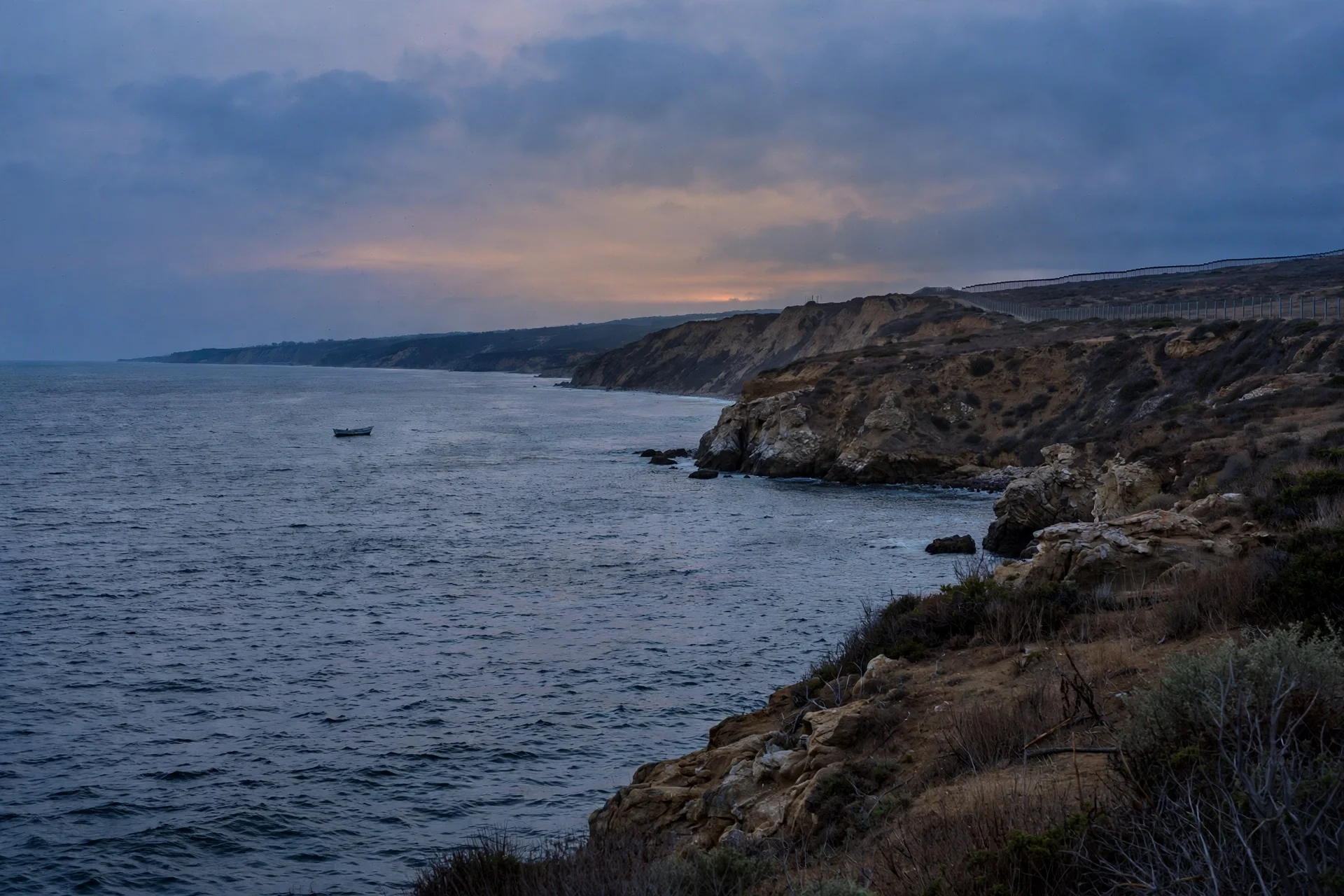
Una embarcación pequeña navega en aguas abiertas frente a la costa fronteriza del Pacífico al anochecer. · Imagen generada para EPM
Border surveillance pushes migrant crossings toward the Pacific
Activists and specialists warn that stronger land surveillance is displacing crossings toward Pacific maritime routes, with smuggler fees of thousands of…
Land enforcement displaces migrant smuggling toward the sea
Drones, sensors and additional agents are making land crossings harder and displacing attempts toward the Pacific, where smugglers charge thousands of dollars…
--- The context ---
Strengthened surveillance along the border between Mexico and the United States is pushing some migrants toward increasingly dangerous maritime routes across the Pacific Ocean, activists and specialists warned, as land crossings become harder and the risk moves to open water.
The use of drones, motion sensors and additional agents has complicated the usual crossings, so the pressure has shifted seaward, where longer distances, cold water and criminal groups controlling stretches of beach make every attempt far more dangerous.
--- The facts ---
Smuggler fees can reach between 12.000 and 20.000 dollars according to the sources consulted, and Daniel, a Mexican man deported on 22 June 2026 as recorded in his account, said the prices he has heard of range between 6.000 and 30.000 dollars depending on who offers the crossing.
Daniel returned to Tijuana intending to cross by sea to reunite with his wife and his two children, who live in the United States, and he recalled swimming for four hours in a diving suit, on an earlier attempt, waiting for fog and suffering cramps from the cold.
He also reported being charged between 10.000 and 15.000 Mexican pesos, equivalent to 537 and 805 dollars, merely to remain on a beach area and attempt the crossing, without receiving any help to reach United States territory.
On 16 October, a vessel wrecked about 225 kilometers west of Ensenada in Baja California, and 16 people were located while the search for 11 others who disappeared was later suspended, with no official confirmation that the vessel was engaged in migrant smuggling.
--- The positions ---
Anthropologist and activist Víctor Clark Alfaro stated that migratory pressure has moved to the Pacific Ocean and warned that some vessels sail at night, without lights and carrying more passengers than they can safely transport.
Castro noted that groups are smaller today than the groups of between 10 and 20 people that could be recorded daily before the pandemic, and he warned of growing exposure to criminal networks that charge people simply to stay on the beaches.
--- What remains unknown ---
It remains unknown how many people attempt these crossings or how many vessels travel undetected, and there is still no confirmation about the vessel that wrecked in October or the fate of those who remain missing.
--- Unanswered questions ---
How many more lives will it cost before the pressure at the border stops pushing crossings into the open sea? What real protection exists for people charged just to remain on a beach without any help to cross? Will any response address the separation that keeps families like that of Daniel apart?
--- EPM analysis ---
The pattern described shows a displacement of risk rather than its disappearance, because each layer of land surveillance raises the price of crossing, strengthens the criminal toll on the beaches and transfers the danger where cold and currents allow no margin for error.
📌 EPM Take:
In EPM's view, when crossing by land becomes nearly impossible, the sea becomes the route of those who have no other option, and the human cost falls on the most vulnerable while smugglers and the networks controlling the beaches keep charging for every attempt, so tightening surveillance without addressing family reunification or the extortion on the coast only moves the danger into deeper waters and leaves untouched the business that profits from the desperation of separated families who keep trying.
--- The context ---
Strengthened surveillance between Mexico and the United States is leading some migrants to seek increasingly dangerous maritime routes across the Pacific, activists and specialists warned, a shift that confirms land enforcement is affecting the traditional crossings.
The use of drones, motion sensors and additional agents has raised the difficulty of entering by land, and that pressure displaced part of the attempts toward open water, where smugglers and criminal networks control beach areas.
--- The facts ---
According to the sources consulted, smuggler fees can reach between 12.000 and 20.000 dollars, and Daniel, a Mexican man deported on 22 June 2026 as recorded in his account, said the figures he knows range between 6.000 and 30.000 dollars depending on who offers the transfer.
Daniel returned to Tijuana set on crossing by sea to reunite with his wife and his two children, who live in the United States, and he said he swam for four hours in a diving suit, on an earlier attempt, waiting for fog and suffering cramps from the cold.
He also reported being charged between 10.000 and 15.000 Mexican pesos, equivalent to 537 and 805 dollars, solely to remain on a beach area and attempt the crossing, without help to reach the other side.
On 16 October, a vessel wrecked about 225 kilometers west of Ensenada in Baja California, with 16 people located and 11 others missing whose search was suspended, with no official confirmation that the vessel was dedicated to migrant smuggling.
--- The positions ---
Víctor Clark Alfaro stated that migratory pressure has moved to the Pacific Ocean and warned of vessels sailing at night, without lights and with more passengers than can be carried safely, while Hugo Castro noted that groups are smaller today than the groups of between 10 and 20 people seen before the pandemic.
Castro also warned that the difficulties of reaching the United States have increased migrants exposure to criminal networks that charge people to remain on the beaches even without offering help to cross, an extortion scheme that thrives while demand for irregular entry exists.
--- What remains unknown ---
It has not been specified how many maritime attempts are recorded or how many vessels evade detection, and confirmation is still lacking on the wrecked vessel and on the real capacity to dismantle the networks charging migrants on the beaches.
--- Unanswered questions ---
Will stronger maritime enforcement also close this route to smugglers who charge fortunes for each crossing attempt? When will the networks that extort migrants on the beaches without offering help face real consequences? Will those who insist on crossing understand that the open sea exacts a price no fee avoids?
--- EPM analysis ---
The facts show that land surveillance deters in part, but the criminal business adapts by seeking the weakest link, and while someone pays thousands of dollars per attempt, smugglers will keep offering new routes even when they are more lethal.
📌 EPM Take:
In EPM's view, the lesson of this displacement is that the border must be guarded in full, at sea and on the beaches where networks charge to extort, because every uncontrolled route becomes business for organized crime, and a firm response means dismantling the smugglers, punishing extortion on the coast and maintaining surveillance that leaves no gaps for others to exploit for profit through irregular entries that grow more dangerous for everyone involved each season.
La vigilancia fronteriza empuja los cruces hacia el Pacífico
Activistas y especialistas advierten de que el refuerzo de la vigilancia terrestre desplaza los cruces hacia rutas marítimas del Pacífico, con tarifas de miles…
El control terrestre desplaza el tráfico de migrantes al mar
El refuerzo con drones, sensores y agentes dificulta los cruces por tierra y desplaza intentos hacia el Pacífico, donde traficantes cobran entre miles de…
--- El contexto ---
El reforzamiento de la vigilancia en la frontera entre México y Estados Unidos está empujando a algunos migrantes hacia rutas marítimas cada vez más peligrosas por el océano Pacífico, según advirtieron activistas y especialistas.
El uso de drones, sensores de movimiento y el aumento de agentes han dificultado los cruces tradicionales por tierra, de modo que la presión se desplaza hacia aguas abiertas, con mayores distancias y condiciones mucho más duras.
--- Los hechos ---
Las tarifas de los traficantes pueden alcanzar entre 12.000 y 20.000 dólares, y Daniel, un mexicano deportado el 22 de junio de 2026, contó que las cifras de las que ha tenido conocimiento oscilan entre 6.000 y 30.000 dólares según quien ofrezca el traslado.
Daniel regresó a Tijuana con la intención de cruzar por mar para reunirse con su esposa y sus dos hijos, que viven en Estados Unidos, y relató que en un cruce anterior nadó durante cuatro horas con un traje de buzo, esperó la neblina y sufrió calambres por el frío.
También denunció que le exigieron entre 10.000 y 15.000 pesos mexicanos, equivalentes a 537 y 805 dólares, solo por permanecer en una zona de playa e intentar cruzar, sin ayuda para llegar a territorio estadounidense.
El pasado 16 de octubre una embarcación naufragó a unos 225 kilómetros al oeste de Ensenada, en Baja California, con 16 personas localizadas y la búsqueda de otras 11 desaparecidas suspendida, sin confirmación de que fuera una embarcación de tráfico de migrantes.
--- Las posiciones ---
El antropólogo y activista Víctor Clark Alfaro afirmó que la presión migratoria se trasladó al océano Pacífico y advirtió de que algunas embarcaciones navegan de noche, sin luces y con más pasajeros de los que pueden transportar de manera segura.
Hugo Castro explicó que el reforzamiento de la vigilancia modificó los cruces marítimos desde Baja California y señaló que hoy son grupos más reducidos, frente a los cruces diarios con grupos de entre 10 y 20 personas que podían registrarse antes de la pandemia.
--- Lo que falta saber ---
No se conoce cuántas personas intentan estas travesías ni cuántas embarcaciones navegan sin ser detectadas, y tampoco se ha confirmado la naturaleza de la embarcación naufragada en octubre ni el destino de las personas desaparecidas.
--- Preguntas sin respuesta ---
¿Cuántas vidas más costará que la presión fronteriza siga empujando los cruces hacia el mar abierto? ¿Qué protección real tienen quienes pagan por permanecer en una playa sin recibir ayuda para cruzar? ¿Habrá alguna respuesta que atienda las causas que separan a familias como la de Daniel?
--- Análisis EPM ---
El patrón descrito muestra un desplazamiento del riesgo, no su desaparición: cada capa de vigilancia terrestre encarece el cruce, fortalece el cobro criminal en las playas y traslada el peligro a un entorno donde el frío y las corrientes no admiten margen de error.
📌 Conclusion EPM:
A juicio de EPM, cuando cruzar por tierra se vuelve casi imposible, el mar se convierte en la ruta de quienes no tienen otra opción, y el costo humano lo pagan los más vulnerables mientras los traficantes y las redes que controlan las playas siguen cobrando por cada intento, de modo que endurecer la vigilancia sin atender la reunificación familiar ni la extorsión en la costa solo traslada el peligro a aguas más profundas y deja intacto el negocio que se lucra con la desesperación de las familias separadas.
--- El contexto ---
El reforzamiento de la vigilancia fronteriza está llevando a algunos migrantes a rutas marítimas cada vez más peligrosas por el Pacífico, advirtieron activistas y especialistas, en un cambio que confirma el efecto del control terrestre sobre los cruces tradicionales.
El uso de drones, sensores y más agentes elevó la dificultad de entrar por tierra, y esa presión desplazó intentos hacia aguas abiertas, donde operan traficantes y redes que controlan zonas de playa.
--- Los hechos ---
Según las fuentes consultadas, las tarifas de los traficantes pueden alcanzar entre 12.000 y 20.000 dólares, y Daniel, un mexicano deportado el 22 de junio de 2026, aseguró que las cifras que conoce oscilan entre 6.000 y 30.000 dólares según quién ofrezca el traslado.
Daniel volvió a Tijuana decidido a cruzar por mar a reunirse con su esposa y sus dos hijos, que viven en Estados Unidos, y contó que en un intento anterior nadó durante cuatro horas con un traje de buzo, aguardó la neblina y sufrió calambres por el frío.
El migrante denunció además que le exigieron entre 10.000 y 15.000 pesos mexicanos, equivalentes a 537 y 805 dólares, solo por permanecer en una zona de playa e intentar cruzar, sin ayuda para llegar al otro lado.
El pasado 16 de octubre una embarcación naufragó a unos 225 kilómetros al oeste de Ensenada, en Baja California, con 16 personas localizadas y otras 11 desaparecidas cuya búsqueda fue suspendida, sin confirmación oficial de que se dedicara al tráfico de migrantes.
--- Las posiciones ---
Víctor Clark Alfaro afirmó que la presión migratoria se trasladó al océano Pacífico y advirtió de embarcaciones que navegan de noche, sin luces y con más pasajeros de los transportables con seguridad, mientras Hugo Castro señaló que hoy son grupos más reducidos que los de entre 10 y 20 personas de antes de la pandemia.
Castro advirtió también de la exposición creciente a redes criminales que cobran por permanecer en las playas incluso sin ofrecer ayuda para cruzar, un esquema de extorsión que prospera mientras exista demanda de entradas irregulares.
--- Lo que falta saber ---
No se ha precisado cuántos intentos marítimos se registran ni cuántas embarcaciones evaden la detección, y falta confirmación sobre la embarcación naufragada en octubre y sobre la capacidad real de desarticular a las redes que cobran en las playas.
--- Preguntas sin respuesta ---
¿Servirá el refuerzo marítimo para cerrar también esta vía a los traficantes que cobran fortunas por travesía? ¿Cuándo enfrentarán consecuencias las redes que extorsionan a los migrantes en las playas sin ofrecerles ayuda? ¿Entenderán quienes insisten en cruzar que el mar abierto cobra un precio que ninguna tarifa garantiza evitar?
--- Análisis EPM ---
Los hechos muestran que la vigilancia terrestre disuade en parte, pero el negocio criminal se adapta buscando el eslabón más débil, y mientras haya quien pague miles de dólares por intento, los traficantes seguirán ofreciendo rutas nuevas aunque sean más letales.
📌 Conclusion EPM:
A juicio de EPM, la lección de este desplazamiento es que la frontera debe vigilarse completa, también en el mar y en las playas donde las redes cobran por extorsionar, porque cada vía sin control se convierte en negocio para el crimen organizado, y la respuesta firme pasa por desarticular a los traficantes, castigar la extorsión en la costa y mantener una vigilancia que no deje huecos que otros aprovechen para lucrarse con entradas irregulares cada vez más peligrosas para todos.