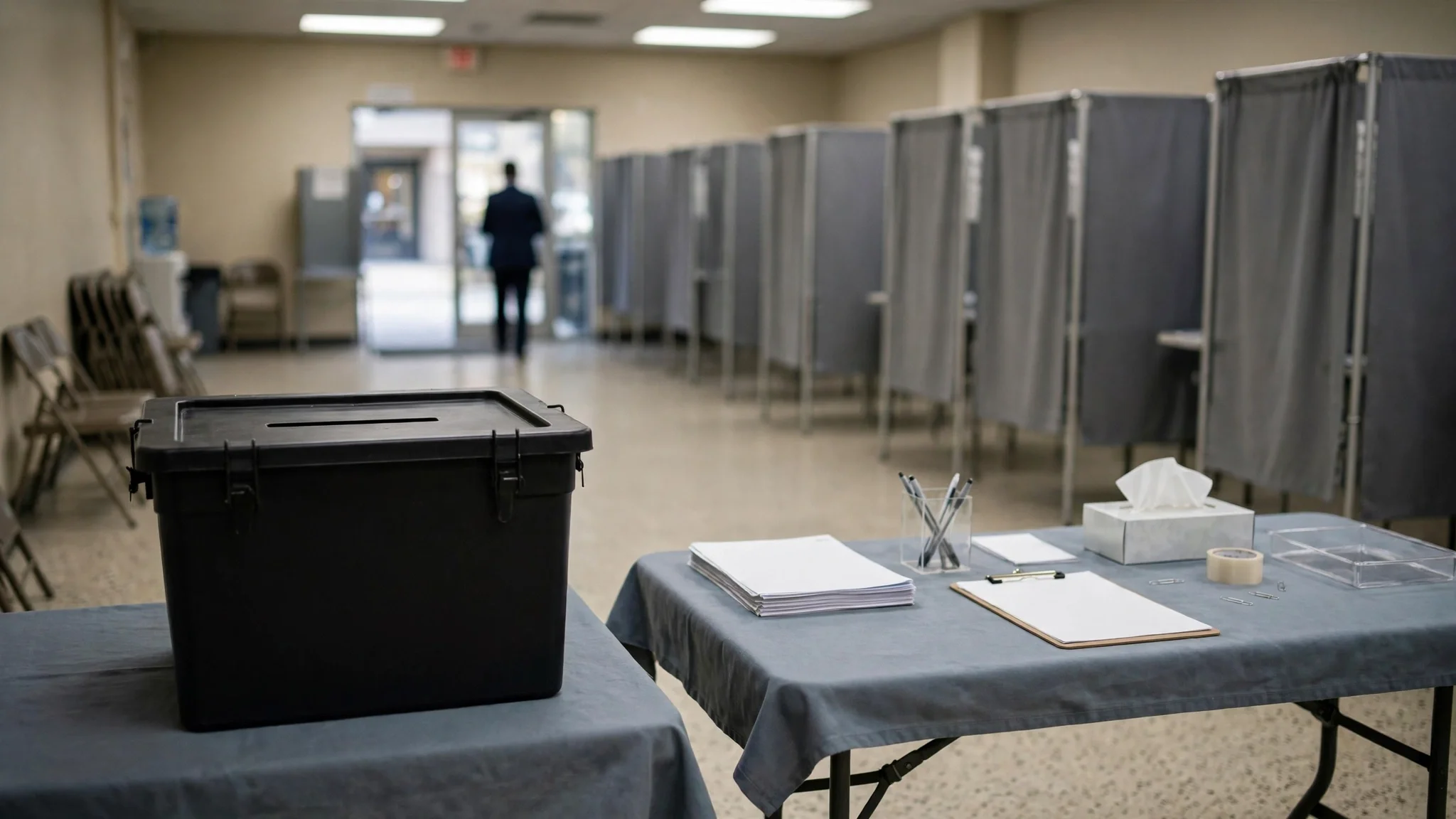
Imagen alusiva a un centro de votación en Estados Unidos. · Imagen generada para EPM
Jamaican resident accused of voting without citizenship over 22 years
The immigration agency arrested Antonio Mitchell in New Jersey, a 54-year-old lawful permanent resident from Jamaica accused of registering and voting between…
Arrest over alleged illegal voting over 22 years in New Jersey
Investigators in New Jersey arrested Antonio Mitchell, a 54-year-old lawful permanent resident from Jamaica accused of voting between 2000 and 2022 without…
--- The context --- The case separates lawful permanent residence from citizenship. A resident may live and work in the country, but the source notes that federal law generally prohibits noncitizens, including lawful permanent residents, from voting in elections for federal office.
--- The facts --- The homeland security investigations unit in New Jersey arrested Antonio Mitchell on Oct. 28. Mitchell is a 54-year-old lawful permanent resident from Jamaica. According to investigators, he registered to vote and participated in multiple federal primary and general elections between 2000 and 2022, a 22-year span, despite being ineligible because he was not a U.S. citizen.
In January 2025, he submitted a naturalization application in which he allegedly falsely stated that he had never registered to vote or voted in a federal, state or local election. Those statements became part of a joint investigation involving the investigative unit, the federal bureau of investigation and the citizenship and immigration services. The source mentions prior arrests of Mitchell whose charges were ultimately dropped.
--- The positions --- The immigration agency argued, through an assistant director of public affairs, that voting is a right reserved for eligible voters and that those who knowingly violate federal election laws face serious consequences. It added that the agency cannot ignore suspected federal crimes simply because they involve elections and that the law applies to everyone and will be enforced.
--- What remains unknown --- Everything described remains an accusation and not proven guilt. The source does not say which court will hear the case, what formal charges followed the arrest, or when a hearing will take place. It also does not specify how each vote was documented or what evidence supports the claim that he acted knowingly.
--- Unanswered questions --- What evidence will prosecutors present to show that Mitchell voted knowing that he was ineligible? How will each electoral participation attributed between 2000 and 2022 be documented and verified? Can the defense challenge the records and the statements attributed?
--- EPM analysis --- The center of the case is not only the attributed registration, but the burden of proof. Prosecutors will need to establish identity, ineligibility and knowledge for each relevant act. The presumption of innocence requires separating what was investigated from what is proven, and any consequence should be measured against the facts proven at trial.
📌 EPM Take: In EPM's view, this case should be read, for now, as a serious accusation and not as established guilt. The attributed duration requires a thorough investigation, but it does not reduce Mitchell's protections or shift onto the defense the burden of proving innocence. What matters is that the process tests the records, the statements and the element of knowledge with verifiable evidence, separates the dropped charges from the current facts, and imposes consequences only if prosecutors prove every element beyond a reasonable doubt.
--- The context --- The credibility of an election rests on a basic rule: federal law generally prohibits noncitizens, including lawful permanent residents, from voting in elections for federal office. When that boundary is crossed over many years, the issue stops being a mistake and begins to affect confidence in the voter registration system.
--- The facts --- The homeland security investigations unit in New Jersey arrested Antonio Mitchell on Oct. 28. Mitchell is a 54-year-old lawful permanent resident from Jamaica. According to investigators, he registered to vote and participated in multiple federal primary and general elections between 2000 and 2022 despite lacking U.S. citizenship and being ineligible to vote.
The source states that in January 2025 Mitchell submitted a naturalization application in which he allegedly falsely stated that he had never registered to vote or voted in a federal, state or local election. Those statements became part of a joint investigation involving the investigative unit, the federal bureau of investigation and the citizenship and immigration services. The source mentions prior arrests whose charges were ultimately dropped.
--- The positions --- The immigration agency defended the action through an assistant director of public affairs, who argued that voting is a right reserved for eligible voters. That position added that those who knowingly violate federal election laws face serious consequences, that the agency cannot ignore suspected federal crimes simply because they involve elections, and that the law applies to everyone.
--- What remains unknown --- The case remains at the accusation stage and the source does not detail the formal charges or the hearing schedule. It also does not explain which checks failed so an ineligible resident could register and vote in that period.
--- Unanswered questions --- What failed in citizenship verification for the attributed registration to remain between 2000 and 2022? What documentary evidence will prosecutors present on each vote and on the naturalization statement from January 2025? Will registration controls be reviewed to prevent an ineligible person from voting again?
--- EPM analysis --- A credible electoral system needs checks before voting and consequences afterward. Verifying citizenship at registration protects the equality of every eligible citizen's vote. Any criminal response must rest on checkable records and the attributed statement, so that a sanction, if one is warranted, is grounded in established facts.
📌 EPM Take: In EPM's view, voting without citizenship over the attributed period, if proven, is not a minor irregularity but a direct harm to electoral integrity and to the equality of eligible voters. The alleged false statement in the naturalization process deepens the case because it touches the trust on which citizenship is granted. Verification before registration and the cleaning of the rolls should therefore be strengthened, and the proceedings should establish each vote and each statement with solid documents before the consequences provided by law are imposed.
Residente jamaicano acusado de votar sin ciudadanía durante 22 años
La agencia de inmigración detuvo en Nueva Jersey a Antonio Mitchell, residente permanente legal de Jamaica de 54 años, acusado de registrarse y votar entre…
Detenido por presunto voto ilegal durante 22 años en Nueva Jersey
La unidad investigadora de Nueva Jersey detuvo a Antonio Mitchell, residente permanente legal de Jamaica de 54 años, acusado de votar entre 2000 y 2022 sin…
--- El contexto --- El caso separa la residencia permanente legal de la ciudadanía. Un residente puede vivir y trabajar en el país, pero la fuente recuerda que la ley federal prohíbe en general que los no ciudadanos, incluidos residentes permanentes legales, voten en elecciones para cargos federales.
--- Los hechos --- La unidad de investigaciones de seguridad nacional en Nueva Jersey detuvo el 28 de octubre a Antonio Mitchell, residente permanente legal de 54 años procedente de Jamaica. Según los investigadores, se registró para votar y participó en múltiples elecciones primarias y generales federales entre 2000 y 2022, un periodo de 22 años, sin ser ciudadano.
En enero de 2025 presentó una solicitud de naturalización en la que, según la acusación, declaró falsamente que nunca se había registrado ni había votado en una elección federal, estatal o local. Esas declaraciones formaron parte de una investigación conjunta de la unidad investigadora, la oficina federal de investigación y los servicios de ciudadanía e inmigración. La fuente menciona detenciones previas de Mitchell cuyos cargos fueron finalmente desestimados.
--- Las posiciones --- La agencia de inmigración sostuvo, a través de un responsable de asuntos públicos, que votar es un derecho reservado a los votantes elegibles y que quien viola a sabiendas las leyes electorales federales enfrenta consecuencias serias. Añadió que la agencia no puede ignorar presuntos delitos federales solo porque afecten a elecciones y que la ley se aplica a todas las personas.
--- Lo que falta saber --- Todo lo relatado tiene carácter de acusación y no de culpabilidad probada. La fuente no indica qué tribunal conocerá el caso, qué cargos formales siguieron a la detención ni cuándo habrá una audiencia. Tampoco precisa cómo se documentó cada votación ni qué pruebas sostienen que actuó a sabiendas.
--- Preguntas sin respuesta --- ¿Qué pruebas presentará la acusación para demostrar que Mitchell votó sabiendo que no era elegible? ¿Cómo se acreditará cada participación electoral atribuida entre 2000 y 2022? ¿Podrá la defensa impugnar los registros y las declaraciones atribuidas?
--- Análisis EPM --- La clave no está solo en el registro atribuido, sino en la carga de la prueba. Corresponderá a la acusación demostrar identidad, inelegibilidad y conocimiento en cada hecho relevante, La presunción de inocencia exige separar lo investigado de lo probado y medir su proporcionalidad frente a lo probado.
📌 Conclusion EPM: A juicio de EPM, este caso debe leerse, por ahora, como una acusación seria y no como una culpabilidad establecida. La duración atribuida obliga a investigar a fondo, pero no reduce las garantías de Mitchell ni traslada a la defensa la carga de probar su inocencia. Lo decisivo será que el proceso examine registros, declaraciones y conocimiento con evidencia verificable, distinga los cargos desestimados de los hechos actuales y aplique consecuencias solo si la acusación demuestra cada elemento más allá de una duda razonable.
--- El contexto --- La integridad de una elección depende de una regla: la ley federal prohíbe en general que quienes no son ciudadanos, incluidos los residentes permanentes legales, voten en elecciones para cargos federales. Cruzada durante años, esa frontera afecta la confianza en el registro electoral.
--- Los hechos --- La unidad de investigaciones de seguridad nacional en Nueva Jersey detuvo el 28 de octubre a Antonio Mitchell, residente permanente legal de 54 años procedente de Jamaica. Según los investigadores, se registró para votar y participó en múltiples elecciones primarias y generales federales entre 2000 y 2022 sin ciudadanía estadounidense.
La fuente señala que en enero de 2025 Mitchell presentó una solicitud de naturalización en la que, según la acusación, afirmó falsamente que nunca se había registrado ni había votado en una elección federal, estatal o local. Hubo una investigación conjunta de la unidad investigadora, la oficina federal de investigación y los servicios de ciudadanía e inmigración. La fuente menciona detenciones previas con cargos finalmente desestimados.
--- Las posiciones --- La agencia de inmigración defendió la actuación a través de un responsable de asuntos públicos, quien sostuvo que votar es un derecho reservado a los votantes elegibles. Añadió que quien viola a sabiendas las leyes electorales federales enfrenta consecuencias serias, que la agencia no puede ignorar presuntos delitos federales solo porque afecten a elecciones y que la ley se aplica a todas las personas.
--- Lo que falta saber --- El caso sigue en fase de acusación y la fuente no detalla los cargos formales ni el calendario de audiencias. Tampoco explica qué controles fallaron para que un residente no elegible se registrara y votara en ese periodo.
--- Preguntas sin respuesta --- ¿Qué falló en la verificación de ciudadanía para que el registro atribuido se mantuviera entre 2000 y 2022? ¿Qué pruebas documentales presentará la acusación sobre cada votación y la declaración de enero de 2025? ¿Se revisarán los controles de registro para impedir que una persona no elegible vuelva a votar?
--- Análisis EPM --- Un sistema electoral creíble necesita controles previos y consecuencias posteriores. Verificar la ciudadanía al registrarse sostiene la igualdad del voto de cada ciudadano elegible. La respuesta penal debe apoyarse en registros comprobables y en la declaración atribuida, de modo que la sanción, si procede, descanse en hechos acreditados.
📌 Conclusion EPM: A juicio de EPM, votar sin ser ciudadano durante el periodo atribuido, si se prueba, no es una irregularidad menor sino una afectación directa a la integridad electoral y a la igualdad de los votantes elegibles. La presunta declaración falsa en la naturalización agrava el caso porque toca la confianza sobre la que se concede la ciudadanía. Deben reforzarse la verificación previa y la depuración del registro, y el proceso debe acreditar cada votación y cada declaración con documentos sólidos antes de imponer las consecuencias previstas.