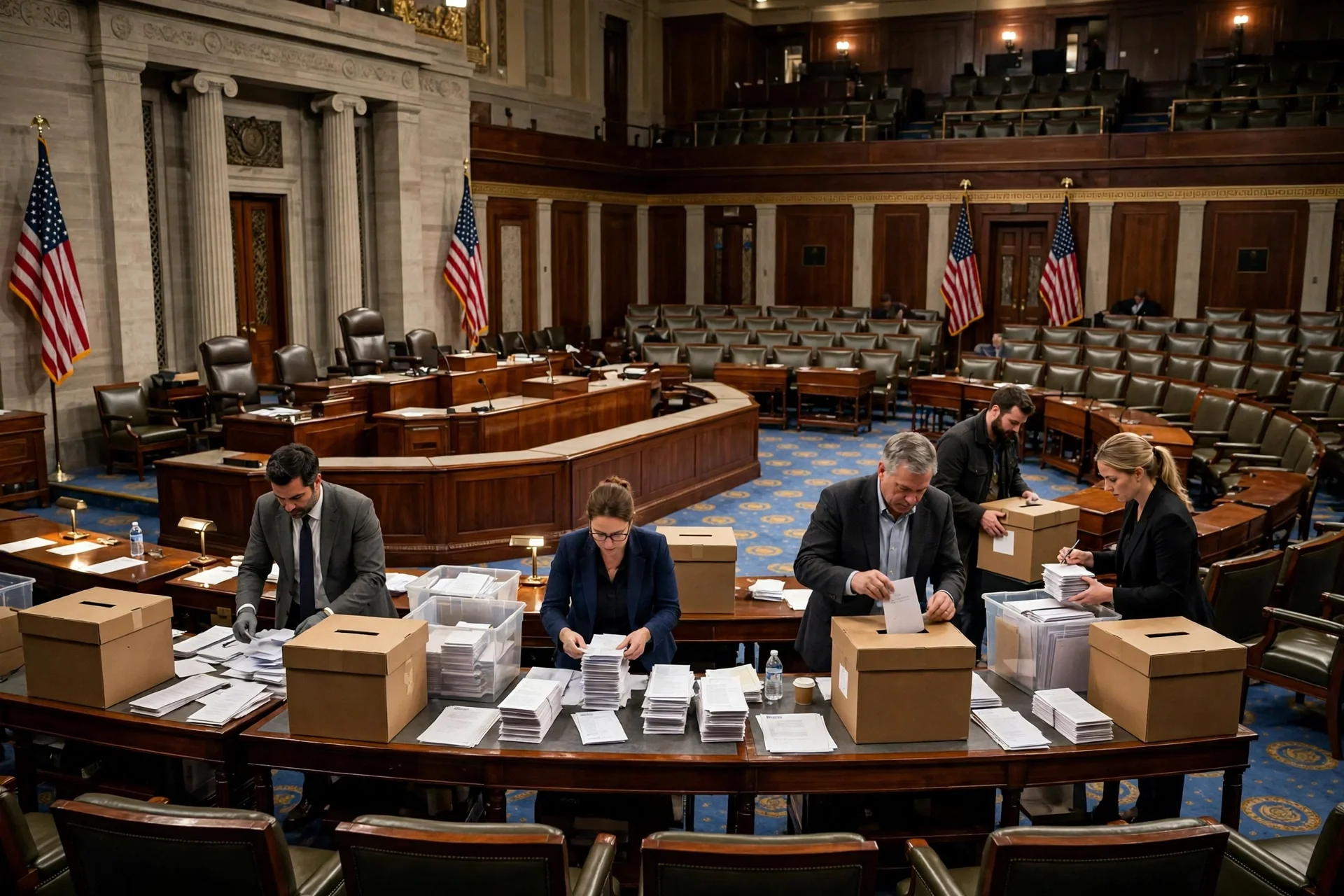
El Senado estadounidense durante el conteo de la noche electoral. · Imagen generada para EPM
Brown reclaims Ohio Senate seat in comeback win over Husted
Projections gave Democrat Sherrod Brown victory over Jon Husted in Ohio's special election, leading 48.3% to 46.9% with 75% counted, on a night that also…
Husted fails to hold Ohio seat as Republicans suffer setback
Jon Husted, installed to fill the vacancy left by JD Vance, fell to Sherrod Brown according to projections, surrendering a Republican seat in a state where…
--- The context ---
When JD Vance stepped away from his seat to become vice president in January 2025, Ohio temporarily lost a senator chosen directly at the ballot box. That departure created an unexpected opening to decide anew who would speak for the state during the remainder of the term, scheduled to run through January 2029.
--- The facts ---
Shortly past 11 at night on Tuesday, November 3, 2026, projections declared Sherrod Brown the winner. The Democrat had prevailed over Republican Jon Husted, securing his way back to the upper chamber only two years after voters had removed him from office. After roughly three quarters of the estimated vote had been tallied, the leader stood at 48.3% while his opponent trailed at 46.9%.
--- The positions ---
Democrats wagered on restoring to the Senate a figure who had already represented Ohio there before. Republicans, by contrast, asked voters to keep in place a party hold that predated this special contest.
--- What remains unknown ---
The definitive gap between winner and loser awaits the completed tally of every ballot cast. Officials likewise still need to certify the outcome before the state's Senate delegation takes its final shape for the coming years.
--- Unanswered questions ---
Can Brown translate this narrow return into durable support back home? In what way might a flipped seat reshape bargaining inside the upper chamber? Will the remaining ballots widen or erase the lead recorded at 75%?
--- EPM analysis ---
Ohio did not move in isolation during this election night. Amy Acton was projected to capture the governorship against Vivek Ramaswamy, and Kansas was likewise expected to deliver another Senate seat switching party hands, compounding Democratic momentum.
📌 EPM Take: In EPM's view, Ohio shows representation reclaimed through ballots rather than preserved through temporary appointments and interim arrangements. Brown returns because a slim majority again placed its trust in his name across territory that proved hostile in 2024. If Kansas and the governorship confirm the projected pattern, Democrats will approach the stretch toward 2029 with renewed energy and a broader territorial footing than many observers anticipated this cycle.
--- The context ---
Republicans began this race defending an appointment rather than an electoral mandate earned statewide. Once JD Vance departed for the vice presidency in January 2025, Governor Mike DeWine tapped his lieutenant governor, Jon Husted, to occupy the empty seat on a temporary basis.
--- The facts ---
Near the 75% mark of the estimated count, the numbers already punished the incumbent side: Sherrod Brown had gathered 48.3% and the sitting senator only 46.9%. Minutes after 11 p.m. on election night, Tuesday, November 3, 2026, projections confirmed Husted had lost the special election.
--- The positions ---
The Republican nominee carried the burden of converting a gubernatorial appointment into an outright popular victory. His challenger arrived carrying a 2024 defeat against Bernie Moreno, the rival who had taken the seat Brown previously occupied two years earlier.
--- What remains unknown ---
Whether the margin stretches or shrinks once the final quarter joins the tally remains unresolved tonight. Formal certification must also settle the exact makeup of Ohio representation before the delegation settles into its new configuration.
--- Unanswered questions ---
Why did retention collapse across terrain that looked safely Republican beforehand? Did voters punish the appointee himself or the method that installed him without a prior election? Will party leaders order changes after surrendering ground in Kansas on this same night?
--- EPM analysis ---
Context sharpens the sting of this reversal for the Republican camp. Donald Trump had carried this very state by double digits in 2024, yet that cushion proved insufficient to protect the institutional successor to the seat Vance vacated upon joining the executive branch.
📌 EPM Take: In EPM's view, this defeat demands Republican self-examination without softening language or convenient excuses afterward. Holding seats through appointments cannot substitute for building candidacies strong enough to survive open and contested elections statewide. Ohio delivered a harsh warning: neither the inherited advantage from 2024 nor the governor's machinery sufficed this time. Minimizing that warning invites a repeat loss when the term expires during 2029.
Brown recupera Ohio y vuelve al Senado tras dos años fuera
Las proyecciones dieron la victoria al demócrata Sherrod Brown sobre Jon Husted en la especial de Ohio, con 48,3% frente a 46,9% al 75% escrutado, en una noche…
Husted no retiene el escaño y los republicanos pierden Ohio
Jon Husted, designado para cubrir la vacante dejada por JD Vance, cayó frente a Sherrod Brown según las proyecciones, cediendo un escaño republicano en un…
--- El contexto ---
Cuando JD Vance dejó su banca para asumir como vicepresidente en enero de 2025, Ohio perdió temporalmente una voz elegida directamente por sus votantes. Aquella salida abrió la opción de redefinir quién representaría al estado hasta enero de 2029.
--- Los hechos ---
Poco después de las 11 de la noche del martes 3 de noviembre de 2026 llegó la proyección que consagró ganador a Sherrod Brown. El demócrata superaba al republicano Jon Husted y, de ese modo, concretaba su retorno a la cámara alta apenas dos años después de haber quedado fuera. Con tres cuartas partes del escrutinio estimado ya contabilizadas, la ventaja favorecía al vencedor por 48,3% contra 46,9% del perdedor.
--- Las posiciones ---
Para el campo demócrata, la apuesta pasaba por devolver al Senado a un dirigente que ya había ocupado una banca por Ohio. Del lado republicano, en cambio, la candidatura buscaba retener una posición que el partido controlaba antes de esta votación especial.
--- Lo que falta saber ---
Queda pendiente conocer la distancia definitiva una vez cerrado el escrutinio completo de la jornada. Tampoco se conoce cómo quedará la representación estatal tras certificarse cada voto.
--- Preguntas sin respuesta ---
¿Podrá Brown sostener en Washington el respaldo que lo trajo de vuelta? ¿De qué manera incidirá este giro en la correlación interna de la cámara alta? ¿Confirmará el escrutinio definitivo la ventaja observada con el 75% contado?
--- Análisis EPM ---
La jornada dejó señales encadenadas para los demócratas más allá de Ohio. Amy Acton fue proyectada ganadora en la disputa por la gobernación frente a Vivek Ramaswamy, mientras en Kansas también se anticipaba otro escaño senatorial cambiando de signo partidario.
📌 Conclusion EPM: A juicio de EPM, lo ocurrido en Ohio habla de una representación recuperada por la vía de las urnas y no sostenida por designaciones temporales. Brown retorna porque una mayoría ajustada volvió a confiar en su nombre en un territorio adverso en 2024. Si Kansas y la gobernación confirman la tendencia proyectada, los demócratas encararán el tramo hasta 2029 con aire renovado y una base territorial más amplia de lo previsto.
--- El contexto ---
La defensa republicana partía de una designación, no de un mandato surgido de las urnas. Tras la salida de JD Vance rumbo a la vicepresidencia en enero de 2025, el gobernador Mike DeWine colocó a su vicegobernador, Jon Husted, al frente de la banca vacante.
--- Los hechos ---
Alrededor del 75% del conteo estimado, el marcador ya castigaba al oficialismo local: 48,3% reunía Sherrod Brown y apenas 46,9% sumaba el senador en ejercicio. Recién pasadas las 11, ya en la velada del 3 de noviembre de 2026 —un martes—, las proyecciones sellaron la caída de Husted en la elección especial.
--- Las posiciones ---
El postulante republicano cargaba con la obligación de validar en votos un nombramiento previo del Ejecutivo estatal. Su rival, en contraste, llegaba precedido por una derrota en 2024 ante Bernie Moreno, cuando cedió la banca que entonces ocupaba.
--- Lo que falta saber ---
Aún resta saber si la brecha se estira o se achica al incorporarse el último cuarto del escrutinio. La certificación oficial deberá despejar además cualquier duda sobre la composición definitiva del bloque que representará a Ohio.
--- Preguntas sin respuesta ---
¿Por qué naufragó la retención republicana en un mapa que parecía seguro? ¿Pesó más el candidato o el desgaste de llegar designado sin elección previa? ¿Habrá consecuencias internas tras ceder también terreno en Kansas durante esta misma jornada?
--- Análisis EPM ---
El golpe se entiende mejor mirando el punto de partida: hablamos de un territorio donde Donald Trump había ganado por dos dígitos en 2024. Ni siquiera ese colchón alcanzó para sostener al heredero institucional del escaño que Vance liberó al pasar a la vicepresidencia.
📌 Conclusion EPM: A juicio de EPM, esta caída exige una autocrítica republicana sin atenuantes ni excusas rápidas. Sostener bancas mediante nombramientos no reemplaza el trabajo de construir candidaturas capaces de ganar elecciones abiertas y disputadas. Ohio entregó un aviso severo: ni la ventaja heredada de 2024 ni la estructura del gobernador bastaron esta vez. Si el partido minimiza la advertencia, corre el riesgo de repetir la pérdida cuando el mandato concluya en 2029.