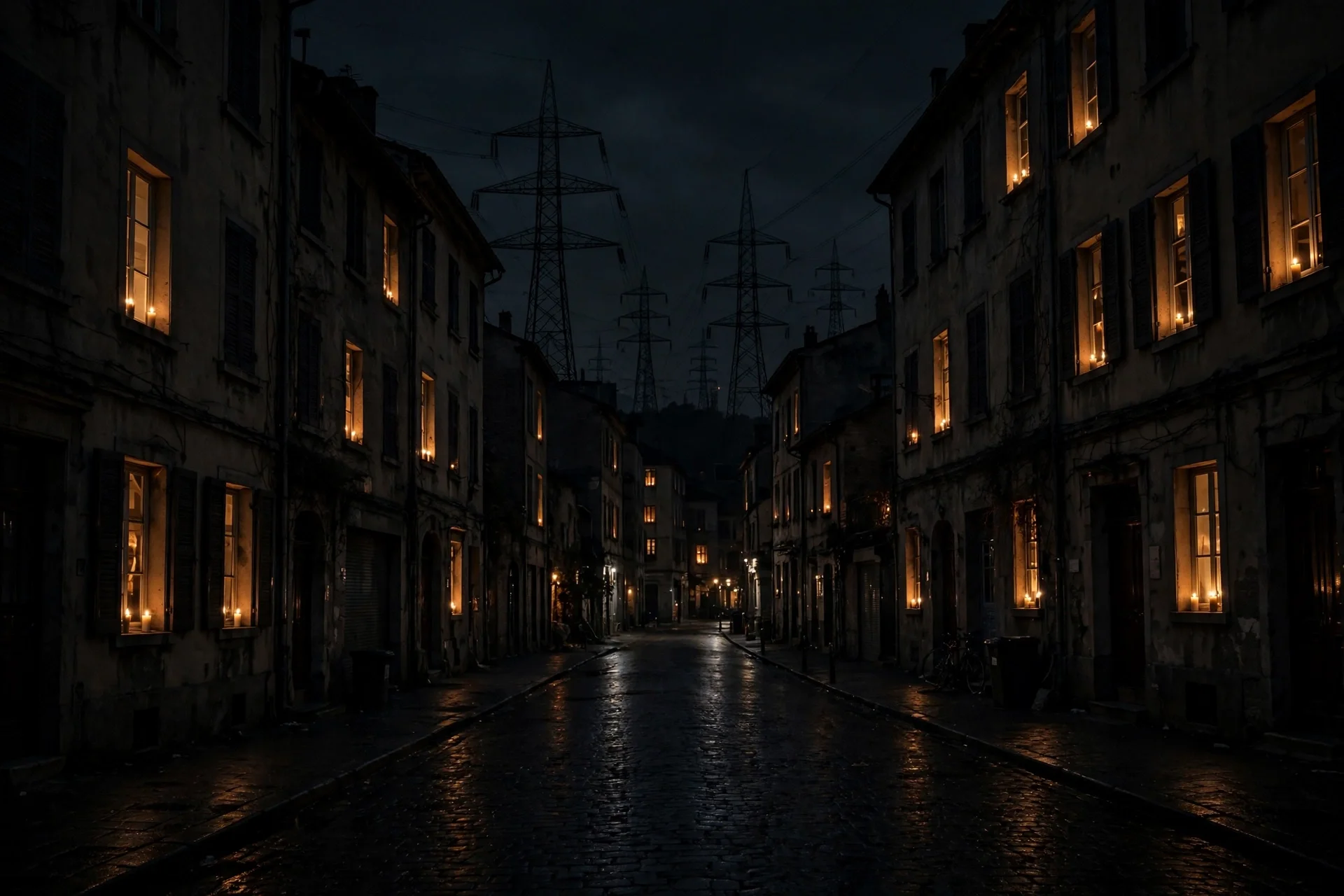
Una calle sin alumbrado durante un apagón, con velas en las ventanas y torres eléctricas en silueta. · Imagen generada para EPM
Venezuela delays power law reform again amid worsening blackouts
Venezuela National Assembly postponed for a second time the final debate on the electricity service law reform, which seeks private investment in a sector hit…
Venezuela power reform stalls as private investment rules wait
Venezuela National Assembly again postponed the final debate on the electricity reform at lawmaker Pedro Carreño request, while blackouts worsen and the sector…
Venezuela National Assembly postponed on Tuesday for a second time the final debate on the reform of the electricity service law, a decision that extends the wait for households living with blackouts that have grown more frequent.
--- The context ---
The country has endured an electricity crisis for more than a decade, but outages have intensified over the past year and have triggered social protests in different areas, where people demand a continuous service as a basic condition for daily life, work and family education.
--- The facts ---
The postponement came at the request of lawmaker Pedro Carreño, who considered that the legislature had already advanced fruitfully in discussing some of the more than 20 articles to be reformed. The discussion is expected to continue in a coming session, with no date announced for the final debate.
The initiative seeks to encourage private investment in the sector and to regulate the service nationwide, including international energy exchanges through generation, transmission, dispatch, distribution and commercialization, as explained during the reading of the text in an ordinary session of parliament.
--- The positions ---
The opposition and experts attribute the crisis to corruption and lack of maintenance, while the government attributes it to sanctions, the El Niño climate phenomenon and alleged sabotage. These are two opposing explanations that citizens keep hearing while outages continue and protests voice a deep accumulated frustration in affected neighborhoods.
--- What remains unknown ---
It is still unknown when the discussion will resume or how the promised universal access to the service will be guaranteed in practice under conditions of equality, continuity, regularity, safety and quality, or how the efficient, transparent, sustainable and safe system promised will be achieved.
--- Unanswered questions ---
When will the Assembly resume the final debate on the reform? What immediate measures will ease the blackouts while the law remains under discussion? Will the promised universal access reach the communities that are protesting the outages today?
--- EPM analysis ---
The new postponement confirms that the institutional response is moving more slowly than the daily emergency. Each week without an approved law adds candles, spoiled food and interrupted workdays for those with the least margin, and the official promise of relief needs verifiable facts to rebuild trust.
📌 EPM Take: In EPM's view, the right to a continuous electricity service cannot depend on legislative calendars that are postponed without a sufficient explanation to citizens, because blackouts punish the most vulnerable households first and fuel protests that express a legitimate demand for dignity, so the Assembly must set a date, debate transparently and pass a reform with real guarantees of equality and quality, while the government accounts clearly for system maintenance and the urgent measures it will apply until the new law takes effect nationwide.
Venezuela National Assembly postponed on Tuesday for a second time the final debate on the reform of the electricity service law, the initiative meant to open the sector to private investment after years of decline.
--- The context ---
The Venezuelan electricity system has been in crisis for more than a decade and blackouts have intensified over the past year, with social protests in different areas. Without clear rules and fresh capital, restoring generation and the grid becomes harder to finance and to sustain.
--- The facts ---
The postponement came at the request of lawmaker Pedro Carreño, who considered that the legislature had already advanced fruitfully in discussing some of the more than 20 articles to be reformed. The discussion is expected to continue in a coming session, though the final debate is paused again.
The reform seeks to regulate the service nationwide and international energy exchanges through generation, transmission, dispatch, distribution and commercialization, while promoting an efficient, transparent, sustainable and safe system, indispensable conditions for investors committing long term resources.
--- The positions ---
The opposition and experts attribute the crisis to corruption and lack of maintenance, structural causes that point to how the system has been managed, while the government attributes it to sanctions, the El Niño climate phenomenon and alleged sabotage. Both explanations remain attributed to their spokespeople and neither is presented here as proven fact.
--- What remains unknown ---
The date of the next session remains unknown, along with the final content of the pending articles and the concrete guarantees the law will offer private investment, as well as the mechanisms to secure the integral development and the energy required for socioeconomic activities that the text aims to guarantee.
--- Unanswered questions ---
When will the final debate on the electricity reform resume? What legal certainty will the law offer those investing in generation and distribution? What maintenance plan accompanies the reform while the new framework takes effect across the country?
--- EPM analysis ---
Each postponement sends a signal of uncertainty to the capital this project wants to attract. A broken sector is not rebuilt with promises but with stable rules, transparency and sustained maintenance, and acting president Delcy Rodríguez has promised the law will be approved before the year ends, a commitment that now demands punctual delivery.
📌 EPM Take: In EPM's view, Venezuela will not restore its electricity service without private investment backed by clear, stable and verifiable rules, and every legislative delay weakens that indispensable confidence, so the Assembly should close the debate without further pauses, approve a framework that rewards efficiency and transparency, and address the structural causes of decline, from postponed maintenance to opaque management, because a country with growing blackouts cannot afford another year of discussion while its economy and households pay the daily cost of accumulated neglect.
Venezuela aplaza otra vez la reforma eléctrica en plena crisis de apagones
La Asamblea Nacional de Venezuela aplazó por segunda vez el debate definitivo de la reforma de la ley del servicio eléctrico, que busca atraer inversión…
La reforma eléctrica venezolana espera reglas para atraer inversión privada
La Asamblea Nacional de Venezuela volvió a aplazar el debate definitivo de la reforma eléctrica, a petición del diputado Pedro Carreño, mientras el sector…
La Asamblea Nacional de Venezuela aplazó este martes por segunda vez el debate definitivo de la reforma de la ley del servicio eléctrico, una decisión que prolonga la espera de los hogares que conviven con apagones cada vez más frecuentes.
--- El contexto ---
El país arrastra una crisis eléctrica desde hace más de una década, pero los cortes se recrudecieron durante el último año y desencadenaron protestas sociales en distintos sectores, donde la gente reclama un servicio continuo como condición básica para la vida diaria.
--- Los hechos ---
El aplazamiento se produjo a petición del diputado Pedro Carreño, quien consideró que el Legislativo ya había avanzado de manera fecunda en la discusión de algunos de los más de 20 artículos a reformar. Se espera que la discusión continúe en una próxima sesión, sin fecha anunciada para el debate definitivo.
La iniciativa busca propiciar la inversión privada en el sector y regular el servicio en todo el territorio, incluidos los intercambios internacionales de energía mediante la generación, la transmisión, el despacho, la distribución y la comercialización, según la lectura del texto en sesión ordinaria.
--- Las posiciones ---
La oposición y expertos atribuyen la crisis a la corrupción y a la falta de mantenimiento, mientras el Gobierno la atribuye a las sanciones, al fenómeno de El Niño y a supuestos sabotajes. Son dos explicaciones enfrentadas que la ciudadanía escucha mientras los cortes continúan y las protestas expresan un cansancio acumulado.
--- Lo que falta saber ---
Todavía no se conoce cuándo se retomará la discusión ni cómo se garantizará en la práctica el acceso universal al servicio en igualdad, continuidad, regularidad, seguridad y calidad, ni de qué modo se logrará el sistema eficiente, transparente, sostenible y seguro que el propio texto promete favorecer.
--- Preguntas sin respuesta ---
¿Cuándo retomará la Asamblea el debate definitivo de la reforma? ¿Qué medidas inmediatas alivian los apagones mientras la ley sigue en discusión? ¿Llegará el acceso universal prometido a los sectores que hoy protestan por los cortes?
--- Análisis EPM ---
El nuevo aplazamiento confirma que la respuesta institucional avanza más despacio que la emergencia cotidiana. Cada semana sin ley aprobada suma velas, alimentos perdidos y jornadas interrumpidas para quienes menos margen tienen, y la promesa oficial de alivio cercano necesita hechos verificables.
📌 Conclusion EPM: A juicio de EPM, el derecho a un servicio eléctrico continuo no puede depender de calendarios legislativos que se posponen sin explicación suficiente, porque los apagones castigan primero a los hogares más vulnerables y alimentan una protesta que expresa una demanda legítima de dignidad, así que la Asamblea debe fijar fecha, debatir con transparencia y aprobar una reforma con garantías reales de igualdad y calidad, mientras el Gobierno rinde cuentas sobre el mantenimiento del sistema y las medidas urgentes previas a la ley.
La Asamblea Nacional de Venezuela aplazó este martes por segunda vez el debate definitivo de la reforma de la ley del servicio eléctrico, la iniciativa que busca abrir el sector a la inversión privada.
--- El contexto ---
El sistema eléctrico venezolano arrastra una crisis desde hace más de una década y los apagones se recrudecieron durante el último año, con protestas sociales en distintos sectores. Sin reglas claras ni capital, la recuperación de la generación y las redes resulta más difícil de financiar.
--- Los hechos ---
El aplazamiento se produjo a petición del diputado Pedro Carreño, quien consideró que el Legislativo ya había avanzado de manera fecunda en la discusión de algunos de los más de 20 artículos a reformar. Se espera que la discusión continúe en una próxima sesión, y el debate definitivo queda en pausa.
La reforma busca regular el servicio en todo el territorio y los intercambios internacionales de energía mediante la generación, la transmisión, el despacho, la distribución y la comercialización, y favorecer un sistema eficiente, transparente, sostenible y seguro, condición indispensable para atraer capital a largo plazo.
--- Las posiciones ---
La oposición y expertos atribuyen la crisis a la corrupción y a la falta de mantenimiento, causas estructurales que apuntan a la gestión del sistema, mientras el Gobierno la atribuye a las sanciones, al fenómeno de El Niño y a supuestos sabotajes. Ninguna de las dos explicaciones se presenta aquí como hecho probado.
--- Lo que falta saber ---
Falta conocer la fecha de la próxima sesión, el contenido de los artículos pendientes y las garantías que ofrecerá la ley a la inversión privada, y los mecanismos para garantizar la energía requerida por las actividades socioeconómicas.
--- Preguntas sin respuesta ---
¿Cuándo se retomará el debate definitivo de la reforma eléctrica? ¿Qué seguridad jurídica ofrecerá la ley a quien invierta en generación y distribución? ¿Qué plan de mantenimiento acompaña la reforma mientras el nuevo marco entra en vigor?
--- Análisis EPM ---
Cada aplazamiento envía una señal de incertidumbre al capital que el proyecto quiere atraer. Un sector quebrado no se reconstruye con promesas, sino con normas estables, transparencia y mantenimiento sostenido, y la presidenta encargada Delcy Rodríguez prometió que la ley quedará aprobada antes de fin de año.
📌 Conclusion EPM: A juicio de EPM, Venezuela no recuperará su servicio eléctrico sin inversión privada respaldada por reglas claras, estables y verificables, y cada aplazamiento legislativo debilita esa confianza indispensable, así que la Asamblea debe cerrar el debate sin más pausas, aprobar un marco que premie la eficiencia y la transparencia, y atacar las causas estructurales del deterioro, desde el mantenimiento postergado hasta la gestión opaca, porque un país con apagones crecientes no puede esperar otro año de discusiones mientras su economía y sus hogares pagan el costo diario del atraso acumulado.