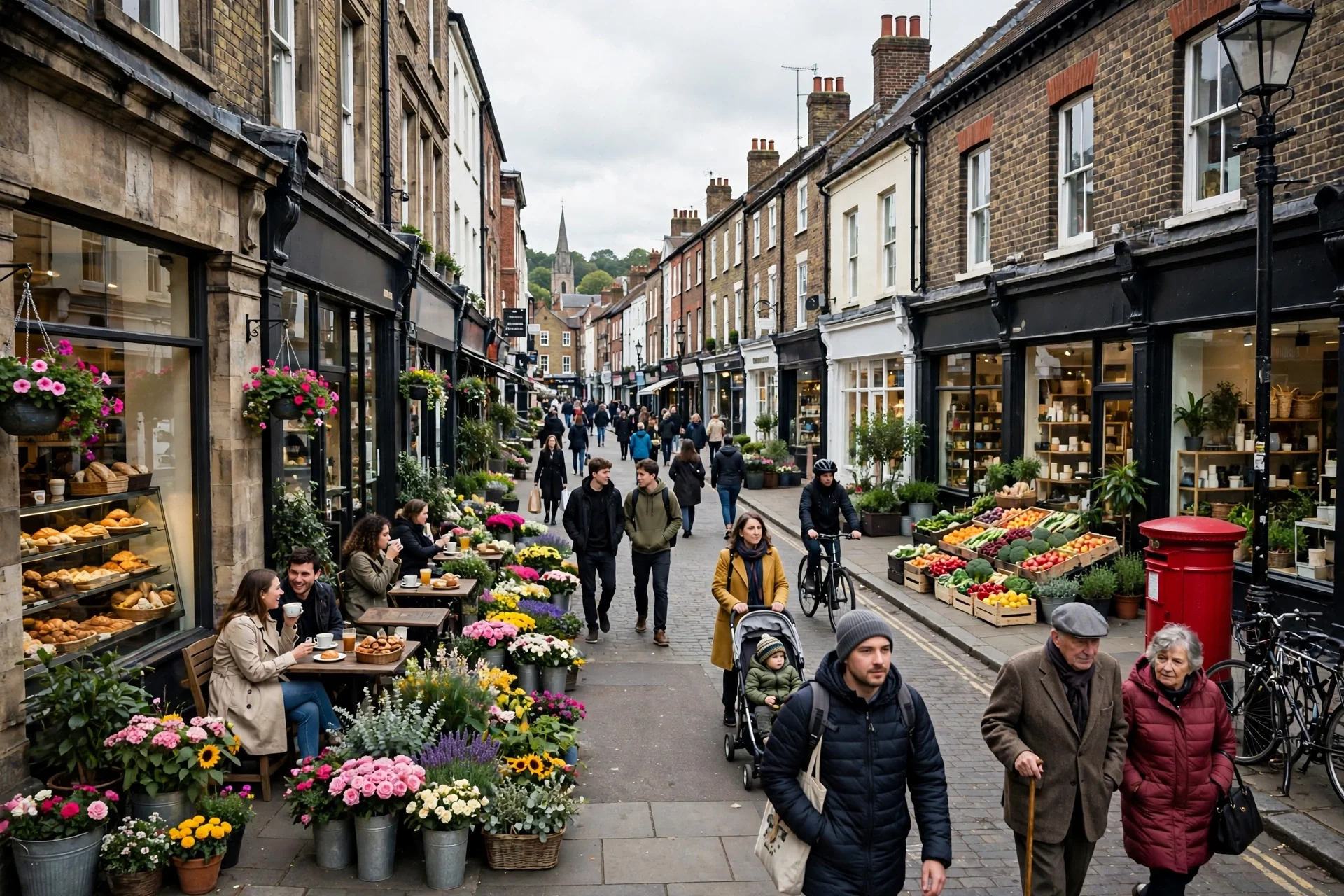
Una calle principal británica con comercios y visitantes, el tipo de espacio que la tasa local busca apoyar. · Imagen generada para EPM
UK mayors gain power to levy a charge on overnight stays
The British government introduced a Visitor Levy Bill that would let mayors and local leaders charge a small percentage rate on overnight stays, keeping the…
England mayors to get visitor levy power with a 5% pledge
The Visitor Levy Bill would allow mayors and local leaders to charge a percentage rate on overnight stays, with a pledged ceiling of 5%, national exemptions, a…
--- The context ---
Millions of people visit British towns and cities each year, and that footfall supports shops, culture and jobs on local high streets. Yet the communities receiving those visitors have had little power of their own to reinvest in the places and services that visitors and residents share. The bill introduced seeks to correct that imbalance locally, giving mayors and leaders who know their areas best a choice that previously sat with central government.
--- The facts ---
The government introduced the Visitor Levy Bill in the House of Commons, describing it as a significant step in making fiscal devolution a reality. Mayors who choose to introduce a levy will charge it as a percentage rate of the cost of accommodation rather than as a flat fee, so those choosing cheaper accommodation will pay less. Ten mayors have also committed that any levy in their areas would be no higher than 5%, providing certainty for visitors and businesses while preserving local choice.
The levy will apply only to the first 28 consecutive days of a stay, because longer stays count as long-term accommodation. National exemptions are confirmed for student accommodation, care homes, children's homes and school boarding houses, and temporary accommodation, shelters and refuges for vulnerable people will not be charged either. Occasional hosts will only pay if they earn above a set threshold, which local leaders may adjust to reflect their local tourism market.
Before introducing a levy, an authority must publish a draft plan and an impact assessment setting out the proposed rate, threshold, exemptions and how the money will be spent, consult local people and businesses, seek the necessary agreement within its strategic authority, consider the views received, and publish the responses and final versions. Foundation strategic authorities will require unanimous support, and authorities with a levy must publish an annual report on what they raise, what they spend and their future spending plans. Hotels and other providers will account for and pay the levy. A nearby precedent was cited in the presentation. In Greater Manchester, a £1 per room per night charge introduced in 2023 through a business improvement district raised £2.8 million in its first year and helped to increase street cleaning across the city. That industry-led scheme was presented as evidence that the model can work, generating millions that were invested back with widespread support from the hospitality sector.
--- The positions ---
Secretary of State Angela Rayner argued, in her attributed remarks, that communities should feel the benefit of visitor footfall, that every pound raised will stay in the local area, and that the measure gives mayors and local leaders the choice to invest in what matters most locally while protecting lower-cost stays and ensuring businesses have their say. Bev Craig, Mayor of Greater Manchester, said her region had campaigned for such a levy and that its pioneering local charge had already reinvested millions into street cleaning and attracting major events.
Steve Rotheram, Mayor of the Liverpool City Region, said he had called for the power for many years and that his region's visitor economy is already worth more than £6.8bn a year and supports more than 55,000 jobs, so a modest levy could potentially raise up to £18m a year to reinvest in events, culture and infrastructure. Sadiq Khan, Mayor of London, welcomed greater freedom for London to raise and invest funding locally. David Skaith, Mayor of York and North Yorkshire, said his county welcomes more than 40 million visitors every year and that he will introduce a levy there.
--- What remains unknown ---
It is not yet known what rate each authority will set below the committed 5% ceiling, what income threshold will apply to occasional hosts in each place, or what additional limited local exemptions, such as for camping pitches, mayors will adopt. The final parliamentary timetable for the bill and the date when each local plan, after its consultation and impact assessment, could take effect also remain to be confirmed.
--- Unanswered questions ---
What percentage rate will each mayor finally choose within the committed limit of 5%? How much will each area raise in its first year, and in which concrete projects will residents see that money first? Will the mandatory consultations lead local people and accommodation businesses to back the draft plans as presented? What will the annual report measure to show whether the reinvestment is truly improving local streets and services?
--- EPM analysis ---
The core of the design is that money raised stays where it is raised and that a percentage charge partly protects lower-cost family breaks compared with a flat fee charged equally to everyone. By requiring a draft plan, an impact assessment, consultation and an annual report, the bill tries to make spending visible and debated by the people who live and work in each place, rather than settled at a distance.
That same requirement marks its practical limit. The real effect will depend on moderate rates, clearly applied exemptions and reinvestment that residents can verify in high streets, public spaces, culture and transport. If the money is felt in concrete improvements, the levy can be understood as a small contribution from the visitor; if not, it risks being seen only as another cost added to an overnight stay.
📌 EPM Take: In EPM's view, the value of this proposal lies in bringing both the decision and the money closer to the territory that receives the visitor, with meaningful protection in charging a percentage rather than a flat fee. The commitment by ten mayors to stay at or below 5%, the national exemptions and the mandatory prior consultation offer safeguards that must be honoured in every local plan, without opaque exceptions. Success will be measured not by announced revenue, but by visible improvements in streets, public spaces, culture and transport, reported annually so residents and businesses can check them with data in hand.
--- The context ---
The case presented for the bill starts with a simple observation: places that receive tens of millions of overnight stays bear costs in cleaning, public spaces, security and transport, while the power to decide on new revenue has been concentrated at the centre. The government frames the initiative within its Budget commitment to growth in every postcode, its high streets strategy and its stated aim of shifting power from central government back to local communities.
--- The facts ---
The Visitor Levy Bill, introduced in the House of Commons, will give mayors and local leaders the power to introduce a small fee on overnight stays if they choose to do so. The levy must be charged as a percentage rate of the cost of accommodation rather than as a flat fee, meaning those choosing cheaper accommodation will pay less. Ten mayors have committed that any levy in their areas would be no higher than 5%, providing certainty for visitors and businesses while preserving local choice.
The levy will apply only to the first 28 consecutive days of a stay, as longer stays count as long-term accommodation. National exemptions are confirmed for student accommodation, care homes, children's homes and school boarding houses, and temporary accommodation, shelters and refuges providing homes for vulnerable people will not be charged. Occasional hosts, such as people who only rent out a spare room from time to time, will only pay if they earn above a set amount, and local leaders may adjust that threshold. Accommodation providers will be responsible for accounting for and paying the levy.
No authority will be able to impose the levy without prior steps. It must first publish a draft plan and an impact assessment setting out the expected impact, the proposed rate, threshold, exemptions and how the money will be spent, then consult local people and businesses, seek the necessary agreement within its strategic authority, consider views, publish responses and issue final versions. In foundation strategic authorities a levy can only proceed with unanimous support, and authorities must publish an annual report on receipts, spending and future plans. The government cited Greater Manchester as a precedent, where a £1 per room per night charge introduced in 2023 through a business improvement district raised £2.8 million in its first year and helped to increase street cleaning across the city. It also noted that visitor levy mechanisms are already used in other countries and cities, and that the new powers would bring England into line with those destinations, with decisions taken locally and businesses consulted before any scheme begins.
--- The positions ---
Angela Rayner, the Secretary of State, defended in her attributed remarks that every pound raised will stay in the local area and could go to better transport, thriving high streets or more attractions, and she stressed that lower-cost stays are protected and that businesses must have their say. Bev Craig, Mayor of Greater Manchester, argued that the levy would provide new funding to reinvest and that her city's pioneering scheme had already worked with widespread support from the hospitality sector.
Steve Rotheram, Mayor of the Liverpool City Region, said his visitor economy is worth more than £6.8bn a year and supports more than 55,000 jobs, and estimated that a modest levy could raise up to £18m a year for reinvestment in events, culture, experiences and infrastructure. Sadiq Khan, Mayor of London, backed greater freedom for the capital to raise and invest new funding locally. David Skaith, Mayor of York and North Yorkshire, said his county welcomes more than 40 million visitors a year and that he will introduce a levy there.
--- What remains unknown ---
The exact rate each authority will propose has not yet been announced, nor the final threshold for occasional hosts in each market, nor the additional limited local exemptions each mayor may add within what is allowed. The full parliamentary passage of the bill also remains ahead, as does the detailed guidance promised to providers on how to register, pay and report the levy.
--- Unanswered questions ---
Will every mayor keep rates at or below 5% when final plans are presented? How will anyone ensure that revenue is not diverted into spending unrelated to the places and services used by visitors and residents? What will happen if a local consultation clearly rejects an authority's draft plan? When will each levy actually take effect once the bill's passage and the local consultation are complete?
--- EPM analysis ---
The design contains safeguards that matter to taxpayers and businesses alike: proportionality according to the price of accommodation, exemptions for sensitive uses, a 28-day limit and a duty to consult before charging. Those safeguards do not remove the underlying question raised by any new levy, which is whether administering it will be simple for hotels and small hosts and whether its yield will justify the cost of collecting it.
The Manchester precedent provides a checkable figure, not a general guarantee. Each authority will have to show, through its impact assessment and its annual report, that the money becomes cleaner streets, cared-for spaces and better services without harming the competitiveness of its accommodation offer. Discipline on the rate and transparency on spending will be the difference between useful devolution and simple revenue expansion.
📌 EPM Take: In EPM's view, this power is only justified if it is exercised with restraint, with rates clearly at or below the pledged 5% limit, with exemptions respected and with every pound accounted for before local residents. The bill is right to require consultation, a draft plan, an impact assessment and an annual report, because without that control the levy would lose legitimacy with businesses and visitors. The test will be local execution: if revenue visibly improves high streets and transport without punishing modest stays, it will have served its stated purpose and nothing beyond that purpose.
Reino Unido da a alcaldes potestad de cobrar tasa al visitante
El Gobierno británico presentó un proyecto de ley que permitirá a alcaldes y líderes locales cobrar una pequeña tasa porcentual sobre pernoctaciones, con el…
Londres abre la puerta a una tasa local sobre pernoctaciones
El proyecto de ley de tasa al visitante permitirá a alcaldes y líderes locales cobrar un porcentaje sobre pernoctaciones, con tope comprometido del 5 %…
--- El contexto ---
Millones de personas visitan cada año las ciudades y los pueblos británicos, y esa afluencia sostiene comercios, cultura y empleo en las calles principales. Hasta ahora, sin embargo, las comunidades que reciben a esos visitantes han tenido poca capacidad propia para reinvertir en los lugares y servicios que ellos también usan. El proyecto presentado busca corregir ese desequilibrio desde lo local, trasladando a alcaldes y líderes que conocen su territorio una decisión que antes dependía del centro.
--- Los hechos ---
El Gobierno presentó en la Cámara de los Comunes el proyecto de ley de tasa al visitante, descrito como un paso significativo para hacer realidad la devolución fiscal. Quien opte por aplicar la tasa podrá cobrarla como un porcentaje del costo del alojamiento, y no como una tarifa plana, de modo que quien elija un alojamiento más barato pague menos. Diez alcaldes se comprometieron a que cualquier tasa en sus áreas no supere el 5 %, para dar certidumbre a visitantes y empresas sin eliminar la elección local.
La tasa solo se aplicará a los primeros 28 días consecutivos de una estancia, porque las estancias más largas cuentan como alojamiento de largo plazo. Quedan exentos a nivel nacional el alojamiento estudiantil, las residencias de cuidado, los hogares infantiles y los internados escolares, y tampoco se cobrará en alojamiento temporal, refugios y albergues que acogen a personas vulnerables. Los anfitriones ocasionales solo pagarán si superan un umbral de ingresos, que los líderes locales podrán ajustar según su mercado turístico.
Antes de introducir la tasa, cada autoridad deberá publicar un plan borrador y una evaluación de impacto con la tasa propuesta, el umbral, las exenciones y el destino del dinero, consultar a residentes y empresas, buscar el acuerdo necesario dentro de su autoridad estratégica y publicar las respuestas y las versiones finales. En las autoridades estratégicas fundacionales se exigirá apoyo unánime, y quienes apliquen la tasa deberán publicar un informe anual sobre lo recaudado, lo gastado y los planes futuros de gasto. Los hoteles y otros proveedores deberán contabilizar y pagar la tasa. Existe un precedente cercano citado en la presentación. En Greater Manchester, un cargo de £1 por habitación y noche, introducido en 2023 a través de un distrito de mejora empresarial, recaudó 2,8 millones de libras en su primer año y ayudó a aumentar la limpieza de calles en la ciudad. Ese antecedente se presenta como muestra de que un esquema similar, liderado por la industria, puede funcionar y contar con apoyo amplio del sector de la hospitalidad.
--- Las posiciones ---
La secretaria de Estado Angela Rayner sostuvo, en términos atribuidos a su intervención, que es justo que las comunidades sientan el beneficio de esa afluencia, que cada libra recaudada se quedará en el área local y que la medida da a alcaldes y líderes la opción de reinvertir en lo que más importa a la población, protegiendo las estancias de menor costo y asegurando que las empresas tengan voz. Bev Craig, alcaldesa de Greater Manchester, señaló que su región hizo campaña por una tasa de este tipo y que el precedente local ya reinvirtió millones en limpieza de calles y en atraer grandes eventos.
Steve Rotheram, alcalde de la región de Liverpool, afirmó que llevaba años pidiendo esta potestad y que la economía de visitantes de su región ya vale más de 6,8 mil millones de libras al año y sostiene más de 55.000 empleos, por lo que una tasa modesta podría recaudar hasta 18 millones de libras al año para reinvertir en eventos, cultura e infraestructura. Sadiq Khan, alcalde de Londres, celebró que el proyecto daría a su ciudad mayor libertad para recaudar e invertir fondos localmente. David Skaith, alcalde de York y North Yorkshire, dijo que su condado recibe más de 40 millones de visitantes al año y que introduciría la tasa allí.
--- Lo que falta saber ---
Todavía no consta qué tasas concretas fijará cada autoridad por debajo del compromiso del 5 %, ni qué umbral de ingresos se aplicará en cada lugar a los anfitriones ocasionales, ni qué exenciones locales adicionales se aprobarán, por ejemplo para parcelas de acampada. Tampoco se conoce el calendario final de aprobación parlamentaria del proyecto ni la fecha en que cada plan local, tras su consulta y su evaluación de impacto, podría entrar en vigor.
--- Preguntas sin respuesta ---
¿Qué tasa porcentual elegirá finalmente cada alcalde dentro del límite comprometido del 5 %? ¿Cuánto recaudará cada área en su primer año y en qué proyectos concretos se verá primero ese dinero? ¿Lograrán las consultas previas que empresas de alojamiento y residentes respalden los planes borrador tal como se presenten? ¿Qué criterios usará el informe anual para medir si la reinversión mejora de verdad las calles y los servicios locales?
--- Análisis EPM ---
La clave del diseño es que la recaudación se queda donde se genera y que el cobro proporcional protege, en parte, las escapadas familiares de menor costo frente a una tarifa plana igual para todos. Al exigir plan borrador, evaluación de impacto, consulta e informe anual, el proyecto intenta que el gasto sea visible y discutido por quienes viven y trabajan en cada lugar, y no una decisión cerrada desde lejos.
Esa misma exigencia marca su límite práctico. El efecto real dependerá de tasas moderadas, de exenciones aplicadas con claridad y de que la reinversión llegue a calles principales, espacios públicos, cultura y transporte de forma comprobable. Si el dinero se percibe en mejoras concretas, la tasa puede entenderse como una aportación pequeña del visitante; si no, corre el riesgo de verse solo como un costo más sobre la pernoctación.
📌 Conclusion EPM: A juicio de EPM, el valor de esta propuesta está en acercar la decisión y el dinero al territorio que recibe al visitante, con una protección relevante al cobrar un porcentaje y no una tarifa plana. El compromiso de diez alcaldes de no superar el 5 %, las exenciones nacionales y la consulta previa obligatoria ofrecen garantías que deben cumplirse en cada plan local, sin excepciones opacas. Su éxito no se medirá por la recaudación anunciada, sino por mejoras visibles en calles, espacios públicos, cultura y transporte, rendidas en informes anuales que residentes y empresas puedan comprobar y discutir con datos en la mano.
--- El contexto ---
La presentación del proyecto parte de una constatación sencilla: las localidades que reciben decenas de millones de pernoctaciones soportan costos en limpieza, espacios públicos, seguridad y transporte, mientras la capacidad de decidir sobre nuevos ingresos ha estado concentrada en el centro. El Gobierno enmarca la iniciativa en su compromiso presupuestario con el crecimiento en todo el país, en su estrategia para las calles principales y en la intención declarada de devolver poder a las comunidades locales.
--- Los hechos ---
El proyecto de ley de tasa al visitante, presentado en la Cámara de los Comunes, dará a alcaldes y líderes locales la potestad de introducir una pequeña tasa sobre las pernoctaciones si así lo deciden. La tasa deberá cobrarse como porcentaje del costo del alojamiento y no como tarifa plana, para que las estancias más baratas paguen menos. Diez alcaldes se comprometieron a que la tasa en sus áreas no sea superior al 5 %, un límite que busca dar certidumbre a visitantes y empresas preservando la elección local.
La tasa se aplicará solo a los primeros 28 días consecutivos de estancia. El proyecto confirma exenciones nacionales para el alojamiento estudiantil, las residencias de cuidado, los hogares infantiles y los internados escolares, y deja fuera también el alojamiento temporal, los refugios y los albergues destinados a personas vulnerables. Los anfitriones ocasionales, como quien alquila una habitación libre de vez en cuando, solo pagarán si superan un umbral de ingresos fijado, que podrá ajustarse localmente. Los proveedores de alojamiento serán responsables de contabilizar y pagar la tasa.
Nadie podrá imponer la tasa sin trámites previos. Cada autoridad deberá publicar un plan borrador y una evaluación de impacto con la tasa propuesta, el umbral, las exenciones y el uso previsto del dinero, consultar a población y empresas, buscar el acuerdo necesario en su autoridad estratégica, considerar las respuestas y publicar las versiones finales. En las autoridades estratégicas fundacionales hará falta apoyo unánime, y cada autoridad con tasa deberá publicar un informe anual de recaudación, gasto y planes futuros. El Gobierno citó como antecedente el caso de Greater Manchester, donde un cargo de £1 por habitación y noche, vigente desde 2023 mediante un distrito de mejora empresarial, recaudó 2,8 millones de libras en su primer año y contribuyó a aumentar la limpieza viaria. También señaló que mecanismos similares ya se usan en países y ciudades de otros lugares, y que la nueva potestad equipararía a Inglaterra con esos destinos, siempre con decisión local y consulta empresarial previa.
--- Las posiciones ---
Angela Rayner, secretaria de Estado, defendió en su intervención atribuida que cada libra recaudada permanecerá en el área local y podrá destinarse a mejor transporte, calles principales prósperas o más atractivos, y subrayó que se protegen las estancias de menor costo y que las empresas tendrán voz en el proceso, según su planteamiento. Bev Craig, alcaldesa de Greater Manchester, sostuvo que la tasa daría fondos nuevos para reinvertir y que el esquema pionero de su ciudad ya funcionó con apoyo amplio de la hostelería.
Desde Liverpool, Steve Rotheram recordó que su economía de visitantes vale más de 6,8 mil millones de libras anuales y sostiene más de 55.000 empleos, y estimó que una tasa modesta podría aportar hasta 18 millones de libras al año reinvertibles en eventos, cultura e infraestructura. Sadiq Khan, alcalde de Londres, respaldó que la capital gane libertad para recaudar e invertir localmente. David Skaith, alcalde de York y North Yorkshire, afirmó que su territorio acoge más de 40 millones de visitantes al año y que aplicaría la tasa en su condado.
--- Lo que falta saber ---
No se ha anunciado todavía la tasa exacta que propondrá cada autoridad, ni el umbral definitivo para anfitriones ocasionales en cada mercado, ni las exenciones locales adicionales que cada alcalde decida añadir dentro de lo permitido. Falta también el recorrido parlamentario completo del proyecto y el detalle de la guía que el Gobierno promete a los proveedores sobre cómo registrarse, pagar e informar de la tasa.
--- Preguntas sin respuesta ---
¿Mantendrán todos los alcaldes sus tasas por debajo del 5 % cuando presenten sus planes definitivos? ¿Cómo se vigilará que la recaudación no se desvíe hacia gastos ajenos a los lugares y servicios que usan visitantes y residentes? ¿Qué ocurrirá si una consulta local rechaza mayoritariamente el plan borrador de una autoridad? ¿Cuándo entrará en vigor cada tasa una vez completada su tramitación parlamentaria y su consulta local?
--- Análisis EPM ---
El diseño contiene cautelas que importan para el contribuyente y para la empresa: proporcionalidad según el precio del alojamiento, exenciones para usos sensibles, límite de 28 días y obligación de consultar antes de cobrar. Esas cautelas no eliminan la pregunta de fondo sobre cualquier tasa nueva, que es si su administración será sencilla para hoteles y pequeños anfitriones y si su rendimiento justificará el costo de recaudarla.
El precedente de Mánchester aporta un dato comprobable, no una garantía general. Cada autoridad tendrá que demostrar, con su evaluación de impacto y su informe anual, que el dinero se traduce en calles más limpias, espacios cuidados y servicios mejores, sin dañar la competitividad de su oferta de alojamiento. La disciplina en la tasa y la transparencia en el gasto serán la diferencia entre devolución útil y simple expansión recaudatoria.
📌 Conclusion EPM: A juicio de EPM, esta potestad solo se justifica si se ejerce con contención, con tasas claramente por debajo o en el límite comprometido del 5 %, con exenciones respetadas y con cada libra contabilizada ante los vecinos. El proyecto acierta al exigir consulta, plan borrador, evaluación de impacto e informe anual, porque sin ese control la tasa perdería legitimidad ante empresas y visitantes. La prueba estará en la ejecución local: si la recaudación mejora de forma visible las calles principales y el transporte sin castigar las estancias modestas, habrá cumplido su propósito declarado y nada más que ese propósito.