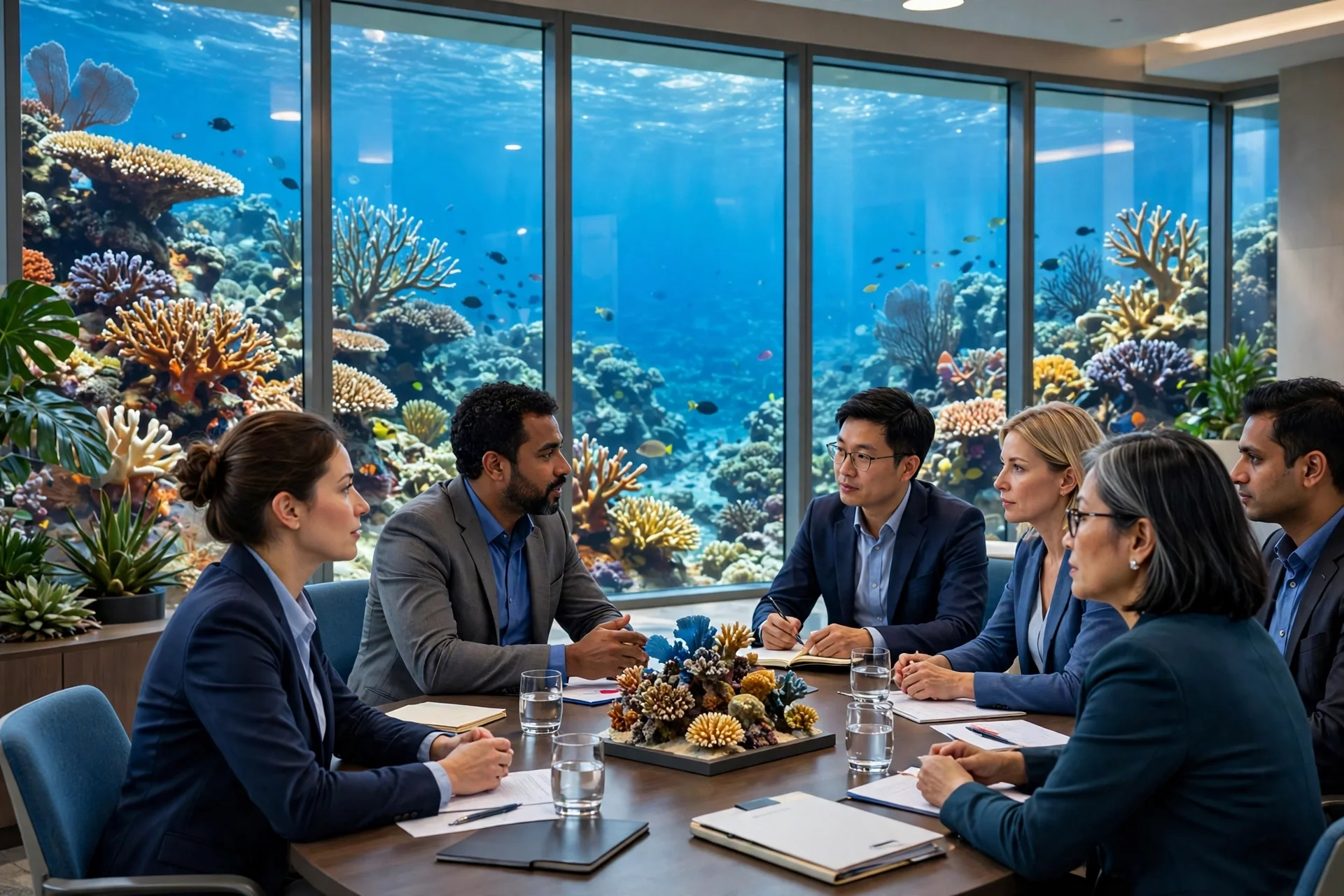
Imagen alusiva a la financiación azul y la protección de los arrecifes de coral debatidas en la Commonwealth. · Imagen generada para EPM
United Kingdom puts oceans at heart of climate agenda
Ed Miliband, the United Kingdom's Foreign Secretary, argued on 03 November 2026 at the Commonwealth for placing the oceans at the centre of the agenda, with…
London backs green shipping and blue finance push
Ed Miliband, the United Kingdom's Foreign Secretary, set out on 03 November 2026 at the Commonwealth an ocean agenda grounded in economics and investment…
The United Kingdom's Foreign Secretary, Ed Miliband, spoke on 03 November 2026 at the Blue Finance and Innovation event of the Commonwealth Heads of Government Meeting and set out a clear political commitment: to move the oceans from what sometimes seems to be the margins of debates on climate, prosperity and security to the mainstream and the centre of the debate, accepting his country's responsibility, not least as an island nation, to step up on these issues.
--- The context ---
According to the minister, the oceans are absorbing 80% of temperature rises, they sit at the centre of prosperity for many countries, and they are crucial to issues of security, trade and conflict in the world. The Commonwealth, he added, is home to a third of the world's ocean under national jurisdiction and almost half of the world's coral reefs, which makes it central to the issue of the oceans. Miliband said he was not there as an expert, but to offer political commitment.
--- The facts ---
In his speech, the minister argued that healthy oceans are not just an environmental priority but an economic necessity, essential for the security of everyone, because they sustain food security and the productivity of the world's most important fisheries, provide jobs for millions of people, and sit at the centre of the culture and identity of maritime nations. In that context, he said the United Kingdom is absolutely committed to working through the International Maritime Organization to drive a fair and effective global transition to green shipping. The organization will meet again in London later this month to discuss the implementation of its greenhouse gas strategy.
The minister added that his country remains absolutely committed to the aims of the maritime organization's net zero framework, which it believes is the best way to decarbonise the sector, and warned that diluting its ambition would increase costs. He also reaffirmed the British commitment to the United Nations Convention on the Law of the Sea, noted that the United Kingdom has ratified the biodiversity beyond national jurisdiction agreement, and said he wanted to make the first conference of the parties in January a success. From COP31, together with Bermuda, his country will ask all interested parties to sign the Hamilton II Declaration on the Sargasso Sea, while backing international efforts to tackle plastic pollution.
--- The positions ---
The British position, as Miliband presented it, combines three fronts. On finance, the United Kingdom committed to work with Commonwealth countries and with the whole financial system, including development banks and international funds, to mobilize private capital and create more growth opportunities in the blue economy. Its new Planet Fund is supporting innovation, improving data and helping to build investment-ready pipelines, while support for the Outrigger Facility is helping early-stage enterprises in Small Island Developing States become investment ready. The minister also acknowledged that the unsustainable debt burden facing so many countries across the Global South must be tackled, and that vulnerability, as well as income levels, should be factored into concessional finance.
--- What remains unknown ---
The speech set no funding figures and no firm timetable for the Planet Fund or the Outrigger Facility, and it did not spell out which concrete mechanisms would be used to ease the debt of Global South countries through the multilateral development banks. It remains to be seen whether the London meeting later this month can move the maritime strategy forward without diluting its ambition, given the concerns the minister himself acknowledged in some countries. Nor is it clear how many parties would sign the Hamilton II Declaration.
--- Unanswered questions ---
How much private capital will the announced blue finance actually mobilize for Commonwealth countries in practice? How will vulnerability, alongside income levels, be measured when concessional finance is allocated to the most exposed countries? Can the London meeting later this month keep the ambition of the net zero framework for shipping fully intact?
--- EPM analysis ---
The intervention placed Small Island Developing States in a dual position that the minister underlined: they are on the front line of the threat to the oceans, facing existential questions, and at the same time they are at the frontier of innovation, leadership and action. Miliband closed on a note of humility, saying his country is determined to learn from those governments and to work alongside them, and he recalled that COP31 kicks off next week, where he will be talking about these issues. Under the British G20 presidency next year, he said, the United Kingdom stands ready to keep oceans, resilience and economic opportunity at the centre of the agenda.
📌 EPM Take: In EPM's view, the strength of the speech lies in joining, within a single agenda, three matters that are usually treated separately: the legal protection of the oceans, the decarbonisation of shipping, and the money needed to pay for the transition. The United Kingdom is not promising to act alone, but to mobilize private capital, reform finance criteria and recognize the vulnerability of island countries. That combination is demanding and still lacks figures, but it points in the right direction: without finance that reaches those on the front line, ocean commitments remain declarations. The test will come in London this month and at COP31 next week, where promises must become decisions.
The United Kingdom wants to lead the global ocean agenda with a bet that links economics, security and finance. That was the message from its Foreign Secretary, Ed Miliband, on 03 November 2026 at the Blue Finance and Innovation event of the Commonwealth Heads of Government Meeting, where he offered political commitment to move the oceans to the centre of decisions on climate, prosperity and security.
--- The context ---
The minister's starting point was economic and strategic. The oceans, he recalled, are absorbing 80% of temperature rises, they sustain food security and the productivity of the world's most important fisheries, they provide jobs for millions of people, and they sit at the centre of the culture and identity of maritime nations. The Commonwealth is home to a third of the world's ocean under national jurisdiction and almost half of the world's coral reefs. Miliband admitted he was not speaking as an expert, but as a political leader.
--- The facts ---
On the practical side, the minister argued that not acting costs more than acting, an idea he tied to the green transition in shipping. The United Kingdom, he said, is absolutely committed to working through the International Maritime Organization to drive a fair and effective global transition to green shipping. The organization will meet again in London later this month to discuss the implementation of its greenhouse gas strategy, and London remains committed to the aims of its net zero framework, which it believes is the best way to decarbonise the sector. Diluting that ambition, he warned, would increase costs and would make no sense.
The second front was legal. The United Kingdom reaffirmed that it remains wholly committed to the United Nations Convention on the Law of the Sea, noted that it has ratified the biodiversity beyond national jurisdiction agreement, and said it wants to make the first conference of the parties in January a success. From COP31, together with Bermuda, it will ask all interested parties to sign the Hamilton II Declaration, recognizing the global importance of the Sargasso Sea and the need to protect it, while backing international efforts to tackle plastic pollution. The minister also stressed that respecting sovereignty is absolutely crucial, in a context of sea level rise and competition for scarce resources.
--- The positions ---
On finance, the British position bets on mobilizing private capital rather than depending on public funds alone. The United Kingdom committed to work with Commonwealth countries and with the whole financial system, including development banks and international funds, to mobilize private capital and create more opportunities for growth in the blue economy. Its new Planet Fund is supporting innovation, improving data and helping to build investment-ready opportunities, and the Outrigger Facility is helping early-stage enterprises in Small Island Developing States become investment ready. At the same time, Miliband acknowledged that private capital is crucial but not enough on its own, and that the unsustainable debt burden facing many countries across the Global South must also be tackled through work with the multilateral development banks.
--- What remains unknown ---
The speech did not specify the size of the Planet Fund, the timetable of the Outrigger Facility, or how Global South debt would be eased through the multilateral development banks. It is also unclear whether the London meeting later this month will settle implementation of the maritime strategy without concessions, given that the minister himself recognized concerns in some countries. It remains unknown, too, how many signatories the Hamilton II Declaration will gather and what real obligations they would assume.
--- Unanswered questions ---
How much additional private capital will the Planet Fund and the Outrigger Facility attract to the Commonwealth blue economy? Which countries will take on firm commitments by signing the Hamilton II Declaration from COP31 alongside the United Kingdom and Bermuda? Will the British G20 presidency next year turn Global South debt into concrete relief agreements with the development banks?
--- EPM analysis ---
Miliband presented Small Island Developing States as partners to learn from, and not only as recipients of aid: they are on the front line of the ocean threat, but also at the frontier of innovation, leadership and action. That recognition, combined with the idea of factoring vulnerability as well as income levels into concessional finance, sets a criterion that could change who receives money and on what conditions. The minister recalled that COP31 kicks off next week and that his country will be talking about these issues there, and he closed by saying that, as part of its G20 presidency next year, the United Kingdom stands ready to play its part in keeping oceans, resilience and economic opportunity at the centre of the agenda.
📌 EPM Take: In EPM's view, the most solid part of the British approach is its economic logic: protecting the oceans is presented as an investment that avoids greater costs, and not as an expense. The bet on mobilizing private capital, preparing investable projects in island States and keeping the shipping net zero framework undiluted gives the package coherence. What remains, however, is the hard part: figures, deadlines and measurable results. If London turns these intentions into real finance during its G20 presidency, the blue agenda will gain weight; if it does not, the speech will remain a well-built declaration in search of delivery and proof.
Reino Unido pone los océanos en el centro de la agenda climática
Ed Miliband, secretario de Exteriores del Reino Unido, defendió el 03 de noviembre de 2026 en la Commonwealth situar los océanos en el centro de la agenda, con…
Londres defiende el transporte verde y la financiación azul
Ed Miliband, secretario de Exteriores del Reino Unido, planteó el 03 de noviembre de 2026 en la Commonwealth una agenda oceánica basada en la economía y la…
El secretario de Exteriores del Reino Unido, Ed Miliband, intervino el 03 de noviembre de 2026 en el evento Blue Finance and Innovation de la Reunión de Jefes de Gobierno de la Commonwealth y planteó un compromiso político claro: sacar a los océanos de los márgenes y colocarlos en el centro de la agenda internacional.
--- El contexto ---
Según expuso el ministro, los océanos absorben el 80% del aumento de la temperatura y están en el centro de la prosperidad de muchos países, además de resultar cruciales para la seguridad, el comercio y los conflictos en el mundo. La Commonwealth, añadió, alberga un tercio del océano mundial bajo jurisdicción nacional y casi la mitad de los arrecifes de coral del planeta, lo que la sitúa en el centro de la cuestión oceánica. Miliband reconoció que no hablaba como experto, sino para ofrecer compromiso político, y aceptó la responsabilidad británica de dar un paso adelante.
--- Los hechos ---
En su intervención, el ministro sostuvo que unos océanos sanos no son solo una prioridad ambiental, sino una necesidad económica y esencial para la seguridad de todos, porque sostienen la seguridad alimentaria, la productividad de las pesquerías más importantes del mundo, empleos para millones de personas y la cultura e identidad de las naciones marítimas. En ese marco, afirmó que el Reino Unido está absolutamente comprometido a trabajar a través de la Organización Marítima Internacional para impulsar una transición global justa y efectiva hacia un transporte marítimo verde. La organización se reunirá de nuevo en Londres este mes para debatir la aplicación de su estrategia sobre gases de efecto invernadero.
El ministro añadió que su país mantiene el compromiso con los objetivos del marco de cero emisiones netas de la organización marítima, que considera la mejor vía para descarbonizar el sector, y advirtió de que rebajar la ambición aumentaría los costes. También reafirmó el compromiso británico con la Convención de las Naciones Unidas sobre el Derecho del Mar, recordó que el Reino Unido ha ratificado el acuerdo sobre biodiversidad más allá de la jurisdicción nacional y quiere que la primera conferencia de las partes, en enero, sea un éxito. Desde la COP31, junto a Bermuda, pedirá a las partes interesadas que firmen la Declaración Hamilton II sobre el Mar de los Sargazos, y respaldará los esfuerzos internacionales contra la contaminación por plásticos.
--- Las posiciones ---
La posición británica, tal como la presentó Miliband, combina tres frentes. En financiación, el Reino Unido se comprometió a trabajar con los países de la Commonwealth y con todo el sistema financiero, incluidos los bancos de desarrollo y los fondos internacionales, para movilizar capital privado hacia la economía azul. Su nuevo Planet Fund apoya la innovación, mejora los datos y ayuda a construir proyectos listos para la inversión, mientras que la Outrigger Facility ayuda a empresas en fase inicial de los pequeños Estados insulares en desarrollo a prepararse para recibir inversión. Además, el ministro reconoció que hay que abordar la deuda insostenible del Sur Global y tener en cuenta la vulnerabilidad, además de los niveles de ingresos, en la financiación concesional.
--- Lo que falta saber ---
El discurso no fijó cifras de financiación ni calendarios cerrados para el Planet Fund ni para la Outrigger Facility, y tampoco detalló qué mecanismos concretos se usarán para aliviar la deuda de los países del Sur Global. Queda por ver si la reunión de la organización marítima en Londres este mes logra aplicar su estrategia sin rebajar la ambición, pese a las preocupaciones que el propio ministro reconoció en algunos países.
--- Preguntas sin respuesta ---
¿Qué volumen de capital privado logrará movilizar realmente la financiación azul anunciada para los países de la Commonwealth? ¿Cómo se medirá la vulnerabilidad, además de los ingresos, a la hora de asignar financiación concesional a los países más expuestos? ¿Conseguirá la reunión de Londres de este mes mantener intacta la ambición del marco de cero emisiones netas para el transporte marítimo?
--- Análisis EPM ---
La intervención sitúa a los pequeños Estados insulares en desarrollo en una doble condición que el propio ministro subrayó: están en primera línea de la amenaza que pesa sobre los océanos y, al mismo tiempo, en la frontera de la innovación, el liderazgo y la acción. Miliband cerró con un mensaje de humildad, al afirmar que su país está decidido a aprender de esos gobiernos y a trabajar junto a ellos, y recordó que la COP31 arranca la próxima semana, donde seguirá hablando de estos temas. Con la presidencia británica del G20 el próximo año, Londres se declaró listo para mantener los océanos, la resiliencia y la oportunidad económica en el centro de la agenda.
📌 Conclusion EPM: A juicio de EPM, el valor del discurso está en unir en una sola agenda tres asuntos que suelen tratarse por separado: la protección jurídica de los océanos, la descarbonización del transporte marítimo y el dinero necesario para pagar la transición. El Reino Unido no promete actuar solo, sino movilizar capital privado, reformar criterios de financiación y reconocer la vulnerabilidad de los países insulares. Esa combinación es exigente y todavía carece de cifras, pero apunta en la dirección correcta: sin financiación que llegue a quienes están en primera línea, los compromisos oceánicos se quedan en declaraciones. La prueba llegará en Londres este mes y en la COP31 de la próxima semana.
El Reino Unido quiere liderar la agenda oceánica mundial con una apuesta que une economía, seguridad y finanzas. Así lo planteó su secretario de Exteriores, Ed Miliband, el 03 de noviembre de 2026 en el evento Blue Finance and Innovation de la Reunión de Jefes de Gobierno de la Commonwealth, donde ofreció compromiso político para llevar los océanos al centro de las decisiones sobre clima, prosperidad y seguridad.
--- El contexto ---
El punto de partida del ministro fue económico y estratégico. Los océanos, recordó, absorben el 80% del aumento de la temperatura, sostienen la seguridad alimentaria y la productividad de las pesquerías más importantes del mundo, dan empleo a millones de personas y forman parte de la cultura y la identidad de las naciones marítimas. La Commonwealth concentra un tercio del océano mundial bajo jurisdicción nacional y casi la mitad de los arrecifes de coral del planeta. Miliband admitió que no hablaba como experto, sino como responsable político.
--- Los hechos ---
En el terreno práctico, el ministro defendió que no actuar sale más caro que actuar, una idea que vinculó a la transición verde del transporte marítimo. El Reino Unido, afirmó, está absolutamente comprometido a trabajar a través de la Organización Marítima Internacional para impulsar una transición global justa y efectiva hacia un transporte marítimo verde. La organización volverá a reunirse en Londres este mes para debatir la aplicación de su estrategia sobre gases de efecto invernadero, y Londres mantiene su compromiso con los objetivos del marco de cero emisiones netas, que considera la mejor vía para descarbonizar el sector. Rebajar esa ambición, advirtió, aumentaría los costes y carecería de sentido.
El segundo frente fue el jurídico. El Reino Unido reafirmó su compromiso pleno con la Convención de las Naciones Unidas sobre el Derecho del Mar, recordó que ha ratificado el acuerdo sobre biodiversidad más allá de la jurisdicción nacional y expresó su voluntad de que la primera conferencia de las partes, en enero, sea un éxito. Desde la COP31, junto a Bermuda, pedirá a todas las partes interesadas que firmen la Declaración Hamilton II, que reconoce la importancia global del Mar de los Sargazos y la necesidad de protegerlo, al tiempo que respalda los esfuerzos internacionales contra la contaminación por plásticos. El ministro subrayó que respetar la soberanía es crucial.
--- Las posiciones ---
En financiación, la posición británica apuesta por movilizar capital privado en lugar de depender solo de fondos públicos. El Reino Unido se comprometió a trabajar con los países de la Commonwealth y con todo el sistema financiero, incluidos los bancos de desarrollo y los fondos internacionales, para crear más oportunidades de crecimiento en la economía azul. Su nuevo Planet Fund apoya la innovación, mejora los datos y ayuda a construir proyectos listos para invertir, y la Outrigger Facility ayuda a empresas en fase inicial de los pequeños Estados insulares en desarrollo a volverse atractivas para la inversión. Al mismo tiempo, Miliband reconoció que el capital privado no basta y que hay que abordar la deuda insostenible que soportan muchos países del Sur Global.
--- Lo que falta saber ---
El discurso no concretó el tamaño del Planet Fund, ni los plazos de la Outrigger Facility, ni el modo en que se aliviará la deuda del Sur Global a través de los bancos multilaterales de desarrollo. Tampoco está claro que la reunión de Londres de este mes cierre la aplicación de la estrategia marítima sin concesiones, dado que el propio ministro reconoció preocupaciones en algunos países. Falta saber, igualmente, cuántos firmantes reunirá la Declaración Hamilton II y qué obligaciones reales asumirán, así como de qué forma se medirá la vulnerabilidad cuando se reparta la financiación concesional.
--- Preguntas sin respuesta ---
¿Cuánto capital privado adicional atraerán el Planet Fund y la Outrigger Facility hacia la economía azul de la Commonwealth? ¿Qué países asumirán compromisos firmes firmando la Declaración Hamilton II desde la COP31 junto al Reino Unido y Bermuda? ¿Logrará la presidencia británica del G20 del próximo año convertir la deuda del Sur Global en acuerdos concretos de alivio?
--- Análisis EPM ---
Miliband presentó a los pequeños Estados insulares en desarrollo como socios de los que aprender, y no solo como receptores de ayuda: están en primera línea de la amenaza oceánica, pero también en la frontera de la innovación y el liderazgo. Ese reconocimiento marca un criterio que puede cambiar quién recibe dinero y en qué condiciones. El ministro recordó que la COP31 arranca la próxima semana y que su país hablará allí de estos asuntos, y cerró asegurando que, con la presidencia del G20 el próximo año, el Reino Unido está listo para mantener los océanos, la resiliencia y la oportunidad económica en el centro de la agenda.
📌 Conclusion EPM: A juicio de EPM, lo más sólido del planteamiento británico es su lógica económica: proteger los océanos se presenta como una inversión que evita costes mayores, y no como un gasto. La apuesta por movilizar capital privado, preparar proyectos invertibles en los Estados insulares y mantener sin rebajas el marco de cero emisiones netas del transporte marítimo da coherencia al conjunto. Queda, eso sí, la parte difícil: cifras, plazos y resultados medibles. Si Londres convierte estas intenciones en financiación real durante su presidencia del G20, la agenda azul ganará peso; si no, el discurso quedará como una declaración bien construida.