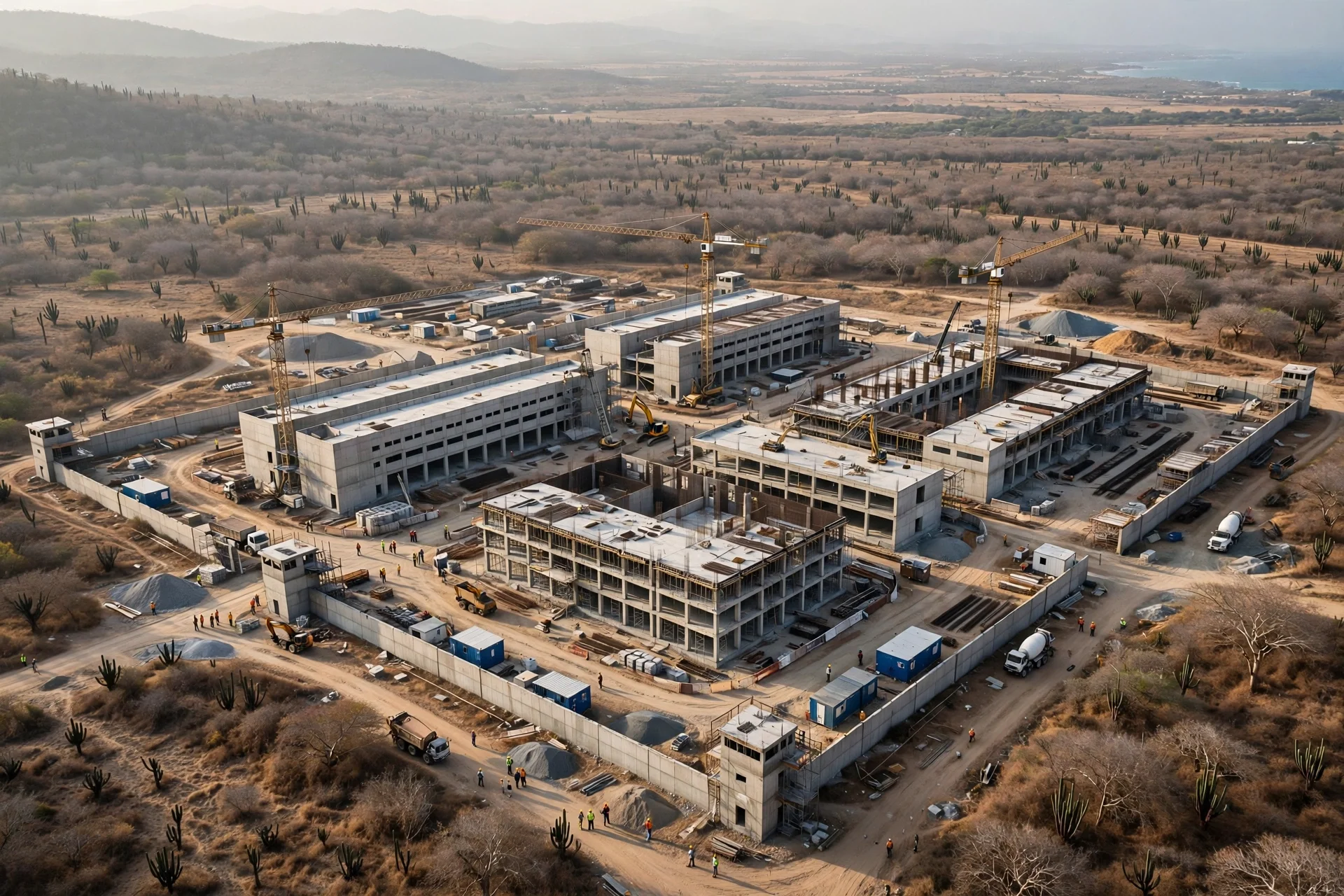
Complejo penitenciario en construcción, imagen alusiva a las nuevas cárceles de Colombia. · Imagen generada para EPM
Colombia sets delivery dates for four new prisons amid crisis
The National Planning Department presented to the Constitutional Court the schedule for four prisons under construction: Riohacha in December 2026, Pereira in…
Four new prisons and a timetable that demands delivery
Before the Constitutional Court, National Planning Department director Julián Buitrago presented the delivery dates and progress for four prisons under…
--- The context ---
Colombia has lived for years with a prison crisis that the Constitutional Court treats as an unconstitutional state of affairs, the figure reserved for structural failures that no single office can repair on its own. The crisis is not measured only inside existing prisons.
The country had 1,144 temporary detention spaces, including holding rooms in police stations and substations and immediate reaction units. They had capacity for 9,686 people but were holding 18,824. The excess was 9,138 people and overcrowding reached 94.34%. In addition, 17,292 people had spent more than 36 hours deprived of liberty in spaces intended for short stays. Those figures, from August 2026, describe a system operating at almost twice its capacity in temporary spaces.
--- The facts ---
Against that backdrop, on Wednesday, November 4, 2026, during a public follow-up hearing in Bogotá, the national government presented the delivery schedule for four new penitentiary establishments under construction. Riohacha, in La Guajira, leads the list with the highest progress of the four and is scheduled for delivery in December 2026, which would make it the first to be finished. The presentation was made before the Special Follow-up Chamber, with the national government and other authorities taking part, in a proceeding that examined the prison system and the temporary detention centers.
Sabana del San Ángel, in Magdalena, records 87% progress and is projected for delivery in August 2027. Pereira records progress close to 65% and, although it is lower than that of Riohacha and Sabana del San Ángel, its delivery is estimated for April 2027, four months earlier than the Magdalena establishment. Barrancabermeja, in Santander, records 41%, the lowest progress, with delivery in 2028, which would make it the last to enter into operation.
--- The positions ---
The hearing was convened on October 19, 2026, by the Special Follow-up Chamber for the unconstitutional state of affairs in prisons and temporary detention centers. National and territorial authorities took part, along with oversight bodies, judicial representatives, civil society organizations, universities and experts.
Julián Buitrago, director of the National Planning Department, raised that the parallel execution of the processes related to the construction could be among the factors behind the delays. He also noted that none of the four projects has yet reached its purpose, a situation identified while monitoring the agreement and shared within the government in this new stage. The Court explained that the proceeding seeks to identify the obstacles preventing the structural crisis from being overcome, compare solutions and establish responsibilities and commitments among institutions.
--- What remains unknown ---
The schedule sets dates and progress percentages, but it does not specify how many places each establishment will contribute or by how much they would reduce overcrowding in temporary centers. The exact progress for Riohacha is also unknown, beyond its being the highest, as is the specific month in 2028 for Barrancabermeja. Without those place numbers, neither the Court nor the public can measure whether the four deliveries, even if they arrive on time, will change the daily reality of the temporary centers or only relieve a fraction of an excess that already stood at 9,138 people in August 2026.
Nor did the hearing settle its own axes: financing, fiscal sustainability and distribution of powers; overcrowding, infrastructure, places and transfers; and evaluation and strengthening of follow-up mechanisms and information systems.
--- Unanswered questions ---
How many places will each prison add, and what share of the 18,824 people in temporary centers could be transferred? Will the dates of December 2026 for Riohacha and April 2027 for Pereira hold, even though Pereira records progress close to 65%? What exact date in 2028 applies to Barrancabermeja, and what measures will correct the parallel execution raised by Buitrago? Who will assume the operation of the new establishments once delivered?
--- EPM analysis ---
The value of the hearing does not lie only in announcing four dates: the schedule becomes a measurable commitment. In December 2026 it will be known, with no room for interpretation, whether Riohacha was delivered or not. For those who today wait in rooms designed for hours, the difference between a calendar that is met and one that slips is not administrative. It is the difference between recovering minimum conditions for thousands of people and continuing to accumulate days of waiting in spaces that the Court itself considers part of the structural problem the hearing seeks to overcome with articulated and verifiable measures.
📌 EPM Take: In EPM's view, the schedule for the four prisons is a verifiable step forward after years of crisis without dates, but its real reach will depend on the places it contributes and on deliveries arriving without new delays. With overcrowding of 94.34% in temporary centers and 17,292 people held for more than 36 hours in short-stay spaces, each month of delay carries a concrete human cost. Oversight by the Court and public tracking of every percentage will be decisive if December 2026 is to mark a genuine change and not another postponement announced with institutional solemnity before the same unresolved emergency.
--- The context ---
Colombia's penitentiary system faces pressure that no longer admits repeated diagnoses. The Constitutional Court maintains an unconstitutional state of affairs covering prisons and temporary detention centers, and the public follow-up hearing in Bogotá once again placed the numbers at the center.
The data set out by the Court, based on National Police information from August 2026, are the obligatory starting point. The country had 1,144 temporary spaces, including holding rooms in police stations and substations and immediate reaction units, with capacity for 9,686 people. They were holding 18,824 people, an excess of 9,138 and overcrowding of 94.34%. In addition, 17,292 people had spent more than 36 hours in places intended for short stays. When temporary detention stretches for days, it also becomes a problem of order and of operational burden for the police.
--- The facts ---
On Wednesday, November 4, 2026, at a public follow-up hearing in Bogotá, the national government released the delivery schedule for four new penitentiary establishments under construction. Riohacha, in La Guajira, records the highest progress of the four and is scheduled for delivery in December 2026, which would make it the first to enter into operation, within a calendar extending to the beginning of 2028. The works would enter into operation progressively, although their execution levels differ markedly from one another.
Sabana del San Ángel, in Magdalena, records 87% progress and projected delivery in August 2027. Pereira shows progress close to 65% and, although it is lower than that of Riohacha and Sabana del San Ángel, its delivery is estimated for April 2027, four months earlier. Barrancabermeja, in Santander, records 41%, the lowest progress, with delivery in 2028, the last of the four.
--- The positions ---
The hearing was convened on October 19, 2026, by the Special Follow-up Chamber for the unconstitutional state of affairs in prisons and temporary detention centers. The Court explained that it seeks to identify the obstacles preventing the structural crisis from being overcome, compare proposed solutions and establish responsibilities and commitments. National and territorial authorities, oversight bodies, judicial representatives, civil society, universities and experts took part.
Julián Buitrago, director of the National Planning Department, raised that the parallel execution of the construction processes could be among the factors behind the delays and noted that none of the four projects has yet reached its purpose, a situation identified while monitoring the agreement and shared within the government in this new stage. The acknowledgment matters because it places the focus on the management of execution and on clear responsibility for each work.
--- What remains unknown ---
The schedule orders the debate, but it does not close it. It does not indicate how many places each establishment will contribute or its operating scheme. The exact progress for Riohacha was not specified either, beyond its being the highest, nor was the concrete date within 2028 for Barrancabermeja, the most delayed work at 41%.
The operational commitments also remain to be defined: personnel, equipment, services and a transfer plan that frees the overwhelmed temporary spaces. The axes of financing, fiscal sustainability and distribution of powers; overcrowding, infrastructure, places and transfers; and follow-up mechanisms and information systems point to those definitions, which will have to become concrete commitments, with identifiable responsibilities and with deadlines that the Court can verify in its next follow-up sessions on the penitentiary system and on the temporary detention centers that remain overwhelmed today.
--- Unanswered questions ---
How many places will each prison contribute, and will they be enough to reduce the excess of 9,138 people? Why would Pereira, with progress close to 65%, be delivered in April 2027, earlier than Sabana del San Ángel, at 87%? What corrections will be applied to the parallel execution raised by Buitrago? What exact date in 2028 and what plan apply to Barrancabermeja, at 41%?
--- EPM analysis ---
A state that does not finish its prisons ends up improvising detention in police stations, and that improvisation is paid for in disorder and loss of authority. The central point is not the presentation of the schedule but its strict fulfillment. December 2026 is close and Riohacha will be the first test: if delivery is completed and operable, the government will gain credibility; if it slips, distrust will extend to the remaining dates. Experience requires prudence: the execution factors must be corrected with management and public follow-up, not with new announcements.
📌 EPM Take: In EPM's view, setting dates before the Constitutional Court was a necessary step, but the country does not need another schedule; it needs four prisons finished, equipped and operating within the announced deadlines. Security and order are also at stake in those works: while 18,824 people occupy spaces with capacity for 9,686, the pressure will keep falling on the police and on the temporary centers. Fulfillment in Riohacha in December 2026 will be the measure of the seriousness of the whole program, and every progress percentage should be rendered with transparency through the final delivery, that of Barrancabermeja in 2028.
Colombia fija fechas para cuatro cárceles en medio de la crisis
El Departamento Nacional de Planeación presentó ante la Corte Constitucional el cronograma de cuatro cárceles en construcción: Riohacha en diciembre de 2026…
Cuatro cárceles nuevas y un cronograma que exige cumplimiento
Ante la Corte Constitucional, el director del Departamento Nacional de Planeación, Julián Buitrago, presentó las fechas de entrega de cuatro cárceles en…
--- El contexto ---
Colombia arrastra una crisis penitenciaria que la Corte Constitucional trata como un estado de cosas inconstitucional, figura reservada para fallas estructurales que ningún despacho puede resolver por separado. Esa crisis no se mide solo dentro de las cárceles ya construidas.
El país contaba con 1.144 espacios de detención transitoria, entre salas de estaciones y subestaciones de Policía y unidades de reacción inmediata. Tenían capacidad para 9.686 personas, pero albergaban a 18.824. La sobreocupación era de 9.138 personas y el hacinamiento llegaba al 94,34 %. Además, 17.292 personas llevaban más de 36 horas privadas de la libertad en espacios destinados a estancias de corta duración. Esas cifras, de agosto de 2026, describen un sistema que opera casi al doble de su capacidad en los espacios transitorios.
--- Los hechos ---
En ese escenario, el Gobierno presentó el miércoles 4 de noviembre de 2026, durante una audiencia pública de seguimiento en Bogotá, el cronograma de entrega de cuatro nuevos establecimientos penitenciarios en construcción. Riohacha, en La Guajira, encabeza el listado con el mayor avance de los cuatro y tiene prevista su entrega para diciembre de 2026, por lo que sería el primero en estar terminado. La presentación se hizo ante la Sala Especial de Seguimiento, con participación del Gobierno nacional y de otras autoridades, en una diligencia que examinó el sistema penitenciario y los centros de detención transitoria.
Sabana del San Ángel, en Magdalena, registra un avance del 87 % y su entrega se proyecta para agosto de 2027. Pereira presenta un avance cercano al 65 % y, aunque es inferior al de Riohacha y al de Sabana del San Ángel, su entrega se estima para abril de 2027, cuatro meses antes que la del Magdalena. Barrancabermeja, en Santander, registra un 41 %, el avance más bajo, y su entrega sería en 2028, por lo que sería la última en entrar en funcionamiento.
--- Las posiciones ---
La audiencia fue convocada el 19 de octubre de 2026 por la Sala Especial de Seguimiento al Estado de Cosas Inconstitucional penitenciario, carcelario y en los centros de detención transitoria. Participaron autoridades nacionales y territoriales, organismos de control, representantes judiciales, organizaciones de la sociedad civil, universidades y expertos.
Julián Buitrago, director del Departamento Nacional de Planeación, planteó que la ejecución paralela de los procesos relacionados con la construcción podría estar entre los factores que han incidido en los retrasos. Señaló además que ninguno de los cuatro proyectos ha llegado todavía a su finalidad, situación identificada durante el seguimiento al convenio y socializada al interior del Gobierno. Su intervención hizo parte de la revisión de los compromisos institucionales relacionados con la infraestructura penitenciaria, en una jornada cuyo propósito, según explicó la Corte, es identificar los obstáculos que impiden superar la crisis estructural, contrastar las propuestas de solución y establecer responsabilidades y compromisos entre las instituciones.
--- Lo que falta saber ---
El cronograma fija fechas y avances, pero no precisa cuántos cupos aportará cada establecimiento ni en cuánto reducirían la sobreocupación de los centros transitorios. Tampoco se conoce el porcentaje exacto de Riohacha, más allá de que es el mayor, ni el mes concreto de 2028 para Barrancabermeja.
Tampoco quedaron cerrados los ejes de la jornada: financiación, sostenibilidad fiscal y distribución de competencias; hacinamiento, infraestructura, cupos y traslados; y evaluación y fortalecimiento de los mecanismos de seguimiento y de los sistemas de información.
--- Preguntas sin respuesta ---
¿Cuántos cupos sumará cada cárcel y qué parte de las 18.824 personas de los centros transitorios podrá ser trasladada? ¿Se mantendrán las fechas de diciembre de 2026 para Riohacha y de abril de 2027 para Pereira, pese a su avance cercano al 65 %? ¿Qué fecha exacta de 2028 tiene Barrancabermeja y qué medidas corregirán la ejecución paralela señalada por Buitrago? ¿Quién asumirá la operación de los nuevos establecimientos una vez entregados?
--- Análisis EPM ---
El valor de la audiencia no está solo en anunciar cuatro fechas: el cronograma se convierte en un compromiso medible. En diciembre de 2026 se sabrá, sin margen para interpretaciones, si Riohacha se entregó o no. Para quienes hoy esperan en salas diseñadas para horas, la diferencia entre un calendario que se cumple y uno que se desplaza no es administrativa. Es la diferencia entre recuperar condiciones mínimas para miles de personas y seguir acumulando días de espera en espacios que la propia Corte considera parte del problema estructural que la audiencia busca superar con medidas articuladas y verificables.
📌 Conclusion EPM: A juicio de EPM, el cronograma de las cuatro cárceles es un avance verificable frente a años de crisis sin fechas, pero su alcance real dependerá de los cupos que aporte y de que las entregas lleguen sin nuevas demoras. Con un hacinamiento del 94,34 % en los centros transitorios y 17.292 personas retenidas más de 36 horas en espacios de corta duración, cada mes de retraso tiene un costo humano concreto. La vigilancia de la Corte y el seguimiento público de cada porcentaje serán decisivos para que diciembre de 2026 marque un cambio y no otro aplazamiento anunciado con solemnidad institucional.
--- El contexto ---
El sistema penitenciario colombiano enfrenta una presión que ya no admite diagnósticos repetidos. La Corte Constitucional mantiene un estado de cosas inconstitucional que abarca las cárceles y los centros de detención transitoria, y la audiencia pública de seguimiento en Bogotá volvió a poner los números en el centro.
Los datos expuestos por la Corte, con información de la Policía Nacional de agosto de 2026, son el punto de partida obligado. El país contaba con 1.144 espacios transitorios, entre salas de estaciones y subestaciones de Policía y unidades de reacción inmediata, con capacidad para 9.686 personas. En ellos había 18.824 personas, una sobreocupación de 9.138 y un hacinamiento del 94,34 %. Además, 17.292 personas llevaban más de 36 horas en lugares de corta duración. Cuando la detención transitoria se prolonga, el problema se convierte también en uno de orden y de carga operativa para la Policía.
--- Los hechos ---
El miércoles 4 de noviembre de 2026, en audiencia pública en Bogotá, el Gobierno dio a conocer el cronograma de cuatro nuevos establecimientos en construcción. Riohacha, en La Guajira, registra el mayor avance y su entrega se prevé para diciembre de 2026, por lo que sería la primera en entrar en funcionamiento, en un calendario que se extiende hasta comienzos de 2028. Las obras entrarían en funcionamiento de manera progresiva, aunque sus niveles de ejecución presentan diferencias marcadas entre sí.
Sabana del San Ángel, en Magdalena, registra un 87 % de avance y entrega proyectada para agosto de 2027. Pereira presenta un avance cercano al 65 % y, aunque es inferior al de Riohacha y al de Sabana del San Ángel, su entrega se estima para abril de 2027, cuatro meses antes. Barrancabermeja, en Santander, registra un 41 %, el avance más bajo, y su entrega sería en 2028, la última de las cuatro.
--- Las posiciones ---
La audiencia fue convocada el 19 de octubre de 2026 por la Sala Especial de Seguimiento al Estado de Cosas Inconstitucional penitenciario, carcelario y en los centros de detención transitoria. La Corte explicó que busca identificar los obstáculos que impiden superar la crisis, contrastar propuestas y establecer responsabilidades y compromisos. Participaron autoridades nacionales y territoriales, organismos de control, representantes judiciales, sociedad civil, universidades y expertos.
Julián Buitrago, director del Departamento Nacional de Planeación, planteó que la ejecución paralela de los procesos de construcción podría estar entre los factores de los retrasos y señaló que ninguno de los cuatro proyectos ha llegado todavía a su finalidad, situación identificada en el seguimiento al convenio y socializada al interior del Gobierno en esta nueva etapa. El reconocimiento importa porque pone el foco en la gestión de la ejecución y en responsables claros por cada obra.
--- Lo que falta saber ---
El cronograma ordena el debate, pero no lo cierra. No indica cuántos cupos aportará cada establecimiento ni su esquema de operación. Tampoco se precisó el porcentaje exacto de Riohacha, más allá de ser el mayor, ni la fecha concreta de 2028 para Barrancabermeja, la obra más rezagada con un 41 %.
Quedan por definir los compromisos operativos: personal, dotación, servicios y un plan de traslados que libere los espacios transitorios. Los ejes de financiación, sostenibilidad fiscal y distribución de competencias; hacinamiento, infraestructura, cupos y traslados; y mecanismos de seguimiento y sistemas de información apuntan a esas definiciones, que deberán traducirse en compromisos concretos, con responsables identificables y con plazos que la Corte pueda verificar en sus próximas sesiones de seguimiento al sistema penitenciario.
--- Preguntas sin respuesta ---
¿Cuántos cupos aportará cada cárcel y alcanzarán para reducir la sobreocupación de 9.138 personas? ¿Por qué Pereira, con un avance cercano al 65 %, se entregaría en abril de 2027, antes que Sabana del San Ángel, con un 87 %? ¿Qué correcciones se aplicarán a la ejecución paralela señalada por Buitrago? ¿Qué fecha exacta de 2028 y qué plan tiene Barrancabermeja, con un 41 %?
--- Análisis EPM ---
Un Estado que no termina sus cárceles termina improvisando la detención en estaciones de Policía, y esa improvisación se paga en desorden y en pérdida de autoridad. El punto central no es la presentación del cronograma, sino su cumplimiento. Diciembre de 2026 está cerca y Riohacha será la primera prueba: si se cumple, el Gobierno ganará credibilidad; si se desplaza, la desconfianza se extenderá a las demás fechas. La experiencia obliga a la prudencia: los factores de ejecución deben corregirse con gestión y seguimiento público, no con nuevos anuncios.
📌 Conclusion EPM: A juicio de EPM, fijar fechas ante la Corte Constitucional era un paso necesario, pero el país no necesita un cronograma más, sino cuatro cárceles terminadas, dotadas y en funcionamiento en los plazos anunciados. La seguridad y el orden también se juegan en esas obras: mientras 18.824 personas ocupen espacios con capacidad para 9.686, la presión seguirá cayendo sobre la Policía y sobre los centros transitorios. El cumplimiento de Riohacha en diciembre de 2026 será la medida de la seriedad del conjunto, y cada porcentaje de avance deberá rendirse con transparencia hasta la última entrega, la de Barrancabermeja en 2028.