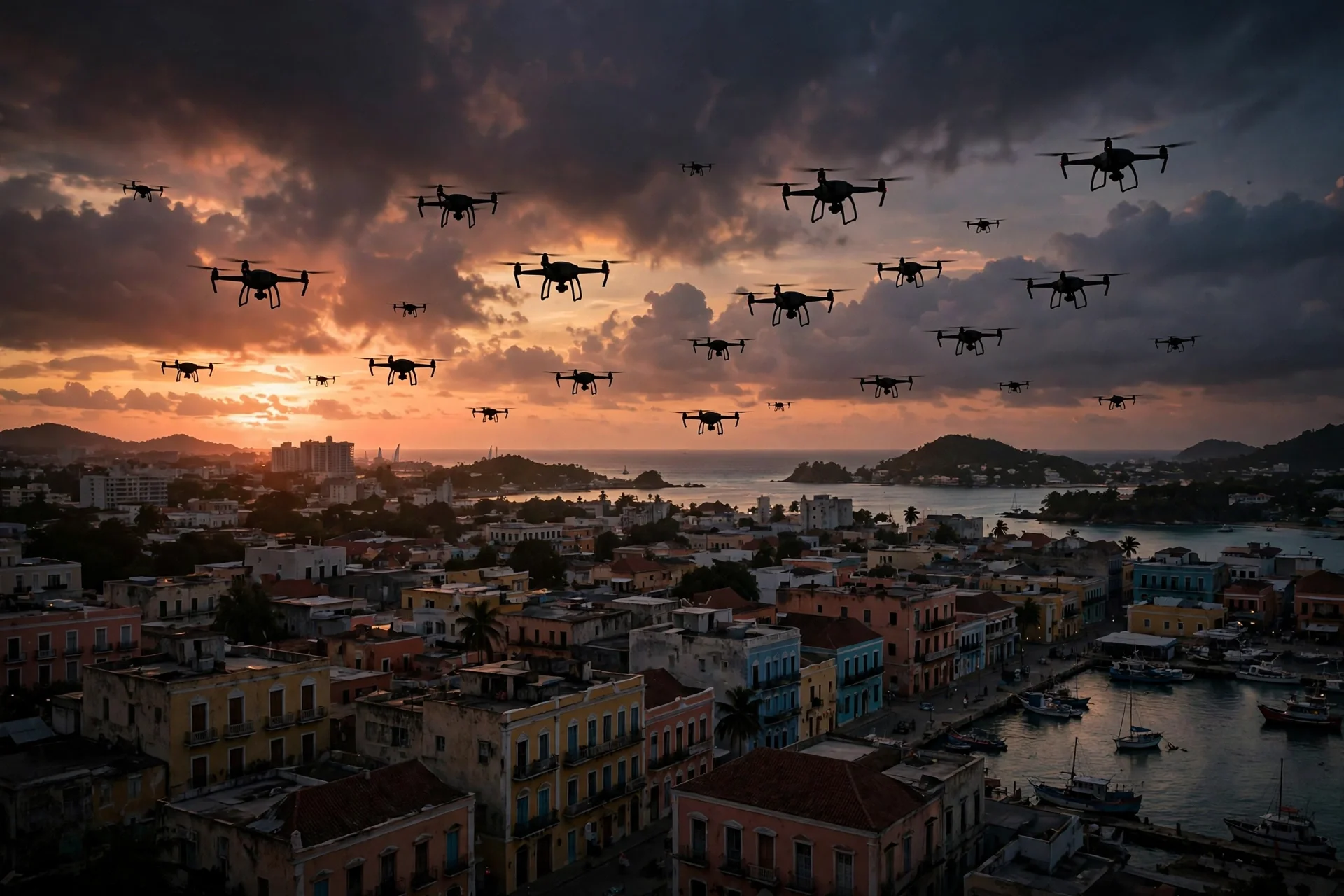
Imagen alusiva generada por EPM sobre los drones atribuidos por analistas a los grupos armados en Haití. · EPM
Haiti faces private armies with drones, Salvadoran analysts warn
Salvadoran analysts cited argue that Haiti faces private armies with drones, modern weapons and political ties, and that any solution requires dismantling…
Salvadoran analysts: private armies, not gangs, operate in Haiti
According to Elmer Arias and Nelson Flores, Haitian groups operate as private armies with drones and political ties; both argue that stabilizing Haiti requires…
--- The context ---
According to the analysis presented by Elmer Arias in a television interview, the crisis in Haiti cannot be analyzed as a conventional gang phenomenon. In his view, the groups operating in that country act as sophisticated private armies and maintain ties with sectors of local politics, a reading that, he argued, requires different responses.
--- The facts ---
Arias argued that those groups control territory and illicit routes and that they have modern weaponry, economic resources and internal organization. According to his explanation, they engage in arms trafficking and drug trafficking and are deeply involved in Haitian political life. The analyst also stated that some of those groups answer to the interests of specific political leaders.
In his remarks, Arias mentioned the use of drones and latest-generation weapons among the capabilities that, in his assessment, those organizations possess. He also said they can sustain armed confrontations and operate in both rural and urban areas, unlike the gang structures that the Salvadoran experience focused on, in his comparison.
--- The positions ---
Nelson Flores agreed that dismantling the armed groups would not be enough to stabilize Haiti. Flores argued that the country faces corruption networks inside its institutions and arms supply circuits linked to people with political power. According to him, those who sold the weapons were the same people entrenched in power, so he called for investigating the structures that facilitated the financing, equipment and protection of the armed groups.
--- What remains unknown ---
Arias warned that the lack of official information makes it difficult to evaluate operations and their results. According to both analysts, it also remains undefined who would lead a transition process in Haiti, what role international organizations would assume and under what conditions elections could be organized, aspects that Flores considered decisive for the country's political recomposition once the armed groups lose control.
--- Unanswered questions ---
How will the sources of weapons and financing that, according to the analysts, sustain those groups be cut? What investigations will reach the corruption networks and political ties both described? Who will lead the transition and with what participation of the Haitian population in recovering their communities?
--- EPM analysis ---
The approach set out by both analysts places the debate beyond immediate security. According to Arias, any response must coordinate the countries and organizations already involved in the crisis and prioritize recovering social and territorial control. In his analysis, an approach limited to arrests, patrols or police actions could contain episodes of violence, although it would not dismantle the economic and political interests that, they argued, sustain the armed organizations.
📌 EPM Take: In EPM's view, the value of this diagnosis is that it shifts the debate from labels toward the structures the analysts describe: weapons, financing, corruption and political protection. If those networks remain intact, any operation risks being temporary, as Arias and Flores warn. The underlying demand is verifiable: investigate the links, cut the supply circuits and rebuild institutions capable of sustaining territorial control without depending indefinitely on deployed external forces.
--- The context ---
Elmer Arias argued in a television interview that Haiti's structure of violence requires a response different from the one applied against gangs in El Salvador or in other Central American countries. According to the analyst, Haiti does not have maras or gangs like those in the region, but well-established and well-armed private armies with large-scale criminal capacity.
--- The facts ---
According to Arias, those groups control territory and illicit routes, have economic resources and internal organization, and engage in arms trafficking and drug trafficking. The analyst stated that they are deeply involved in Haitian political life and that some answer to the interests of political leaders, which, in his explanation, increases the complexity of a crisis marked by weakened institutions.
Arias mentioned the use of drones and latest-generation weapons among the capabilities that, in his assessment, those organizations possess. He also warned that recovering state control would not be resolved with a limited intervention or with the transfer of military contingents without a broader political and international strategy, given the differences he noted with El Salvador.
--- The positions ---
Nelson Flores argued that the problem will not be solved merely by eliminating the bands. According to him, those who corrupted the system must also be pursued, because the same people who sold the weapons were entrenched in power. Flores also called for reviewing the use of international aid and the role of organizations that, he said, benefited from resources intended to address the humanitarian crisis.
--- What remains unknown ---
According to what Flores set out, Haiti's political recomposition remains to be defined: who would lead a transition process, what role international organizations would assume and under what conditions elections could be organized. Arias, for his part, insisted that the lack of official information makes it difficult to evaluate operations and to distinguish between limited interventions, open combat, territorial control and possible casualties.
--- Unanswered questions ---
Will a limited intervention be enough to recover state control, as Arias questioned? Will those who, according to Flores, sold weapons from within power be investigated? Will there be a broader political and international strategy, or will limited operations prevail without dismantling the networks described?
--- EPM analysis ---
According to Arias, combating the violence demands a response that reaches the institutional corruption networks and arms trafficking circuits entrenched in power. Both analysts agreed that the way out requires confronting the armed groups, cutting their sources of weapons and financing, investigating their political links and rebuilding the institutions that must recover control of the country, with participation by the Haitian population.
📌 EPM Take: In EPM's view, the diagnosis attributed to Arias and Flores puts the emphasis where it belongs: without institutional order and without pursuing the arms and corruption circuits, there is no lasting territorial control. The distinction they propose between gangs and private armies is not semantic, because it defines the type of response a state can sustain. Haiti will need verifiable authority, investigated responsibilities and a transition with clear rules, not only temporary deployments of force.
Haití enfrenta ejércitos privados con drones, advierten analistas salvadoreños
Analistas salvadoreños citados sostienen que Haití enfrenta ejércitos privados con drones, armamento moderno y vínculos políticos, y que la salida exige…
Analistas salvadoreños: en Haití operan ejércitos privados, no pandillas
Según Elmer Arias y Nelson Flores, los grupos haitianos operan como ejércitos privados con drones y vínculos políticos; ambos sostienen que estabilizar Haití…
--- El contexto ---
Según el análisis expuesto por Elmer Arias en una entrevista televisiva, la crisis de Haití no puede analizarse como un fenómeno de pandillas convencionales. A su juicio, lo que opera en ese país son grupos armados que actúan como ejércitos privados sofisticados y que mantienen vínculos con sectores de la política local.
--- Los hechos ---
Arias sostuvo que esos grupos controlan territorios y rutas ilícitas y que disponen de armamento moderno, recursos económicos y organización interna. Según su explicación, se dedican al tráfico de armas y al tráfico de drogas y están muy involucrados con el quehacer político haitiano. El analista afirmó además que algunos de esos grupos responden a intereses de dirigentes políticos concretos.
En sus declaraciones, Arias mencionó el uso de drones y armas de última generación como parte de las capacidades que, según su evaluación, poseen esas organizaciones. También señaló que pueden sostener enfrentamientos armados y operar tanto en zonas rurales como urbanas, según su comparación con la experiencia salvadoreña.
--- Las posiciones ---
Nelson Flores coincidió en que el desmantelamiento de los grupos armados no bastaría para estabilizar Haití. Flores sostuvo que el país enfrenta redes de corrupción dentro de las instituciones y circuitos de provisión de armas vinculados a personas con poder político. Según afirmó, quienes vendían las armas eran los mismos que estaban enquistados en el poder, por lo que pidió investigar las estructuras que facilitaron el financiamiento, el equipamiento y la protección de los grupos armados.
--- Lo que falta saber ---
Arias advirtió que la falta de información oficial dificulta evaluar los operativos y sus resultados. Según ambos analistas, tampoco está definido quiénes conducirán un proceso de transición en Haití, qué papel asumirán los organismos internacionales ni bajo qué condiciones podrían organizarse elecciones, aspectos que Flores consideró decisivos para la recomposición política del país.
--- Preguntas sin respuesta ---
¿Cómo se cortarán las fuentes de armas y de financiamiento que, según los analistas, sostienen a esos grupos? ¿Qué investigaciones alcanzarán a las redes de corrupción y a los vínculos políticos que ambos describieron? ¿Quiénes conducirán la transición y con qué participación de la población haitiana en la recuperación de sus comunidades?
--- Análisis EPM ---
El planteamiento de ambos analistas sitúa el debate más allá de la seguridad inmediata. Según Arias, cualquier respuesta debe articular a los países y organismos ya involucrados y priorizar recuperar el control territorial. Un enfoque limitado a detenciones o patrullajes podría contener episodios de violencia, aunque no desarticularía los intereses económicos y políticos que, según sostuvieron, sostienen a las organizaciones armadas.
📌 Conclusion EPM: A juicio de EPM, el valor de este diagnóstico está en que desplaza el debate desde las etiquetas hacia las estructuras que los analistas describen: armas, financiamiento, corrupción y protección política. Si esas redes permanecen intactas, cualquier operativo corre el riesgo de ser temporal, como advierten Arias y Flores. La exigencia de fondo es verificable: investigar los nexos, cortar los circuitos de provisión y reconstruir instituciones capaces de sostener el control territorial sin depender indefinidamente de fuerzas externas desplegadas.
--- El contexto ---
Elmer Arias sostuvo en una entrevista televisiva que la estructura de violencia haitiana exige una respuesta distinta a la aplicada contra las pandillas en la región. Según el analista, en Haití no operan maras ni pandillas como las de la región, sino ejércitos privados bien establecidos y bien armados, con capacidad para delinquir a gran escala.
--- Los hechos ---
Según Arias, esos grupos controlan territorios y rutas ilícitas, disponen de recursos económicos y de organización interna, y se dedican al tráfico de armas y al tráfico de drogas. El analista afirmó que están muy involucrados con el quehacer político en Haití y que algunos responden a intereses de dirigentes políticos, lo que, según su explicación, incrementa la complejidad de una crisis con institucionalidad debilitada.
Arias mencionó el uso de drones y armas de última generación entre las capacidades que, según su evaluación, poseen esas organizaciones. También advirtió que la recuperación del control estatal no se resolvería con una intervención limitada ni con el traslado de contingentes militares sin una estrategia política e internacional más amplia, por las diferencias que señaló frente a El Salvador.
--- Las posiciones ---
Nelson Flores sostuvo que el problema no se resolverá solamente eliminando a las bandas. Según afirmó, hay que ir también por quienes corrompían el sistema, porque los mismos que vendían las armas estaban enquistados en el poder. Flores pidió además revisar el uso de la ayuda internacional y el papel de organizaciones que, según afirmó, se beneficiaron de recursos destinados a atender la crisis humanitaria.
--- Lo que falta saber ---
Según lo planteado por Flores, falta definir la recomposición política de Haití: quiénes conducirán un proceso de transición, qué papel asumirán los organismos internacionales y bajo qué condiciones podrían organizarse elecciones. Arias insistió en que la falta de información oficial dificulta evaluar los operativos y sus resultados.
--- Preguntas sin respuesta ---
¿Bastará una intervención limitada para recuperar el control estatal, como cuestionó Arias? ¿Se investigará a quienes, según Flores, vendían las armas desde el poder? ¿Habrá una estrategia política e internacional más amplia o predominarán los operativos puntuales sin desarticular las redes descritas?
--- Análisis EPM ---
De acuerdo con Arias, el combate contra la violencia demanda una respuesta que alcance las redes de corrupción institucional y de tráfico de armas enquistadas en el poder. Ambos analistas coincidieron en que la salida requiere enfrentar a los grupos armados, cortar sus fuentes de armas y de financiamiento, investigar sus nexos políticos y reconstruir las instituciones que deben recuperar el control del país, con participación de la población haitiana.
📌 Conclusion EPM: A juicio de EPM, el diagnóstico atribuido a Arias y Flores pone el acento donde corresponde: sin orden institucional ni persecución de los circuitos de armas y corrupción, no hay control territorial duradero. La distinción que proponen entre pandillas y ejércitos privados no es semántica, porque define el tipo de respuesta que un Estado puede sostener. Haití necesitará autoridad verificable, responsabilidades investigadas y una transición con reglas claras, no solo despliegues temporales de fuerza.