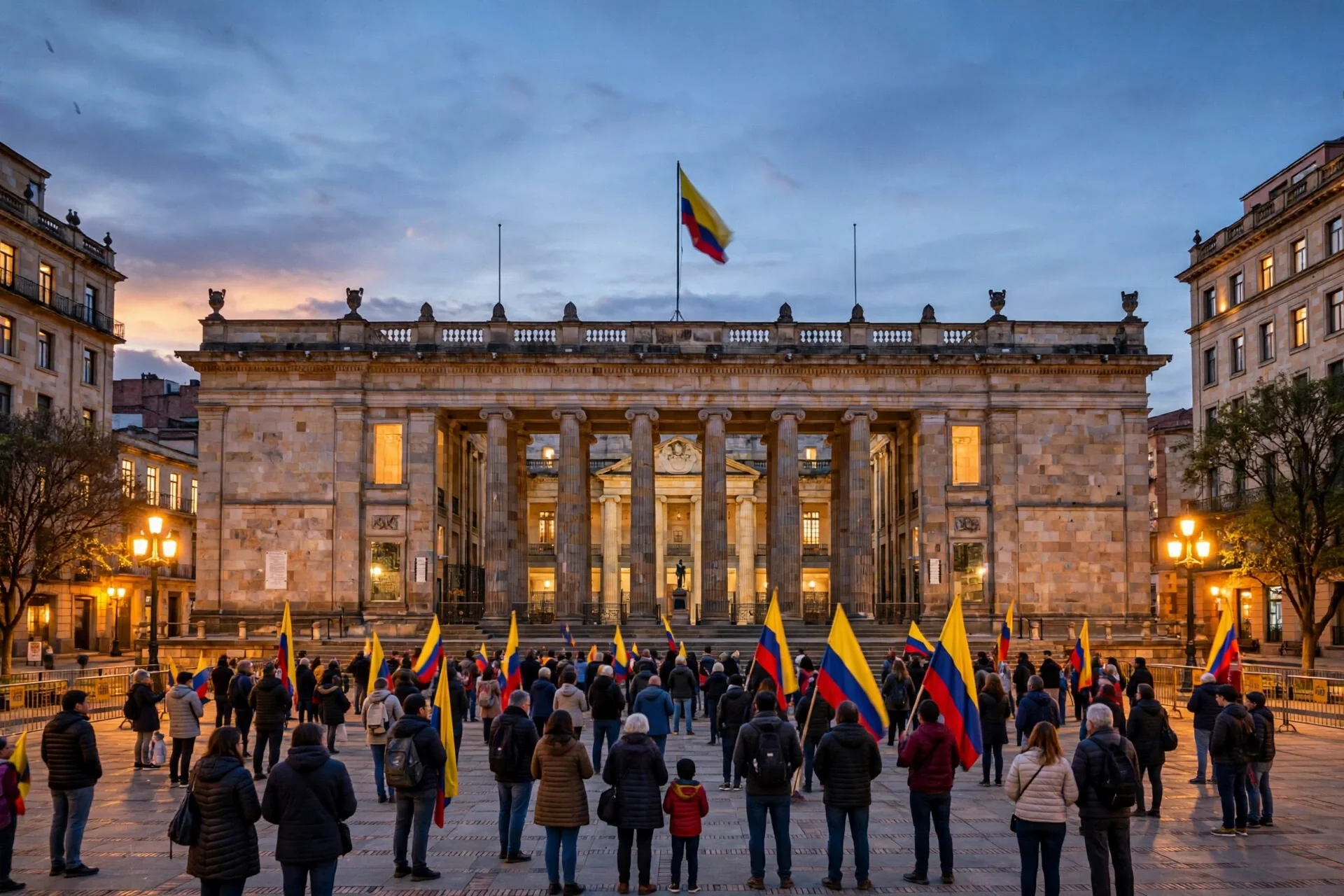
Imagen alusiva generada por EPM del Capitolio en Bogotá. · Imagen generada por EPM
Anti-Hood Bill Clears Its First Debate in Colombia's Chamber
The Chamber's First Committee approved by 21 votes to four the report on a bill that would punish with 54 to 96 months in prison and fines those who…
Chamber Backs Penalties for Concealed Vandalism at Protests
A bill punishing the deliberate concealment of identity to commit vandalism during demonstrations cleared its first debate in the First Committee by 21 votes…
--- The context ---
Colombia is debating how to respond to acts of vandalism committed during some demonstrations without undermining the right to protest. Within that tension, the Chamber of Representatives is considering a bill to amend the Penal Code and punish those who deliberately conceal their identity in order to commit crimes in such settings.
The initiative cleared a first stage, but it is not yet law of the Republic and must still face three more debates before any final decision.
--- The facts ---
The First Committee of the Chamber approved the bill's positive report by 21 votes in favor and four against, in its first debate. Before that, it rejected a shelving motion from the Historic Pact and the Green Party: 21 representatives voted against shelving it and 15 in favor.
The conduct it seeks to punish consists of deliberately using garments, masks, balaclavas, items or other similar means intended to prevent or hinder a person's identification, and committing acts of vandalism in a public demonstration, meeting, mobilization or public gathering.
The proposed penalties are prison terms of 54 to 96 months and fines of 50 to 200 current monthly legal minimum wages. The initiative was promoted by Jaime Arizabaleta, Daniel Briceño and Miguel Ángel Pinto, of the Democratic Center; Julio César Triana, of Radical Change, and Guillermo Alvira, of the Conservative Party.
--- The positions ---
The rapporteur, Jaime Arizabaleta, has assured that the initiative does not seek to persecute students or the right to protest. According to him, 99 % of those who protest do not conceal their identity or engage in vandalism, but exercise that constitutional right, and he has argued that someone who wears a hood at a protest goes out to commit crimes.
The Historic Pact bloc has stated that it will not allow freedoms and human rights to be trampled under the excuse of guaranteeing security, and that protesting is a right it will defend. That sector maintains criticism over the possibility of criminalizing protest.
--- What remains unknown ---
The bill must pass three more debates to become law. For now, no rule derived from this initiative is in force: what was approved is only the first debate in the Chamber's First Committee.
--- Unanswered questions ---
How will it be proven that concealing one's identity was deliberate and intended for committing a crime? What guarantees will a demonstrator who takes no part in vandalism have? Will the wording on garments and masks be made more precise in the remaining debates? How will the criticism about criminalizing protest be answered?
--- EPM analysis ---
The two votes show a clear majority for letting the bill continue and an organized minority that tried unsuccessfully to shelve it. The center of the discussion is the scope of a criminal response to vandalism under anonymity and the limits that response must respect.
📌 EPM Take:
In EPM's view, the advance of this proposal requires looking at two dimensions at once with serious institutional care. On one hand, there is a legitimate concern about vandalism committed during public demonstrations. On the other, any new criminal penalty must define the punished conduct with precision so it does not affect the exercise of peaceful protest. The remaining process, with three debates ahead, will be decisive to clarify scope, guarantees and limits before Congress decides whether this proposal finally becomes law.
--- The context ---
Public demonstrations are a right, but in the midst of some of them acts of vandalism are committed by people who rely on anonymity to avoid identification. Faced with that problem, lawmakers from different blocs in Colombia promote a bill to amend the Penal Code and punish those who deliberately conceal their identity to commit crimes.
The proposal cleared its first debate in the Chamber of Representatives. It is not yet law of the Republic: three more debates remain.
--- The facts ---
The First Committee approved the bill's positive report by 21 votes in favor and four against. Shortly before, it rejected the shelving motion from the Historic Pact and the Green Party, with 21 votes against shelving and 15 in favor.
The text targets a specific conduct: deliberately using garments, masks, balaclavas, items or other similar means intended to prevent or hinder identification, and committing acts of vandalism in a public demonstration, meeting, mobilization or public gathering.
For that conduct it proposes prison terms of 54 to 96 months and fines of 50 to 200 current monthly legal minimum wages. The initiative is promoted by Jaime Arizabaleta, Daniel Briceño and Miguel Ángel Pinto, of the Democratic Center; Julio César Triana, of Radical Change, and Guillermo Alvira, of the Conservative Party.
--- The positions ---
The rapporteur, Jaime Arizabaleta, has assured that the initiative does not seek to persecute students or the right to protest. According to him, 99 % of those who protest do not conceal their identity, do not wear a hood or engage in vandalism, but exercise that constitutional right, and he has stated that someone who wears a hood at a protest goes out to commit crimes.
The Historic Pact bloc has stated that it will not allow freedoms and human rights to be trampled under the excuse of guaranteeing security, and that protesting is a right it will defend. That sector criticizes the possibility that the bill could criminalize protest.
--- What remains unknown ---
To become law, the bill must pass three more debates. Until that happens, no new penalty from this initiative is in force: what has been decided is that the proposal continues its course through Congress.
--- Unanswered questions ---
What identification mechanisms will apply when a concealed person commits vandalism during a mobilization? How will a peaceful demonstrator be distinguished from someone hiding their identity to commit crimes? Will the text keep the 54 to 96 month terms in the coming debates? What adjustments will address the Historic Pact's objections?
--- EPM analysis ---
The two votes were consistent: the committee backed the report by 21 to four and rejected shelving by 21 to 15. The majority brings together the Democratic Center, Radical Change and the Conservative Party, while the most visible opposition comes from the Historic Pact and the Green Party.
📌 EPM Take:
In EPM's view, identifying someone who commits crimes shielded by anonymity during a demonstration is not the same as persecuting protest, and that distinction runs through the entire debate over this proposal. The initiative targets concrete acts of vandalism, with substantial prison terms and significant fines, and it was backed by a broad majority in its first debate. Three debates remain to refine its wording and answer the objections raised. Congress should make clear that the right to protest is protected and that concealed vandalism will carry criminal consequences.
Ley anticapuchos supera su primer debate en la Cámara
La Comisión Primera de la Cámara aprobó por 21 votos a cuatro la ponencia del proyecto que busca sancionar con prisión de 54 a 96 meses y multas a quienes…
Cámara aprueba en primer debate sancionar el vandalismo encubierto
El proyecto que castiga el ocultamiento deliberado de la identidad para cometer actos vandálicos en manifestaciones superó su primer debate en la Comisión…
--- El contexto ---
Colombia discute cómo responder a los actos vandálicos cometidos durante algunas manifestaciones sin afectar el derecho a la protesta. En ese cruce se tramita en la Cámara de Representantes un proyecto para modificar el Código Penal y sancionar a quienes oculten deliberadamente su identidad con el propósito de cometer delitos en esos escenarios.
La iniciativa superó una primera etapa, pero todavía no es ley de la República y deberá enfrentar tres debates más antes de cualquier definición.
--- Los hechos ---
La Comisión Primera de la Cámara aprobó la ponencia positiva con 21 votos a favor y cuatro en contra, en su primer debate. Antes, negó una proposición de archivo presentada por el Pacto Histórico y el Partido Verde: 21 representantes votaron en contra de archivarla y 15 a favor.
La conducta que se busca castigar consiste en utilizar deliberadamente prendas, máscaras, pasamontañas, elementos u otros medios similares destinados a impedir o dificultar la identificación de una persona, y cometer actos vandálicos en una manifestación pública, reunión, movilización o concentración pública.
Las sanciones previstas son prisión de 54 a 96 meses y multas de 50 a 200 salarios mínimos legales mensuales vigentes. Impulsan la iniciativa Jaime Arizabaleta, Daniel Briceño y Miguel Ángel Pinto, del Centro Democrático; Julio César Triana, de Cambio Radical, y Guillermo Alvira, del Partido Conservador.
--- Las posiciones ---
El ponente, Jaime Arizabaleta, ha asegurado que la iniciativa no busca perseguir a los estudiantes ni el derecho a la protesta. Según ha dicho, el 99 % de quienes salen a protestar no ocultan su identidad ni hacen vandalismo, sino que ejercen ese derecho constitucional, y ha sostenido que quien usa una capucha en una protesta sale a delinquir.
La bancada del Pacto Histórico ha señalado que no permitirá que, bajo la excusa de garantizar la seguridad, se atropellen las libertades y los derechos humanos, y que protestar es un derecho que defenderá. Ese sector mantiene críticas por la posibilidad de criminalizar la protesta.
--- Lo que falta saber ---
El proyecto debe superar tres debates más para convertirse en ley. Por ahora no hay ninguna norma vigente derivada de esta iniciativa: lo aprobado es únicamente el primer debate en la Comisión Primera de la Cámara.
--- Preguntas sin respuesta ---
¿Cómo se acreditará en la práctica que el ocultamiento fue deliberado y con el propósito de delinquir? ¿Qué garantías tendrá el manifestante que no participe en actos vandálicos? ¿Se precisará la redacción sobre prendas y máscaras en los debates restantes? ¿Cómo se responderá a las críticas sobre una posible criminalización de la protesta?
--- Análisis EPM ---
Las dos votaciones muestran una mayoría clara por continuar el trámite y una minoría organizada que intentó archivarlo sin éxito. El centro del debate es el alcance de una respuesta penal frente al vandalismo cometido bajo anonimato y los límites que esa respuesta debe respetar.
📌 Conclusion EPM:
A juicio de EPM, el avance de esta iniciativa obliga a mirar dos planos a la vez con mucha seriedad institucional. Por un lado existe una preocupación legítima frente a los actos vandálicos cometidos durante movilizaciones públicas. Por otro, cualquier sanción penal nueva debe delimitar con precisión la conducta castigada para no afectar el ejercicio de la protesta pacífica. El trámite restante, con tres debates por delante, será decisivo para precisar alcances, garantías y límites antes de que el Congreso defina si esta propuesta se convierte finalmente en ley.
--- El contexto ---
Las manifestaciones son un derecho, pero en medio de algunas se cometen actos vandálicos cuyos responsables se amparan en el anonimato. Frente a ello, congresistas de distintas bancadas impulsan en Colombia un proyecto para modificar el Código Penal y castigar a quienes oculten deliberadamente su identidad para delinquir.
La propuesta superó su primer debate en la Cámara de Representantes. No es todavía ley de la República: le faltan tres debates más.
--- Los hechos ---
La Comisión Primera aprobó la ponencia positiva del proyecto con 21 votos a favor y cuatro en contra. Poco antes, negó la proposición de archivo del Pacto Histórico y el Partido Verde, con 21 votos en contra de archivarla y 15 a favor.
El texto apunta a una conducta específica: utilizar deliberadamente prendas, máscaras, pasamontañas, elementos u otros medios similares destinados a impedir o dificultar la identificación, y cometer actos vandálicos en una manifestación pública, reunión, movilización o concentración pública.
Para esa conducta se proponen prisión de 54 a 96 meses y multas de 50 a 200 salarios mínimos legales mensuales vigentes. Impulsan la iniciativa Jaime Arizabaleta, Daniel Briceño y Miguel Ángel Pinto, del Centro Democrático; Julio César Triana, de Cambio Radical, y Guillermo Alvira, del Partido Conservador.
--- Las posiciones ---
El ponente, Jaime Arizabaleta, ha asegurado que la iniciativa no busca perseguir a los estudiantes ni el derecho a la protesta. Según ha dicho, el 99 % de quienes protestan no ocultan su identidad, no salen con capucha ni a hacer vandalismo, sino a ejercer ese derecho constitucional, y ha afirmado que quien usa una capucha en una protesta sale a delinquir.
La bancada del Pacto Histórico ha señalado que no permitirá que, bajo la excusa de garantizar la seguridad, se atropellen las libertades y los derechos humanos, y que protestar es un derecho que defenderá. Ese sector critica la posibilidad de que el proyecto criminalice la protesta.
--- Lo que falta saber ---
Para convertirse en ley, el proyecto debe superar tres debates más. Hasta que eso ocurra no hay ninguna sanción nueva en vigor por esta iniciativa: lo decidido es que la propuesta continúa su recorrido en el Congreso.
--- Preguntas sin respuesta ---
¿Qué mecanismos de identificación se aplicarán cuando una persona encubierta cometa actos vandálicos? ¿Cómo se diferenciará al manifestante pacífico de quien oculta su identidad para delinquir? ¿Mantendrá el texto las penas de 54 a 96 meses en los próximos debates? ¿Qué ajustes recogerán las objeciones del Pacto Histórico?
--- Análisis EPM ---
Las dos votaciones fueron consistentes: la comisión respaldó la ponencia por 21 a cuatro y rechazó el archivo por 21 a 15. La mayoría reúne al Centro Democrático, Cambio Radical y el Partido Conservador, mientras la oposición más visible proviene del Pacto Histórico y el Partido Verde.
📌 Conclusion EPM:
A juicio de EPM, identificar a quien delinque amparado en el anonimato durante una manifestación no equivale a perseguir la protesta, y esa distinción recorre todo el debate de esta iniciativa. La propuesta apunta contra actos vandálicos concretos, con penas elevadas y multas significativas, y fue respaldada por una mayoría amplia en su primer debate. Quedan tres debates para afinar su redacción y responder las objeciones planteadas. El Congreso deberá dejar claro que el derecho a protestar se protege y que el vandalismo encubierto tendrá consecuencias penales.