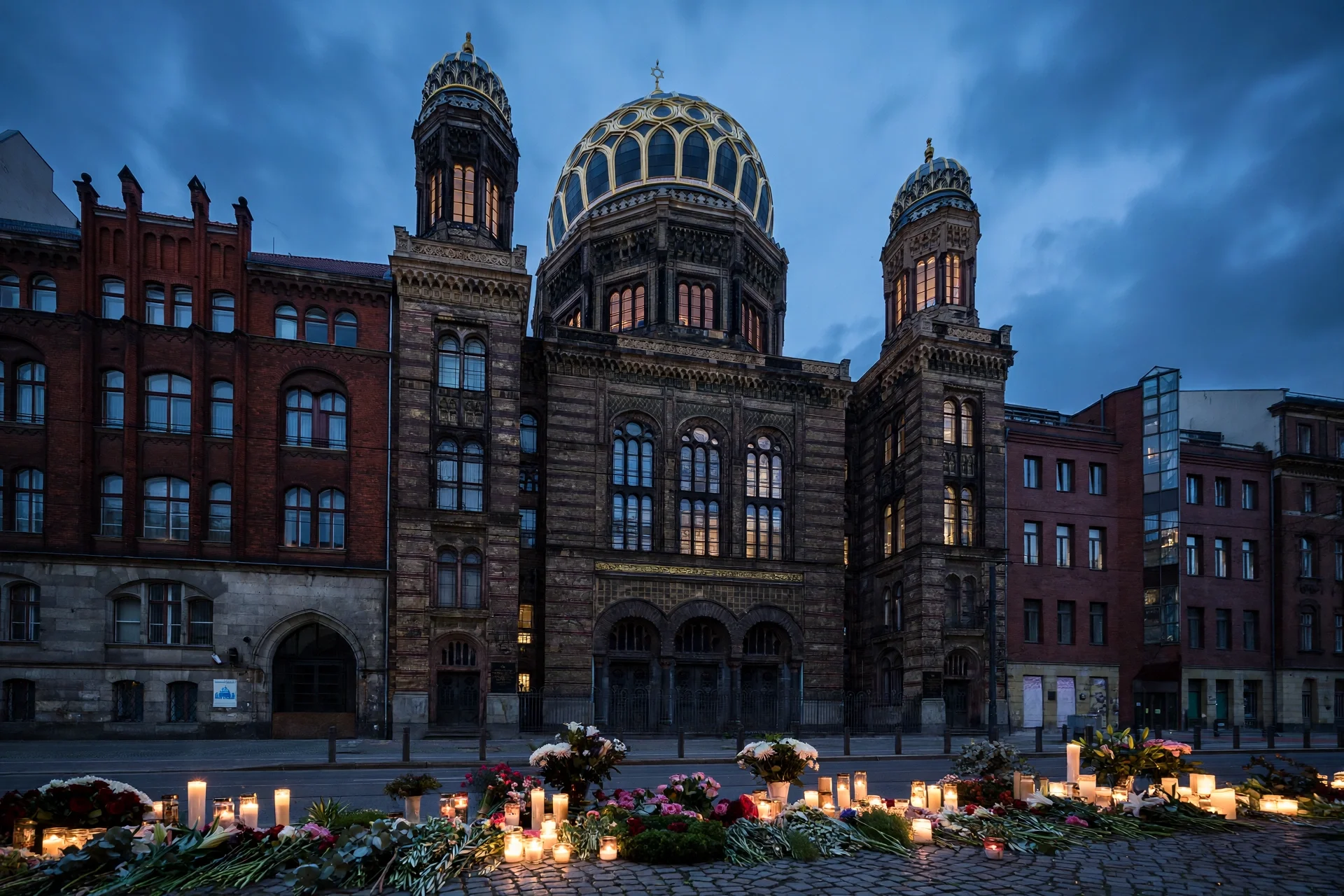
Imagen alusiva generada por EPM: velas de conmemoración ante una sinagoga histórica. · EPM (imagen generada)
Weimer: remembering 1938 is a duty for the present
Wolfram Weimer said remembering the pogroms of November 9, 1938 is an obligation for the present and the future amid rising antisemitism, and defended a…
Weimer calls for preserving memory and human dignity
Marking the anniversary of the Reichspogromnacht, Wolfram Weimer defended the memory of November 9, 1938 as a present obligation and said antisemitism and…
--- The context ---
Germany is marking the anniversary of the Reichspogromnacht of November 9, 1938, a date that marked the transition from discrimination and exclusion practiced since 1933 to the systematic persecution of the Jewish population.
--- The facts ---
During the night of November 9 to 10, 1938, more than 1,400 synagogues were set on fire across Germany, thousands of Jewish businesses and homes were destroyed, and cemeteries were desecrated. People were humiliated, mistreated and murdered, and tens of thousands of Jewish men were arrested and deported to concentration camps.
--- The positions ---
State Minister for Culture and Media Wolfram Weimer said in his statement that remembering that date is not a look into the past but an obligation for the present and the future. According to Weimer, the pogroms were not a spontaneous outbreak of violence but state-organized and state-directed terror, and they revealed the failure of a society in which too many remained silent or looked away.
--- What remains unknown ---
The statement does not detail concrete measures against the rise in antisemitism mentioned. It also does not specify how Jewish life will be ensured as natural and safe in practice.
--- Unanswered questions ---
How will the rise in antisemitism noted in the statement be confronted? What responsibility does society assume today in the face of indifference? How will it be ensured that human dignity remains inviolable?
--- EPM analysis ---
The message focuses on collective responsibility: remembering implies not repeating the exclusion that led to organized violence.
📌 EPM Take: In EPM's view, the value of this commemoration lies in turning memory into present commitment. Remembering November 9, 1938 requires rejecting indifference, defending human dignity as an inviolable principle and sustaining a society in which Jewish life is natural and safe, with no place for antisemitism or hatred in any of its everyday forms or expressions.
--- The context ---
Germany remembers the November pogroms of 1938, when discrimination and exclusion practiced since 1933 turned into systematic persecution of the Jewish population, according to the official statement issued for the anniversary.
--- The facts ---
During the night of November 9 to 10, 1938, more than 1,400 synagogues were set on fire across Germany, thousands of Jewish businesses and homes were destroyed, and cemeteries were desecrated. Jewish people were humiliated, mistreated and murdered, and tens of thousands of Jewish men were arrested and deported to concentration camps.
--- The positions ---
State Minister for Culture and Media Wolfram Weimer said antisemitism and hatred must have no place in society. According to his statement, the responsible regime stripped Jewish people of their rights, excluded them and ultimately sought to annihilate them systematically, while too many citizens remained silent, looked away or supported the crimes.
--- What remains unknown ---
The text does not announce specific decisions or programs. It remains unspecified how protection of Jewish life will be strengthened after this appeal.
--- Unanswered questions ---
What concrete measures will follow Weimer's statement? How will the memory of 1938 be preserved for new generations? In what way will it be guaranteed that the indifference of that time is never repeated?
--- EPM analysis ---
The message underlines permanent duties: historical memory, respect for human dignity and a firm rejection of hatred.
📌 EPM Take: In EPM's view, preserving the memory of November 9, 1938 is a duty of the state and of society as a whole. The lesson of that night demands moral order, firm institutions and citizens who do not look away, so that human dignity remains inviolable and Jewish life proceeds with safety and normality in Germany.
Weimer: recordar 1938 obliga a defender la vida judía hoy
Wolfram Weimer afirmó que recordar los pogromos del 9 de noviembre de 1938 es una obligación para el presente y el futuro, frente al aumento del antisemitismo…
Weimer llama a preservar la memoria y la dignidad humana
Con motivo del aniversario de la Reichspogromnacht, Wolfram Weimer defendió la memoria del 9 de noviembre de 1938 como obligación presente y afirmó que el…
--- El contexto ---
En Alemania se conmemora el aniversario de la Reichspogromnacht del 9 de noviembre de 1938, una fecha que marcó el paso de la discriminación iniciada en 1933 a la persecución sistemática de la población judía.
--- Los hechos ---
En la noche del 9 al 10 de noviembre de 1938 se incendiaron en toda Alemania más de 1.400 sinagogas, se destruyeron miles de negocios y viviendas judías y se profanaron cementerios. Hubo personas humilladas, maltratadas y asesinadas, y decenas de miles de hombres judíos fueron arrestados y deportados a campos de concentración.
--- Las posiciones ---
El ministro de Estado de Cultura y Medios, Wolfram Weimer, sostuvo en su declaración que recordar esa fecha no es mirar al pasado, sino una obligación para el presente y el futuro. Según Weimer, los pogromos no fueron un estallido espontáneo, sino un terror organizado y dirigido por el Estado, y revelaron el fracaso de una sociedad en la que demasiados callaron o miraron hacia otro lado.
--- Lo que falta saber ---
La declaración no detalla medidas concretas frente al aumento del antisemitismo mencionado. Tampoco precisa cómo se garantizará en la práctica que la vida judía sea natural y segura.
--- Preguntas sin respuesta ---
¿Cómo se combatirá el aumento del antisemitismo señalado en la declaración? ¿Qué responsabilidad asume hoy la sociedad frente a la indiferencia? ¿Cómo se asegurará que la dignidad humana permanezca inviolable?
--- Análisis EPM ---
El mensaje pone el acento en la responsabilidad colectiva: recordar implica no repetir la exclusión que condujo a la violencia organizada.
📌 Conclusion EPM: A juicio de EPM, el valor de esta conmemoración está en convertir la memoria en compromiso presente. Recordar el 9 de noviembre de 1938 obliga a rechazar la indiferencia, a defender la dignidad humana como principio inviolable y a sostener una sociedad en la que la vida judía sea natural y segura, sin lugar para el antisemitismo ni para el odio en ninguna de sus formas cotidianas.
--- El contexto ---
Alemania recuerda los pogromos de noviembre de 1938, cuando la discriminación y la exclusión practicadas desde 1933 derivaron en persecución sistemática contra la población judía, según expone la declaración oficial difundida con motivo del aniversario.
--- Los hechos ---
En la noche del 9 al 10 de noviembre de 1938 se incendiaron más de 1.400 sinagogas en toda Alemania, se destruyeron miles de negocios y viviendas judías y se profanaron cementerios. Personas judías fueron humilladas, maltratadas y asesinadas, y decenas de miles de hombres judíos fueron arrestados y deportados a campos de concentración.
--- Las posiciones ---
El ministro de Estado de Cultura y Medios, Wolfram Weimer, afirmó que el antisemitismo y el odio no deben tener cabida en la sociedad. Según su declaración, el régimen responsable despojó de derechos, excluyó y finalmente quiso aniquilar sistemáticamente a las personas judías, mientras demasiados ciudadanos callaron, miraron hacia otro lado o apoyaron los crímenes.
--- Lo que falta saber ---
El texto no anuncia decisiones ni programas específicos. Queda sin precisar cómo se reforzará la protección de la vida judía tras este llamamiento.
--- Preguntas sin respuesta ---
¿Qué medidas concretas seguirán a la declaración de Weimer? ¿Cómo se preservará la memoria de 1938 en las nuevas generaciones? ¿De qué modo se garantizará que nunca se repita la indiferencia de entonces?
--- Análisis EPM ---
El mensaje subraya deberes permanentes: memoria histórica, respeto a la dignidad humana y rechazo firme al odio.
📌 Conclusion EPM: A juicio de EPM, preservar la memoria del 9 de noviembre de 1938 es un deber de Estado y de la sociedad en su conjunto. La lección de aquella noche exige orden moral, instituciones firmes y ciudadanos que no miren hacia otro lado, para que la dignidad humana permanezca inviolable y la vida judía transcurra con seguridad y normalidad en Alemania.