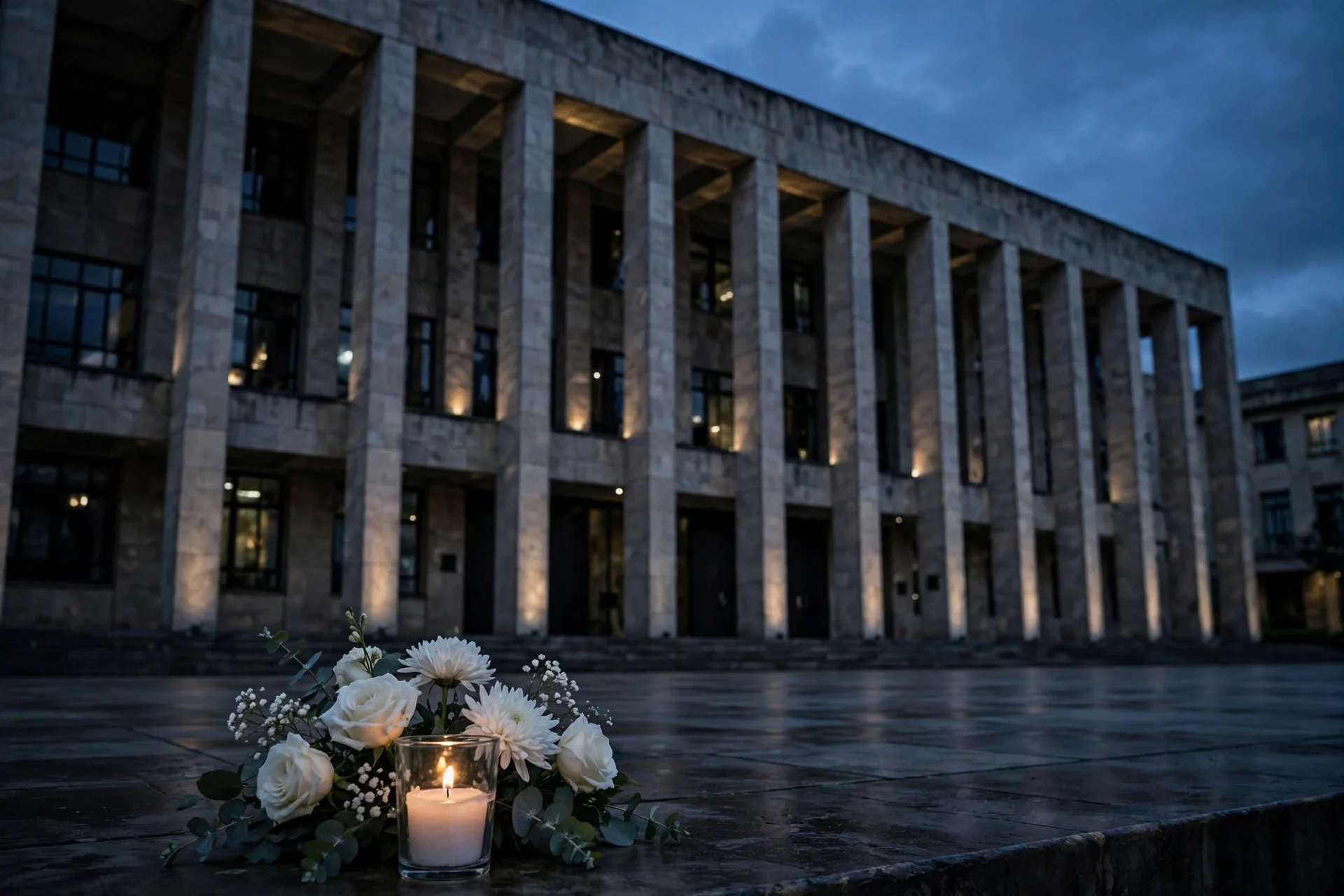
Imagen alusiva al avance judicial del caso por la muerte de la niña Ana Lucía González en Bogotá. · Imagen generada por EPM
Prosecutors add third charge in Ana Lucía González case
Prosecutors filed a third charge against the alleged perpetrator in the death of Ana Lucía González, a nine-year-old girl found on September 15 in Ciudad…
Third charge filed over death of nine-year-old in Bogotá
The man accused in the death of nine-year-old Ana Lucía González in Bogotá now faces three charges after prosecutors added a new count supported by a forensic…
--- The context ---
The case of Ana Lucía González, a nine-year-old girl, has gripped Bogotá since September 15, when her body was found in a rainwater canal in Ciudad Bolívar, in the south of the Colombian capital. The proceedings against the man identified by prosecutors as the alleged perpetrator took a new turn this week, with an additional charge that widens the investigation into what happened before the child's death.
--- The facts ---
Prosecutors charged the accused, Shenner José Rojas Lárez, a Venezuelan national, with aggravated abusive carnal access with a minor under 14 years of age. This third charge adds to the earlier counts of aggravated femicide and aggravated sexual acts with a minor under 14, so the defendant now faces three charges within the same judicial case.
According to the prosecution, the decision rested on a report by the National Institute of Legal Medicine and Forensic Sciences, and investigators placed the alleged abuse between June 2026 and September 15, 2026. The investigation states that events began on September 14 at a home in Ciudad Bolívar, that the girl left the property seeking help, and that she was later taken to a property in Fontibón, in western Bogotá.
--- The positions ---
Prosecutors maintain that the forensic findings support the new hypothesis without altering the charges already filed, and that the accused allegedly took advantage of cohabitation and a relationship of trust within the same household. The girl's family, through its lawyer, Solarte, reported alleged threats attributed to the detainee against his former partner, Rusmery González, and asked the Ministry of Justice and the prison authority Inpec to transfer him or tighten prison controls.
--- What remains unknown ---
The date of the next hearings is not yet known, nor is there an official decision on the transfer requested by the victims' counsel. The available information also does not state whether Inpec will reinforce controls at Cómbita prison, where the accused remains in custody.
--- Unanswered questions ---
What concrete measures will the Ministry of Justice and Inpec adopt in response to the report of alleged threats? When will the hearing resume, and how will the accused answer the charges against him? What protection will the girl's family and the witnesses receive during the trial? Can the investigation accurately reconstruct what happened between June and September 2026?
--- EPM analysis ---
The case file shows an investigation that is not limited to the discovery of September 15: it seeks to reconstruct previous months of alleged harm within the victim's close environment. That breadth of evidence may prove decisive at trial, but it also requires institutions to protect the family effectively, because every report of pressure that goes unanswered in time erodes trust in the justice system.
📌 EPM Take: In EPM's view, the filing of a third charge shows an investigation determined to reconstruct the full sequence of events rather than only the fatal outcome. When the victim is a nine-year-old girl, the State carries a double duty: to establish every stage of the facts with rigorous evidence and to shield the family from any improper pressure. The report of alleged threats from prison demands an immediate institutional response, because without protected witnesses and effective prison controls there can be no full justice and no public trust in the process.
--- The context ---
Bogotá continues to follow the proceedings over the death of Ana Lucía González, a nine-year-old girl whose body was found on September 15 in a rainwater canal in Ciudad Bolívar, in the south of the capital. This week prosecutors added a third charge against the man identified as the alleged perpetrator, in a case that has renewed public demands for firm justice without impunity.
--- The facts ---
Prosecutors charged Shenner José Rojas Lárez, a Venezuelan national, with aggravated abusive carnal access with a minor under 14 years of age. The new count joins earlier charges of aggravated femicide and aggravated sexual acts with a minor under 14, meaning the accused now faces three charges in the proceedings brought against him.
The charge was based on a report by the National Institute of Legal Medicine and Forensic Sciences, according to prosecutors, who placed the alleged abuse between June 2026 and September 15, 2026. According to the investigation, events began on September 14 at a home in Ciudad Bolívar; the girl left the property and was later taken to a property in Fontibón, in western Bogotá.
--- The positions ---
For prosecutors, the forensic findings support the new hypothesis without modifying the earlier charges, and the accused allegedly took advantage of cohabitation and trust within the household. The victim's family, represented by lawyer Solarte, reported alleged threats by the detainee against his former partner, Rusmery González, and asked the Ministry of Justice and the prison authority Inpec for his transfer or stricter prison controls.
--- What remains unknown ---
No date has yet been announced for the next court proceedings, and no decision is known on the transfer requested by the victims' counsel. It is also unknown whether Inpec will adopt additional control measures at Cómbita prison, where the accused remains held.
--- Unanswered questions ---
Will the Ministry of Justice and Inpec act with the speed that the report of alleged threats demands? What controls will prevent a detainee from contacting the victim's relatives again? When will the trial advance, and what sentence would the accused face if found guilty? What failed in the earlier safeguards that left the girl exposed for months?
--- EPM analysis ---
The case exposes two fronts the State cannot neglect: a rigorous criminal process that establishes responsibility on solid evidence, and a prison system able to keep a detainee within the limits ordered by law. Public trust depends on both tasks being carried out without delays or institutional gaps.
📌 EPM Take: In EPM's view, the fact that the accused now faces three charges reflects the gravity of events that society cannot regard with indifference. The response must be firm and orderly: a rigorous investigation, prison controls that prevent any intimidating contact, and a trial without delays that respects due process. If the alleged threats from Cómbita prison are confirmed, the prison authorities will have to act decisively, because the authority of the State is also upheld by protecting victims and their families throughout the proceedings.
Fiscalía imputa tercer delito en caso de Ana Lucía González
La Fiscalía imputó un tercer delito al presunto responsable de la muerte de Ana Lucía González, una niña de nueve años hallada el 15 de septiembre en Ciudad…
Tercer cargo contra señalado por muerte de niña en Bogotá
El señalado por la muerte de la niña Ana Lucía González en Bogotá enfrenta ahora tres cargos, tras la imputación de un nuevo delito sustentado en un dictamen…
--- El contexto ---
El caso de Ana Lucía González, una niña de nueve años, mantiene en vilo a Bogotá desde el 15 de septiembre, cuando su cuerpo fue hallado en un canal de aguas lluvias de Ciudad Bolívar, en el sur de la capital. El proceso contra el hombre señalado por la Fiscalía como presunto responsable sumó esta semana una imputación adicional que amplía la investigación sobre lo ocurrido antes de la muerte de la menor.
--- Los hechos ---
La Fiscalía General de la Nación imputó al señalado, Shenner José Rojas Lárez, de nacionalidad venezolana, el delito de acceso carnal abusivo con menor de 14 años agravado. Este tercer cargo se suma a las imputaciones previas por feminicidio agravado y actos sexuales con menor de 14 años agravados, por lo que el procesado enfrenta ahora tres delitos en el mismo expediente.
Según la Fiscalía, la decisión se apoyó en un dictamen del Instituto Nacional de Medicina Legal y Ciencias Forenses, y el ente acusador ubicó los presuntos abusos entre junio de 2026 y el 15 de septiembre de 2026. La investigación señala que los hechos comenzaron el 14 de septiembre en una vivienda de Ciudad Bolívar, que la menor salió del inmueble en busca de ayuda y que después fue trasladada a un inmueble de Fontibón, en el occidente de Bogotá.
--- Las posiciones ---
La Fiscalía sostiene que los hallazgos forenses respaldan la nueva hipótesis sin alterar las imputaciones ya comunicadas, y que el señalado se habría aprovechado de la convivencia y de una relación de confianza dentro del núcleo doméstico. La familia de la menor, a través de su abogado, Solarte, denunció presuntas amenazas atribuidas al detenido contra su expareja, Rusmery González, y pidió al Ministerio de Justicia y al Inpec su traslado o mayores controles penitenciarios.
--- Lo que falta saber ---
Todavía no se conoce la fecha de las próximas audiencias ni una decisión oficial sobre el traslado solicitado por la defensa de las víctimas. Tampoco consta si el Inpec reforzará los controles en la cárcel de Cómbita, donde el señalado permanece detenido.
--- Preguntas sin respuesta ---
¿Qué medidas adoptarán el Ministerio de Justicia y el Inpec frente a la denuncia de presuntas amenazas? ¿Cuándo continuará la audiencia y qué responderá el procesado frente a los cargos atribuidos? ¿Qué protección recibirán la familia de la menor y los testigos durante el juicio? ¿Podrá la investigación reconstruir con precisión lo ocurrido entre junio y septiembre de 2026?
--- Análisis EPM ---
El expediente muestra una investigación que no se limita al hallazgo del 15 de septiembre: busca reconstruir meses previos de presunta vulneración en el entorno cercano de la víctima. Esa amplitud probatoria puede resultar decisiva en el juicio, pero también exige que las instituciones protejan a la familia, porque cada denuncia de presión sin respuesta oportuna erosiona la confianza en la justicia.
📌 Conclusion EPM: A juicio de EPM, la imputación de un tercer delito muestra una investigación que busca reconstruir por completo lo ocurrido y no solo el desenlace fatal. Cuando la víctima es una niña de nueve años, el deber del Estado es doble: esclarecer cada tramo de los hechos con rigor probatorio y proteger a la familia frente a cualquier presión indebida. La denuncia de presuntas amenazas desde prisión exige respuestas institucionales inmediatas, porque sin testigos protegidos y sin controles carcelarios efectivos no puede haber justicia plena ni confianza ciudadana en el proceso.
--- El contexto ---
Bogotá sigue con atención el proceso por la muerte de Ana Lucía González, una niña de nueve años cuyo cuerpo fue hallado el 15 de septiembre en un canal de aguas lluvias de Ciudad Bolívar, en el sur de la capital. Esta semana, la Fiscalía sumó un tercer delito a las imputaciones contra el hombre señalado como presunto responsable, en un caso que ha reavivado la exigencia ciudadana de justicia firme y sin impunidad.
--- Los hechos ---
La Fiscalía General de la Nación imputó a Shenner José Rojas Lárez, de nacionalidad venezolana, el delito de acceso carnal abusivo con menor de 14 años agravado. El nuevo cargo se suma a los de feminicidio agravado y actos sexuales con menor de 14 años agravados, de manera que el señalado enfrenta ahora tres delitos dentro del proceso que se adelanta en su contra.
La imputación se sustentó en un dictamen del Instituto Nacional de Medicina Legal y Ciencias Forenses, según informó la Fiscalía, que ubicó los presuntos abusos entre junio de 2026 y el 15 de septiembre de 2026. De acuerdo con la investigación, los hechos comenzaron el 14 de septiembre en una vivienda de Ciudad Bolívar; la menor salió del inmueble y luego fue trasladada a un inmueble de Fontibón, en el occidente de la capital.
--- Las posiciones ---
Para la Fiscalía, los hallazgos forenses respaldan la nueva hipótesis sin modificar las imputaciones anteriores, y el señalado se habría aprovechado de la convivencia y de la confianza dentro del núcleo doméstico. La familia de la víctima, representada por el abogado Solarte, denunció presuntas amenazas del detenido contra su expareja, Rusmery González, y solicitó al Ministerio de Justicia y al Inpec su traslado o un refuerzo de los controles en prisión.
--- Lo que falta saber ---
Aún no se ha informado la fecha de las próximas diligencias judiciales ni una decisión sobre el traslado pedido por la defensa de las víctimas. Tampoco se conoce si el Inpec adoptará medidas adicionales de control en la cárcel de Cómbita, donde permanece recluido el procesado.
--- Preguntas sin respuesta ---
¿Actuarán el Ministerio de Justicia y el Inpec con la rapidez que exige la denuncia de presuntas amenazas? ¿Qué controles impedirán que un detenido vuelva a contactar a familiares de la víctima? ¿Cuándo avanzará el juicio y qué pena enfrentaría el señalado si es hallado culpable? ¿Qué falló en los controles previos para que la menor quedara expuesta durante meses?
--- Análisis EPM ---
El caso expone dos frentes que el Estado no puede descuidar: un proceso penal riguroso que establezca responsabilidades con pruebas sólidas y un sistema penitenciario capaz de mantener al detenido dentro de los límites que ordena la ley. La confianza ciudadana depende de que ambas tareas se cumplan sin dilaciones ni fisuras institucionales.
📌 Conclusion EPM: A juicio de EPM, que el señalado enfrente ahora tres cargos refleja la gravedad de unos hechos que la sociedad no puede mirar con indiferencia. La respuesta debe ser firme y ordenada: investigación rigurosa, controles carcelarios que impidan cualquier contacto intimidatorio y un juicio sin dilaciones que respete el debido proceso. Si se comprueban las presuntas amenazas desde la cárcel de Cómbita, las autoridades penitenciarias tendrán que actuar con contundencia, porque la autoridad del Estado también se defiende protegiendo a las víctimas y a sus familias.