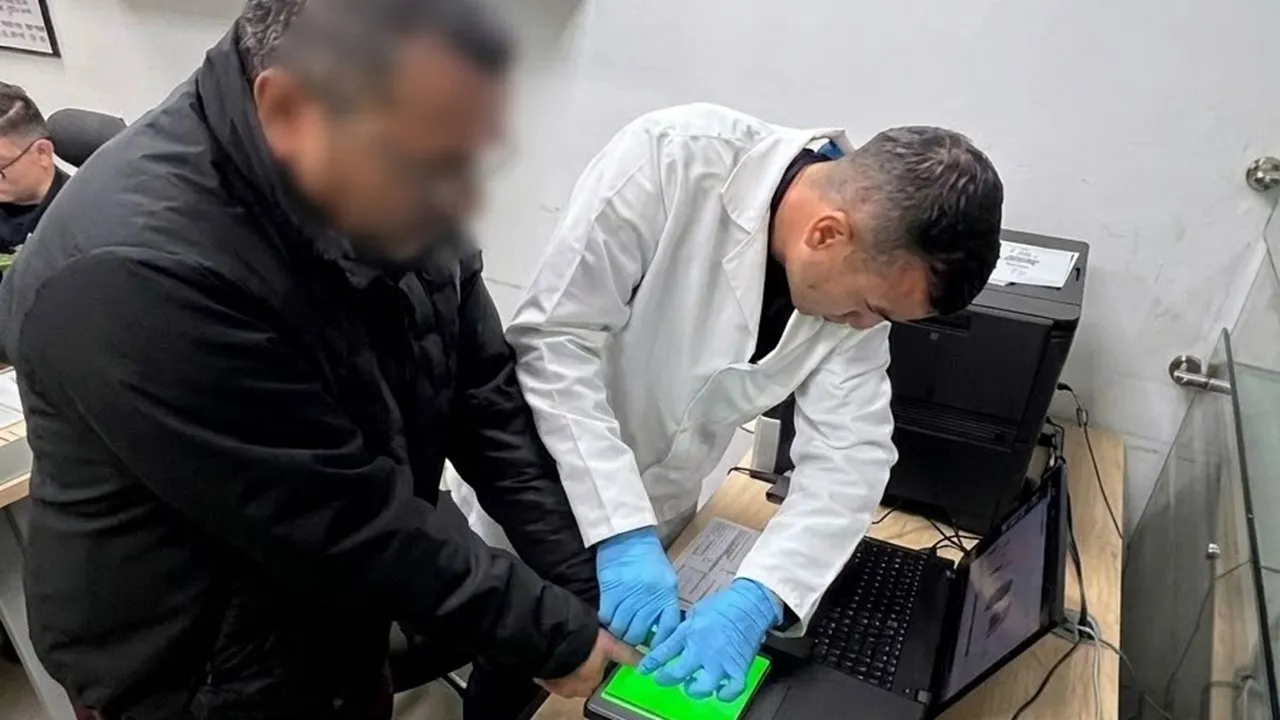
Un detenido, con el rostro difuminado, durante la toma de huellas en su procesamiento en Colombia, en el marco de las detenciones del caso Wedding. · Proyecto Diez
Mexican judge arrested in Colombia in the Wedding case
Colombian authorities arrested Mexican judge Luis Benítez Alcántara, accused by the United States of accepting a two-million-dollar bribe to release Andrew…
A Mexican judge, arrested in Colombia over the Wedding case
Colombia arrested Mexican judge Luis Benítez Alcántara, accused by the United States of receiving two million dollars to release Andrew Clark, second in…
--- The context ---
A Mexican federal judge was arrested in Colombia as part of one of the largest drug trafficking cases opened in California in recent decades: the case against the organization of Ryan Wedding, a former Olympic athlete accused by the United States of leading a cocaine trafficking network with connections in Colombia, Mexico and the United States.
--- The facts ---
Colombian authorities arrested Mexican judge Luis Benítez Alcántara last Sunday. He is accused by the United States government of accepting a two-million-dollar bribe in exchange for ordering the release of a Canadian drug trafficker linked to Wedding's organization. The U.S. Department of Justice announced the arrest on Thursday and requested his extradition to the Southern District of California. Benítez Alcántara, 49, a Mexico City resident, faces nine charges, including accessory after the fact, and if convicted he would face up to 15 years in prison on each charge, according to the official statement.
--- The facts ---
The indictment holds that, in exchange for the bribe, the judge issued rulings that facilitated the release of Andrew Clark, 36, considered the organization's second in command and nicknamed «The Dictator». Clark had been arrested in Mexico in October 2024, in Zapopan, Jalisco, and appeared before Benítez Alcántara, then a district judge in charge of overseeing the extradition process requested by Washington. According to U.S. prosecutors, the trafficker's intermediaries made transfers totaling more than the bribe amount, and on February 24, 2025, the same day the judge received the full bribe, he granted Clark release on bail. Days later, the Canadian was arrested again and transferred to the United States.
--- The positions ---
FBI Director Kash Patel highlighted that the judge's alleged corrupt acts occurred while Wedding orchestrated a multimillion-dollar transnational criminal organization, described as the largest cocaine supplier to Canada. Mexico's Federal Judicial Council confirmed Benítez Alcántara's temporary suspension and announced the opening of an internal administrative disciplinary procedure. The judge was placed at the disposal of Colombia's Attorney General's Office, which began the passive extradition process.
--- What remains unknown ---
The extradition process must be ratified by Colombia's Supreme Court of Justice before authorizing the transfer to a U.S. federal court, a process that could take three to six months. The source does not detail the judge's defense position or whether Clark testified about the alleged payment.
--- Unanswered questions ---
Will Colombia's Supreme Court ratify the judge's extradition to the United States? What evidence will U.S. prosecutors present regarding the transfers attributed to the intermediaries? Will the disciplinary procedure in Mexico reach other court officials?
--- EPM analysis ---
The arrest moves the Wedding case from drug trafficking networks to the heart of the Mexican judicial system: the indictment does not describe just a bribe, but the purchase of a decision that set the organization's second in command free. Colombia became the stage where judicial cooperation among the three countries took effect.
📌 EPM Take: In EPM's view, the arrest of Benítez Alcántara in Colombia marks the most delicate point of the Wedding case, because the U.S. indictment no longer targets only the traffickers, but the judicial decision that allegedly freed Andrew Clark after a multimillion-dollar payment. If prosecutors prove that bail was granted on the same day the bribe was completed, the process will become a test of the integrity of Mexican justice and of cooperation among Colombia, Mexico and the United States against the corruption that protects organized crime.
--- The context ---
The network of Ryan Wedding, a former Olympic athlete accused by the United States of leading one of the continent's largest cocaine trafficking organizations, added an unexpected detainee: a Mexican federal judge arrested in Colombia, accused of selling a judicial decision that favored the organization's second in command.
--- The facts ---
Colombia arrested Luis Benítez Alcántara last Sunday. He is accused by the U.S. government of accepting two million dollars in exchange for ordering the release of a Canadian drug trafficker linked to Wedding's network. The Department of Justice announced the arrest on Thursday and requested the judge's extradition to the Southern District of California. Benítez Alcántara, 49, faces nine charges, including accessory after the fact, with penalties of up to 15 years in prison on each charge if convicted, according to the official statement.
--- The facts ---
According to the indictment, the judge facilitated the release of Andrew Clark, 36, considered the organization's second in command and known as «The Dictator». Clark was arrested in Mexico in October 2024, in Zapopan, Jalisco, and his extradition process fell under the supervision of Benítez Alcántara, then a district judge in Mexico City. Prosecutors hold that intermediaries transferred a sum greater than two million dollars and that on February 24, 2025, the day the attributed payment was completed, the judge granted release on bail. Clark was recaptured days later and transferred to the United States.
--- The positions ---
FBI Director Kash Patel stressed that the alleged corrupt acts occurred while Wedding ran a multimillion-dollar transnational criminal organization, identified as the largest cocaine supplier to Canada. In Mexico, the Federal Judicial Council confirmed the judge's temporary suspension and opened an internal administrative disciplinary procedure. In Colombia, the detainee was placed at the disposal of the Attorney General's Office, which began the passive extradition process.
--- What remains unknown ---
The extradition must be ratified by Colombia's Supreme Court of Justice and the process could take three to six months before the transfer to a U.S. federal court. The source contains no statement from the judge's defense regarding the charges he faces.
--- Unanswered questions ---
How long will the Colombian Supreme Court take to decide the extradition? Will U.S. prosecutors present complete records of the transfers attributed to Clark's circle? Will more judicial officials in Mexico be investigated over this case?
--- EPM analysis ---
The case shows the full chain of purchased impunity: a high-value detainee, a judge holding the key to his extradition and a payment that, according to the indictment, coincided in date with his release. Mexico's institutional response, with suspension and an internal procedure, came only after the arrest abroad.
📌 EPM Take: In EPM's view, the arrest of Benítez Alcántara confirms that the Wedding case is no longer judged only on drug trafficking grounds: what is on trial is the vulnerability of institutions to organized crime money. A judge in charge of overseeing an extradition ended up accused of freeing the network's second in command for two million dollars, and it took an arrest in Colombia and a U.S. extradition request for the Mexican system to react with his suspension. The extradition, if Colombia's Supreme Court ratifies it, will put that accusation to the test before a federal court.
Cae en Colombia el juez mexicano acusado en el caso Wedding
Autoridades de Colombia detuvieron al juez mexicano Luis Benítez Alcántara, acusado por Estados Unidos de aceptar un soborno de dos millones de dólares para…
Un juez mexicano, detenido en Colombia por el caso Wedding
Colombia detuvo al juez mexicano Luis Benítez Alcántara, acusado por Estados Unidos de recibir dos millones de dólares para liberar a Andrew Clark, segundo de…
--- El contexto ---
Un juez federal mexicano fue detenido en Colombia dentro de uno de los mayores procesos por narcotráfico abiertos en California: el caso contra la organización de Ryan Wedding, exatleta olímpico señalado por Estados Unidos como líder de una red de tráfico de cocaína con conexiones en Colombia, México y Estados Unidos.
--- Los hechos ---
Las autoridades de Colombia detuvieron el pasado domingo al juez mexicano Luis Benítez Alcántara, acusado por el Gobierno de Estados Unidos de aceptar un soborno de dos millones de dólares a cambio de ordenar la liberación de un narcotraficante canadiense vinculado a la organización de Wedding. El Departamento de Justicia estadounidense anunció el arresto este jueves y solicitó su extradición al Distrito Sur de California. Benítez Alcántara, de 49 años y residente de Ciudad de México, enfrenta nueve cargos, entre ellos el de complicidad posterior al delito, y si es declarado culpable afrontaría hasta 15 años de prisión por cada uno, según el comunicado oficial.
--- Los hechos ---
La acusación sostiene que, a cambio del soborno, el juez emitió resoluciones que facilitaron la liberación de Andrew Clark, de 36 años, considerado segundo al mando de la organización y apodado «The Dictator». Clark había sido detenido en México en octubre de 2024, en Zapopan, Jalisco, y compareció ante Benítez Alcántara, entonces juez de distrito a cargo del proceso de extradición pedido por Washington. Según la fiscalía estadounidense, los intermediarios realizaron transferencias por una suma superior a los dos millones de dólares, y el 24 de febrero de 2025, el mismo día en que el juez recibió la totalidad del soborno, concedió la libertad bajo fianza a Clark. Días después, el canadiense fue detenido nuevamente y trasladado a Estados Unidos.
--- Las posiciones ---
El director del FBI, Kash Patel, destacó que los presuntos actos del juez ocurrieron mientras Wedding orquestaba una organización criminal transnacional multimillonaria, descrita como la mayor proveedora de cocaína hacia Canadá. El Consejo de la Judicatura Federal de México confirmó la suspensión temporal de Benítez Alcántara y anunció la apertura de un procedimiento administrativo disciplinario interno. El juzgador quedó a disposición de la Fiscalía General de la Nación de Colombia, que inició el trámite de extradición pasiva.
--- Lo que falta saber ---
El trámite de extradición deberá ser ratificado por la Corte Suprema de Justicia colombiana antes de autorizar el traslado a una corte federal de Estados Unidos, un proceso que podría extenderse de tres a seis meses. La fuente no detalla la postura de la defensa ni si Clark declaró sobre el presunto pago.
--- Preguntas sin respuesta ---
¿Ratificará la Corte Suprema de Colombia la extradición del juez a Estados Unidos? ¿Qué pruebas presentará la fiscalía estadounidense sobre las transferencias atribuidas a los intermediarios? ¿El procedimiento disciplinario en México alcanzará a otros funcionarios del juzgado?
--- Análisis EPM ---
La detención traslada el caso Wedding desde el narcotráfico hasta el sistema judicial mexicano: la acusación no describe solo un soborno, sino la compra de una decisión que dejó libre al segundo de la organización. Colombia aparece como el escenario donde la cooperación judicial entre los tres países se hizo efectiva.
📌 Conclusion EPM: A juicio de EPM, el arresto de Benítez Alcántara en Colombia marca el punto más delicado del caso Wedding, porque la acusación estadounidense ya no apunta solo a los traficantes, sino a la decisión judicial que presuntamente liberó a Andrew Clark tras un pago millonario. Si la fiscalía prueba que la libertad bajo fianza se concedió el mismo día en que se completó el soborno, el proceso dejará de ser solo un caso de narcotráfico para convertirse en una prueba de fuego sobre la integridad de la justicia mexicana y la cooperación entre Colombia, México y Estados Unidos.
--- El contexto ---
La red de Ryan Wedding, exatleta olímpico acusado por Estados Unidos de liderar una de las mayores organizaciones de tráfico de cocaína del continente, sumó un detenido inesperado: un juez federal mexicano arrestado en Colombia, señalado de haber vendido una decisión judicial que favoreció al segundo de esa organización.
--- Los hechos ---
Colombia detuvo el pasado domingo a Luis Benítez Alcántara, acusado por el Gobierno estadounidense de aceptar dos millones de dólares a cambio de ordenar la liberación de un narcotraficante canadiense vinculado a la red de Wedding. El Departamento de Justicia anunció el arresto este jueves y solicitó la extradición del juez al Distrito Sur de California. Benítez Alcántara, de 49 años, enfrenta nueve cargos, entre ellos complicidad posterior al delito, con penas de hasta 15 años de prisión por cada uno si es declarado culpable, según el comunicado oficial.
--- Los hechos ---
Según la acusación, el juez facilitó la liberación de Andrew Clark, de 36 años, considerado el segundo al mando de la organización y conocido como «The Dictator». Clark fue detenido en México en octubre de 2024, en Zapopan, Jalisco, y su proceso de extradición quedó bajo supervisión de Benítez Alcántara, entonces juez de distrito en Ciudad de México. La fiscalía sostiene que los intermediarios transfirieron una suma superior a los dos millones de dólares y que el 24 de febrero de 2025, el día en que se completó el pago atribuido, el juez concedió la libertad bajo fianza. Clark fue recapturado días después y trasladado a Estados Unidos.
--- Las posiciones ---
El director del FBI, Kash Patel, subrayó que los presuntos actos corruptos ocurrieron mientras Wedding dirigía una organización criminal transnacional multimillonaria, señalada como la mayor proveedora de cocaína hacia Canadá. En México, el Consejo de la Judicatura Federal confirmó la suspensión temporal del juez y abrió un procedimiento administrativo disciplinario interno. En Colombia, el detenido quedó a disposición de la Fiscalía General de la Nación, que inició el trámite de extradición pasiva.
--- Lo que falta saber ---
La extradición deberá ser ratificada por la Corte Suprema de Justicia de Colombia y el proceso podría extenderse de tres a seis meses antes del traslado a una corte federal estadounidense. No consta en la fuente una declaración de la defensa del juez sobre los cargos que enfrenta.
--- Preguntas sin respuesta ---
¿Cuánto tardará la Corte Suprema colombiana en decidir la extradición? ¿La fiscalía estadounidense presentará registros completos de las transferencias atribuidas al entorno de Clark? ¿Habrá más funcionarios judiciales investigados en México por este caso?
--- Análisis EPM ---
El caso exhibe la cadena completa de la impunidad comprada: un detenido de alto valor, un juez con la llave de su extradición y un pago que, según la acusación, coincidió en fecha con la libertad. La respuesta institucional mexicana, con suspensión y procedimiento interno, llegó recién tras la detención en el exterior.
📌 Conclusion EPM: A juicio de EPM, la detención de Benítez Alcántara confirma que el caso Wedding ya no se juzga solo en el terreno del narcotráfico: se juzga la vulnerabilidad de las instituciones frente al dinero del crimen organizado. Un juez encargado de supervisar una extradición terminó acusado de liberar al segundo de la red por dos millones de dólares, y fue necesaria una detención en Colombia y una solicitud de extradición de Estados Unidos para que el sistema mexicano reaccionara con su suspensión. La extradición, si la Corte Suprema colombiana la ratifica, pondrá esa acusación a prueba ante una corte federal.