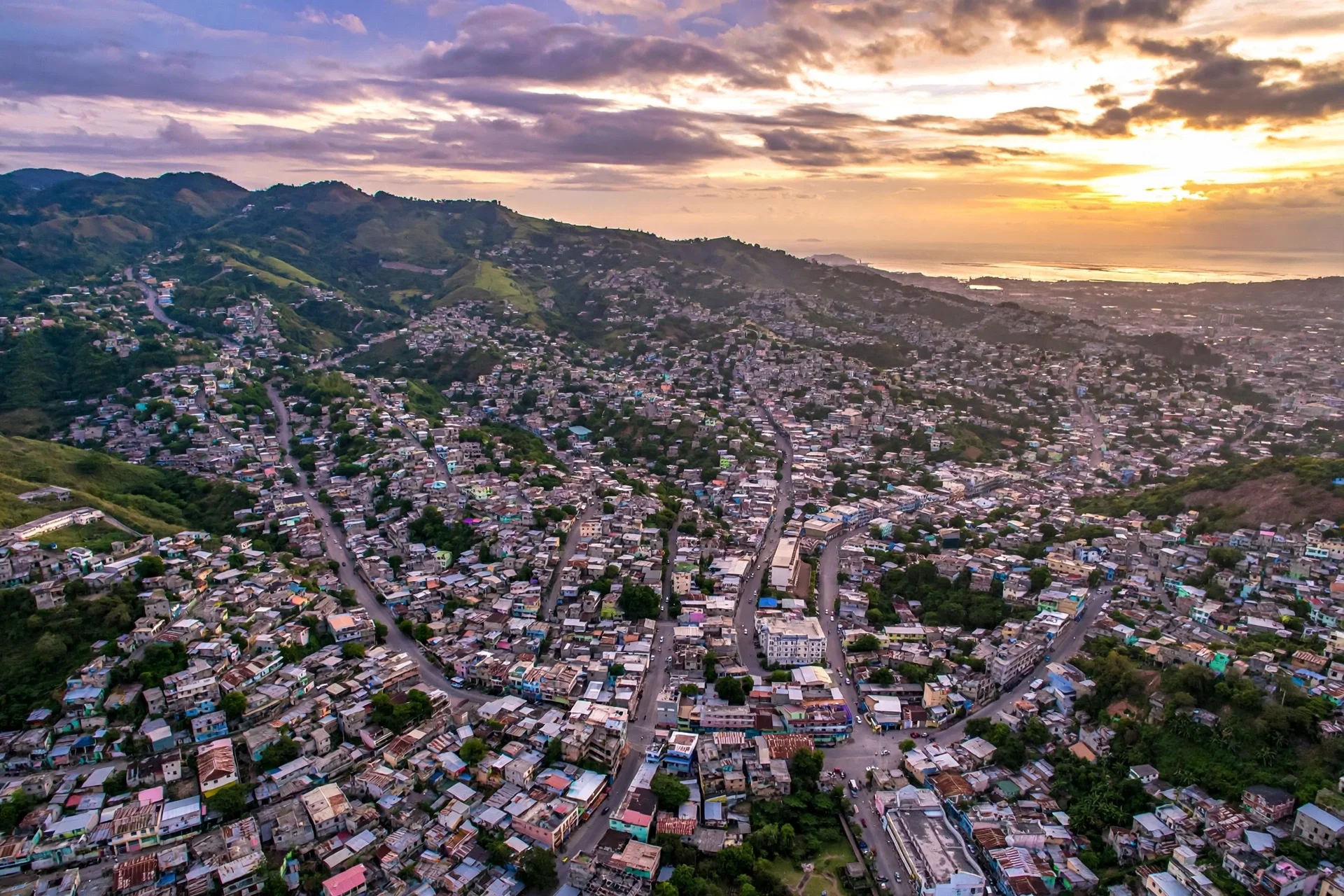
Vista aérea de una capital caribeña entre colinas al atardecer. · EPM
Salvadoran general: gangs control over 90% of Port-au-Prince, he said
In EPM's view, the weight of these remarks lies in who makes them: a Salvadoran general whose country keeps personnel deployed in Haiti.
General says gangs control more than 90% of Port-au-Prince capital
In EPM's view, the general's central message is one of order and realism: without planning, without international coordination and without logistical…
--- The context ---
Haiti is going through deep instability, with weakened institutions, according to Salvadoran brigadier general José Edgar Campos Rivas in a radio interview. In his judgment, that deterioration makes restoring order harder and makes the country a very complex setting for any eventual armed intervention.
--- The facts ---
According to the general, criminal gangs control more than 90% of Port-au-Prince. He maintained that those groups have extended their presence in the capital and widened their control over different areas, especially in the Haitian capital.
The interview took place amid the disappearance of four aeronautical technicians who were part of a Salvadoran contingent deployed in Haiti, the context for the general's analysis of security in the Caribbean country.
--- The positions ---
Campos Rivas maintained that the gangs have allied and organized into federations, which, in his judgment, has allowed them to expand their territorial control. He also stated that Haiti has entered great instability and that, in his assessment, the country lacks sufficient institutional strength to restore order.
The general warned that any operation to confront those groups would require planning, international coordination and logistical resources, given the security conditions he described on the ground.
--- What remains unknown ---
The interview does not detail which areas would fall outside the control attributed to the gangs, nor what data supports the proportion cited for the capital. It also includes no official Haitian response to those claims.
--- Unanswered questions ---
What concrete data supports the proportion of territorial control the general asserted? Will Haitian authorities respond to that assessment of their capital? What is known about the four missing aeronautical technicians and about the situation of the Salvadoran contingent deployed in Haiti?
--- EPM analysis ---
The general's assessment combines three elements he himself connected: the territorial dominance he attributes to the gangs, the institutional weakness he describes and the strategic value of Haitian territory. As he explained, Haiti's geographic position, between Cuba and the rest of the region, facilitates routes used for drug and arms trafficking toward the United States and Europe, which, in his judgment, deepens the obstacles for any operation.
📌 EPM Take: In EPM's view, the weight of these remarks lies in who makes them: a Salvadoran general whose country keeps personnel deployed in Haiti. That weight also demands caution: the 90% figure is his claim, not a fact independently verified in this interview, and treating it as a settled diagnosis would be a mistake. The sound approach is to read it as an attributed warning, test it against Haitian and international voices, and closely follow the search for the missing technicians and any announced operation.
--- The context ---
Salvadoran brigadier general José Edgar Campos Rivas described Haiti, in a radio interview, as a nation with weakened institutions and great instability. In his judgment, that combination makes restoring order difficult and makes the country a very complex setting for any eventual armed intervention.
--- The facts ---
According to Campos Rivas, criminal gangs control more than 90% of Port-au-Prince. He maintained that the gangs have extended their presence in the capital and that any operation to confront them would require planning, international coordination and sufficient logistical resources.
The officer gave that analysis amid the disappearance of four aeronautical technicians who were part of a Salvadoran contingent deployed in Haiti, a context that closely marks the Salvadoran presence in the country.
--- The positions ---
Campos Rivas stated that the gangs have allied and organized into federations, which, in his judgment, has allowed them to expand their control over different areas, especially in Port-au-Prince. He also stated that Haiti has entered great instability and, as he maintained, lacks sufficient institutional strength.
The general further warned that Haiti's geographic location makes it, as he explained, a strategic point for illicit activities in the Caribbean, with drug and arms trafficking routes toward the United States and Europe.
--- What remains unknown ---
The interview does not specify what data supports the proportion of control attributed to the gangs in the capital, nor which areas would fall outside that dominance. It also includes no official Haitian assessment confirming or qualifying that diagnosis.
--- Unanswered questions ---
What data supports the general's claim about control of more than 90% of the capital? How will Haitian authorities respond to that description? What is known about the four missing aeronautical technicians and their contingent?
--- EPM analysis ---
The general's analysis links territorial control attributed to allied gangs, weakened institutions and a geographic position that, as he warned, facilitates illicit routes toward the United States and Europe. Those factors, in his judgment, pose major obstacles for any security operation in Haiti and explain his insistence on planning rather than improvised responses.
📌 EPM Take: In EPM's view, the general's central message is one of order and realism: without planning, without international coordination and without logistical resources, no operation will succeed under the conditions he describes for Haiti. His claim about control of the capital must be read for what it is, an attributed assessment by a military commander with personnel deployed in the country, and it requires corroboration before becoming certainty. Even so, ignoring the warning because it is uncomfortable would be as reckless as accepting it unverified.
General salvadoreño: bandas controlan más del 90 % de Puerto Príncipe
A juicio de EPM, la fuerza de estas declaraciones está en quién las hace: un general salvadoreño cuyo país mantiene personal desplegado en Haití.
Campos Rivas afirmó que bandas dominan más del 90 % de Puerto Príncipe
A juicio de EPM, el mensaje central del general es de orden y realismo: sin planificación, sin coordinación internacional y sin recursos logísticos, ninguna…
--- El contexto ---
Haití atraviesa una profunda inestabilidad, con instituciones debilitadas, según la descripción que hizo el general de brigada salvadoreño José Edgar Campos Rivas en una entrevista radial. A su juicio, el deterioro dificulta restablecer el orden y hace del país un escenario muy complejo para una eventual intervención armada.
--- Los hechos ---
Según afirmó el militar, las bandas criminales controlan más del 90 % de Puerto Príncipe. Sostuvo que esos grupos han extendido su presencia en la capital y que han ampliado su control sobre distintas zonas.
La entrevista se produjo en medio de la desaparición de cuatro técnicos aeronáuticos que formaban parte de un contingente salvadoreño desplegado en Haití, contexto del análisis del general sobre la seguridad en el país caribeño.
--- Las posiciones ---
Campos Rivas sostuvo que las bandas se han aliado y organizado en federaciones, lo que, a su juicio, les ha permitido ampliar su control territorial. También manifestó que Haití ha entrado en una gran inestabilidad y que, según su valoración, el país carece de institucionalidad suficiente.
El general advirtió que cualquier operación para enfrentar a esos grupos requeriría planificación, coordinación internacional y recursos logísticos, dadas las condiciones que describió.
--- Lo que falta saber ---
La entrevista no detalla qué zonas quedarían fuera del control que el general atribuye a las bandas, ni con qué datos sustenta la proporción citada para la capital. Tampoco recoge una respuesta oficial haitiana a esas afirmaciones.
--- Preguntas sin respuesta ---
¿Qué datos concretos respaldan la proporción de control territorial que afirmó el general? ¿Habrá una respuesta de las autoridades haitianas a esa valoración sobre la capital? ¿Qué se sabe de los cuatro técnicos aeronáuticos desaparecidos y de la situación del contingente salvadoreño desplegado en Haití?
--- Análisis EPM ---
La valoración del general combina el dominio territorial que atribuye a las bandas, la debilidad institucional que describe y el valor estratégico del territorio. Según explicó, la posición de Haití, entre Cuba y el resto de la región, facilita rutas de tráfico de drogas y armas hacia Estados Unidos y Europa, lo que, a su juicio, agrava los obstáculos para cualquier operación de seguridad.
📌 Conclusion EPM: A juicio de EPM, la fuerza de estas declaraciones está en quién las hace: un general salvadoreño cuyo país mantiene personal desplegado en Haití. Pero su peso exige también cautela: el 90 % es una afirmación suya, no un dato verificado de forma independiente en esta entrevista, y tratarlo como diagnóstico cerrado sería un error. Lo prudente es leerlo como una advertencia atribuida, contrastarla con otras voces haitianas e internacionales y seguir de cerca la búsqueda de los técnicos desaparecidos.
--- El contexto ---
El general de brigada salvadoreño José Edgar Campos Rivas describió a Haití, en una entrevista radial, como una nación con instituciones debilitadas y gran inestabilidad. A su juicio, esa combinación dificulta restablecer el orden y hace del país un escenario muy complejo para una eventual intervención armada.
--- Los hechos ---
Según afirmó Campos Rivas, las bandas criminales controlan más del 90 % de Puerto Príncipe. Sostuvo que las pandillas han extendido su presencia en la capital y que cualquier operación para enfrentarlas requeriría planificación, coordinación internacional y recursos logísticos.
El militar hizo ese análisis en medio de la desaparición de cuatro técnicos aeronáuticos que formaban parte de un contingente salvadoreño desplegado en Haití, contexto que marca de cerca la presencia salvadoreña en el país.
--- Las posiciones ---
Campos Rivas afirmó que las bandas se han aliado y organizado en federaciones, lo que, a su juicio, les ha permitido ampliar su control sobre distintas zonas de Puerto Príncipe. También manifestó que Haití ha entrado en gran inestabilidad y que, según sostuvo, no tiene institucionalidad suficiente.
El general advirtió además que la ubicación de Haití lo convierte, según explicó, en punto estratégico para actividades ilícitas en el Caribe, con rutas de tráfico de drogas y armas hacia Estados Unidos y Europa.
--- Lo que falta saber ---
La entrevista no precisa qué datos sustentan la proporción de control atribuida a las bandas en la capital, ni qué zonas quedarían fuera de ese dominio. Tampoco incluye una valoración oficial haitiana que confirme o matice ese diagnóstico.
--- Preguntas sin respuesta ---
¿Con qué datos sustenta el general su afirmación sobre el control de más del 90 % de la capital? ¿Qué respuesta darán las autoridades haitianas a esa descripción? ¿Qué se sabe de los cuatro técnicos aeronáuticos desaparecidos y de su contingente?
--- Análisis EPM ---
El análisis del general une control territorial atribuido a bandas aliadas, instituciones debilitadas y una posición geográfica que, según advirtió, facilita rutas ilícitas hacia Estados Unidos y Europa. Esos factores, a su juicio, son obstáculos importantes para cualquier operación de seguridad en Haití y explican su insistencia en la planificación antes que en respuestas improvisadas.
📌 Conclusion EPM: A juicio de EPM, el mensaje central del general es de orden y realismo: sin planificación, sin coordinación internacional y sin recursos logísticos, ninguna operación prosperará en las condiciones que él describe para Haití. Su afirmación sobre el control de la capital debe leerse como lo que es, una valoración atribuida de un mando militar con personal desplegado en el país, y exige contraste antes de convertirse en certeza. Aun así, ignorar la advertencia por incómoda sería tan imprudente como aceptarla sin verificarla.