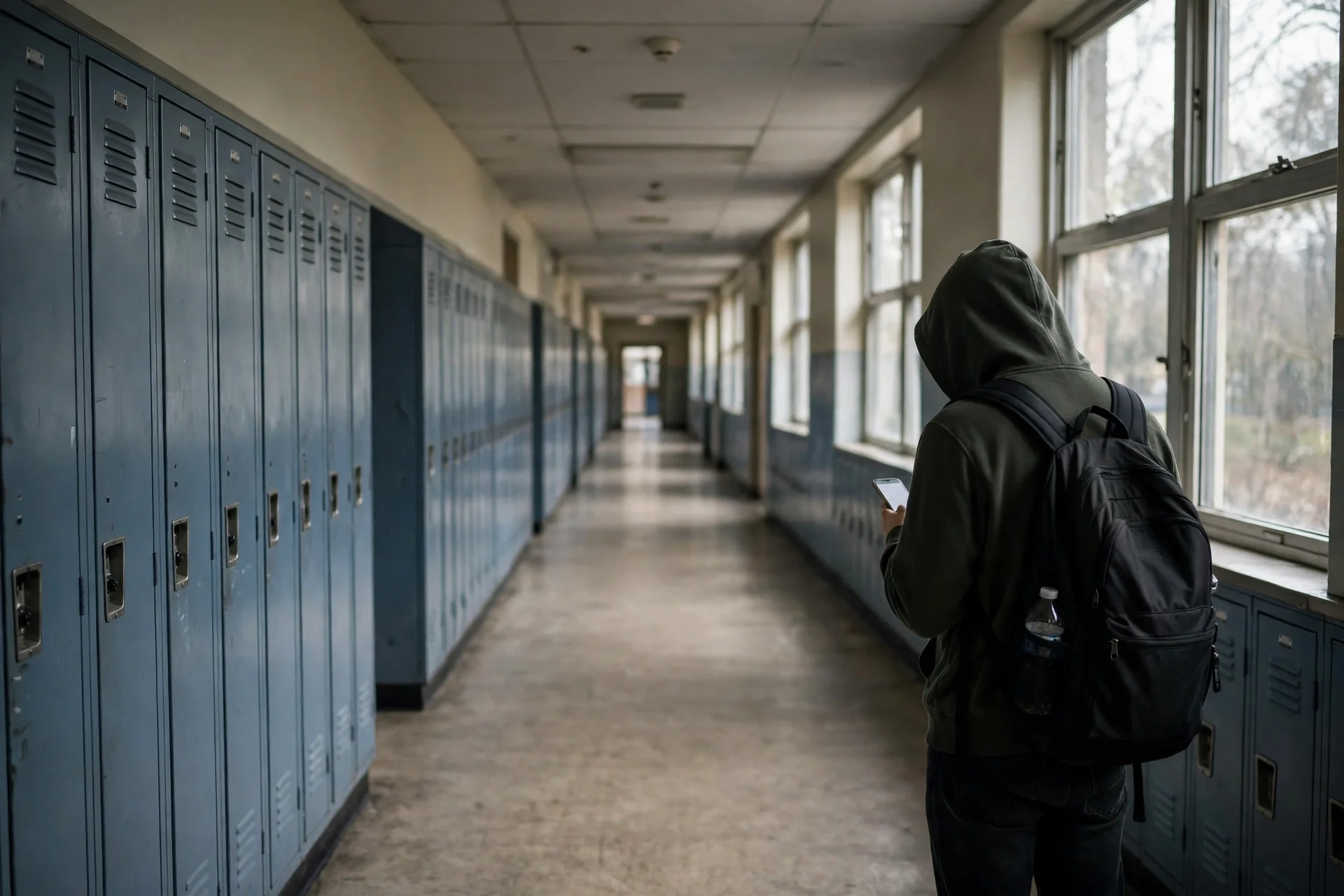
Imagen alusiva al acoso escolar y al aislamiento de los estudiantes. · Imagen generada para EPM
Rumors and mockery: the most frequent bullying in Colombian schools
An analysis by the LEE at Pontificia Universidad Javeriana using Pisa 2025 data found that 20,7% of students aged 15 suffer frequent bullying in Colombia, with…
One in five Colombian students faces frequent bullying at school
Using Pisa 2025 microdata, the LEE at Pontificia Universidad Javeriana estimated that 20,7% of students aged 15 face frequent bullying, close to 124.000…
--- The context ---
Colombia has had Law 1620 since 2013 to strengthen school coexistence and prevent violence in classrooms. Even so, an analysis by the Laboratory of Economics of Education (LEE) at Pontificia Universidad Javeriana, using microdata from the Ocde Pisa 2025 tests, shows that bullying remains present among students aged 15.
--- The facts ---
A total of 20,7% suffers frequent bullying: one in five students, close to 124.000 students, victims of mockery, threats, blows, rumors or publication of personal information without authorization. A total of 9,7% experiences some form every week.
The most frequent form is rumors, with 13,4% saying classmates spread unpleasant comments. Mockery follows at 10,7%, blows and pushes at 4,3% and direct threats at 3,4%. Cyberbullying reaches 3,6%, almost always together with face-to-face aggression, so attacks continue on the mobile phone even at home.
With little family support, frequent victimization is 24,4%; with high support it falls to 16,8%. In schools with the greatest coexistence difficulties it reaches 23,8%, and exposure is higher among those who repeated a grade or study at a level below expectations.
A total of 27,7% of frequent victims feels alone at school, compared with 13,8% of those who do not suffer it, with lower life satisfaction and worse perception of safety. A total of 42,7% of bullied students missed classes in the two weeks before the test, compared with 34,5%, and their results in reading and mathematics were worse. Colombia ranks 43 among 90 systems, near the world average and better than the Latin American mean.
--- The positions ---
Gloria Bernal, director of the LEE, argued in indirect terms that families cannot be present in every difficult situation, but they can give tools to face bullying. Omar Garzón, a researcher, warned in indirect terms that the relationship between bullying, absenteeism and grade lag can become a vicious circle and that prevention is fundamental to guarantee the right to education. The report also warns that the smaller distance from Ocde countries does not necessarily mean improvement, because bullying rose in several developed nations.
--- What remains unknown ---
It remains unknown which strategies work in schools with better coexistence and whether Law 1620 of 2013 is applied uniformly. It is also unclear how much of the 3,6% cyberbullying starts inside the school community and how much outside it.
--- Unanswered questions ---
Why do rumors, at 13,4%, exceed physical aggression by so much? What specific support do students who repeated a grade and are more exposed need? How can victimization of 24,4% be lowered when family support is low? Can prevention break the link between absenteeism and grade lag?
--- EPM analysis ---
When rumors and mockery predominate over blows, aggression becomes less visible, but just as persistent every week. The report connects family, classroom climate and performance: loneliness at 27,7% and absenteeism at 42,7% are not minor effects, but part of the same educational problem that requires early detection and sustained attention in schools.
📌 EPM Take: In EPM's view, the priority must be to detect non-physical bullying early, strengthen family accompaniment and care for the coexistence climate before harm becomes loneliness, absenteeism and grade lag. The Pisa 2025 data show that support at home and an attentive school environment reduce exposure, so sustained prevention, with follow-up by school and support for the most vulnerable students, is the strongest path to protect the right to learn without fear every day.
--- The context ---
Law 1620 has been in force in Colombia since 2013, created to strengthen school coexistence and prevent violence in classrooms. However, an analysis by the Laboratory of Economics of Education (LEE) at Pontificia Universidad Javeriana, using microdata from the Ocde Pisa 2025 tests, confirms that frequent bullying still affects students aged 15.
--- The facts ---
A total of 20,7% faces frequent bullying: one in five students, close to 124.000 students, has suffered mockery, threats, blows, rumors or publication of personal information without authorization. A total of 9,7% endures some form every week.
The most common form is rumors, with 13,4% saying classmates spread unpleasant comments. Mockery follows at 10,7%, blows and pushes at 4,3% and direct threats at 3,4%. Cyberbullying affects 3,6%, almost always together with face-to-face aggression, so harassment follows the student home as well.
With little family support, frequent bullying reaches 24,4%; with high support it drops to 16,8%. In schools with greater coexistence difficulties, bullied students reach 23,8%, and exposure is higher among those who repeated a grade or study at a level below expectations for their age.
A total of 27,7% of frequent victims feels alone at school, compared with 13,8% of those who do not suffer it, with lower life satisfaction and worse perception of safety. A total of 42,7% of bullied students missed classes in the two weeks before the test, compared with 34,5%, and their results in reading and mathematics were lower. Colombia is at 43 among 90 systems, near the world average and above the Latin American mean.
--- The positions ---
Gloria Bernal, director of the LEE, held in indirect terms that families cannot be present in every difficult moment, but they can give tools to face bullying. Omar Garzón, a researcher, warned in indirect terms that the link between bullying, absenteeism and grade lag can become a vicious circle and that prevention is fundamental to guarantee the right to education. Moving closer to Ocde levels does not necessarily mean improving, since bullying grew in several developed nations.
--- What remains unknown ---
It remains to be specified how Law 1620 of 2013 is applied in practice, what resources counselors have and whether care routes act quickly. Detail is also missing on the response to 3,6% cyberbullying when it continues outside school hours.
--- Unanswered questions ---
What explains why rumors reach 13,4% as the main form of intimidation? Do schools with 23,8% of bullied students receive the authority and support they need? How can students who repeated a grade and already carry lag be better protected? Will family and school manage to lower 42,7% absenteeism among victims?
--- EPM analysis ---
Bullying thrives where daily authority, coexistence and family support fail. Written rules are not enough if application is uneven. When rumor displaces the blow, harm becomes normalized and affects attendance and learning, so distinguishing schools, profiles and environments allows precise action instead of treating the problem as inevitable for every student.
📌 EPM Take: In EPM's view, confronting bullying requires effective school discipline, present families that build judgment and character, and demanding application of Law 1620 without empty bureaucracy. The contrasts between 24,4% and 16,8% according to support at home, and between 42,7% and 34,5% in absenteeism, show that the environment does change outcomes. Protecting the bullied student and correcting the aggressor on time means defending educational authority and the basic right to study in peace.
Rumores y burlas: el acoso más frecuente en colegios colombianos
Un análisis del LEE de la Pontificia Universidad Javeriana con datos Pisa 2025 halló que el 20,7% de estudiantes de 15 años sufre bullying frecuente en…
Uno de cada cinco alumnos sufre bullying frecuente en Colombia
Con microdatos Pisa 2025, el LEE de la Pontificia Universidad Javeriana estimó que el 20,7% de estudiantes de 15 años padece bullying frecuente, cerca de…
--- El contexto ---
Colombia cuenta desde 2013 con la Ley 1620 para fortalecer la convivencia escolar. Aun así, un análisis del Laboratorio de Economía de la Educación (LEE) de la Pontificia Universidad Javeriana, con microdatos de las pruebas Pisa 2025 de la Ocde, muestra que el acoso sigue presente a los 15 años.
--- Los hechos ---
El 20,7% sufre bullying frecuente: uno de cada cinco estudiantes, cerca de 124.000 alumnos, víctimas de burlas, amenazas, golpes, rumores o difusión de datos personales. El 9,7% vive alguna modalidad cada semana.
La forma más frecuente son los rumores, con 13,4% que dice que compañeros difunden comentarios desagradables. Siguen las burlas con 10,7%, los golpes y empujones con 4,3% y las amenazas directas con 3,4%. El ciberacoso llega a 3,6%, casi siempre junto con agresiones presenciales, y los ataques siguen en el celular aun en casa.
Con poco respaldo familiar, la victimización frecuente es de 24,4%; con apoyo alto baja a 16,8%. En colegios con mayores dificultades de convivencia llega a 23,8%, y la exposición es mayor en quienes repitieron grado o cursan un nivel inferior al esperado.
El 27,7% de víctimas frecuentes se siente solo en el colegio, frente a 13,8% de quienes no lo sufren, con menor satisfacción y peor percepción de seguridad. Faltó a clases el 42,7% de acosados en las dos semanas anteriores a la prueba, frente a 34,5%, y sus resultados en lectura y matemáticas fueron peores. Colombia ocupa el puesto 43 entre 90 sistemas, cerca del promedio mundial y mejor que la media latinoamericana.
--- Las posiciones ---
Gloria Bernal, directora del LEE, señaló en indirecto que las familias no pueden estar presentes en cada situación difícil, pero sí dar herramientas para enfrentar el acoso. Omar Garzón, investigador, advirtió en indirecto que la relación entre acoso, ausentismo y rezago puede volverse un círculo vicioso y que prevenir es fundamental para garantizar el derecho a la educación. El informe advierte además que la menor distancia frente a países Ocde no necesariamente es mejora, porque el acoso aumentó en varias naciones desarrolladas.
--- Lo que falta saber ---
Falta saber qué estrategias funcionan en los colegios con mejor convivencia y si la Ley 1620 de 2013 se aplica de forma uniforme. Tampoco está claro cuánto del ciberacoso de 3,6% nace dentro de la comunidad escolar y cuánto fuera de ella.
--- Preguntas sin respuesta ---
¿Por qué los rumores, con 13,4%, superan tanto a las agresiones físicas? ¿Qué apoyo específico necesitan quienes repitieron grado y están más expuestos? ¿Cómo bajar la victimización de 24,4% cuando el respaldo familiar es bajo? ¿Podrá la prevención romper el vínculo entre ausentismo y rezago?
--- Análisis EPM ---
Cuando predominan rumores y burlas sobre golpes, la agresión se vuelve menos visible, pero persistente cada semana. El informe conecta familia, aula y rendimiento: la soledad de 27,7% y el ausentismo de 42,7% no son efectos menores, sino parte del mismo problema educativo.
📌 Conclusion EPM: A juicio de EPM, la prioridad debe estar en detectar temprano el acoso no físico, fortalecer el acompañamiento familiar y cuidar el clima de convivencia antes de que el daño se vuelva soledad, ausentismo y rezago. Los datos de Pisa 2025 muestran que el respaldo en casa y un entorno escolar atento reducen la exposición, por lo que la prevención sostenida, con seguimiento por colegio y apoyo a los más vulnerables, es la vía más sólida para proteger el derecho a aprender sin miedo.
--- El contexto ---
Desde 2013 rige en Colombia la Ley 1620, para fortalecer la convivencia escolar. Sin embargo, un análisis del Laboratorio de Economía de la Educación (LEE) de la Pontificia Universidad Javeriana, con microdatos de las pruebas Pisa 2025 de la Ocde, confirma que el bullying frecuente sigue a los 15 años.
--- Los hechos ---
El 20,7% enfrenta bullying frecuente: uno de cada cinco estudiantes, cerca de 124.000 alumnos, ha sufrido burlas, amenazas, golpes, rumores o publicación de información personal sin autorización. El 9,7% padece alguna modalidad cada semana.
La modalidad más común son los rumores, con 13,4% que afirma que compañeros difunden comentarios desagradables. Luego aparecen las burlas con 10,7%, los golpes y empujones con 4,3% y las amenazas directas con 3,4%. El ciberacoso afecta a 3,6%, casi siempre junto con agresiones presenciales y el hostigamiento sigue hasta su hogar.
Con poco respaldo familiar, el bullying frecuente alcanza 24,4%; con apoyo alto desciende a 16,8%. En colegios con mayores dificultades de convivencia, los acosados llegan a 23,8%, y hay mayor exposición en quienes repitieron grado o cursan un nivel inferior al esperado para su edad.
Se siente solo el 27,7% de víctimas frecuentes, frente a 13,8% de quienes no lo sufren, con menor satisfacción y peor percepción de seguridad. Faltó a clases el 42,7% de acosados en las dos semanas previas a la prueba, frente a 34,5%, y sus resultados en lectura y matemáticas fueron inferiores. Colombia está en el puesto 43 entre 90 sistemas, cerca del promedio mundial y sobre la media latinoamericana.
--- Las posiciones ---
Gloria Bernal, directora del LEE, planteó en indirecto que las familias no pueden estar presentes en cada momento difícil, pero sí dar herramientas para enfrentar el acoso. Omar Garzón, investigador, advirtió en indirecto que el vínculo entre acoso, ausentismo y rezago puede volverse un círculo vicioso y que prevenir es fundamental para garantizar el derecho a la educación. Acercarse a niveles Ocde no significa necesariamente mejorar, pues el acoso creció en varias naciones desarrolladas.
--- Lo que falta saber ---
Queda por precisar cómo se aplica en la práctica la Ley 1620 de 2013, qué recursos tienen los orientadores y si las rutas de atención actúan con rapidez. También falta detalle sobre la respuesta frente al 3,6% de ciberacoso cuando continúa fuera del horario escolar.
--- Preguntas sin respuesta ---
¿Qué explica que los rumores lleguen a 13,4% como principal forma de intimidación? ¿Reciben los colegios con 23,8% de acosados la autoridad y el apoyo necesarios? ¿Cómo proteger mejor a quienes repitieron grado y ya cargan rezago? ¿Lograrán familia y escuela bajar el ausentismo de 42,7% entre víctimas?
--- Análisis EPM ---
El acoso prospera donde fallan la autoridad cotidiana, la convivencia y el respaldo familiar. Normas escritas no bastan si su aplicación es desigual. Cuando el rumor desplaza al golpe, el daño se normaliza y afecta asistencia y aprendizaje, por lo que distinguir colegios, perfiles y entornos permite actuar con precisión.
📌 Conclusion EPM: A juicio de EPM, enfrentar el bullying exige disciplina escolar efectiva, familias presentes que formen criterio y carácter, y una aplicación exigente de la Ley 1620 sin burocracia vacía. Los contrastes entre 24,4% y 16,8% según el apoyo en casa, y entre 42,7% y 34,5% en ausentismo, muestran que el entorno sí cambia los resultados. Proteger al acosado y corregir al agresor a tiempo es defender la autoridad educativa y el derecho a estudiar en paz.