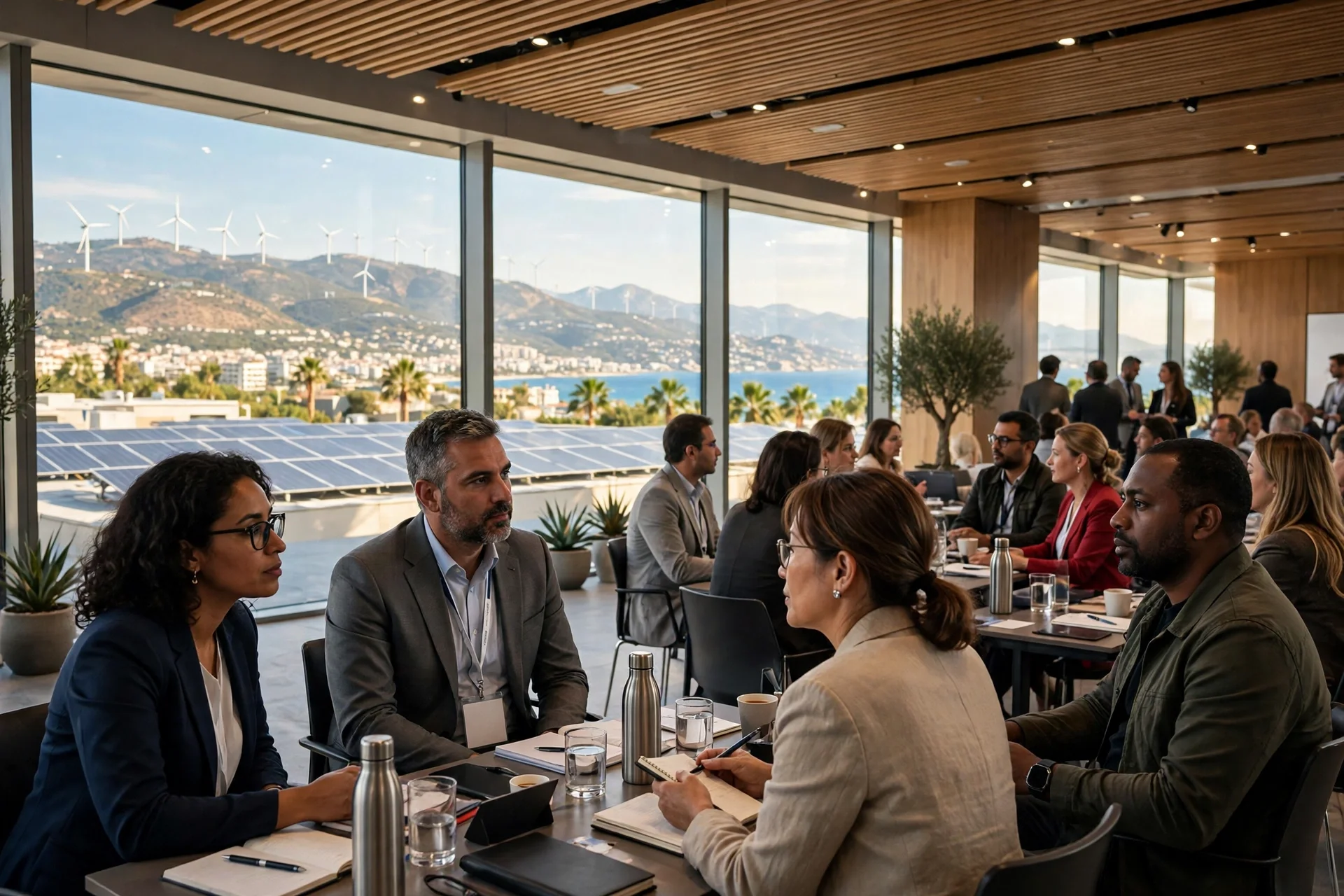
COP31 in Antalya: Britain sets out its climate priorities
COP31 will take place in Antalya, Türkiye, from 9 to 20 November.
COP31: Britain seeks clean energy, security and fiscal discipline
Britain will attend COP31 in Antalya from 9 to 20 November to uphold the Paris Agreement and the 1.5°C limit, accelerate clean energy and electrification, curb…
The 31st United Nations Climate Change Conference, known as COP31, will bring delegations from around the world to Antalya, Türkiye, from 9 to 20 November. It is the largest international summit devoted to agreeing how to tackle climate change and deal with its effects, and Britain arrives with priorities linking emissions cuts, adaptation finance, nature and clean-energy jobs.
--- The context ---
For Britain, climate change is no longer a distant threat. This year saw record heatwaves, droughts and wildfires, and interim data from the national health security agency estimates 2,877 heat-associated deaths from the May and June 2026 heatwaves alone. The national weather service has provisionally declared the summer of 2026 the hottest on record, with extremes increasing and the months from October to March set to become wetter.
Other countries face similar pressures, with El Niño compounding effects in some regions. The British premise is simple: no country can tackle this alone. Decisions in Antalya are meant to help limit global temperature increases to 1.5°C, move towards clean and reliable energy, protect people from climate effects and build opportunity through clean energy.
--- The facts ---
Britain's stated priority at COP31 is to uphold the Paris Agreement made in 2015 and keep countries working towards the 1.5°C limit. The Prime Minister will attend alongside the Foreign Secretary, Ed Miliband, and the Secretary of State for Energy Security and Net Zero, Miatta Fahnbulleh, will lead the delegation in the negotiations, joined by other ministers and special representatives Rachel Kyte and Ruth Davis.
The broader priorities were set out in Parliament: speed up the global shift to clean energy and electrification, curb methane and other super-pollutants, protect critical ecosystems including forests and oceans, support more sustainable food systems and a circular economy, and advance adaptation, with more investment and better access to quality finance.
--- The positions ---
London supports its case with its domestic record: emissions cut by 54% since 1990 while the economy grew by around 85%, through wind, solar and nuclear power and cuts in industry, transport and heating. It was the first G7 country to stop using coal for electricity, has around 2 million electric vehicles registered, sold over 100,000 heat pumps in 2025 and recorded 269,000 solar installations that year.
Adaptation at home carries significant funding: £10.5 billion for flood defences and coastal erosion over the next decade, more than £7 billion for nature programmes, £97 million extra for firefighters this summer and support for households to install air-to-air heat pumps. New homes must also be designed to reduce unwanted solar heat.
--- What remains unknown ---
Internationally, British climate finance since 2011 has supported an estimated 159 million people to adapt, mobilised an estimated £26 billion in public and private finance, avoided an estimated 201 million tonnes of emissions and improved management of an estimated 21.5 million hectares. The latest commitment pledges around £6 billion in official assistance over three years, alongside £6.7 billion in public finance, aiming to catalyse billions more privately.
What remains open is how far other countries will match that effort, how quickly new finance would reach the communities that need it, and what mechanism would verify delivery after the summit. Nor is it specified what new commitments, beyond the announced priorities, the delegation expects to secure on methane, forests and oceans.
--- Unanswered questions ---
Will the summit produce new and verifiable commitments capable of keeping the 1.5°C limit within reach? How much additional money will actually be pledged so that the most exposed countries can adapt? Will the major economies accept concrete measures against methane and the other super-pollutants? Will the promised protection for forests and oceans become obligations with deadlines and public monitoring?
--- EPM analysis ---
The progressive reading is that the summit's value will be measured in finance and fairness. For countries already facing drought, floods and extreme heat, adaptation is the difference between preparing and paying ever higher damages. Britain arrives with cuts to show, but its credibility will depend on money arriving quickly, on access improving for the most vulnerable and on a transition that creates jobs without leaving poorer households behind.
📌 EPM Take: In EPM's view, COP31 should be judged by whether it turns climate ambition into real protection for people. Holding the 1.5°C limit requires rapid cuts, but it also requires funding defences, health and resilience where the damage has already arrived. Britain is right to join clean energy, methane, nature and adaptation in a single agenda. Its test will be persuading other countries to accept financed, verifiable and fair commitments, because a transition that fails to protect the most exposed first will lose public support and arrive too late for communities already living with extreme heat, persistent drought and increasingly frequent flooding across the country.
The 31st United Nations Climate Change Conference, known as COP31, will be hosted in Antalya, Türkiye, from 9 to 20 November. It is the largest international summit where countries agree how to tackle climate change and deal with its effects, and Britain attends with an agenda of clean energy, national security and measured use of public resources.
--- The context ---
The British argument begins with a measurable impact at home: record heatwaves, droughts and wildfires this year, and 2,877 heat-associated deaths, on interim health security agency data, from the May and June 2026 heatwaves alone. The national weather service has provisionally declared that summer the hottest on record, warning that extremes are increasing and winters are set to become wetter.
From a security standpoint, the government argues that no country can tackle this alone and that cutting global emissions best protects British people in the long term. It also makes a practical claim: clean energy should bring bills down and reduce exposure to volatile fossil fuel markets, while British technology promoted at the summit can benefit domestic business.
--- The facts ---
The declared priority in Antalya is to uphold the Paris Agreement made in 2015 and keep countries working towards limiting global warming to 1.5°C. The Prime Minister will attend alongside the Foreign Secretary, Ed Miliband, and the Secretary of State for Energy Security and Net Zero, Miatta Fahnbulleh, will lead the British delegation during the negotiations, joined by other ministers and by the special representatives for climate and for nature, Rachel Kyte and Ruth Davis.
The priorities set out in Parliament are fourfold: speed up clean energy and electrification; curb methane and other super-pollutants; protect forests and oceans, with more sustainable agriculture, a circular economy and attention to climate risks for national security; and advance adaptation, with more investment and improved access to finance.
--- The positions ---
London backs its position with its domestic record: emissions cut by 54% since 1990 while the economy grew by around 85%, through wind, solar and nuclear power and cuts in industry, transport and heating. It was the first G7 country to stop using coal for electricity, has around 2 million electric vehicles registered, and in 2025 passed 100,000 heat pump sales and 269,000 solar installations.
Adaptation spending at home is substantial and will require measurable results: £10.5 billion for flood defences and coastal erosion over the next decade, more than £7 billion on nature programmes, £97 million extra for firefighters this summer, household funding for air-to-air heat pumps and design rules so new homes reduce unwanted solar heat.
--- What remains unknown ---
The external dimension also involves large sums. Since 2011, British climate finance has supported an estimated 159 million people to adapt, mobilised an estimated £26 billion, avoided an estimated 201 million tonnes of emissions and improved management of an estimated 21.5 million hectares. The latest strategy pledges around £6 billion in official assistance over three years, alongside £6.7 billion in public finance.
What remains open is how the burden will be shared, how much will fall to private capital and what controls will guarantee verifiable results. It is also unresolved whether promoting British clean technology will translate into real exports, one of the benefits the government attaches to its presence in Antalya.
--- Unanswered questions ---
Will other countries accept a proportional share of the effort, or will the burden fall again on the same taxpayers? What control mechanisms will verify that the announced international finance produces real results? Will household energy bills in Britain actually fall under the transition being proposed? How will security of supply be protected while dependence on fossil fuels is reduced?
--- EPM analysis ---
The conservative reading is that climate policy will only endure if it protects household budgets, energy supply and national security. Britain can point to cuts achieved alongside growth, and its emphasis on domestic technology, nuclear power and electrification points that way. But the sums for adaptation and overseas finance are high, and their defence will depend on clear audits and visible benefits in bills, jobs and exports, not on annual declarations.
📌 EPM Take: In EPM's view, the British agenda for Antalya is defensible if it is held to a simple discipline: every pound committed must buy verifiable resilience, energy security or technological advantage. Defending the 1.5°C limit cannot become an open cheque or an unequal burden shared by too few countries. Britain arrives with a serious domestic record and technical capacity it can sell to the world. Its duty in the negotiation is to demand reciprocity, measurement and deadlines, so the transition reduces real risks without driving up household costs or weakening national security of supply in the coming years ahead.
COP31 en Antalya: Reino Unido fija sus prioridades climáticas
COP31 se celebrará en Antalya, Türkiye, del 9 al 20 de noviembre.
COP31: Londres busca energía limpia, seguridad y control del gasto
Reino Unido acudirá a COP31, en Antalya del 9 al 20 de noviembre, para defender el Acuerdo de París y el límite de 1,5°C, acelerar la energía limpia y la…
La trigésima primera Conferencia de las Naciones Unidas sobre el Cambio Climático, conocida como COP31, reunirá en Antalya, Türkiye, del 9 al 20 de noviembre, a delegaciones de todo el mundo en la mayor cumbre internacional dedicada a acordar cómo enfrentar el cambio climático y responder a sus efectos, ya visibles en salud, energía, ecosistemas y economía.
--- El contexto ---
El cambio climático ya no se presenta como una amenaza lejana para Reino Unido. Este año el país registró olas de calor récord, sequías e incendios forestales, y los datos provisionales de la agencia británica de seguridad sanitaria estiman 2.877 muertes asociadas al calor solo durante las olas de calor de mayo y junio de 2026.
El servicio meteorológico nacional declaró provisionalmente el verano de 2026 como el más caluroso registrado. Su informe climático de 2025 concluyó que el país se calienta, que los extremos aumentan y que los meses entre octubre y marzo tenderán a ser más húmedos. En otras regiones del mundo, problemas similares se ven agravados por los efectos de El Niño.
--- Los hechos ---
Ningún país puede enfrentar solo esta crisis. Las decisiones de Antalya deberán ayudar a mantener el calentamiento dentro del límite de 1,5°C, avanzar hacia energía limpia y fiable, proteger a las personas frente a los efectos del clima y crear empleo mediante la energía limpia y la electrificación.
La prioridad británica declarada es defender el Acuerdo de París de 2015 y mantener a los países trabajando para limitar el calentamiento a 1,5°C. El primer ministro asistirá a la cumbre junto al secretario de Exteriores, Ed Miliband, y la secretaria de Estado de Seguridad Energética y Cero Neto, Miatta Fahnbulleh, encabezará la delegación en las negociaciones, con otros ministros y las representantes especiales Rachel Kyte y Ruth Davis.
--- Las posiciones ---
El Gobierno fijó en el Parlamento cuatro líneas: acelerar el cambio hacia la energía limpia y la electrificación; frenar el metano y otros supercontaminantes; proteger ecosistemas críticos como bosques y océanos, con sistemas alimentarios más sostenibles y economía circular; y avanzar en adaptación, con más inversión y mejor acceso a financiación de calidad.
Londres respalda esa agenda con resultados internos: redujo sus emisiones un 54% desde 1990 mientras la economía crecía alrededor de un 85%, fue el primer país del G7 en dejar de generar electricidad con carbón, suma unos 2 millones de vehículos eléctricos registrados, superó las 100.000 bombas de calor vendidas en 2025 y registró 269.000 instalaciones solares ese año.
--- Lo que falta saber ---
La adaptación concentra parte del esfuerzo: 10,5 mil millones de libras a defensas contra inundaciones y erosión costera en la próxima década, más de 7 mil millones a programas de naturaleza, ayudas a hogares para bombas de calor aire-aire y normas para que las viviendas nuevas reduzcan el calor solar no deseado.
En el plano internacional, la financiación climática británica apoyó desde 2011 a unas 159 millones de personas en adaptación, movilizó unos 26 mil millones de libras públicas y privadas, evitó unos 201 millones de toneladas de emisiones y mejoró la gestión de 21,5 millones de hectáreas. La nueva estrategia compromete unos 6 mil millones de libras de ayuda oficial en tres años y 6,7 mil millones más en financiación pública.
--- Preguntas sin respuesta ---
¿Logrará la cumbre compromisos nuevos y verificables para mantener vivo el límite de 1,5°C? ¿Cuánto dinero adicional se comprometerá realmente para que los países más expuestos puedan adaptarse? ¿Aceptarán las grandes economías medidas concretas contra el metano y los demás supercontaminantes? ¿Se traducirá la protección prometida de bosques y océanos en obligaciones con plazos y seguimiento público?
--- Análisis EPM ---
La lectura progresista es que el valor de la cumbre se medirá en financiación y equidad. Para los países que ya sufren sequías, inundaciones y calor extremo, adaptarse es la diferencia entre prepararse o pagar daños crecientes. Reino Unido llega con recortes que mostrar, pero su credibilidad dependerá de que el dinero llegue rápido, de que accedan a él las comunidades más vulnerables y de que la transición cree empleo sin dejar atrás a los hogares pobres.
📌 Conclusion EPM: A juicio de EPM, COP31 debe juzgarse por si convierte la ambición climática en protección real para las personas. Mantener el límite de 1,5°C exige recortes rápidos, pero también exige financiar defensas, salud y resiliencia donde el daño ya llegó. Reino Unido acierta al unir energía limpia, metano, naturaleza y adaptación en una sola agenda. Su prueba será lograr que otros países asuman compromisos financiados, verificables y justos, porque una transición que no protege primero a los más expuestos perderá apoyo público y llegará demasiado tarde para quienes ya viven bajo calor extremo, sequías persistentes e inundaciones cada vez más frecuentes en sus comunidades.
La trigésima primera Conferencia de las Naciones Unidas sobre el Cambio Climático, conocida como COP31, se celebrará en Antalya, Türkiye, del 9 al 20 de noviembre. Es la mayor cumbre internacional dedicada a acordar cómo reducir emisiones y responder a los efectos del clima, y Reino Unido acude con una agenda de energía limpia, seguridad nacional y uso medido de los recursos públicos.
--- El contexto ---
El argumento británico parte de un impacto medible en casa: olas de calor récord, sequías e incendios este año, y 2.877 muertes asociadas al calor, según datos provisionales de la agencia de seguridad sanitaria, solo en las olas de mayo y junio de 2026. El servicio meteorológico declaró ese verano el más caluroso registrado y advirtió de extremos crecientes e inviernos más húmedos.
Desde la seguridad, el Gobierno sostiene que ningún país resuelve solo un problema global y que reducir emisiones mundiales protege a largo plazo a la población británica. Subraya además un interés práctico: depender menos de mercados volátiles de fósiles debería abaratar facturas y reducir la exposición a sacudidas externas de precios.
--- Los hechos ---
La prioridad declarada para Antalya es defender el Acuerdo de París de 2015 y mantener el esfuerzo común para limitar el calentamiento global a 1,5°C. El primer ministro asistirá junto al secretario de Exteriores, Ed Miliband, y la secretaria de Estado de Seguridad Energética y Cero Neto, Miatta Fahnbulleh, encabezará la delegación durante las negociaciones, con otros ministros y con las representantes especiales para el clima y la naturaleza, Rachel Kyte y Ruth Davis.
Las prioridades fijadas en el Parlamento son cuatro: acelerar la energía limpia y la electrificación; actuar contra el metano y otros supercontaminantes; proteger bosques y océanos, con agricultura más sostenible, economía circular y atención a los riesgos del clima para la seguridad nacional; y avanzar en adaptación, con más inversión y mejor financiación.
--- Las posiciones ---
Londres respalda su posición con su historial: redujo emisiones un 54% desde 1990 mientras la economía crecía un 85%, con eólica, solar y nuclear y recortes en industria, transporte y calefacción. Fue el primer país del G7 en abandonar el carbón eléctrico, suma unos 2 millones de vehículos eléctricos y en 2025 superó las 100.000 bombas de calor vendidas y las 269.000 instalaciones solares.
En adaptación, el gasto exige resultados medibles: 10,5 mil millones de libras para defensas contra inundaciones y erosión costera en la próxima década, más de 7 mil millones para naturaleza, 97 millones adicionales para bomberos este verano, ayudas para bombas de calor aire-aire y normas para reducir el calor no deseado en viviendas nuevas.
--- Lo que falta saber ---
La dimensión exterior mueve cifras elevadas: desde 2011, la financiación climática británica apoyó a unas 159 millones de personas en adaptación, movilizó unos 26 mil millones de libras, evitó unos 201 millones de toneladas de emisiones y mejoró la gestión de 21,5 millones de hectáreas. La nueva estrategia suma 6 mil millones de libras de ayuda oficial en tres años y 6,7 mil millones más.
Queda por ver cómo se repartirá la carga entre países, qué parte recaerá en capital privado y qué controles garantizarán resultados comprobables. Falta concretar si la promoción de la tecnología limpia británica se traducirá en exportaciones reales, uno de los beneficios que el Gobierno asocia a su presencia en Antalya.
--- Preguntas sin respuesta ---
¿Aceptarán otros países una parte proporcional del esfuerzo o recaerá de nuevo sobre los mismos contribuyentes? ¿Qué mecanismos de control verificarán que la financiación internacional anunciada produce resultados reales? ¿Bajarán efectivamente las facturas energéticas de los hogares británicos con la transición planteada? ¿Cómo se protegerá la seguridad del suministro mientras se reduce la dependencia de los combustibles fósiles?
--- Análisis EPM ---
La lectura conservadora es que la política climática solo durará si protege el bolsillo, el suministro y la seguridad. Reino Unido muestra recortes logrados con crecimiento, y su apuesta por tecnología propia, nuclear y electrificación apunta ahí. Pero las sumas en adaptación y financiación exterior son altas, y su defensa dependerá de auditorías claras y beneficios visibles en facturas, empleo y exportaciones, no de declaraciones anuales.
📌 Conclusion EPM: A juicio de EPM, la agenda británica para Antalya es defendible si se somete a una disciplina sencilla: cada libra comprometida debe comprar resiliencia, seguridad energética o ventaja tecnológica comprobable. Defender el límite de 1,5°C no puede convertirse en un cheque abierto ni en cargas desiguales entre países. Reino Unido llega con resultados internos serios y con capacidad técnica que vender al mundo. Su obligación en la negociación es exigir reciprocidad, medición y plazos, para que la transición reduzca riesgos reales sin disparar costes a los hogares ni debilitar la seguridad del suministro nacional en los próximos años.