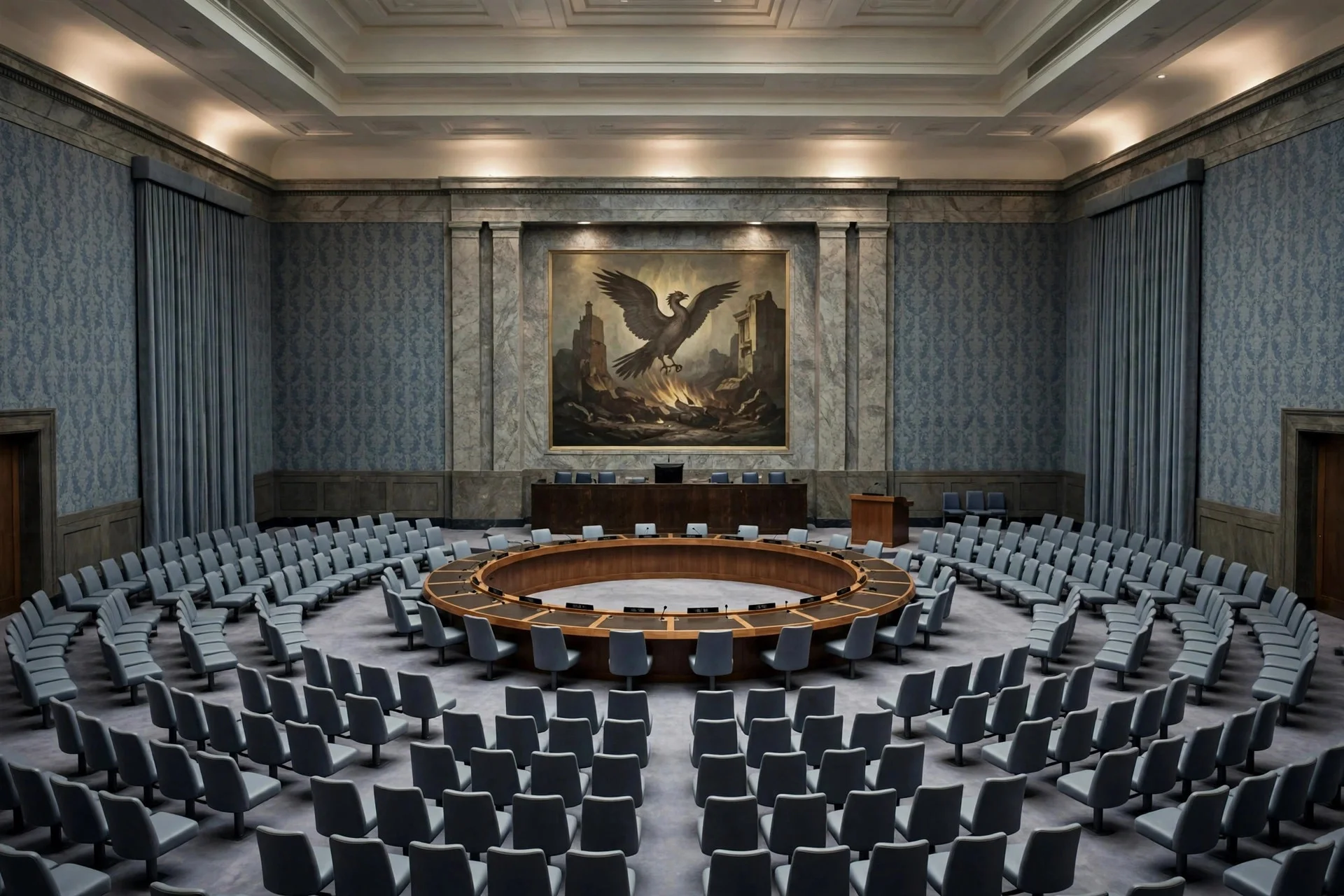
Sala del Consejo de Seguridad de la ONU, en una imagen alusiva generada para esta cobertura. · Imagen generada por EPM
UK vows to stand with Ukraine for as long as needed
British Ambassador Sarah MacIntosh told the Security Council, according to the official statement, that Russia is intensifying attacks on civilians and energy…
Britain warns Russia and pledges allied resolve
According to the British statement at the UN, Ambassador Sarah MacIntosh said Russia is gaining no net territory, taking heavy casualties and using winter as…
--- The context ---
In the British statement to the Security Council, Ambassador Sarah MacIntosh argued, according to the official text, that Russia is intensifying attacks on Ukrainian cities as winter approaches. She said President Vladimir Putin seeks to use the cold to break Ukrainian resolve, and she stated that the United Kingdom and its partners will support Ukraine through the winter and for as long as it takes.
--- The facts ---
The ambassador said that on 30 October a Russian drone struck a railway station in Dnipro, killing at least 15 civilians and injuring another 14. She also said that on 2 November Russian bombs struck a school operating as an aid centre in the Zaporizhzhia region, killing at least 55 civilians in one of the deadliest attacks of the war, according to the statement. She added that on 7 November Russian drones and missiles hit energy and civilian infrastructure, including Kyiv's northern bridge, and that on 8 November the attacks killed a further 7 civilians.
According to the statement, such attacks have killed over 1,540 Ukrainian civilians in the last four months. The ambassador also said that since President Donald Trump called for an energy ceasefire on 11 October, Russia has launched over 150 ballistic missiles, mainly at energy infrastructure. She further cited the UN Commission of Inquiry as reporting last month that Russia has pursued a state policy against that infrastructure for more than four years and as concluding that these attacks constitute war crimes, according to the statement. She added that Russia suffered 54,000 casualties last month alone and gained net zero territory this year.
--- The positions ---
The statement attributed to Russia's Ministry of Defence the message, reported here indirectly, that Ukrainians will freeze this winter. Against that, the ambassador said Europe's commitment to Ukraine is unshakeable. She also welcomed the humanitarian ceasefire in Oleshky, brokered with United States support, which according to the statement allowed aid to reach civilians and enabled hundreds to leave occupation, while noting that it should not take an extraordinary intervention to secure a few days of safety.
--- What remains unknown ---
The statement does not detail what concrete steps the United Kingdom and its partners will take during the winter or what follow-up the Oleshky ceasefire will have. Beyond the cited UN Commission findings, it also does not specify what steps will follow on international accountability. Whether new Council initiatives will follow remains unclear.
--- Unanswered questions ---
What additional protection will Ukrainian civilians receive during the winter under what was announced? Will humanitarian aid expand beyond one-off experiences such as Oleshky? What practical consequences will follow from the war crimes conclusion attributed to the UN Commission?
--- EPM analysis ---
From a civilian-protection perspective, the core of the intervention is the link the statement draws between energy, winter and everyday survival. The ambassador presented trains, schools and heating as part of daily life lived in fear, and placed the debate on the ground of international law and humanitarian aid, without these claims being presented here as verified beyond the official British text itself.
📌 EPM Take: In EPM's view, the value of this statement lies in putting civilians at the centre and recalling that behind every number is a loved one lost, a family broken and a community torn apart. If the United Kingdom and its partners sustain the support promised through the winter, protecting energy infrastructure and delivering humanitarian aid can make a real difference for people now living amid attacks, cold and fear, while insisting that peace remains a possible and necessary choice for everyone involved in this war.
--- The context ---
In her statement to the Security Council, British Ambassador Sarah MacIntosh said, according to the official text, that Russia is failing to achieve its objectives on the battlefield and is therefore intensifying attacks on Ukrainian cities and infrastructure. She stated that London and its partners will stand by Ukraine through the winter and for as long as it takes, describing Europe's commitment as unshakeable.
--- The facts ---
According to the statement, on 30 October a Russian drone struck a railway station in Dnipro, killing at least 15 civilians and injuring another 14. The ambassador said that on 2 November Russian bombs hit a school used as an aid centre in the Zaporizhzhia region and killed at least 55 civilians, and that on 7 November drones and missiles struck energy and civilian infrastructure, including Kyiv's northern bridge. She added that 7 more civilians were killed on 8 November and that attacks over four months have killed over 1,540 civilians.
The statement said that since President Donald Trump's call for an energy ceasefire on 11 October, Russia has launched over 150 ballistic missiles, mainly at energy infrastructure. It also cited the UN Commission of Inquiry as concluding that these attacks constitute war crimes and as finding a state policy against the energy network pursued for more than four years, intensified as temperatures fall. The ambassador added, according to the statement, that Russia suffered 54,000 casualties last month alone and gained net zero territory this year.
--- The positions ---
The intervention attributed to Russia's Ministry of Defence the indirectly reported warning that Ukrainians will freeze this winter, and argued that Putin seeks to achieve through cold what his missiles have failed to do. By contrast, the ambassador welcomed the humanitarian ceasefire in Oleshky, brokered with United States support, which according to the text allowed aid in and hundreds to leave, while stressing that civilian safety should not depend on extraordinary interventions. Her final message, according to the statement, is that Russia can choose to continue the war or choose peace.
--- What remains unknown ---
The statement does not specify new military or financial commitments or concrete timelines for winter support. It also does not detail how partners will respond if attacks on energy infrastructure continue after 11 October. What additional measures will accompany the firmness expressed by London and its allies remains open.
--- Unanswered questions ---
What additional cost will partners impose on Russia if energy attacks continue? How will the allied resolve announced here translate into concrete support during the winter? Will Moscow accept the peace option that the statement presents as the alternative to continuing the war?
--- EPM analysis ---
Read as deterrence, the statement combines two messages: Ukraine is resisting and Russia is paying a high price without net territorial gain, according to the figures cited by the ambassador. EPM notes that London seeks to sustain allied cohesion and make clear that using winter as pressure will not alter Europe's commitment, a resolve whose credibility depends on backing words with practical continuity of support.
📌 EPM Take: In EPM's view, the statement works as a deterrence signal: Russia is accumulating casualties, gaining no net territory this year according to London, and still failing to break Ukrainian resolve. Allied resolve will only be credible if support holds without cracks through the winter and raises the cost of each new attack on civilians and infrastructure. Sustaining that line, with constancy and unity among partners, is what can push Moscow to take seriously the option of peace instead of prolonging a costly war.
Reino Unido promete sostener a Ucrania todo el invierno
La embajadora británica Sarah MacIntosh afirmó ante el Consejo de Seguridad que Rusia intensifica ataques contra civiles e infraestructura energética y…
Londres advierte a Rusia y reafirma firmeza aliada
Según la declaración británica ante la ONU, la embajadora Sarah MacIntosh sostuvo que Rusia no gana territorio neto, acumula bajas y usa el invierno como…
--- El contexto ---
Según la declaración británica ante el Consejo de Seguridad, la embajadora Sarah MacIntosh sostuvo que Rusia intensifica ataques contra ciudades al acercarse el invierno. Afirmó que el presidente Vladímir Putin busca usar el frío para quebrar la resistencia y que Reino Unido y sus socios apoyarán a Ucrania el tiempo que haga falta.
--- Los hechos ---
La embajadora afirmó que el 30 de octubre un dron ruso golpeó una estación ferroviaria en Dnipró, matando al menos a 15 civiles e hiriendo a otros 14. Sostuvo que el 2 de noviembre bombas rusas golpearon una escuela que funcionaba como centro de ayuda en la región de Zaporiyia, matando al menos a 55 civiles, en uno de los ataques más mortales de la guerra, según la declaración. Añadió que el 7 de noviembre drones y misiles rusos golpearon infraestructura energética y civil, incluido el puente norte de Kiev, y que el 8 de noviembre los ataques mataron a otros 7 civiles.
De acuerdo con la declaración, en los últimos cuatro meses estos ataques han matado a más de 1.540 civiles ucranianos. La embajadora sostuvo que, desde que el presidente Donald Trump pidió un alto el fuego energético el 11 de octubre, Rusia lanzó más de 150 misiles balísticos, principalmente contra infraestructura energética. Citó que la Comisión de Investigación de la ONU informó el mes pasado que Rusia ha perseguido durante más de cuatro años una política estatal contra esa infraestructura y concluyó que esos ataques constituyen crímenes de guerra, según la declaración. La embajadora añadió que Rusia sufrió 54.000 bajas solo el mes pasado y que no ganó territorio neto este año, según la declaración.
--- Las posiciones ---
La declaración atribuyó al Ministerio de Defensa ruso el mensaje, en indirecto, de que este invierno los ucranianos se congelarán. Frente a ello, la embajadora afirmó que el compromiso europeo con Ucrania es inquebrantable. Celebró el alto el fuego humanitario en Oleshky, mediado con apoyo de Estados Unidos, que según la declaración permitió llevar ayuda y que cientos salieran de la ocupación, aunque advirtió que no debería hacer falta una intervención extraordinaria para unos días de seguridad.
--- Lo que falta saber ---
La declaración no detalla qué medidas concretas adoptarán Reino Unido y sus socios durante el invierno ni qué seguimiento tendrá el alto el fuego en Oleshky. Tampoco precisa qué pasos seguirán en materia de responsabilidad internacional. Queda por saber si habrá nuevas iniciativas en el Consejo.
--- Preguntas sin respuesta ---
¿Qué protección adicional recibirán los civiles ucranianos durante el invierno según lo anunciado? ¿Se ampliará la ayuda humanitaria más allá de experiencias puntuales como la de Oleshky? ¿Qué consecuencias prácticas tendrá la conclusión atribuida a la Comisión de la ONU sobre crímenes de guerra?
--- Análisis EPM ---
Desde una mirada centrada en la protección civil, lo central de la intervención es el vínculo que la declaración establece entre energía, invierno y supervivencia cotidiana. La embajadora presentó trenes, escuelas y calefacción como parte de la vida diaria bajo temor, y situó el debate en el derecho internacional y la ayuda humanitaria, sin presentarlas como verificadas por fuera del texto oficial.
📌 Conclusion EPM: A juicio de EPM, el valor de esta declaración está en que pone a los civiles en el centro y recuerda que cada cifra esconde una familia rota y una comunidad afectada. Si Reino Unido y sus socios sostienen el apoyo prometido durante el invierno, la protección de la infraestructura energética y la ayuda humanitaria pueden marcar una diferencia para quienes viven entre ataques, frío y miedo, mientras se insiste en que la paz sigue siendo una elección posible y necesaria.
--- El contexto ---
En su declaración ante el Consejo de Seguridad, la embajadora británica Sarah MacIntosh afirmó que Rusia no logra sus objetivos en el campo de batalla y por ello intensifica ataques contra ciudades e infraestructura. Según el texto oficial, Londres y sus socios se comprometen a mantenerse junto a Ucrania durante el invierno y el tiempo que haga falta, con un compromiso europeo inquebrantable.
--- Los hechos ---
Según la declaración, el 30 de octubre un dron ruso golpeó una estación ferroviaria en Dnipró, con al menos 15 civiles muertos y otros 14 heridos. Sostuvo que el 2 de noviembre bombas rusas alcanzaron una escuela usada como centro de ayuda en la región de Zaporiyia y mataron al menos a 55 civiles, y que el 7 de noviembre drones y misiles golpearon infraestructura energética y civil, incluido el puente norte de Kiev. Añadió que el 8 de noviembre murieron otros 7 civiles y que en cuatro meses los ataques suman más de 1.540 civiles muertos.
La declaración sostuvo que, desde el pedido del presidente Donald Trump de un alto el fuego energético el 11 de octubre, Rusia lanzó más de 150 misiles balísticos, principalmente contra infraestructura energética. Afirmó que la Comisión de la ONU concluyó que esos ataques constituyen crímenes de guerra y que Rusia persigue desde hace más de cuatro años una política estatal contra la red energética. La embajadora añadió que Rusia sufrió 54.000 bajas solo el mes pasado y ganó cero territorio neto este año, según la declaración.
--- Las posiciones ---
La intervención atribuyó al Ministerio ruso la advertencia indirecta de que los ucranianos se congelarán este invierno y sostuvo que Putin intenta lograr con el frío lo que no logró con los misiles. La embajadora celebró el alto el fuego humanitario en Oleshky, mediado con apoyo estadounidense, que según el texto permitió ayuda y la salida de cientos, aunque remarcó que la seguridad civil no debería depender de intervenciones extraordinarias. Su mensaje final, según la declaración, es que Rusia puede elegir entre seguir la guerra o elegir la paz.
--- Lo que falta saber ---
La declaración no especifica nuevos compromisos militares o financieros ni plazos para la ayuda de invierno. Tampoco detalla cómo responderán los socios si continúan los ataques contra la infraestructura energética tras el 11 de octubre. Queda abierto qué medidas adicionales acompañarán la firmeza expresada por Londres y sus aliados.
--- Preguntas sin respuesta ---
¿Qué costo adicional impondrán los socios a Rusia si siguen los ataques energéticos? ¿Cómo se traducirá la firmeza aliada anunciada en apoyo concreto durante el invierno? ¿Aceptará Moscú la opción de paz que la declaración le atribuye como alternativa a continuar la guerra?
--- Análisis EPM ---
Leída en clave de disuasión, la declaración combina dos mensajes: Ucrania resiste y Rusia paga un precio alto sin ganar territorio neto, según cifras de la embajadora. EPM observa que Londres busca sostener la cohesión aliada y dejar claro que usar el invierno como presión no alterará el compromiso europeo, una firmeza que depende de respaldar las palabras con continuidad práctica.
📌 Conclusion EPM: A juicio de EPM, la declaración funciona como una señal de disuasión: Rusia acumula bajas, no gana territorio neto este año según Londres y, aun así, no quiebra la voluntad ucraniana. La firmeza aliada solo será creíble si el apoyo se mantiene sin fisuras durante el invierno y eleva el costo de cada nuevo ataque contra civiles e infraestructura. Sostener esa línea con constancia y unidad es lo que puede empujar a Moscú a tomar en serio la paz.